Author: admin

  • The Semiconductor Manufacturing Management

    Photo by Elly Brian on Unsplash


    The semiconductor manufacturing industry is highly complex, requiring a well-planned and managed resource allocation, product flow, and supply chain.

    Effective management of the factories and other resources is also essential to ensure high-quality semiconductor goods. It includes carefully considering capacity, material planning, logistics, and other aspects of the production process.

    Planning: Semiconductor Manufacturing Is Highly Complex, Requiring A Well-Planned And Managed Resource Allocation.

    Manufacturing: Effective Management Of The Factories And Other Resources Is Also Essential.

    With the right tools and strategies in place, companies can ensure that their semiconductor manufacturing operations smoothly are running while meeting customer demand.

    More so when the capacity and complexity of the wafer production process constantly increase and will become more crucial in the chiplets and More-Than-Moore era.


    Picture By Chetan Arvind Patil

    Additionally, it is vital to have a reliable forecasting system for resource planning and allocation. Moreover, the material flow should adhere to industry standards. With such measures, semiconductor manufacturing can support the end customers far better.

    Along the path to achieving the high-quality management of semiconductor manufacturing, issues like – downtime, cost, and process optimization to resource allocation, people management, logistics, capacity planning, and inventory management – all play an essential factor.

    Quality: High-Quality Management Requires A Detailed Process.

    Cost And Time: Cost And Time Are Factors That Can Impact The Production Process.

    In addition to these operational issues, semiconductor manufacturers must also navigate the ever-changing market landscape and gain insight into customer needs to remain competitive.

    Additionally, cost and time are factors that can impact the production process. Thus, navigating these various hurdles is a critical part of semiconductor manufacturing management as it will ensure optimal production of semiconductors.

  • The Semiconductor Neural Copilot

    Photo by Dan Lohmar on Unsplash


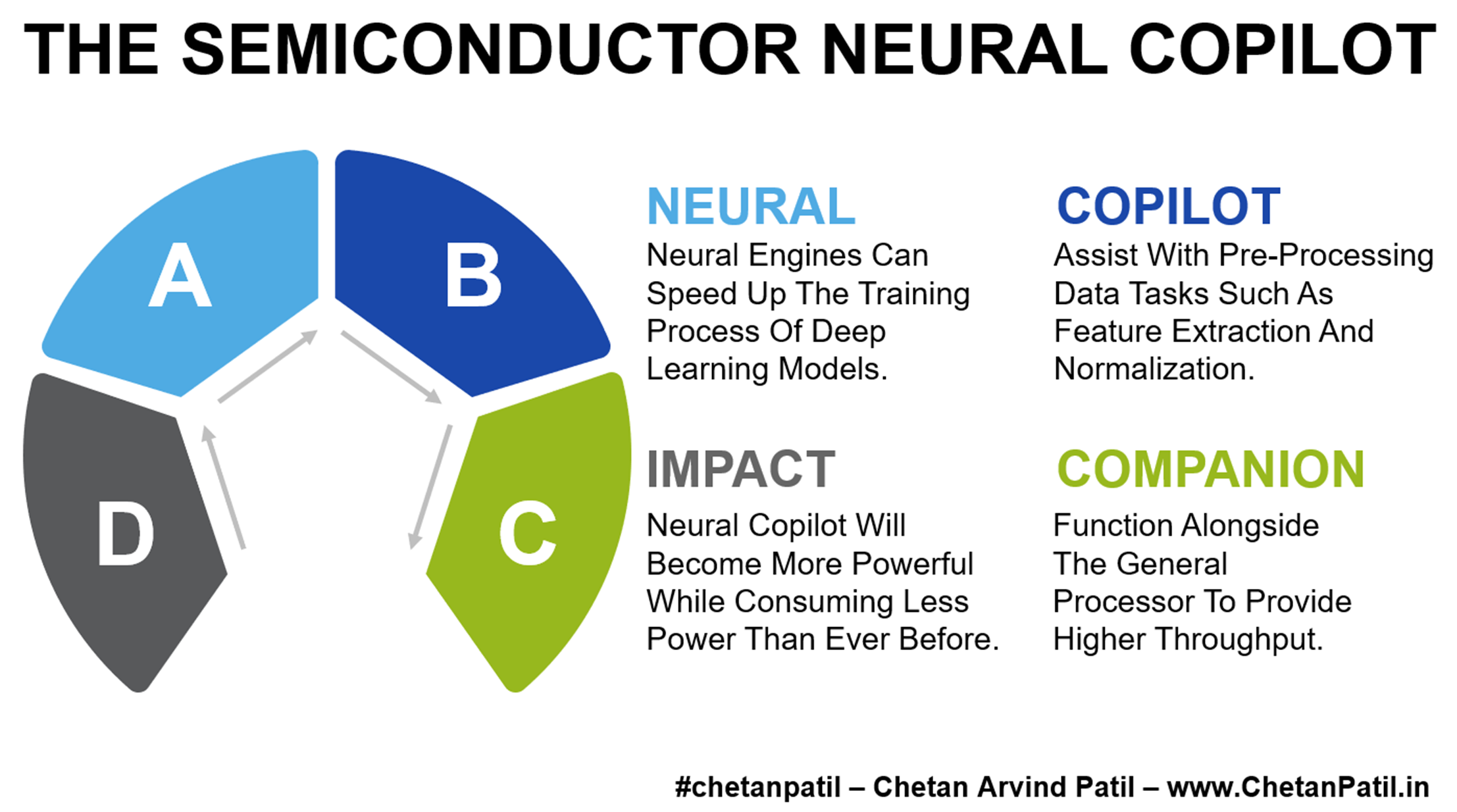
    Neural processing units (NPUs) are specialized neural copilot processors designed to accelerate data flow through neural networks. They are used to process large amounts of data quickly and accurately, allowing for faster and more efficient machine learning. NPUs differ from CPUs, GPUs, XPUs, and ASICs because they NPUs are specifically for neural network operations.

    Neural copilot can speed up the training process of deep learning models and the inference process of already trained models. Neural copilot can assist with pre-processing data tasks such as feature extraction and normalization. With their ability to process large amounts of data quickly and accurately, neural copilot have become an essential tool in developing AI applications.

    Neural: Neural Engines Can Speed Up The Training Process Of Deep Learning Models.

    Copilot: Assist With Pre-Processing Data Tasks Such As Feature Extraction And Normalization.

    Neural copilot are becoming increasingly popular in mobile devices as they offer significant benefits over traditional processors. Neural copilot can provide faster processing speeds, improved accuracy, and cost savings due to their ability to process large amounts of data quickly and efficiently.

    Additionally, neural copilot can help reduce power consumption and improve battery life in mobile devices. As a result, NPUs have the potential to revolutionize how we use our mobile devices by providing faster processing speeds and improved accuracy while saving energy and money.


    Picture By Chetan Arvind Patil

    While neural copilot offer great potential for AI applications, they have certain drawbacks. The cost of neural copilot is high due to their complexity and manufacturing process. Additionally, they require silicon area, making them difficult to use in smaller nodes.

    Furthermore, their use is limited to specific tasks such as image recognition and natural language processing. Thus, not suitable for general-purpose computing tasks.

    Companion: Function Alongside The General Processor To Provide Higher Throughput.

    Impact: Neural Copilot Will Become More Powerful While Consuming Less Power Than Ever Before.

    Another primary reason for neural copilot to become increasingly popular in computing is the ever-increasing use case, where the general processor will only function with a higher throughput than the neural copilot can.

    The future of neural copilot looks promising. Semiconductor companies are investing in research and development for this technology. With advancements in design and manufacturing techniques, neural copilot will become more powerful while consuming less power than ever before. It will open up new possibilities for data processing applications that were not possible back.


  • The Ways In Which Software Has Used Semiconductor To Be AI Ready

    Photo by DeepMind on Unsplash


    The semiconductor industry has significantly contributed to the development of Artificial Intelligence (AI). Semiconductors have enabled software developers to create AI-ready applications by providing the necessary hardware components.

    It has allowed for faster and more efficient processing of data, as well as improved accuracy in decision-making. In addition, semiconductors have enabled software developers to create more robust algorithms that can perform various tasks, such as image recognition and natural language processing.

    AI-Ready: Semiconductors And Software Go Hand In Hand In Creating AI-Ready Solutions.

    Silicon: Underlying Silicon Architecture Is Critical In Ensuring The End AI Product Meets User Experience.

    As a result, AI-ready software is readily available in many industries, including healthcare, finance, and retail. On top of all this, with the help of semiconductor technology, AI-ready tools are increasingly being deployed to automate processes and make decisions with greater accuracy than ever before.

    One key differentiator of how good a semiconductor product is for the AI application is the type of semiconductor technology used. Primarily, semiconductor technologies that reduce power consumption and latency while improving performance are preferred.


    Picture By Chetan Arvind Patil

    All AI-ready software companies have one common trait. They have used semiconductor solutions to their advantage, first by deploying at a larger scale and then using them to come up with initial AI-focused models and then improving the underlining silicon architecture by creating custom silicon that can accelerate the AI applications.

    It has been a common trend that several of the AI giants have followed. It also shows how well these companies have utilized semiconductors to develop next-gen software solutions. It has required a lot of planning and investment and a roadmap that has now started to show results.

    Custom: Opting For Custom Silicon Architecture Is Far Better Thant Adopting Generic Silicon.

    Technology: Internal Silicon Technology Is Also Crucial In Providing Long-Term Benefits To AI Workload.

    To keep driving the AI-ready software, the process node used in semiconductor technology will also play a key role as it allows for more data to be processed at once (based on the technology generation), thus resulting in faster processing speeds and improved throughput, a must-have for AI solutions.

    Overall, the semiconductor industry will play an essential role in AI-ready applications. However, it also requires a greater understanding of how the internals of any XPU architecture works, and then aligning the features with them can provide benefits in the long term.


  • The Modular Semiconductor Supercomputing

    The Modular Semiconductor Supercomputing

    Photo by Robert Linder on Unsplash


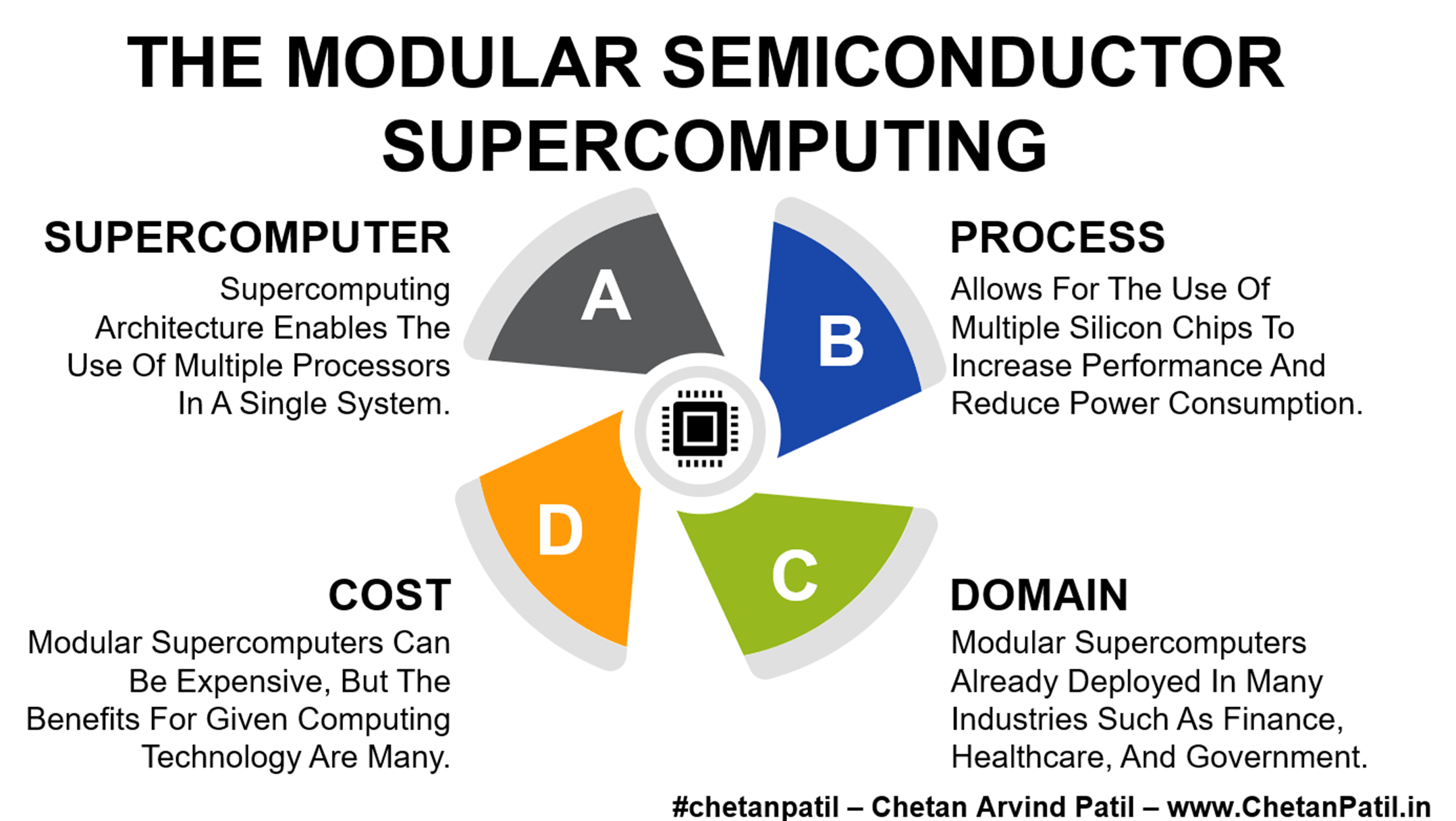
    Modular supercomputing semiconductor is a type of architecture that enables the use of multiple processors in a single system. It provides high speed, low latency, and high throughput for applications that require large amounts of data processing.

    This type of architecture allows for the use of multiple silicon chips to increase performance and reduce power consumption. It also provides for the efficient distribution of workloads across multiple processors, allowing users to get more out of their computing resources.

    Supercomputer: Architecture That Enables The Use Of Multiple Processors In A Single System.

    Process: Supercomputing Architecture Enables The Use Of Multiple Processors In A Single System.

    Modular supercomputing semiconductors cater to various applications such as artificial intelligence, machine learning, big data analytics, and more. With their ability to provide increased speed and performance while reducing power consumption, modular supercomputing semiconductor is becoming an increasingly popular choice for businesses looking to maximize their computing resources.

    However, there are several hurdles to making modular supercomputing semiconductors viable for businesses. These include performance, scalability, cost, and power consumption issues. Additionally, there are challenges associated with integrating modular supercomputing semiconductors into existing systems and networks.


    Picture By Chetan Arvind Patil

    Modular supercomputing semiconductors have overcome different hurdles and have evolved to meet the ever-increasing demands of data load and workload requirements. It is a process that involves integrating multiple components into one system, allowing for improved performance and faster processing flow.

    Over time, as technology advanced, so did the need for more powerful servers with higher performance capabilities. It led to the development of modular supercomputers, now used in many industries such as finance, healthcare, and government.

    Domain: Modular Supercomputers Already Deployed In Many Industries Such As Finance, Healthcare, And Government.

    Cost: Modular Supercomputers Can Be Expensive, But The Benefits For Given Computing Technology Are Many.

    Today, Modular Supercomputing Semiconductor is an essential part of any organization’s IT infrastructure as it helps them manage their data load and workload requirements efficiently while providing improved performance and faster processing flow.

    The cost associated with this technology can vary depending on the complexity and size of the project. Investing in modular supercomputing semiconductors can be expensive, but it can also provide significant savings in time and money compared to traditional computing methods.


  • The Semiconductor Capacity Leaders

    Photo by Ian Taylor on Unsplash


    The future of semiconductor capacity is uncertain due to the increasing demand for chips and the limited availability of production facilities. It has led to a situation where certain countries, regions, and companies monopolize producing semiconductors.

    The distribution of semiconductor capacity across different countries and regions is also an essential factor in determining the future of this industry. Thus, semiconductor capacity management should be the primary focus. Where by managing the resources and processes involved in the fabrication, testing, and assembly of semiconductor components.

    Capacity: The Future Of Semiconductor Capacity Is Uncertain Due To The Increasing Demand For Chips.

    Distribution: The Distribution Of Semiconductor Capacity Across Different Countries And Regions Is Also An Essential Factor.

    In such scenarios, public policies promoting investment in new semiconductor technologies and infrastructure can ensure that all countries have access to the latest technology. Additionally, governments should consider incentives for companies to invest in new production facilities to increase competition and reduce monopolies.

    It involves planning for future capacity needs, allocating resources to meet them, and monitoring performance to ensure capacity meets demand. By managing semiconductor capacity effectively, companies can reduce costs while ensuring that their products are produced on time and with high quality.


    Picture By Chetan Arvind Patil

    As semiconductor technology proliferates, countries and companies worldwide have started competing to dominate the market. They must also have effective strategies to ensure they can stay ahead of their competition.

    The regions that dominate semiconductor manufacturing have access to a wide range of resources, including labor, cost, and next-gen technology. These countries have invested heavily in research and development to stay ahead of the competition. It has enabled them to produce high-quality products at competitive prices.

    Quality: Manufacturing High-Quality Semiconductor Products At Competitive Prices Is An Important Factor.

    Technology: Countries That Have Invested Heavily In Research And Development To Stay Ahead Of The Competition Will Dominate.

    Countries that want to lead semiconductor manufacturing must also have effective management strategies to stay ahead of their competition. By leveraging the right resources, new regions can gain an edge over their competitors and slowly but surely become a leader in the industry.

    Eventually, the country and companies dominating semiconductor manufacturing have an advantage over its competitors. All of this allows them to manufacture high-quality semiconductor products at competitive prices.


  • The Semiconductor Unified Architecture

    The Semiconductor Unified Architecture

    Photo by Alex wong on Unsplash


    The applications that run on silicon architecture are constantly evolving. Today, these architectures are more compute and memory intensive than ever before. It also means that the users of these applications are processing more data and thus demand the lowest latency possible.

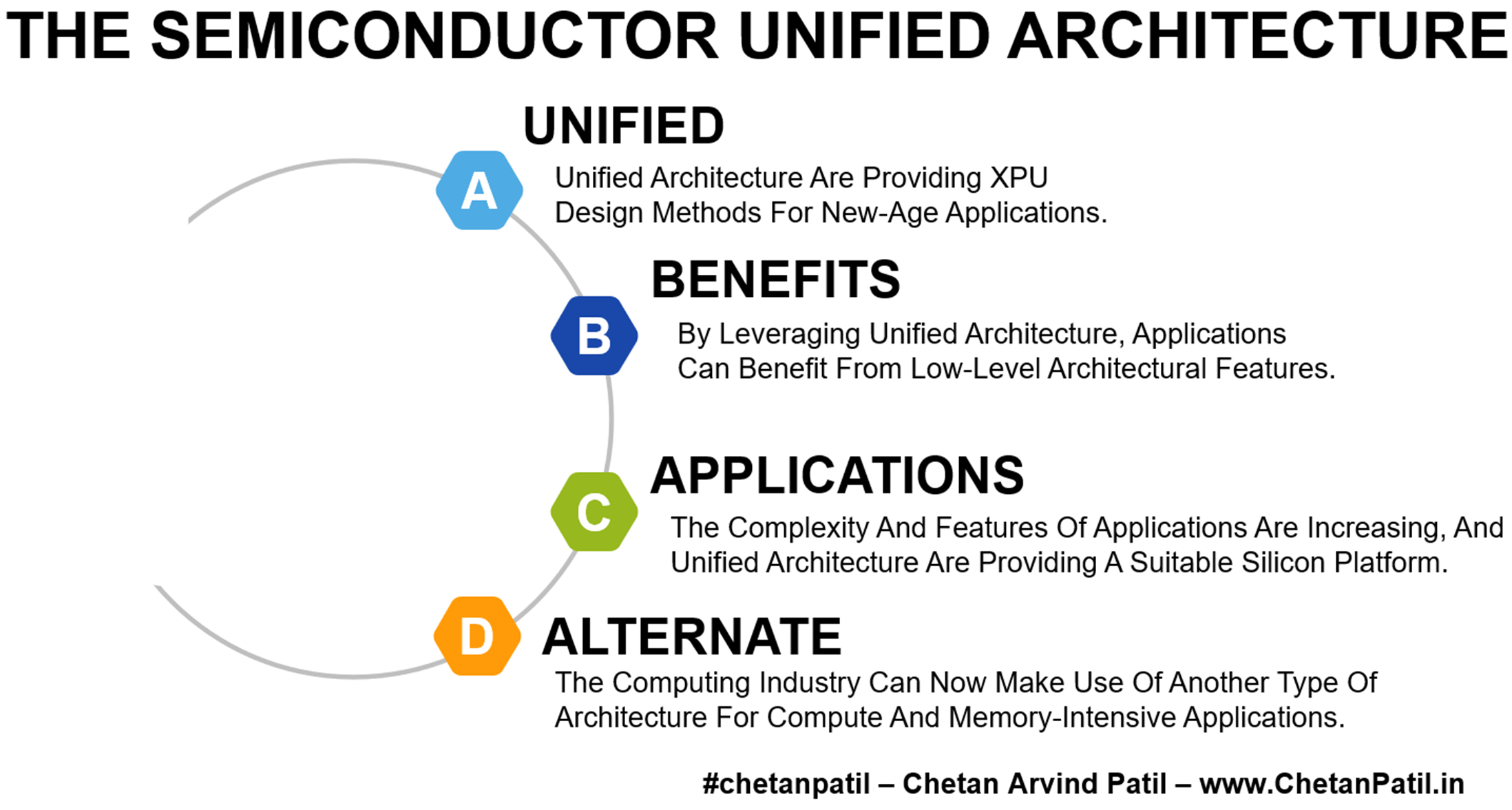
    In reality, achieving good latency is challenging for any computer architecture. It is valid for CPUs, GPUs, specialized ASICs, and so on. Computer architects have been exploring a unified architecture to bridge the gap between higher user experience and lower latency. The goal is to connect different types of XPU blocks uniformly and thus allow the application to have faster memory access, which speeds up the computation.

    Unified: Unified Architecture Are Providing XPU Design Methods For New-Age Applications.

    Benefits: By Leveraging Unified Architecture, Applications Can Benefit From Low-Level Architectural Features.

    Unified Architecture is more suitable for general-purpose computing, so high-bandwidth demanding applications still use Non-Unified Architecture. However, as the application complexity along with silicon design and manufacturing (chiplet) changes, a case in favor of unified architecture is being made.

    At the application level, there can be contention with the use of unified memory. However, harmonious architecture can still provide better performance in terms of design and response time by using memory-level caching algorithms.


    Picture By Chetan Arvind Patil

    Companies already use unified architecture to build more powerful chips with better silicon areas. It can also improve the application performance by 2x to 4x. On another side, by better utilization of resources such as memory, bandwidth, and data, the overall cost of processing decreases, thus enabling better battery life and a higher user experience.

    A computer architecture that follows a unified approach can get used for different computing needs, from gaming to science. It also reduces the response time of AI-driven applications, which are time-sensitive.

    Applications: The Complexity And Features Of Applications Are Increasing, And Unified Architecture Are Providing A Suitable Silicon Platform.

     Alternate: The Computing Industry Can Now Make Use Of Another Type Of Architecture For Compute And Memory-Intensive Applications.

    By leveraging the benefits of unified architecture, the silicon industry is pitching a case against non-uniform architecture that has primarily dominated learning applications. However, it is still too early to say whether providing a single block of memory to different types of CPUs, GPUs, and NPUs will be the de-facto design process for laptop and PC SoCs.

    Whichever way the computer architecture development progresses, computer architects have provided an alternative for the semiconductor computing industry by showcasing the power of unified architecture.


  • The Significance Of Semiconductor Value Chain

    The Significance Of Semiconductor Value Chain

    Photo by Mathieu Turle on Unsplash


    The semiconductor value chain is a global hub of design, manufacturing, and business activities that significantly impact the economy. The semiconductor industry is estimated to contribute more than $400 billion in annual revenue to the global economy, which is possible only due to the worldwide semiconductor value chain process.

    The global semiconductor value chain is highly dependent on collaboration between technical and business partners. This collaboration enables companies to develop innovative products and services for modern businesses. It also helps them to reduce costs and increase efficiency by leveraging economies of scale. All of which then eventually benefits the end consumers in the form of new solutions.

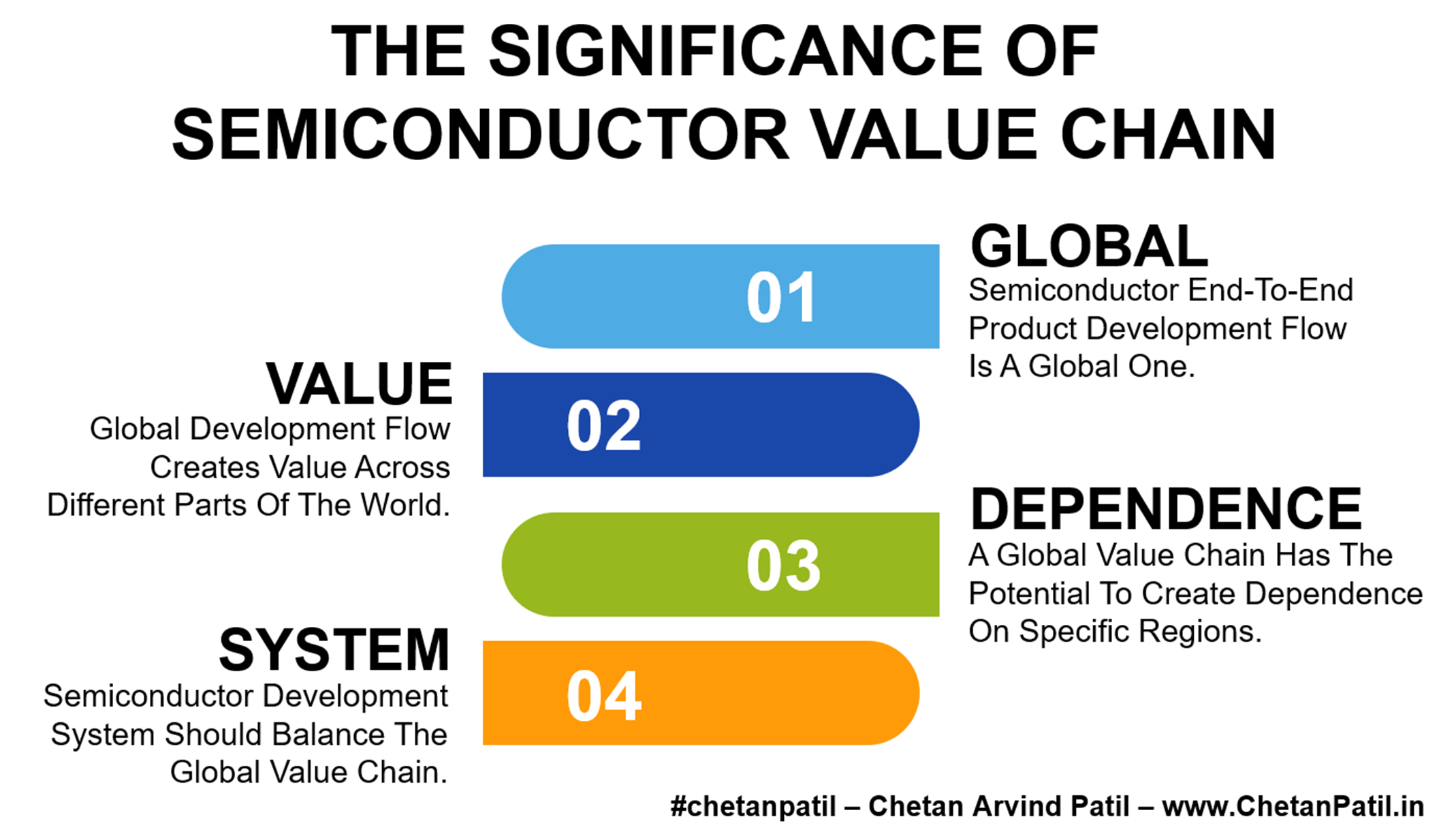
    Global: Semiconductor End-To-End Product Development Flow Is A Global One.

    Value: Global Development Flow Creates Value Across Different Parts Of The World.

    This complex value chain system involves multiple stages of business development, design, manufacturing, and equipment. It is an example of how globalization has enabled the production of high-quality semiconductors at a lower cost. And the unique and challenging part is that each of the design and production steps is executed in different parts of the world, thus simultaneously making the process complex and exciting.

    The value chain starts with the development of a product concept and design. It includes research and development to create the best possible product for the market. After this, the plan is for manufacturers to produce the components needed for assembly. Finally, specialized equipment assembles and tests the finished product before shipping it to the end customer. All of which occur in different parts of the world. Not only creating dependency but also a robust globalization process.


    Picture By Chetan Arvind Patil

    The importance of the semiconductor value chain cannot be overstated, as it has a direct impact on businesses around the world. Companies must understand its significance to: remain competitive in today’s market, manage their resources better, and maximize their profits.

    The reach of the global value chain is extending and creating dependence on foreign countries for raw materials. Technology has increased as many new regions start to produce their semiconductors. It has led to increased competition among countries for access to these resources.

    Dependence: A Global Value Chain Has The Potential To Create Dependence On Specific Regions.

    System: Semiconductor Developing And Depending Companies Must Understand The How To Balance The Global Value Chain.

    Additionally, there is an increased need for skilled labor as more complex processes get developed to produce higher-quality products. All of these factors contribute to the overall dependence of global semiconductor production on external sources.

    As part of a long-term plan, all semiconductor-dependent companies should also understand how this global semiconductor value chain works. Businesses can capture how they can benefit from globalization while still producing quality products at competitive prices.


  • The Semiconductor Market And Design Correlation

    The Semiconductor Market And Design Correlation

    Photo by Vishnu Mohanan on Unsplash


    The semiconductor market has evolved rapidly and will grow significantly in the coming years. The emergence of new areas, such as artificial intelligence, machine learning, and autonomous vehicles, will drive this growth. However, this growth will also bring challenges, such as increased competition and the need for more efficient production processes.

    To remain competitive in this ever-changing market, companies must stay ahead of the curve by investing in research and development to create innovative products that meet customer needs. They should also prepare to face any potential challenges that may arise due to changes in technology or regulations.

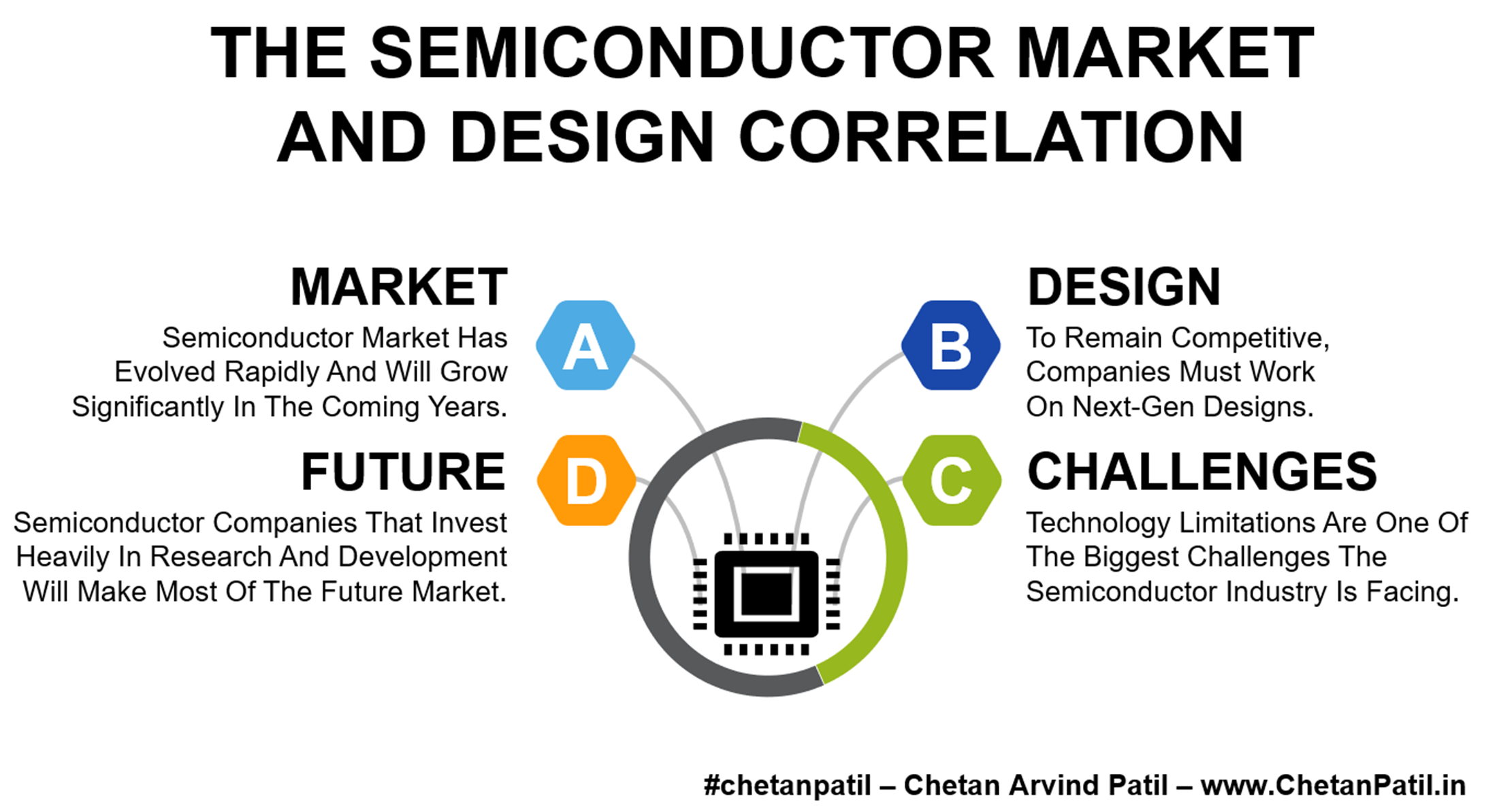
    Market: Semiconductor Market Has Evolved Rapidly And Will Grow Significantly In The Coming Years.

    Design: To Remain Competitive, Companies Must Work On Next-Gen Designs.

    One such challenge is launching new chip solutions to meet the demand for faster, more powerful devices. With the increasing need for data processing and storage, chip solutions must provide high performance while reducing power consumption. Developing such solutions has become increasingly difficult.

    On top of all this, semiconductor design is a complex process requiring much innovation and creativity. It involves designing features that meet the customer’s requirements while also considering the various bottlenecks in the process. All of these require a lot of time and eventually increase the cost.


    Picture By Chetan Arvind Patil

    The challenges in semiconductor design are numerous. It ranges from meeting customer requirements to dealing with technological limitations. Designers must be able to think outside the box and come up with new solutions to overcome these challenges. Additionally, they must stay up-to-date on the latest trends and technologies to ensure their designs are competitive and efficient.

    Semiconductor design time to market is also an essential factor for any business. It determines the time, cost, and resources needed to bring a product from concept to market. The faster a product can be designed and manufactured, the more money it can generate for the company.

    Challenges: Technology Limitations Are One Of The Biggest Challenges The Semiconductor Industry Is Facing.

    Future: Semiconductor Companies That Invest Heavily In Research And Development Will Make Most Of The Future Market.

    With technological advances, semiconductor design time to market has become shorter and more efficient. Companies can now reduce their costs and resources while promptly producing high-quality products. However, achieving such results demands deploying a process that requires investment.

    The semiconductor market will generate more than $400 billion in revenue by 2025, and companies that invest heavily in research and development will make the most of it. Companies overcoming design challenges to create or expand the market will certainly grow tremendously.


  • The Semiconductor Production View

    The Semiconductor Production View

    Photo by Minku Kang on Unsplash


    Semiconductor production is a complex process requiring much precision and accuracy. It has been an integral part of the electronics industry for decades, and its importance only increases as technology advances.

    The production of semiconductors involves many steps and requires highly specialized equipment and techniques. A raw silicon wafer is placed on a wafer carrier and heated in an oven. This heating process helps to create the necessary electrical properties for the semiconductor devices.

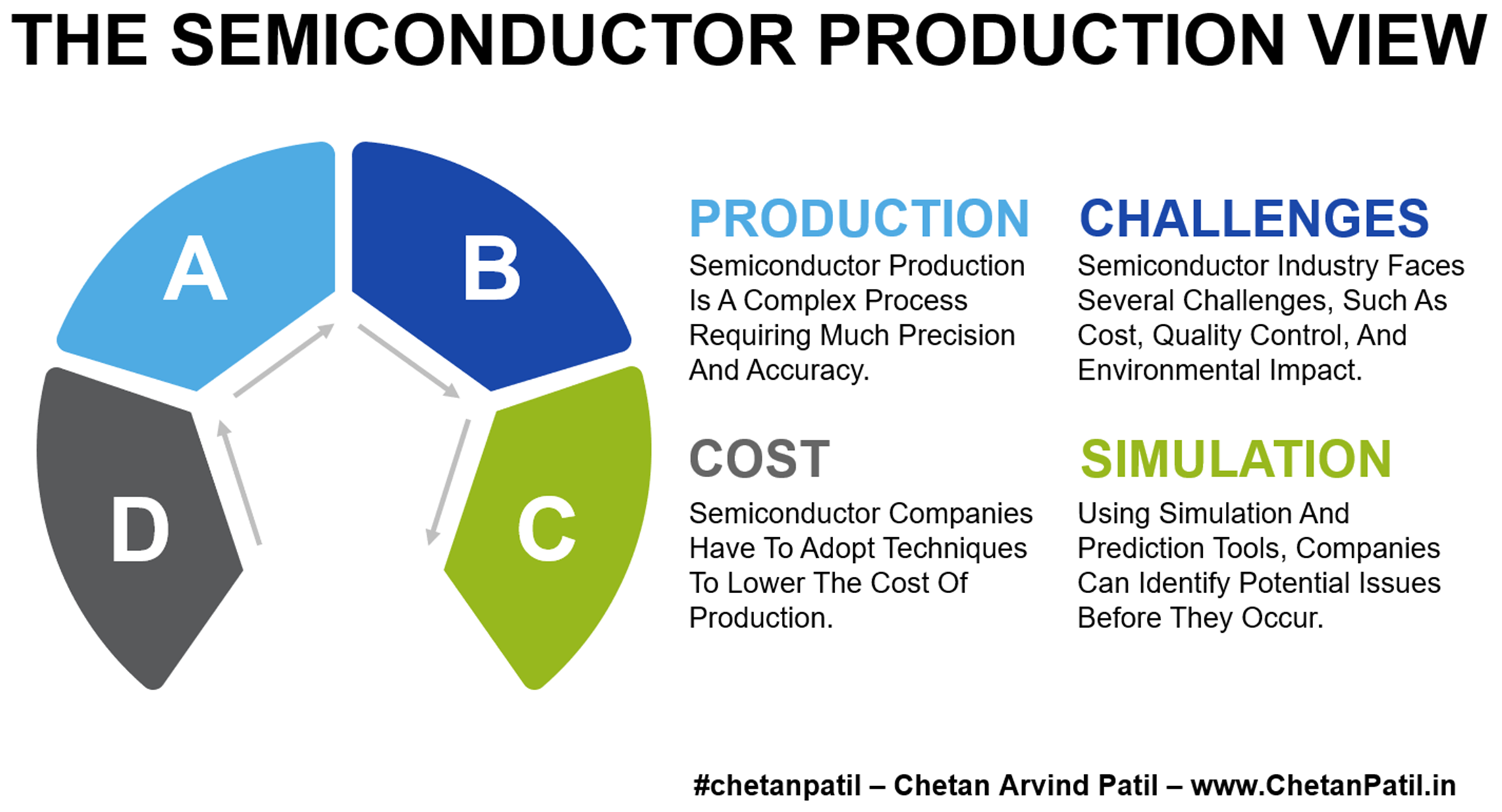
    Production: Semiconductor Production Is A Complex Process Requiring Much Precision And Accuracy.

    Challenges: Semiconductor Industry Faces Several Challenges, Such As Cost, Quality Control, And Environmental Impact.

    Once the wafer is heated, it is etched to form the desired circuit patterns. After etching, the wafer gets exposed to chemicals that deposit various materials onto the surface of the wafer. These materials are then patterned with photolithography to create transistors, resistors, and other components. Finally, the wafer gets cleaned.

    The semiconductor production process faces many challenges, such as cost, quality control, and environmental impact. As the industry continues to grow, these challenges will need to get addressed to ensure that semiconductor production’s future remains viable. Additionally, new technologies are getting developed that could significantly impact how semiconductors will get fabricated.


    Picture By Chetan Arvind Patil

    The semiconductor industry is increasingly using prediction tools to anticipate potential problems and can proactively take measures. Additionally, regular equipment maintenance is necessary for efficient production, which is possible only by tracking day-to-day equipment usage.

    Using simulation and prediction tools, companies can identify potential issues before they occur, allowing them to take corrective action in time. Regular equipment maintenance ensures the machines are running at optimal performance levels and reduces the risk of unexpected downtime. Thus, with proper management, semiconductor manufacturing can be efficient and cost-effective.

    Simulation: Using Simulation And Prediction Tools, Companies Can Identify Potential Issues Before They Occur.

    Cost: Semiconductor Companies Have To Adopt Techniques To Lower The Cost Of Production.

    As technology advances, so does the need for more efficient and cost-effective semiconductor production. Semiconductor companies are investing heavily in research and development to create new processes and materials that can benefit semiconductor production. It includes developing new materials for chip fabrication and exploring ways to reduce costs associated with production.

    Additionally, companies are looking into ways to increase efficiency by automating certain aspects of production. By doing so, they can reduce costs while still producing high-quality products. The future of semiconductor production looks bright as companies continue to invest in research and development to stay ahead of the competition.


  • The Ever-Growing Semiconductor Wall

    The Ever-Growing Semiconductor Wall

    Photo by Henry & Co. on Unsplash


    The semiconductor wall is a term used to describe the limits of silicon devices due to the challenges faced by different types of constraints of current semiconductor technology. This wall has become increasingly apparent in recent years as processor speeds have plateaued, leading to a bottleneck in computing performance. As such, it is becoming increasingly important for engineers and researchers to find ways to overcome this wall and continue pushing the computing power boundaries.

    The semiconductor wall affects different types of chips in different ways. For example, it limits the amount of memory placed on a single chip and the speed at which data processing occurs. It also impacts chips’ cost and power consumption, as more transistors require more energy.

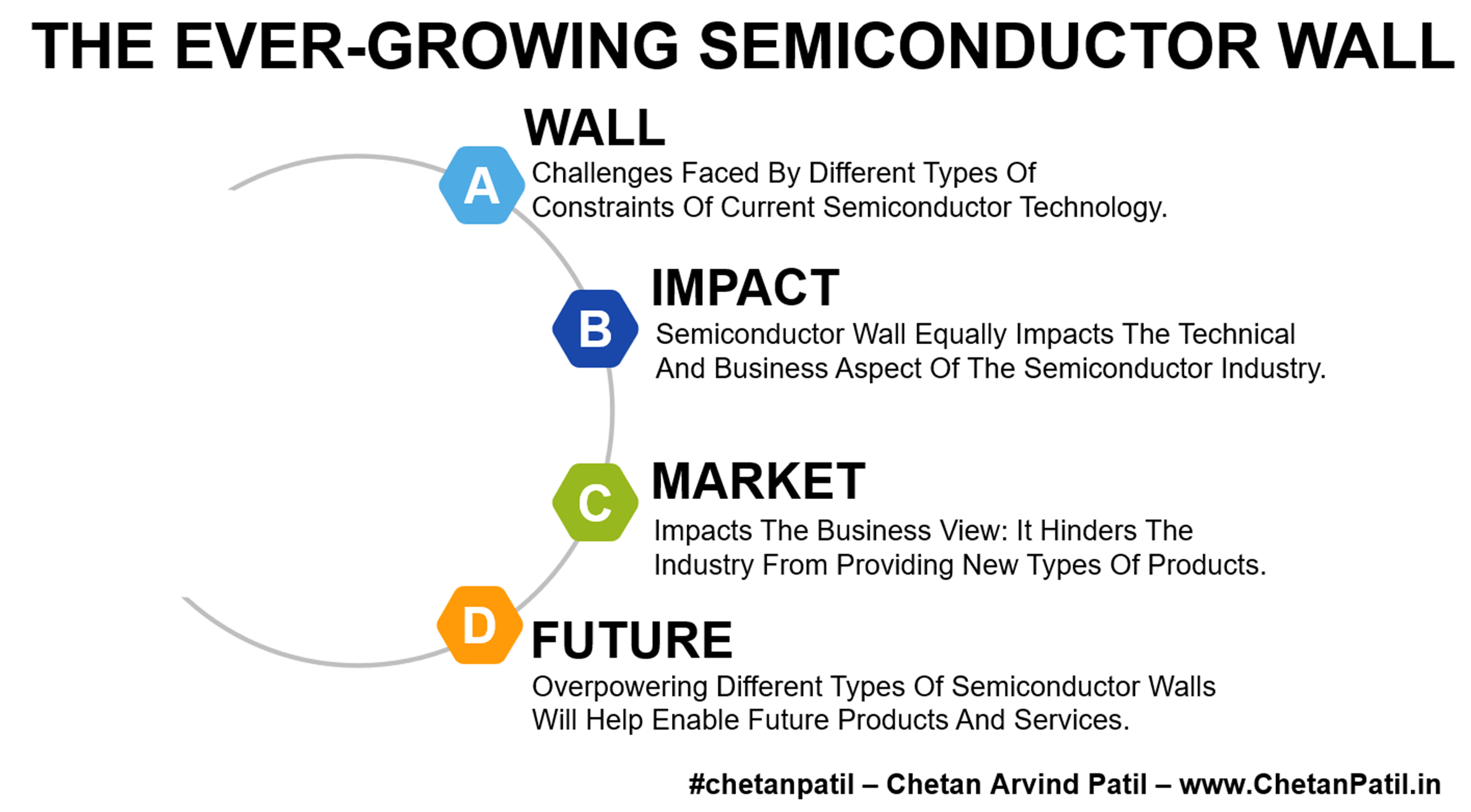
    Wall: Challenges Faced By Different Types Of Constraints Of Current Semiconductor Technology.

    Impact: Semiconductor Wall Equally Impacts The Technical And Business Aspect Of The Semiconductor Industry.

    There are also different types of semiconductor walls depending on the application of a given chip. In summary, scaling/performance/area wall is one of the most significant ones as it hinders the ability to provide more features per given area.

    Apart from this, the semiconductor industry faces memory, computing, power, thermal and cost walls. Each brings its challenges, and researchers have focused on overcoming these over the past few years. However, from a design point of view, there are limited options only, and thus more of design to manufacturing-integrated approaches need to be explored.


    Picture By Chetan Arvind Patil

    On top of the technical limitation, the semiconductor wall impacts the business view as it hinders the industry from providing new types of products. It also causes limited availability of semiconductor products, thus leading to an increase in prices.

    Researchers are actively engaged in finding solutions that can help reduce the bottlenecks (or walls). These solutions include developing new technologies that can increase product scaling while lowering costs. Additionally, companies are looking into ways to use existing components more efficiently to maximize their use and minimize waste.

    Market: Impacts The Business View: It Hinders The Industry From Providing New Types Of Products.

    Future: Overpowering Different Types Of Semiconductor Walls Will Help Enable Future Products And Services.

    The tech industry’s future depends on finding a solution to the semiconductor wall problem. With continued research and development, the industry can find a way out of this bottleneck and create better products with more features at lower costs. As technology advances, customers expect more from their products, and companies must be able to meet these expectations to remain competitive.

    Solving semiconductor walls is essential in determining how successfully a company can meet customer needs. It also impacts how quickly new products can be developed and released into the market. Overpowering different types of semiconductor walls will help enable future products and services. Otherwise, it will impact the year-on-year growth of the semiconductor industry.