Category: BLOG

  • Online Identity

    Online Identity

    Photo by Elijah O’Donell on Unsplash

    World population has reached 7.5 billion. In 2017 about 3.5 billion users were active on internet, that is approximately 50% of world population. If internet was a country, it will be twice the size of the most populated country in the world. Anyone who is on internet can literally find any details about anything at click of a button.

    I think this simple statistic should be good enough for anyone who has anything positive to share to come online, write something and share with potentially 3.5 billion customers. The reason for this blog is to share simple steps on how to get online identity with the hope that it can help someone looking to get one.

    What Is An Online Identity?

    Online identity as per my definition is go to place on internet which users can visit and find more about what a particular individual has to offer. For example – this website is where I would expect people to come and then go onto other platform based on where they would like website feed to be seen. If one is really good at taking pictures, go ahead and sign up with Unsplash or Flickr. For academia there is Google Scholar or Mendeley.

    People like Troy Hunt take it to next level by making living out of it. It’s not always essential to have a dedicated website, one can take specific platform like LinkedIn or Quora and master it to a level that he/she gets awarded in form of LinkedIn Influencer or Quora Top Writer. This not only helps build profile but in process allows building of network.

    Are There Any Specific Steps To Get Online Identity?

    No. However, I suggest a process in following order:

    • Domain:
      • Grab a good domain name. If you can combine your first and last name and get a .com, then take it without thinking twice. Otherwise you can choose from TLDs specific to your country.
    • Website:
      • There are tons of DYI website builder but always consider that if you stuck with writing in form of blogs or articles, then it will grow and one day you will have to move to a dedicated hosting service.
      • Hence, I suggest signup with WordPress as it will be super easy to port it to different service if required. I have my own server but that’s not something everyone needs.
    • Analytics:
      • Though many DYI and WordPress will provide inbuilt traffic analytics. I would strongly suggest to setup Google Analytics and link it to your website. This way you can analyze and improve content based on internet traffic.
      • Even social media profiles like Twitter, Facebook, LinkedIn and Google Plus provide free traffic details at no cost. You just need to find how to enable it.
      • There are also tons of third party services that can track and analyze how your social profiles are performing and the ROI.
    • Social Media:
      • This goes without saying. After you have a website and all is set as per your liking, you need to get at least following must have social profiles.
      • Make sure your <social-website>/username is such that it matches up with your name for easy no brainer search engine optimization.
      • Must Have:
        • Reddit
        • Twitter
        • LinkedIn
        • Facebook
        • Google Plus
        • StackExchange
      • For Artist:
        • Vimeo
        • YouTube
        • Pinterest
        • Unspalsh
        • Instagram
        • SoundCloud
      • For Writers:
        • Quora
        • Medium
        • GoodReads
      • For Researchers:
        • PLOS
        • Scopus
        • ORCID
        • Mendeley
        • GrowKudos
        • ResearcherID
        • ResearchGate
        • Academia.edu

    First three steps to online identity depends on whether or not you need dedicated website to share. But I think social profiles are must and very easy to get.

    What If I Don’t Have Any Online Identity?

    Nothing. You will move on, world will move on. Online identity are smart moves for professionals who rely heavily on skills like software, hardware, paintings, writing, dancing, research, journalism and any type of work that demands work portfolio. Without saying it is must for businesses from any domain.

    It takes really long time to get your profile noticeable to even fraction of active internet users. So it is very important to decide early whether or not you want to get on to the journey of online identity.

  • Encryption Everywhere

    Encryption Everywhere

    Photo by Markus Spiske on Unsplash

    Since the time Edward Snowden leaked classified information, the focus has been on how governments across the world use surveillance to keep tap on digital activities. Lately, I have been reading about it and have come to the conclusion that there is no way around it. However, precautions can be taken if one is worried about his/her digital privacy.

    Encryption in software/hardware largely boils down to the developers and if they wish then they can strongly encrypt the communication/data. For example, WhatsApp has partnered with Open Whisper Systems to provide end-to-end encryption. The reason to trust this partnership is because Signal Protocol, the technology which WhatsApp uses to encrypt messages, is open. Thus allowing anyone to go through the code to understand what exactly has been implemented and whether that matches up to the expectation of tech community at large.

    On the other hand, if you see encryption tool like BitLocker provided by Microsoft to premium versions of Windows is not open sourced. That makes it hard to rely on it when encrypting laptop or desktop running Windows. Ubuntu does somewhat better job at this but Apple again has close system FileVault. All these systems lead to trust issues.

    If you are really worried about digital privacy and want to make sure that the system you are using is secured, then following suggestion may help:

    • Websites:
      • Make sure the website you visit has a valid SSL.
      • It is very simple to check, just look for the green/grey icon on left of the website domain on address bar after the page has been loaded. If it’s green or has lock icon, you are good to go.
      • In case the SSL certificate isn’t valid, then it will show warning message even before the page loads. For such website, visitor should either opt out of the it or try avoiding data transfer task like creating account, submitting private information etc.
    • Applications: 
    • Hardware:
      • Always encrypt your smart devices at operating system level.
      • Opt for laptop and desktop with Trusted Platform Module (TPM).
      • Any hard drive that is not encrypted can lead to data theft.

    Above steps can help encrypt 99% of your daily online activity. In today’s world using smart devices also mean being a smart tech user.

    Pro Tip: Troy Hunt has created short and easy to understand video series on internet security. You may want to watch it.

  • Time We Have Delete Button On All Websites

    Time We Have Delete Button On All Websites

    Photo by Devin Avery on Unsplash

    Since last one month, I started logging the websites I visit and use, mostly those which require user to login. To my surprise I have account at over 50+ different websites. The number may be much more, considering I wasn’t able to recall all those websites where I created account just because that was the only way to get in, and later on never used it. This may be the case with many internet users.

    What Is The Problem?

    Well, the problem is that 90% of these 50+ websites I visit don’t have SSL and some of these send plain text password reset or email the password itself. Showcasing there inner genius in handling user sensitive data. I have taken care not to repeat the mistake of using dump passwords, but that doesn’t help much, as intruders can get in and hit these websites hard. Many of these don’t care much about encryption, mostly because they don’t have expertise in it or may be it cost a lot to hire someone to do it. There should be a way to handle the user sensitive data on websites that don’t spend much effort in doing their bit.

    What Is The Solution?

    The first solution I see is to delete the account, but the problem here is many of the websites I/we log into don’t have the option of “delete/wipe”. If you stretch a lot, websites may provide you with deactivation of account which again doesn’t help. Ultimately you end up being tied with a particular website which you may never use again and the worse happens when someone hacks them.  If you are wondering why will any one care about websites that most likely doesn’t get much visitors then you are wrong. Such websites are much more vulnerable as they can be easy targets and when you extend such intrusion to many other similar websites you get a very large pool of user data. So, please give me that delete button.

    The second solution is to make use of Auth APIs. Google, Facebook are the two most popular and widely used websites. Let them take care of logging in and out of the accounts. If a user removes app authentication for logins, it will also remove/wipe the data automatically. This way you don’t get into the hassle of managing the user account creation and maintenance activities. May be you tap into the social sphere by using such Auth APIs. This isn’t a straightforward solution, but doable.

    The third solution would be to imbibe encryption by default, both on the client and server side. I am not sure if this is the case in today’s databases and other back end tools. But if software has a functionality that by default embeds encryption, then at least 99% of the user data is safe. Getting SSL is costly, and not many opt for that, but if open source projects like WordPress can find a way to develop websites with encryption embedded everywhere, I think that should help. I think Let’s Encrypt is a good start.

    The fourth solution is the simplest just don’t open account if you aren’t able to establish trust on a particular website. Look for SSL and if you are an experienced internet user you will get a hint whether to create account with the website or not. Also, limit the urge to use every website you get hold of.

    Pro Tip: If you want to keep track of all data breaches them do follow Troy Hunt and subscribe to Have I Been Pwned.

  • The Curious Case of Indian Cyber Security

    The Curious Case of Indian Cyber Security

    Photo by Matthew Henry on Unsplash

    India is home to billion dollar IT industry, numerous e-Governance projects, world’s largest bio metric database and many tech driven services. The single major problem with all these technological projects at national and state levels is the danger of theft and fraud. Government of India (GoI) did realize this and as they do with all services, introduced a policy called National Cyber Security Policy 2013.

    Well, the story ends with the formation of policy, 2 years after the policy was drafted there is no sign of National Cyber Coordination Centre (NCCC), and National Critical Information Infrastructure Protection Centre (NCIIPC). Both these agencies were supposed to take care of national IT infrastructure, mainly falling under GoI.

    What’s The Problem?

    Currently, as per my understanding there is only one national level cyber alert team called Indian Computer Emergency Response Team (CERT-In). They are mainly responsible for capturing and distributing information related to cyber security threats and they have been doing an excellent job. The major problem with CERT-In is that they are depended on CERT teams of advanced countries. What they need is a better way to tackle cyber security threats, which may put public and private IT infrastructure at risk. For this reason, GoI came up with new cyber security policy.

    Under the new policy, NCCC and NCIIPC will be formed as separate agencies, meaning they won’t be attached to CERT-In. When it comes to forming a separate national agencies in India, it takes really long to get hold of things and similar issues seems to have happened with these two new agencies. And, the more time it takes to put these agencies to work, the riskier our national IT infrastructure becomes. With cyber surveillance at its peak, national documents being leaked all over world and millions of Indians coming online, it has become the basic need to have these two agencies in place to tackle any cyber threat situation. The next war won’t be fought between forces, but between cyber war teams.

    What’s The Solution?

    The best case is to have these two agencies under or with CERT. This way CERT itself will get a major infrastructure upgrade and having years of experience would also come handy. With new agencies doing similar task and setting up new teams with new tech skills, it becomes a long and tedious process.

    GoI still has time to get this done other way, considering that there will be no conflict of interest. Also, with Digital India, and many other technological projects like Aadhaar taking shape, GoI should implement the policy as soon as possible, before they get tangled in cyber warfare.

  • NagpurTech – Technology. Events. Companies. People.

    NagpurTech – Technology. Events. Companies. People.

    I started NagpurTech – Technology. Events. Companies. People., an initiative to bring together all the information about technology, events, companies, people in & around Nagpur in 2015.  It has been inactive for a while. Hopefully starting today, I will be able to keep it more active.

    If you are a student in Nagpur interested in contributing to NagpurTech, please write to me. I think such open platform can be a great opportunity for students interested in mass media.

    You can follow NagpurTech on Twitter and Facebook.

  • Hardware Is Running The World

    Hardware Is Running The World

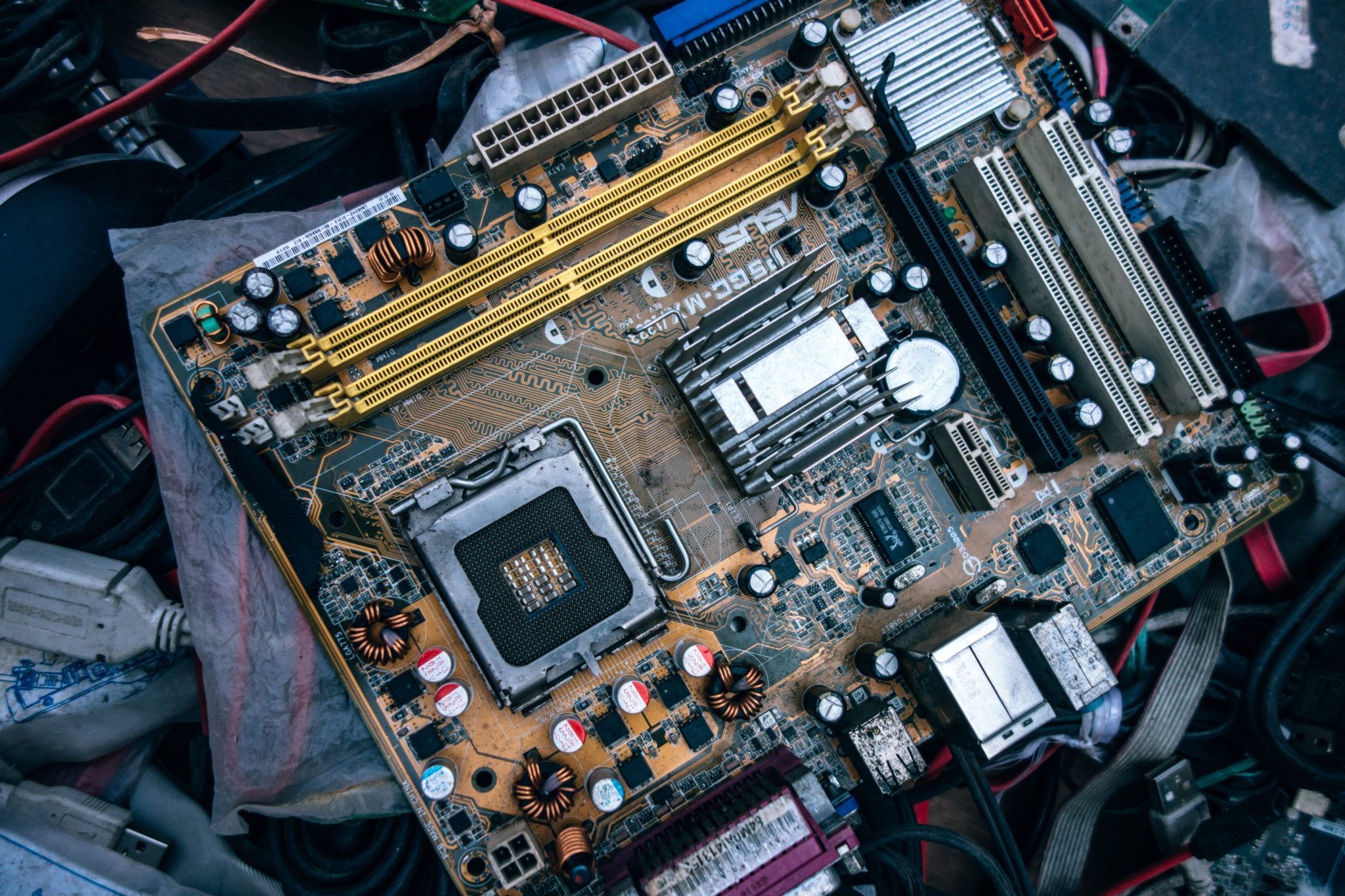
    Photo by Fancycrave on Unsplash

    In 2011, Marc Andreessen wrote widely read article Why Software Is Eating The WorldLast few years saw similar trend to what he projected, but 2016 was special and showed a new trend which not many would have expected in the year 2011.

    Year 2016: Hardware is running the world.

    Hardware has always acted like a catalyst in the world of technology, where many things are done with click of button. Eventually, to process all this information and get user what he she needs, one has to have excellent set of hardware tools, right from WiFi chip, to CPU, to routers, to powerful servers. As it has happened every year since 1971, 2016 too quietly kept introducing hardware oriented products with epic performance and perfect solutions.

    Marc in his article emphasized how technology giants like Google, Amazon and others are writing zillions of code to make everyday decisions in one’s life. Which to some extent is true, but can’t be done without the help of hardware that can process all these zillions of code.

    My goal in this blog post is to emphasize the hardware developments and products that came from same technology giants (and many others) who were mainly focused on software are now moving ahead with software is eating the world and hardware is running it motto.

    Personal Mobile Devices:

    This is the most active domain out of all in computer hardware, and 2016 again showed growing importance of having good hardware for the best OS and applications. Google introduced Pixel smartphones out of the frustration of not having good say in designing hardware and deep integration of its AI services. A smartphone designed by Google allows it to make use of the all the features beneath the architecture which otherwise would have been difficult, and it also shows other Android vendors on how to make best use of Android’s ecosystem by designing something that’s minimal yet so powerful.

    It won’t be wrong to say that Apple literally owns this domain because of deep amalgamation of hardware and software. iPhone saw another version, but what caught everyone’s attention were these tiny little Apple Airpods. It is being said, that Apple’s future products will be inspired from Airpods, because they may allow Apple to have control over on the go virtual reality (VR), a promising and upcoming domain.

    Of all the mobile hardware advancements, something very unexpected happened, Samsung’s Note 7 exploded and raised a very important question on brutal and fast product development to outperform competitors at the cost of user safety. Even after this, mobile hardware development kept pace with market demand, and also saw ARM, leader in mobile processor IP, being acquired by SoftBank. Even Lenovo realized that it can’t produce the best hardware and acquired Motorola, which has wide variety of hardware running Android.

    Overall, 2016 saw growing importance of mobile hardware, which will help software developers in writing applications that can help users to be more productive. In 2017, I think Microsoft with Windows 10 and Google to Samsung with Android OS will show importance of great hardware for great software.

    Desktops:

    Ever since smartphones got traction, desktop is something which everyone keeps writing off, but there are section of people who do want it to survive, even I do, and so does Microsoft. Microsoft’s Surface Studio was what desktop community needed, it showed how designing hardware which is not only powerful, but attractive to use can revive desktop sales. This has got other companies like HP and Dell, who have strong presence in desktop market, pumped up as Microsoft’s major goal is to not be a hardware vendor, but to show other hardware vendors how designing hardware differently can make bring best out of the Windows 10 ecosystem.

    To keep pace with growing software and improved Windows version, Intel throughout the year 2016 kept introducing powerful and efficient CPUs. This perfect development in desktop domain has forced even Apple to rethink about iMacs, and this only means better days for desktop and macOS users. And with Windows 10 finding home in ARM, 2017 is going to be a roller coaster for both hardware development and the race of which chip will run the OS.

    Servers:

    Cloud computing requires the most powerful and efficient processors, and often giants like Google, Microsoft and Facebook have complained about the lack of push by Intel, the leader in this domain. To get the best out of the server grade processors, all software giants decided to take matters in hand, and created teams that work specifically on CPUs for servers with AI and deep learning mechanisms embedded for better efficiency.

    Even Nvidia took the lead and showed the future of chip for AI. On other-hand, IBM showed the importance of domain specific chips for deep learning. And, Amazon acknowledging the need for programmable hardware for its cloud customers. Again emphasizing the importance of hardware in the software eating world.

    Embedded Devices:

    Embedded domain is very different from mobile devices, these are those smart products which are resting quietly somewhere in your office or home, and are waiting of your input to get into action.

    Amazon’s Echo, Google’s Home, Microsoft’s HoloLens and Dial all showed how future hardware may look like. Off course, these are powered by very smart software, but also showed importance of designing products differently. VR is going to see more action with hardware products coming from Oculus, Samsung, Google and may be even Apple?

    What to look for in 2017:

    One thing is pretty clear, that software needs a perfect hardware and it has taken 4 decades for both hardware-software to come together.

    Windows 10 is the best Windows version ever, Linux desktops are getting neat and stable, Android OS is more secure and defacto for mobile devices, IoT is getting its own software ecosystem and VR is finding way into people’s daily life. Intel, ARM, Qualcomm, Nvidia, Microtek are introducing the perfect hardware platform required for all different ecosystem and products to survive.

    Starting 2017, it’s not going to be all about software, vendors have to make best of both. Just having random hardware assembled at Shenzhen with Android installed on it is not going to last forever. Hardware development for smart devices will have to evolve and with stabilized software-hardware architecture, more futuristic products could be introduced.

    Ultrabook will be one domain that will get a major push along with more exciting smart hardware products from Google. Autonomous cars will crave for better self-driving hardware. VR may go mainstream with drones making deliveries. May be CES 2017 will have answers.

  • The Circle Of Mobile Ecosystem

    The Circle Of Mobile Ecosystem

    Photo by Caspar Rubin on Unsplash

    On June 29, 2007, Apple introduced iPhone and with that it reinvented three markets: Mobile Hardware, Mobile Operating System and Mobile Apps, together called as Mobile Ecosystem. Almost one year after iPhone’s launch similar ecosystem was created by Google‘s Android. Since then, with combined market share of more than 95%, these two companies have destroyed almost all other Mobile OS ecosystems including Nokia’s Symbian, Microsoft’s Windows Mobile and RIM’s BlackBerry. After Nokia’s failed acquisition and rewriting millions of codes for touch devices, Microsoft is also getting its act together and is threatening Google and Apple in the mobile arena.

    It is important to understand where each of these three different mobile ecosystems are heading, and how it’s going to affect the market, where products from watches to cars are becoming smarter every year.

    Apple’s iOS:

    Apple is good at one thing: they know which hardware is required to the run software flawlessly. Using the past experience of hardware development, they have developed iPhone as the product to beat with the sleek UI and the ease with which developers can reach out to users who are always willing to pay for apps. Also, with sister products like Macbook, iMac, iPad and iWatch, it helps loyal Apple users to seamlessly move data across devices, which today is a big advantage with all the data and computation moving to cloud.

    However, the biggest problem with Apple’s iOS is the declining market share, which primarily is due to the fact that iOS can’t be used by other OEMs, and it is very unlikely that Apple will reinvent itself by pitching iOS to any OEMs. But nothing can be predicted, may be in near future Apple might find it interesting to acquire OnePlus to create a niche set of iPhones for emerging markets.

    So, it’s pretty clear that in order to increase mobile market share, Apple has to find better ways to get new users for iPhones. They tried this by launching low cost iPhone 5C, which hasn’t got much traction. Moving forward, Apple will keep introducing better iPhones for sure, but what they need to answer is how many new users can they add with each new launch, while retaining old customers?

    Google’s Android OS: 

    Google has done everything required to make Android a mass market product with the help of OEMs. Which has lead to wide adoption and also fierce competition. Since, Android development occurs internally before it’s open sourced, the time to get new versions out by OEMs differ and sometimes many Android smartphones see end of support well before time. So, there is always a question mark on whether the Android smartphone being launched, will be supported with future Android versions or not. This basic flaw has contributed to what is termed as Android fragmentation, apart from creating security loopholes due to the lack of on the go software patches.

    This frustration lead to many Android forks, with CyanogenMod being the most popular one, but unfortunately had to terminate the project. Just having a better forked version of Android is not they way to dominate market, as Google pitches Android with Google Mobile Services, the pre-installed apps that are door to Play Store and many other useful services, and creating these services from scratch is not an easy task. Amazon has done it, but it with failed Fire Phone, its app store still relies on Android.

    For sure, Android OS is going to be the leader in mobile space for long, but it has to tackle the biggest problem of fragmentation. Solution to which is yet to be proposed, but can be done by forming developer teams from different OEMs, and helping them with new OS features while it’s being developed at Google internally, similar to how Linux Kernel development occurs. This to some extent will bring down the time to provide new Android versions, and will also help Google by providing regular security patches.

    By launching Pixel phones, Google is in no way trying to be competitor to OEMs. Google’s major revenue stream is from search and advertisement and to better project services around these, it has to showcase it by having control over set of hardwares running latest Android OS. With Pixel line of devices, it can also test new products-solutions quickly and can ensure that other OEMs are bringing better hardware by setting Pixel as a benchmark.

    In future, better Android versions will keep coming, but the bigger picture is how will non-Pixel users get hold of latest versions before the new one is out. Even today, OEMs like Samsung, Motorola, HTC and others, have good hold over smartphone market as they cater to users with different needs. What they need is ability to push new features of Android as quickly as possible which will go long way in retaining users.

    Microsoft’s Windows 10 Mobile:

    Windows Mobile was the leader in touch smartphones, but with iOS and Android it just couldn’t keep pace with the expectations. But after redrawing Windows OS from scratch for both keyboard and touch based devices, it has positioned it self as a serious competitor in smartphone domain. We are yet to see Surface smartphones with Windows 10 Mobile, but it won’t be long before Microsoft has one. With Surface phone, Microsoft will have full range of products from laptops, desktops, pads, smartphones to VR, similar to Apple and Google line of products.

    But, the biggest challenge for Microsoft with Windows 10 Mobile, is the app ecosystem and lack of OEMs. Though, it has also done lot of work to help developers write apps for Windows without rewriting the code developed for Android and iOS, developers still don’t think Windows 10 Mobile as the place to push apps to. Surely, they have got their act together in terms of hardware and right software, but to get developers to push apps for Windows Store first, it needs to be more open, innovative and should have large user base. This can only be done if they can get Surface phones and other OEMs, to consider Windows 10 Mobile as a serious alternative to Android. They have done it before with stylus based smartphones, they can surely to this time around with touch based devices, considering how aggressive they have been since last couple of years.

    Windows 10 Mobile will surely appeal to enterprise, as RIM is out of the market. By leveraging productivity apps like Office, Outlook and other cloud services, Microsoft can reinvent this space. Also, Microsoft is the only company with they ability to port its OS to any device, and support it for longer duration of time irrespective of which OEM is running it. If they can do this with Windows 10 Mobile, I think it can give Google a strong competition until it finds solution to Android fragmentation.

    So, Where Is Mobile Ecosystem Heading?

    It’s a difficult question to answer, but each of the above three companies have their own set of problems to solve. Apple needs to extend iPhone user base, Android has to solve fragmentation issue, and Microsoft needs OEMs for mobile devices.

    But two things are for sure: First, software developers will keep on finding new users to whom they can reach out to via different app stores, but they need to keep bringing best ideas forward, as retaining user and getting them to install new apps is getting difficult. Second, hardware manufacturers will have to up ante to cater to people looking for better smart devices which are supported for longer period of time.

    On the other hand, open source enthusiasts will keep forking Android, and may find a way to create their ecosystem for apps. Whatever happens, it’s going to be an exciting journey for both software and hardware developers.

    People who are really serious about software should make their own hardware — Alan Kay

  • ElecPad – Find The Best Development Board

    ElecPad – Find The Best Development Board

    Launched ElecPad – Find The Best Development Board.

    It is an initiative to bring together all the information about different development boards that are vital in making any kind of hardware that is either embedded, mobile or IoT.

    Easily browse different types of hardware that can turn ideas into reality.

  • StartupList – Find Indian Startups

    StartupList – Find Indian Startups

    Launched StartupList – Find Indian Startups.

    It is an initiative to bring together all the information about startups in India. One can easily browse startups from different cities and states in India. Also, get to know what the startups do, who founded it and many other details.

  • One Nation One Identity

    Photo by UIDAI

    Over last few years there set of terms are being widely used to simplify Indian government’s service delivery the citizens. It started with One Rank, One Pension, then came One Nation, One Tax (GST) and the latest buzz One Nation, One Election. The argument provided by the Government of India (GoI) is that simplification, cost savings and fair competition it provides to both citizen and industry is the reason to adopt such single window policy.

    I agree with the pension and tax system, but not with the election part. In this article I will briefly talk about the intention and impact of Aadhaar and my take on what should be done to fix it.

    Intention

    The birth of these terminologies in India can be traced back to Aadhaar, world’s largest ID database that provides unique identity to all Indian citizens and residents. Here the GoI’s goal was to create a database, which I will call One Nation, One Identity (ONOI), to provide better services by means of using digital technologies. In short, individual links everything to his/her Aadhaar and gets easy eKYC and benefits on top of it. As of today, it’s being said that all Indians have Aadhaar i.e. wopping ~1.3 billion people.

    Aadhaar is just not a 12 digit number. It allows authorized entities to have both demographic and bio-metric data of any individual having Aadhaar. With such massive details of each and every citizen of an emerging market, the amount of wrong doing that can be done is massive.

    Impact

    As it’s true with any new technology (or framework in this case), similarly questions are raised on Aadhaar as to what will be the impact of such unique database. I am pretty confident even GoI didn’t knew that a framework designed to provide direct to home services (by both public and private), the usage will raise questions about privacy and large scale surveillance.

    I do support Aadhaar but it certainly raises questions about privacy. In short, the intention is great but the impact it’s having is not. Also there has been conflicting statement from the Aadhaar regulatory body UIDAI about whether or not Aadhaar numbers can be made public or not. In a country of ~1.3 billion people it’s difficult to make every tech-savvy and there are always companies that are willing to take advantage of it. Please note I am not getting into the argument whether or not Aadhaar number can be used against people, I am just asking whether or not it should be public. I also know that in India nobody cares about such details as everyone wants faster solution to services.

    In short, the framework is helping unintentionally raise the big question about data privacy laws that aren’t in citizens favor as of today.

    My Take

    Supreme Court of India has reserved verdict on whether Aadhaar should be ONOI. Depending on what the outcome of this case is, personally I believe in following that needs to be done for Aadhaar:

    • There should be a full Aadhaar technology framework audit by a third party.
    • All the loopholes as much possible should be fixed.
    • Strict action against those found to be leaking Aadhaar and bluffing people.
    • Framework should have bug bounty program.
    • UIDAI should join hands with search engines and other possible valid organization to curb popping up of Aadhaar leaked numbers online.
    • It shouldn’t be mandatory (this will be decided by Supreme Court of India).