Category: BLOG

  • The Semiconductor DFT Approach That Shapes IC Reliability

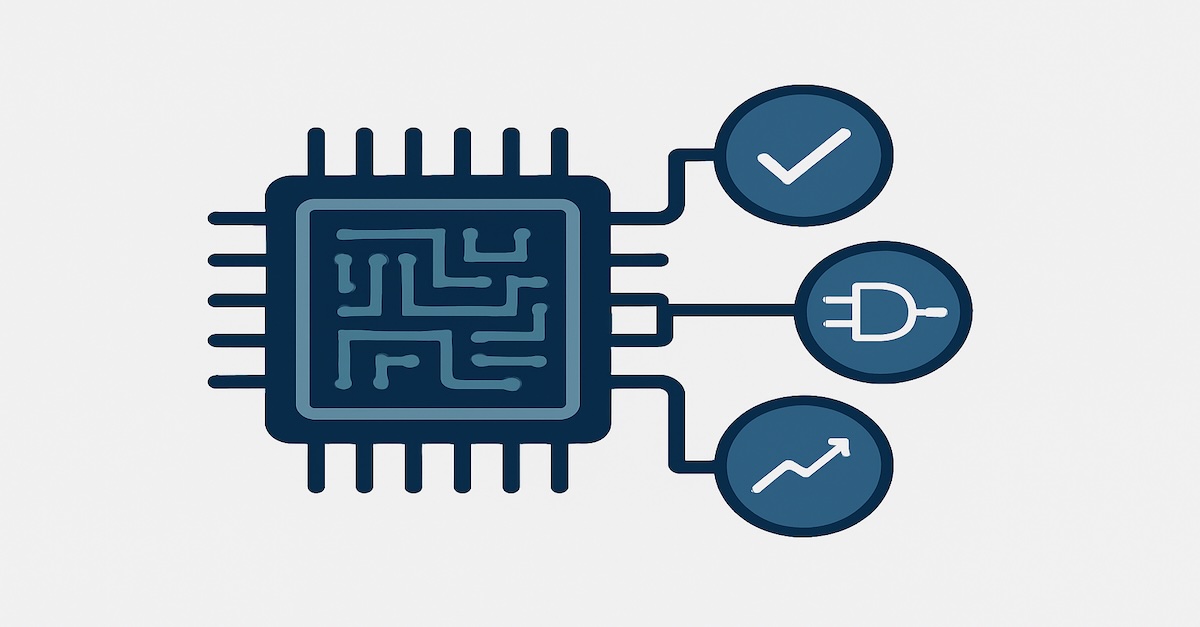
    Image Generated Using 4o


    How DFT Evolved Beyond Test To Impact Reliability

    In the early years of integrated circuit (IC) design, Design-for-Testability (DFT) was primarily introduced to improve manufacturing fault coverage and lower production test costs. Techniques such as scan chains, Built-In Self-Test (BIST), and boundary scans were developed to ensure that devices could be tested efficiently after fabrication. The goal was straightforward: detect manufacturing defects like stuck-at faults or shorts and maximize the number of good parts shipped.

    Reliability, however, existed in a separate part of the development cycle. It focused on burn-in testing, life testing, and field failure analysis; activities typically performed long after the design phase had concluded. Early semiconductor technologies, with larger geometries and lower integration density, were far more tolerant of marginalities, allowing this separation between test and reliability efforts to function without significant consequences.

    However, as the industry pushed into smaller nodes and began designing chips for automotive, medical, and aerospace applications, latent defects and marginal circuit behaviors became much harder to contain. The traditional DFT focus, catching only complex manufacturing faults, was insufficient. Subtle weaknesses introduced during fabrication could evolve into catastrophic failures after months or years of use in harsh real-world environments.

    It became increasingly clear that DFT had to evolve. It was no longer just about passing production tests. It had to become a tool for reliability assurance, enabling early detection of life-limiting defects, supporting real-time health monitoring, and even allowing mechanisms for post-silicon repair.

    From my experience, companies that recognized and embraced this expanded view of DFT, starting in the late 1990s and early 2000s, saw dramatic reductions in field returns and warranty failures, giving them a lasting advantage in high-reliability markets.


    Techniques That Make DFT A Reliability Enabler

    Modern Design-for-Testability (DFT) practices have evolved beyond providing basic test access. Today, DFT intentionally embeds structures and strategies directly contributing to early failure detection, ongoing health monitoring, and long-term reliability assurance. Some of the key techniques that have reshaped DFT’s role include:

    Margin-Aware Testing: Contemporary DFT architectures are designed to detect functional faults and uncover marginal timing vulnerabilities. Techniques such as path delay fault testing, dynamic timing analysis, and voltage and temperature corner testing are now integrated into scan methodologies. These approaches help expose subtle risks like race conditions, timing slippage, and setup/hold margin failures that might otherwise surface only after prolonged field operation or under environmental stress.

    Embedded Health Monitors: Modern ICs now embed a range of on-chip monitors to track critical reliability parameters in real-time. These include thermal sensors, voltage droop detectors, electromigration stress monitors, and aging sensors based on phenomena such as BTI (Bias Temperature Instability) and HCI (Hot Carrier Injection). By continuously observing these degradation mechanisms, the system can identify early warning signs of device wear-out before traditional end-of-life testing catches them.

    Built-In Self-Repair (BISR): While BISR originated in memory arrays to allow the replacement of faulty rows or columns, its philosophy has expanded. Logic BISR concepts are now used to incorporate spare functional blocks, redundant paths, or self-reconfigurable circuits. These enable post-manufacture defect mitigation and even in-field dynamic recovery, which is necessary for high-availability and mission-critical applications like autonomous driving and aerospace systems.

    Accelerated Degradation Detection: Instead of relying solely on lengthy burn-in processes, modern DFT includes stress-inducing scan patterns and high-activity test sequences designed to accelerate latent defect manifestation. Techniques such as elevated voltage toggling, thermal cycling stress patterns, and high-frequency clock strobing allow manufacturers to screen out devices at higher risk of early-life failure during final tests, significantly reducing the “infant mortality” tail in reliability distributions.

    Each technique transforms DFT from a purely manufacturing-oriented tool into a cornerstone of predictive reliability engineering. In my direct experience across multiple technology nodes, products that integrated these advanced DFT capabilities consistently achieved twice the mission life compared to similar designs that treated DFT as a late-stage add-on.

    The lesson is clear: DFT, designed with reliability in mind, becomes a silent but critical insurance policy for every IC leaving the factory.


    Lessons Learned From Real-World Failures

    There is no substitute for experience, especially the hard kind. In the semiconductor industry, field failures often reveal gaps that qualification testing alone cannot uncover. A standard failure mode seen across technologies, particularly in mission-critical applications, involves minor timing shifts and voltage droop effects not captured by nominal-condition scan testing.

    These subtle issues may pass initial qualification yet surface under extreme environmental stresses, such as cold starts or wide voltage variations.

    These cases highlight a critical truth: reliability-driven DFT must extend beyond validating basic functionality. It must be architected to validate timing margins, stress responses, and full-system robustness under real-world operating extremes. Without a margin-aware, environment-sensitive approach, latent vulnerabilities can remain hidden until the device is in the field, leading to costly returns, warranty claims, and potential safety risks.

    Modern best practices now mandate that DFT strategies include corner-aware testing across full environmental ranges, embedded degradation monitors for voltage, temperature, and electromigration, and qualification-resilient test logic that does not become a new failure source itself.

    DFT is no longer viewed as a mere checklist item or manufacturing tool. It is a fundamental mindset shift, treating every test structure and validation point as an active contributor to long-term product reliability and customer trust.


    Best Practices To Align DFT And Reliability

    Specific patterns have become clear after decades of trial and error and technical evolution. Teams that successfully use Design-for-Testability (DFT) to enhance IC reliability follow a deliberate and disciplined approach that starts early, embeds margin awareness, and treats DFT as an investment, not a burden.

    Below is a summary of the best practices that consistently deliver results across complex and mission-critical applications.

    PracticeKey Focus
    Start EarlyIntegrate DFT and reliability engineering during architectural planning, not after layout completion.
    Test Margins, Not Just LogicValidate path delays, power integrity, and signal integrity margins using dedicated DFT hooks.
    Embed Monitors ThoughtfullyPlace thermal sensors, voltage droop detectors, and electromigration monitors strategically at critical locations.
    Plan For In-Field VisibilityArchitect DFT structures that enable monitoring during system operation, not just at manufacturing test.
    Stress Test IntelligentlyUse stress-inducing scan patterns and built-in stress circuits to detect infant mortality risks early.
    Treat DFT As A Reliability AssetShift mindset: view DFT as an insurance policy against field failures and warranty costs, not as overhead.

    As ICs move deeper into critical applications, from autonomous vehicles to implantable medical devices and AI accelerators, the relationship between DFT and reliability will no longer be a luxury or competitive advantage; it will be necessary for survival.

    Those who design with this mindset will not only ship better silicon, they will build trust, longevity, and leadership in industries where failure is not an option.


  • The Semiconductor World Still Runs On Older Nodes

    Image Generated Using 4o


    How Large Is The Mature Node Economy

    The focus immediately shifts to cutting-edge nodes such as 3nm or 5nm when discussing semiconductors. However, the economic and technological importance of mature semiconductor processes, typically those at or above the 28nm (or 40nm in many cases) node, remains substantial and essential to the industry’s foundation.

    Key technical and economic advantages of mature nodes:

    • Cost Efficiency and Equipment Depreciation: Mature semiconductor processes utilize fully depreciated equipment, dramatically lowering capital investment and operational costs compared to advanced-node manufacturing.
    • High Yield and Process Stability: Due to extensive operational experience, mature nodes achieve consistently high yields. Process maturity and thoroughly characterized manufacturing steps significantly enhance productivity and reduce variability.
    • Established IP and Rapid Qualification: Mature nodes feature extensive intellectual property (IP) libraries and proven design ecosystems, facilitating faster qualification, shorter design cycles, and more predictable product ramps.

    These legacy nodes form the critical backbone across numerous essential industries. They drive analog integrated circuits (ICs), power management ICs, automotive microcontrollers, display driver ICs, embedded non-volatile memory solutions, and various sensor-based applications. From a financial standpoint, mature nodes generate a robust, multi-billion-dollar revenue stream, providing economic stability and supporting foundational technologies critical to numerous global industries.


    Technical Sweet Spots That Keep Older Nodes Relevant

    Mature semiconductor nodes possess distinct technical strengths that make them uniquely valuable. They provide specialized features that are challenging or costly for advanced nodes to replicate. Automotive microcontrollers, motor control ICs, industrial controllers, and battery management systems frequently achieve optimal performance within planar CMOS nodes between 40 and 90 nanometers.

    Globally, mature-node manufacturing also continues to represent more than half of total wafer output, dominating 200 mm (eight-inch) and 300 mm (twelve-inch) wafer fabs across semiconductor hubs in Taiwan, the United States, Europe, and Asia.

    These mature technologies offer robust embedded nonvolatile memory capabilities, delivering high-speed access and extended data retention, which are critical attributes in demanding automotive and industrial environments. Additionally, they leverage thick-oxide transistor designs, which comfortably support voltages above 60 volts, enabling reliable operation in power management and motor control circuits.

    Precision analog front-end circuits are another strong suit for older nodes, benefiting from inherently lower noise characteristics and superior linearity thanks to larger transistor dimensions. Integrating these analog functions alongside substantial nonvolatile memory on a single chip significantly reduces complexity and cost, particularly when incorporating similar functionalities within advanced FinFET-based nodes.

    Together, these technical advantages solidify mature nodes as the optimal choice for specific use cases where reliability, analog precision, high-voltage handling, and cost efficiency are paramount.


    Fresh Money Flows Into Legacy Capacity

    Investment and capacity expansion in mature semiconductor nodes are not merely ongoing. They are accelerating significantly. Across the industry, foundries are rapidly scaling their mature-node manufacturing capabilities, with expansions frequently adding tens of thousands of wafers per month to existing facilities. For instance, one prominent foundry is boosting its 28nm, targeting robust demand from the automotive, industrial, and consumer electronics sectors.

    At the same time, governments worldwide recognize the strategic importance of mature nodes, resulting in significant financial support. For example, recent government initiatives include a commitment of more than a billion dollar to enhance domestic mature-node manufacturing in the United States, explicitly aiming to bolster capabilities critical for the automotive, industrial, defense, and aerospace sectors.

    Similar expansions globally reinforce this trend. European governments have initiated strategic investments in fabs operating between 22 and 180nm nodes to strengthen regional supply chains and ensure technological sovereignty. Meanwhile, joint ventures across the globe (mainly in Asia and EU) are significantly increasing capacity at nodes such as 90nm and 180nm to meet the growing demand for analog and power-management ICs.


    Strategic Outlook For Engineers, Investors, And Policy Makers

    Older semiconductor nodes are far from obsolete. They represent highly optimized platforms meticulously refined through decades of production experience. These mature nodes deliver exceptional reliability, predictable yield performance, and proven operational stability.

    Their inherent cost efficiency, driven by fully depreciated equipment and mature manufacturing processes, makes them economically compelling. Additionally, specialized performance characteristics such as high-voltage handling, precision analog integration, robust embedded memory solutions, and radiation tolerance make older nodes indispensable for specific market segments, including automotive, industrial, and aerospace.

    A summarized strategic perspective:

    StakeholderStrategic Importance
    EngineersMature nodes provide trusted solutions for analog precision, high-voltage capabilities, radiation tolerance, and embedded non-volatile memory. Extensive IP reuse accelerates design timelines.
    InvestorsFully depreciated fabs with predictable, stable demand offer attractive margins. Investments have lower risk profiles due to established processes and equipment.
    Policy MakersMature semiconductor processes are strategically essential for national security, automotive resilience, and economic stability. Policy frameworks increasingly treat legacy semiconductor manufacturing as critical infrastructure rather than commodity production.

    Collectively, these strategic considerations confirm that older semiconductor nodes will maintain their critical role well into the next decade, even as the semiconductor industry’s leading edge continues to advance toward ever-smaller technology nodes.


  • The Total Cost Of Ownership In Semiconductor Business

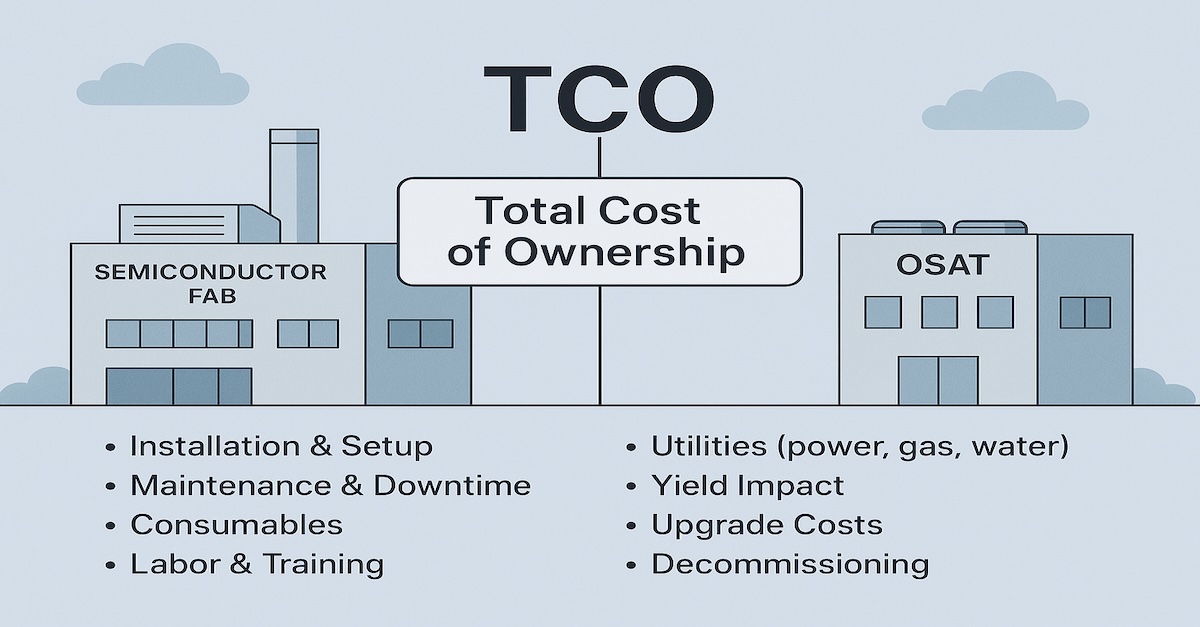
    Image Generated Using 4o


    What Is Total Cost of Ownership (TCO)?

    In the semiconductor industry, the cost of a tool, IP block, or software license is rarely limited to what appears on the purchase order. That figure is only the beginning of the financial story.

    Total Cost of Ownership, or TCO, is a structured approach that enables companies to assess the full economic impact of acquiring, operating, and maintaining a product or service across its entire working life.

    It encompasses the following:

    Initial Purchase Cost: The upfront investment required to acquire the asset. This is often the most visible, yet frequently the smallest portion of the overall cost

    Operational Costs: This includes recurring expenditures such as power, cleanroom real estate, workforce, license renewals, and consumables. These are day-to-day costs that quietly accumulate

    Maintenance And Support: Over time, service contracts, spare parts, calibration routines, software patches, and staff training become essential to sustained performance

    Downtime And Productivity Losses: Every hour of tool unavailability or design team obstruction, often caused by bugs, delays, or compatibility issues, translates directly into lost revenue and time-to-market pressure

    End-of-Life Costs: When a system is retired, further investment may be required for decommissioning, migrating to newer technologies, or adapting legacy workflows

    As the semiconductor business is continuously operated at the intersection of capital intensity and precision, a decision that reduces cost by a few percentage points can easily result in millions in hidden losses if it compromises reliability, throughput, or product quality.

    Consider this:

    • A lower-cost tester that lacks precise thermal control may undermine test integrity, leading to field reliability issues and customer dissatisfaction
    • A less expensive IP block may have limited support or outdated documentation, resulting in costly silicon re-spin and substantial schedule delays
    • TCO encourages a shift in thinking from a short-term view focused on cost minimization to a longer-term view centered on operational value

    In the end, TCO is not just a financial metric. It is a discipline that helps teams make more efficient.


    TCO In Different Parts Of The Semiconductor Business

    Every segment of the semiconductor value chain, whether in fabrication, testing, design, or packaging, carries its own distinct Total Cost of Ownership profile. Each function introduces a unique set of variables that influence long-term cost. Understanding how TCO manifests across these areas is not just a matter of accounting accuracy.

    Let us break it down by function:

    SegmentInitial CostOperational CostSupport & MaintenanceDowntime/Hidden Cost
    FAB EquipmentCapital investment in tools like lithography, etch, depositionUtilities, cleanroom usage, consumables like gas and chemicalsCalibration, spare parts, OEM support, software updatesYield loss, WIP delays, throughput impact due to tool unavailability
    Test EquipmentATEs, handlers, probers, loadboardsPower, thermal systems, test time per unitSocket wear, handler maintenance, debug supportMissed shipments, higher cost of quality, yield loss from mechanical issues
    EDA Tools And IPTool licenses, IP block purchase feesCompute infrastructure, integration effortTool support, version updates, bug fixesProject delays, silicon re-spins due to integration/debug issues
    Materials And ConsumablesPer-unit material cost (e.g., photoresist, leadframes, substrates)Volume-driven spend, contamination risk, rework impactIncreased tool cleaning, wear and tearLower yield, instability, latent defects
    Facility And InfrastructureHVAC, power systems, cleanroom buildoutElectricity, water, gas supply for continuous operationsFilter replacements, backup systems, emergency repairsProduction disruptions, scalability limits during expansion

    It is essential to avoid costly surprises, manage operational risk, and make informed, future-focused investment decisions. Over time, this perspective often separates companies that scale efficiently from those that struggle to contain hidden losses.


    Hypothetical Examples And Mistakes To Avoid

    Let us consider few hypothetical examples to explain TCO.

    Example 1: To reduce capital expenses, a semiconductor firm selected a low-cost test handler for high-volume automotive lines. However, the handler underperformed thermally in production, leading to a 4 to 6 percent yield drop and multiple customer quality issues. The recovery costs far outweighed the initial savings, highlighting that long-term reliability matters more than price.

    Example 2: Another company reused an older IP block to avoid new licensing fees. The IP was incompatible with the current process node and poorly documented. Integration issues went undetected, resulting in a post-silicon bug and a costly response. The delay stretched timelines and added over three million dollars in rework.

    DecisionGoalUnseen Cost
    Low-cost test handlerSave CapExYield loss, quality issues
    IP reuseAvoid licensing feeSilicon respin, delays
    Budget EDA toolReduce license costEngineering inefficiency
    Used fab toolSave equipment costIncreased downtime

    Example 3: A design team switched to a cheaper simulation tool to cut license costs. However, the tool was unstable, with slow runtimes and limited support. Engineers lost valuable time managing tool issues, leading to delays and lowered team efficiency. The short-term savings came at the cost of long-term productivity.

    Example 4: A fabrication facility bought a used etch tool to reduce capital investment. While initially functional, it lacked software updates and required frequent maintenance. Uptime suffered, disrupting wafer cycle times and impacting line stability. The operational drag soon eclipsed the upfront benefit.

    These cases show that decisions to save money upfront can introduce hidden costs in quality, time, and yield. TCO helps teams evaluate the full financial impact beyond the purchase price.


    Integrate TCO Thinking Into Engineering And Business Decisions

    TCO is more than a finance metric. It is a way of planning that must be built into engineering, procurement, and operational decisions. For engineers, this means looking beyond technical specs and considering long-term impacts such as debug effort, uptime, integration complexity, and reusability. Asking what might go wrong after deployment often reveals the fundamental cost drivers.

    Procurement teams should work closely with engineering to move beyond basic quotes. They must evaluate uptime history, support terms, maintenance cycles, and parts availability. Eventually, two tools with similar specs can vary widely in lifetime cost due to serviceability and consumable usage.

    WhoAction For TCO Thinking
    EngineersConsider long-term debug, yield, and integration risks
    ProcurementEvaluate beyond price: uptime, service, and lifecycle support
    Business leadersUse 3–5 year TCO models in planning and ROI analysis
    Cross-functional teamsShare lessons learned and maintain internal TCO benchmarks

    Business leaders can use three to five-year TCO models to improve cost forecasting and ROI decisions. For example, a lower-cost tester may reduce CapEx but limit throughput, while a higher-end tool may improve unit economics in volume production. Planning with this view leads to more resilient product execution.

    Finally, TCO thinking must be shared across functions. Engineering, finance, quality, and operations should jointly define benchmarks and track performance over time. Reviewing past decisions helps organizations avoid repeating costly oversights.


  • The Semiconductor Smart Factory Basics

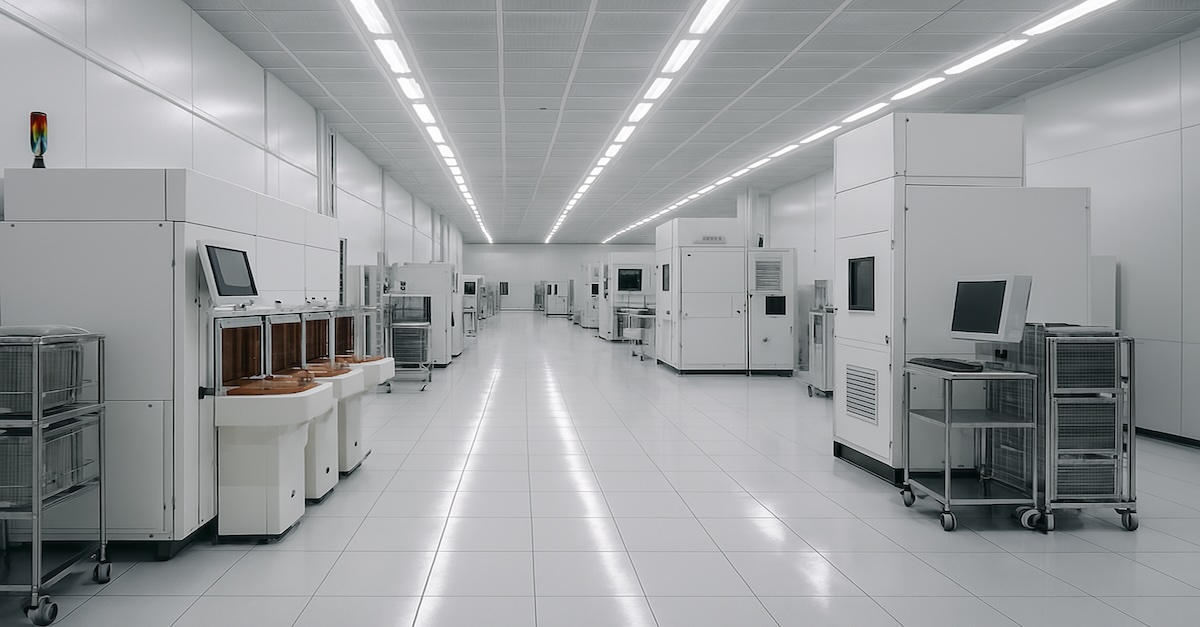
    Image Generated Using 4o


    What Is A Semiconductor Smart Factory?

    If you have spent time reading developments in the semiconductor industry, you have probably heard about the “Semiconductor Smart Factory” term. But what exactly does that mean?

    In simple terms, a Semiconductor Smart Factory is like your regular manufacturing site, just a bit smarter. Think of a conventional semiconductor manufacturing (FAB or OSAT) plant, it is already pretty impressive, equipped with complex machines, operators in clean-room suits, and sophisticated processes designed to produce microscopic chips that power different applications.

    But here is the twist: in a smart factory, the whole operation gets digitally interconnected, powered by advanced technologies such as real-time data analytics, artificial intelligence (AI), robotics, and extensive sensor networks.

    Now, imagine this scenario: instead of manually keeping tabs on every piece of equipment, a smart factory has sensors tracking machine health and wafer quality in real-time. These sensors communicate continuously with powerful AI systems, analyzing mountains of data instantly to predict equipment failures before they occur, optimize production scheduling on the fly, and automatically adjust processes to minimize defects and maximize yield. It is like giving your entire manufacturing line a brain and eyes, empowering it to make smart decisions independently, while humans oversee and fine-tune operations from a control room.

    So, why does this matter now more than ever? With chip demand skyrocketing, thanks to trends like AI, automotive electrification, and emerging computing grids, the industry faces intense pressure to produce faster, cheaper, and at a higher quality. Traditional semiconductor manufacturing sites simply cannot keep pace anymore. That is where semiconductor smart factories step in, providing a path toward better efficiency, reduced costs, and increased flexibility.

    Bottom line: smart factories are not just a trendy buzzword. They are becoming the backbone for semiconductor manufacturing, transforming the way the industry operates, competes, and innovates.


    Key Components Of A Semiconductor Smart Factory

    Building a semiconductor smart factory is not just about developing a facility with flashy robots or AI-driven tools. It is about strategically integrating technology that fundamentally changes the way a factory works, transforming raw data into actionable decisions all by utilizing smart equipment.

    To make this happen, several key components need to come together seamlessly. Let us simplify these components and understand their roles clearly:

    ComponentWhat It DoesWhy It Matters
    Sensor NetworksCollects real-time data from equipment and environment.Immediate issue detection; reduces downtime.
    AI And Data AnalyticsProcesses data to predict issues and optimize decisions.Boosts yield; proactive rather than reactive.
    Automated MES (Manufacturing Execution System)Manages and automates factory operations digitally.Improves efficiency and traceability of wafers.
    Robotics And Autonomous Material HandlingAutomates wafer handling, transport, and processing.Minimizes contamination risks; enhances throughput.
    Digital Twins And SimulationVirtual modeling of processes and equipment.Enables safer testing, optimization, and innovation.
    Cybersecurity InfrastructureProtects interconnected systems and data streams.Ensures safe operation and protects intellectual property.

    By bringing these elements together, a Semiconductor Smart Factory achieves the crucial balance between productivity, quality, flexibility, and security. It is not about blindly adopting technology but thoughtfully selecting and integrating these systems so they enhance and complement each other.

    Ultimately, these components form the backbone of modern semiconductor manufacturing, preparing factories not just to meet today’s demand but to stay ahead of tomorrow’s challenges.


    Benefits Of Implementing A Smart Factory Approach In Semiconductor Industry

    When semiconductor companies consider moving toward smart factories, they are not just chasing tech trend. The goal is to have tangible, practical benefits that boost factory performance and profits.

    First up is improved yield and productivity. Traditional semiconductor manufacturing often face costly downtime or wafer defects from minor issues. Smart factories use real-time analytics and AI to predict and prevent these problems before they occur, ensuring higher yields and steady production.

    Predictive maintenance is another key advantage. Instead of reacting after equipment breaks, smart factories anticipate failures ahead of time. This proactive approach significantly cuts downtime and saves money. Then there is traceability. Smart factories digitally track every wafer, tool, and process step in real-time. This transparency speeds up troubleshooting, boosts product quality, and strengthens customer trust.

    Additionally, smart factories offer unmatched flexibility. They quickly adapt to changing market demands, scaling production and integrating new processes smoothly, essential for staying competitive. Lastly, sustainability improves dramatically. Data-driven control means reduced waste, optimized energy usage, and a greener manufacturing footprint.

    In short, semiconductor smart factories deliver increased yield, reduced downtime, enhanced flexibility, and better sustainability, all essential for staying ahead in today’s competitive market.


    Takeaway

    Transitioning to a Semiconductor Smart Factory model is no longer optional, it is becoming essential for semiconductor companies aiming to stay competitive. Smart factories directly boost yield, reduce operational costs through proactive maintenance, and enhance production flexibility.

    Although initial investments can be substantial, long-term savings from reduced downtime, lower defect rates, and optimized energy consumption significantly offset these costs.

    By strategically balancing upfront expenses with future efficiency gains, manufacturers ensure they are not just keeping pace but staying ahead in today’s fiercely competitive semiconductor market.


  • The Future Of Semiconductor Design As Open Source Is Real Alternative Or Just Wishful Thinking

    Image Generated Using DALL-E


    The Rise Of Open-Source Semiconductor Design

    Traditionally, semiconductor design has been a highly proprietary field dominated by closed ecosystems and tightly controlled intellectual property frameworks. Major industry players have historically maintained strict control over processor architectures, electronic design automation (EDA) tools, design methodologies, and fabrication processes.

    While this model delivered consistent innovation and robust technology roadmaps, it also created significant barriers to entry due to costly licensing agreements, complex proprietary toolchains, and limited transparency into underlying technologies.

    However, a compelling shift toward open-source semiconductor design has begun reshaping this paradigm in recent years. Central to this movement is the rise of open Instruction Set Architectures (ISAs). Most notably, RISC-V, a modular, extensible, and license-free ISA, was initially developed within academic research environments.

    Unlike traditional, proprietary ISAs, which require licensing fees and impose restrictions on customization, open-source architectures offer the semiconductor community the freedom to modify, enhance, and tailor processor cores and related subsystems to specific applications.

    In parallel, the emergence of open-source EDA tools and design flows. Such as openly available RTL-to-GDS toolchains and community-driven physical design kits (PDKs) have further accelerated this shift. Open-source EDA solutions democratize access by enabling a wider range of developers, startups, and research institutions to explore innovative chip designs without prohibitive upfront costs. Although still maturing compared to established proprietary platforms, these tools provide transparency, flexibility, and community-driven innovation.

    This combination of open ISAs, openly accessible EDA tools, and freely available design resources is gradually transforming semiconductor design from a closed, resource-intensive field to a collaborative and broadly accessible discipline.

    The implications are profound: Innovation can occur faster, experimentation can be more widespread, and participation from academia and smaller enterprises can flourish, ultimately fostering a more diverse and dynamic semiconductor ecosystem.


    Real Potential: Benefits and Success Stories

    Open-source semiconductor design brings tangible benefits and measurable real-world outcomes, reflecting its growing viability and potential.

    BenefitDescriptionExample or Success Story
    Customization and FlexibilityFreedom to customize open-source ISA cores, adding specialized instructions optimized for unique workloads.AI accelerators leveraging open ISA cores with custom vector instructions to enhance machine-learning workloads.
    Cost EfficiencySignificant reduction in licensing fees, enabling affordable access to EDA tools, IP cores, and design flows.Startups leveraging open-source RTL-to-GDS toolchains and publicly available PDKs to prototype chips affordably.
    Innovation AccelerationFaster design cycles enabled by community-driven contributions, collaborative design processes, and reusable IP blocks.Academic groups successfully implementing open-source microcontrollers into silicon prototypes within months, significantly shortening time-to-market.
    Enhanced Security And TransparencyFull transparency into hardware implementations facilitates improved security auditing, risk reduction, and reliability verification.Open-source cores widely adopted for safety-critical and security-focused embedded applications, where transparency enables rigorous verification.
    Community-Driven EcosystemActive global communities contribute code, documentation, testing, and knowledge sharing, accelerating development and adoption.Rapid ecosystem expansion, with community-led development of mature libraries, IP modules, and design automation scripts freely shared online.
    Real-World DeploymentOpen-source ISAs and EDA tools now actively deployed in commercial products, demonstrating production-level maturity and trustworthiness.Open-source microcontrollers widely adopted in IoT sensors and embedded systems in commercial deployments globally.


    Practical Limitations: Challenges and Hurdles

    While open-source semiconductor design offers substantial potential, practical challenges currently restrict its widespread adoption. Foremost among these is the maturity gap between open-source electronic design automation (EDA) tools and established proprietary counterparts. Open-source toolchains often lag in advanced features, comprehensive documentation, and extensive industry-standard verification flows.

    Additionally, open-source ecosystems struggle with consistency, especially around standardization of libraries, IP cores, and fabrication process compatibility, leading to reliability and repeatability concerns in mission-critical applications.

    Furthermore, intellectual property (IP) protection and governance present significant hurdles. Open-source semiconductor initiatives inherently raise questions about IP infringement risks, patent liabilities, and clear licensing terms. The absence of universally accepted governance models and IP frameworks creates hesitation among companies, particularly those serving automotive, aerospace, or healthcare sectors, where stringent reliability, security, and compliance requirements demand robust legal and operational clarity.

    Without addressing these critical IP and governance concerns, large-scale commercial adoption of open-source semiconductor designs will continue to face resistance and cautious scrutiny.


    Takeaway: Real Alternative Or Wishful Thinking

    Open-source semiconductor design is neither entirely wishful thinking nor a complete replacement for established proprietary solutions, rather, it represents a viable and increasingly impactful complement within the broader semiconductor landscape.

    The momentum behind open-source ISAs, EDA tools, and collaborative community projects demonstrates real-world applicability, particularly in innovation-driven fields like embedded systems, research prototyping, and academic exploration.

    However, challenges such as tool maturity, intellectual property governance, and standardization must be realistically addressed for broader industry acceptance. Ultimately, the future likely lies in a hybrid ecosystem, where open-source models coexist and integrate seamlessly with proprietary technologies, each leveraging their strengths.

    For open-source semiconductor design to become a mainstream alternative, continued investment in tooling, clear legal frameworks, and robust community-industry collaboration are essential. With these foundations, the promise of open-source semiconductor design can evolve beyond optimism into a sustained, practical reality.


  • The Role Of AI In Semiconductor Manufacturing: Fact Or Fiction

    Image Generated Using DALL-E


    The AI Debate

    Artificial Intelligence (AI) often sparks divided opinions as a groundbreaking innovation or technological hype.

    At the same time, in semiconductor manufacturing, where billions of dollars depend on minuscule yield and efficiency gains, the industry must critically evaluate whether AI delivers transformative results or is merely overblown. Semiconductor FABs and OSATs globally are already investing heavily in AI-driven solutions, leveraging predictive maintenance to reduce equipment downtime, AI-powered Automated Optical Inspection (AOI) to reliably detect subtle defects in packaging, and adaptive testing to reduce costs without compromising quality.

    Despite these promising outcomes, it is important to remain realistic. Claims of fully autonomous fabs or entirely self-driving manufacturing environments are exaggerated. While AI significantly enhances productivity and quality, semiconductor manufacturing relies fundamentally on skilled engineers to interpret AI insights, make strategic decisions, and integrate these technologies into existing systems. Thus, AI’s genuine value is clear, but only if deployed with measured expectations, careful validation, and thoughtful integration strategies.


    Is AI Integration A Necessity In Semiconductor Manufacturing?

    While labeling AI indispensable due to its popularity is tempting, a critical examination still reveals a nuanced picture. Semiconductor manufacturing thrived long before AI, achieving innovation through rigorous engineering, strict quality control, and methodical experimentation.

    Thus, it is fair to ask whether AI is necessary or merely another technological “nice-to-have”?

    Let Us Understand Why Skepticism Is Valid: AI is powerful but brings complexities, high integration costs, demanding data requirements, and organizational barriers. Traditional methods may remain sufficient and economically practical for fabs running mature or legacy processes (e.g., analog or 130nm+ nodes). Additionally, reliance on AI without adequate expertise or infrastructure can lead to confusion, causing AI-generated insights to be misunderstood and potentially harming operational efficiency.

    How AI Can Be Essential In Semiconductor Manufacturing: Despite valid skepticism, the necessity of AI becomes unmistakable when viewed through the lens of today’s leading-edge semiconductor processes. AI integration is becoming necessary due to the staggering complexity at advanced nodes (7nm, 5nm, 3nm, and beyond), complex packaging technologies, and the need for exact manufacturing tolerances.


    Cost Of Deploying AI In Semiconductor Manufacturing

    Deploying AI in semiconductor manufacturing offers substantial benefits, such as enhanced yield, reduced downtime, and improved efficiency. However, these advantages require significant upfront and ongoing investments. Costs depend heavily on fab size, technology node, and existing infrastructure.

    Infrastructure-related investments typically include powerful GPUs, specialized AI accelerators, cloud or edge computing, robust data storage, and networking infrastructure for real-time analytics. AI software licensing, often from commercial platforms or customized proprietary solutions, also represents a substantial cost component.

    Data preparation and integration also add notable expenses, as AI requires clean, labeled, and integrated data. Labor-intensive processes such as data labeling, cleaning, and system integration across MES, test equipment, and legacy infrastructure further increase costs.

    Cost ComponentEstimated Cost (USD)
    AI Hardware Infrastructure$500K – $2M
    AI Software Licensing And Tools$200K – $1M annually
    AI Data Integration And Preparation$200K – $500K
    AI Talent Acquisition And Training$300K – $1M annually
    Annual Maintenance And Operations Of AI$100K – $400K annually
    Total First-Year Costs~$1.3M – $4.9M
    Sources: Industry Reports

    Deploying AI also demands significant investment in talent acquisition and workforce training. Companies must hire specialized AI/ML engineers and data scientists,. Training for existing engineers and operational staff is also critical to ensure effective AI system use and maintenance, which is another adder.

    Additionally, AI systems involve ongoing operational costs such as model retraining, software updates, license renewals, and regular infrastructure maintenance. These recurring expenses typically amount to 10–20% of the initial investment annually, highlighting the sustained financial commitment necessary for successful AI implementation.


    Takeaway

    Deploying AI in semiconductor manufacturing demands considerable upfront and ongoing investments in infrastructure, software, data management, and skilled talent. However, as semiconductor manufacturing complexity increases at advanced technology nodes, AI integration is shifting from beneficial to strategically essential.

    AI-driven solutions consistently deliver improved efficiency, reduced downtime, higher yields, and significant financial gains. To fully capture these benefits, companies must strategically plan their AI deployments, scale thoughtfully, and maintain realistic expectations to achieve sustained profitability and competitive advantage.


  • The Semiconductor Thermography Data

    Image Generated Using DALL-E


    Fundamental Concepts of Semiconductor Thermography

    Semiconductor thermography is a non-destructive measurement technique that quantifies and visualizes temperature variations within semiconductor devices, particularly Integrated Circuits (ICs). It primarily operates by detecting infrared (IR) emissions or other temperature-dependent physical changes at the device’s surface, allowing precise characterization of thermal behaviors.

    Thermography produces detailed thermal maps, accurately depicting temperature gradients, localized hotspots, and thermal anomalies undetectable by conventional electrical testing methods. These thermal maps are essential for identifying device areas experiencing elevated temperatures due to resistive losses (Joule heating), transistor switching activities, or leakage currents at advanced technology nodes.

    A critical parameter determined through thermography is the junction temperature (Tj), precisely the temperature at the semiconductor transistor junction level. Elevated junction temperatures directly reduce carrier mobility, negatively impacting transistor switching speeds and overall chip performance. Additionally, higher Tj accelerates device aging mechanisms such as electro-migration, Negative-Bias Temperature Instability (NBTI), Time-Dependent Dielectric Breakdown (TDDB), and Hot Carrier Injection (HCI), significantly reducing device reliability and lifespan.

    This, accurate thermographic measurement and interpretation allow semiconductor engineers to evaluate and optimize thermal management solutions, ensuring reliable device operation, improved performance, and extended operational lifetime.


    Industry-Accepted Thermography Techniques

    Accurately capturing and interpreting thermal behavior is crucial in the semiconductor industry. Over the past decades, several thermography techniques have been developed, each serving specific needs and practical scenarios.

    Below are the industry-standard thermography techniques widely recognized and adopted by semiconductor professionals.

    TechniqueOperating PrincipleAdvantagesLimitations & ConsiderationsTypical Applications
    Infrared (IR) ThermographyDetects infrared heat emitted by semiconductor surfaces to create thermal maps.– Non-contact and safe
    – Real-time monitoring
    – Widely available
    – Limited resolution at small nodes
    – Accuracy affected by surface properties
    – Production monitoring
    – Quick failure checks
    – Reliability tests
    Thermoreflectance ImagingMeasures temperature-induced changes in surface reflectivity using optical microscopy.– Very high spatial resolution
    – Precise quantitative data
    – Complex setup (lab-based)
    – Surface preparation critical
    – Advanced failure analysis
    – Research & development
    – Validation of complex designs
    Liquid Crystal ThermographyUses temperature-sensitive liquid crystals applied to surfaces, changing color with heat.– Intuitive visual heat mapping
    – Sensitive to small temperature variations
    – Requires direct contact
    – Limited temperature range
    – Unsuitable for packaged ICs
    – Lab visualization of thermal distribution
    – Prototype testing
    Fluorescent MicrothermographyApplies fluorescent dyes whose emission characteristics vary with temperature; observed microscopically.– High-detail thermal maps
    – Detects microscopic hotspots
    – Complex equipment
    – Invasive surface preparation
    – Detailed transistor-level analysis
    – R&D characterization
    Thermal Emission Microscopy (EMMI)Captures IR emissions from electrical defects (shorts, leaks) using specialized microscopy.– Precise defect localization
    – Non-destructive
    – Specialized lab conditions
    – Limited for broad-area thermal measurement
    – Automotive/industrial failure analysis
    – Returned device investigations
    Raman ThermographyUses Raman spectroscopy to detect temperature-dependent shifts in semiconductor materials.– High spatial resolution
    – Non-contact, precise measurements
    – Complex, expensive equipment
    – Specialized lab use only
    – Fundamental research
    – Precise material analysis
    Scanning Thermal Microscopy (SThM)Uses a heated micro-probe scanning across surfaces to detect local temperature variations.– Nanoscale resolution
    – Direct thermal conductivity measurements
    – Slow measurement speed
    – Potentially invasive contact
    – Research applications
    – Nanoscale heat analysis

    Each of these thermography technique has distinct strengths and limitations. The selection typically depends on practical considerations such as required spatial resolution, environment (production vs. lab), measurement accuracy, and the type of semiconductor device under analysis. Industry professionals must carefully evaluate these factors to ensure accurate thermal characterization and successful thermal management.


    Why Semiconductor Thermography Data

    Semiconductor thermography data provides detailed visibility into device thermal performance, making it indispensable for engineers across multiple phases of the semiconductor lifecycle.

    • Device Performance and Reliability: Thermography data shows the real thermal behavior of semiconductor devices. It helps engineers identify and fix heat-related performance issues, improving device reliability and lifespan.
    • Precision Failure Analysis: Thermography quickly locates subtle defects, such as leakage currents, short circuits, or electromigration, that are hard to detect with standard electrical tests alone.
    • Manufacturing Yield Improvement: Thermal imaging identifies manufacturing problems early, allowing quick corrections. This helps semiconductor companies reduce defects, improve yields, and save costs.
    • Compliance With Industry Standards: Thermal data ensures semiconductor devices meet critical industry standards (e.g., JEDEC, AEC-Q100, MIL-STD). This compliance is essential, especially in automotive, aerospace, and industrial electronics, where reliability is crucial.
    • Optimized Semiconductor Design: Thermography provides important feedback during chip design, helping engineers optimize transistor placement, power distribution, cooling methods, and packaging. This avoids expensive design revisions and speeds up development.
    • Cost Efficiency And Profitability: Identifying and solving thermal issues early saves money, improves product yields, and extends device lifetime. This makes semiconductor companies more competitive and profitable.

    By providing precise thermal insights, engineers can then address critical reliability and performance issues proactively.


    Future Techniques For Semiconductor Thermography

    Traditional thermography faces new challenges as semiconductor technology advances toward smaller, denser, and more complex chips. The industry is developing advanced methods to meet these demands, including high-resolution quantum-based sensors, integrated on-chip temperature monitoring, and hybrid diagnostic techniques.

    Future thermography will increasingly depend on sophisticated modeling techniques, which will provide accurate thermal simulations that closely replicate real-world operating conditions. However, these advanced models and analyses have higher computational costs, requiring significant computing resources and infrastructure.

    Additionally, accurately replicating real-system conditions, such as realistic power loads and thermal environments, will become critical. Achieving this realism adds complexity, increasing equipment and licensing costs for specialized software and hardware.

    Balancing precision, computational expense, real-system replication, and licensing fees will thus become crucial. The semiconductor industry must manage these trade-offs effectively to ensure that future thermography techniques remain practical and cost-efficient, ultimately safeguarding device reliability and performance.


  • The Role Of Simulation In Semiconductor Product Development

    Image Generated Using DALL-E


    Simulation In Semiconductor Development

    The semiconductor industry constantly evolves, increasing design complexity and high manufacturing costs. Traditional methods relied on physical prototyping and manual calculations, but as chips now contain billions of transistors, advanced simulation tools have become essential. Simulation allows engineers to test designs, predict performance, and optimize manufacturing processes before production, reducing risks and costs. Including electrical, thermal, and mechanical, providing a detailed view of semiconductor behavior before fabrication.

    Key roles played by simulation:

    • Cost Reduction: Detects design flaws early, minimizing expensive prototyping and reducing material waste
    • Time Efficiency: Enables rapid design iterations and scenario testing, accelerating time-to-market
    • Risk Mitigation: Simulates extreme conditions to identify potential reliability issues before production
    • Innovation Facilitation: Supports “what-if” scenarios, allowing engineers to push technology boundaries

    Simulation Techniques And Tools In Semiconductor Development

    As semiconductor devices become more advanced, specialized simulation methodologies ensure accurate design and efficient manufacturing. These simulations help engineers model complex interactions, optimize performance, and predict potential failures before fabrication. By integrating multiple physics domains, simulation tools enable a comprehensive analysis of semiconductor behavior, reducing design iterations and improving reliability.

    The table below compares simulation types, objectives, key challenges, and commonly used tools.

    Simulation TypeObjectiveKey ChallengesCommon Tools
    ElectricalAnalyze circuit behavior, signal integrity, power distributionCrosstalk, timing closure, high-frequency effectsSPICE, Cadence Spectre, Synopsys HSPICE
    ThermalPredict heat dissipation and optimize thermal managementHotspots, package-induced stress, cooling efficiencyANSYS Icepak, COMSOL, FloTHERM
    MechanicalEnsure structural integrity and stress resiliencePackaging stress, warpage, reliability under stressANSYS Mechanical, Abaqus
    OpticalModel light interaction in photonic and imaging devicesWave propagation, material properties, efficiency lossZemax, Lumerical, COMSOL Multiphysics
    ProcessSimulate semiconductor manufacturing stepsProcess variability, yield optimization, defect predictionSynopsys Sentaurus, Silvaco Victory Process
    AI-DrivenAutomate and optimize simulation through machine learningModel training, data availability, interpretabilityCustom AI/ML frameworks integrated with EDA tools
    Cloud-BasedLeverage scalable computing for large simulationsLatency, security, data integrationCloud EDA solutions from Synopsys, Cadence, AWS

    Advanced EDA tools eventually enable circuit verification, including finite element analysis (FEA) for mechanical and thermal modeling. Process simulation tools also help optimize fabrication steps, improve yield, and reduce defects. Engineers can then integrate advanced simulation methodologies to enhance reliability, optimize performance, and accelerate development.


    Benefits And Impact On Semiconductor Product Development

    One of the most significant advantages of simulation is cost reduction and resource optimization. Catching design flaws early eliminates the need for repeated prototyping, cutting expenses and development time. Process simulations also help optimize material usage, improving yield and minimizing waste, which is particularly important in high-volume manufacturing.

    Speed is another crucial factor. Faster time-to-market is achieved through virtual prototyping and concurrent engineering, where design, process, and reliability teams work in parallel rather than sequentially. This seamless collaboration helps accelerate development cycles and keeps companies competitive in an industry where timing is everything.

    Beyond design optimization, simulation is vital in risk mitigation and compliance. By simulating extreme operating conditions, engineers can identify failure points before they become real-world issues. Compliance verification ensures that semiconductor products meet stringent industry standards, reducing the risk of costly recalls or regulatory setbacks.

    Moreover, simulation is transforming collaboration and industry impact. Companies leveraging advanced simulation tools have significantly reduced production defects and improved manufacturing yields. It also fosters greater synergy across disciplines, bringing together design, process, and reliability engineers to create optimized solutions faster and more effectively.

    Future Trends, Challenges, And The Road Ahead

    As semiconductor complexity grows, simulation must evolve to improve accuracy, efficiency, and scalability. AI-driven simulation accelerates design optimization and defect detection, while digital twins enable real-time performance monitoring and predictive maintenance. Cloud-based simulation offers scalable computing power for large-scale designs, reducing reliance on costly infrastructure. Though still in its early stages, quantum simulation holds promise for atomic-scale modeling, enhancing material and process optimization.

    Despite these advancements, challenges remain. Model accuracy and validation require continuous refinement, while multiphysics integration across electrical, thermal, and mechanical domains remains complex. Data security and management are growing concerns as semiconductor designs generate vast amounts of sensitive data. Additionally, the skill gap in advanced simulation tools and high computing costs pose barriers, especially for smaller firms.

    Collaboration between academia, industry, and technology providers will be essential. Open-source frameworks and shared resources can also improve accessibility, while AI, cloud, and quantum advancements will further drive efficiency, reduce costs, and sustain innovation in semiconductor development.


  • The Semiconductor Reliability Testing Essentials

    Image Generated Using DALL-E


    Semiconductor Reliability Matters

    The semiconductor industry thrives on precision, performance, and longevity, from microcontrollers to processors, semiconductors power nearly every aspect of modern life. However, their reliability is not guaranteed, making rigorous testing essential.

    Reliability testing thus plays a crucial role in ensuring that semiconductors can withstand real-world conditions and function as expected. Failures in automotive, aerospace, medical, and telecommunications applications can have severe consequences. By identifying potential issues early, reliability testing minimizes risks, enhances product longevity, and maintains safety in mission-critical environments.

    Example of what different silicon applications need to guarantee from a reliability perspective:

    • Automotive Electronics: Withstand extreme temperatures and mechanical vibrations
    • Aerospace-Grade Chips: Endure radiation exposure and harsh environments
    • Medical Devices: Ensure high precision and failure-free operation
    • Telecommunications: Operate under high data loads and power surges
    • Industrial Automation: Tolerate electrical noise, humidity, and mechanical stress
    • Defense And Military Electronics: Function in extreme temperatures, shock, and vibration
    • HPC And AI Chips: Handle intense workloads with efficient thermal management

    Reliability Testing For Semiconductors

    Reliability testing involves subjecting semiconductor components to accelerated stress conditions to simulate real-world aging and failure mechanisms. By exposing devices to high temperatures, voltage stress, humidity, and mechanical strain, semiconductor designers and manufacturers can assess their long-term performance and durability. This process helps predict how components behave over time and under extreme operating conditions.

    In short, reliability in semiconductors ensures:

    • Consistent Performance: Over time, despite environmental and operational stresses.
    • Lower Failure Rates: Reducing costly recalls and replacements
    • Compliance With Industry Regulations: Ensuring semiconductor components meet stringent safety and quality standards

    Overall, semiconductor reliability tests assess lifetime performance, failure mechanisms, and environmental resilience. Key tests include HTOL, ELFR, HAST, TC, ESD, and latch-up, ensuring components withstand thermal, electrical, and mechanical stress under real-world conditions. The table below shows key semiconductor reliability standards, what they cover, and their application areas, providing a structured overview of industry benchmarks for qualification and testing.

    Test TypePurposeCommon Standards
    High-Temperature Operating Life (HTOL)Evaluates long-term operational reliability under high-temperature stress.JESD22-A108, AEC-Q100
    Early Life Failure Rate (ELFR)Detects infant mortality failures in semiconductor devices.JESD22-A113, AEC-Q100
    Highly Accelerated Stress Test (HAST)Tests device reliability under high humidity and temperature.JESD22-A110, AEC-Q100
    Temperature Cycling (TC)Simulates thermal expansion and contraction to assess mechanical stress.JESD22-A104, AEC-Q100
    Electrostatic Discharge (ESD)Tests a device’s resistance to ESD events that can damage circuitry.AEC-Q100-002 (HBM), AEC-Q101-001 (HBM), JESD22-A114 (HBM), JESD22-C101 (CDM)
    Latch-Up TestingEvaluates IC vulnerability to latch-up conditions.JESD78, AEC-Q100-004
    Solderability And Board-Level Reliability (BLR)Ensures robust solder joints and package integrity.JESD22-B102, AEC-Q200-005
    Soft Error Rate (SER) TestingEvaluates susceptibility to radiation-induced bit flips.JESD89

    Eventually, the ultimate goal of reliability testing is to predict component lifespan, identify failure mechanisms such as electromigration, oxide breakdown, and package degradation, and ensure compliance with industry standards like AEC, JEDEC, and MIL-STD. Adhering to these standards is essential for qualifying semiconductors in automotive, aerospace, and high-reliability applications, where failure can result in significant safety risks and financial losses.


    Reason Industry Adheres To Reliability Data

    Failures in automotive, aerospace, and medical devices can have serious consequences. To prevent this, the industry follows strict reliability testing frameworks and standards. These ensure compliance and optimize manufacturing, reduce failures, and build supply chain trust.

    Product Longevity And Safety: Reliability failures in semiconductors can lead to serious consequences, especially in industries where safety and precision are critical. Automotive electronics must function under extreme conditions, medical devices require high accuracy, and aerospace systems must withstand radiation and harsh environments. Without rigorous reliability testing, unexpected failures can cause significant risks, financial losses, and even loss of life.

    Compliance With Industry Standards: Industry standards establish a universal framework for semiconductor reliability, ensuring consistent performance across different applications. Organizations like AEC, JEDEC, and MIL-STD define stringent temperature, stress, and failure analysis test methods. Compliance with these standards is mandatory for market approval and prevents costly recalls. Without standard adherence, semiconductor components risk rejection from significant industries.

    Cost And Yield Optimization: Early defect detection and continuous reliability testing help semiconductor manufacturers improve production yield while minimizing costs. They identify weak components before deployment, reduce failures in the field, and avoid expensive warranty claims and replacements. Reliability testing enhances product robustness and helps optimize fabrication by identifying design or material weaknesses early.

    Customer And Supplier Trust: OEMs and Tier-1 suppliers prioritize reliability when selecting semiconductor vendors. A supplier with a proven track record of meeting industry reliability standards gains a competitive advantage. Customers expect consistency in performance, and reliability testing ensures that each batch meets the same high-quality standards. Establishing a strong reliability record leads to long-term partnerships and repeat business.

    As semiconductor technology advances, rigorous reliability strategies will be key to maintaining a competitive edge.


    Different Types Of Standards And What Do They Cover

    Multiple standards organizations govern semiconductor reliability. These standards specify testing methodologies, failure criteria, and environmental conditions. This table provides a comprehensive view of the most widely used reliability standards, their scope, and application domains.

    StandardWhat It CoversApplication Area
    AEC-Q100Reliability qualification for automotive ICs. Covers HTOL, ELFR, HAST, TC, and ESD testing.Automotive microcontrollers, sensors, SoCs.
    AEC-Q101Reliability qualification for discrete semiconductors like diodes and transistors.Power MOSFETs, BJTs, diodes in automotive.
    AEC-Q102Reliability qualification for optoelectronic semiconductors.Automotive LEDs, laser diodes, photodiodes.
    AEC-Q103Reliability qualification for MEMS sensors used in automotive applications.MEMS accelerometers, gyroscopes, pressure sensors.
    AEC-Q104Reliability qualification for multichip modules (MCMs).Automotive multi-chip power modules.
    AEC-Q200Reliability qualification for passive components (capacitors, resistors, inductors).Automotive-grade passive components.
    JEDEC JESD47General reliability qualification for integrated circuits (ICs). Covers HTOL, ELFR, TC, HAST.Consumer, industrial, telecom, military applications.
    JEDEC JESD22 SeriesDefines various reliability test methods, including HTOL, HAST, TC, solderability, and SER testing.Broad semiconductor applications.
    MIL-STD-883Reliability test methods for military microelectronics. Covers radiation testing, environmental stress testing, and reliability qualification.Aerospace, defense, high-reliability electronics.
    MIL-STD-750Reliability testing for discrete semiconductor devices.Defense-grade diodes, transistors, thyristors.
    Telcordia GR-468Reliability qualification for optoelectronic components in telecom applications.Fiber-optic components, laser diodes, photodetectors.
    Telcordia GR-1221Reliability requirements for passive optical components.Optical amplifiers, couplers, splitters.
    IEC 60749 SeriesReliability test methods for semiconductor devices. Similar to JEDEC standards.Consumer electronics, industrial applications.
    ISO 26262Functional safety standard for automotive electronics.Automotive ADAS, ECUs, microcontrollers.


    The Future Of Semiconductor Reliability Testing

    With the rise of advanced packaging, AI-driven chips, and heterogeneous integration, traditional reliability testing is evolving to address new challenges. 3D ICs, chiplets, and high-density SoCs introduce complex thermal and mechanical stresses that standard tests may not fully capture.

    Electromigration, interconnect reliability, and thermal cycling in these advanced nodes demand more precise predictive modeling and simulation-based reliability assessments. Digital twin technology and AI-driven failure prediction are becoming integral to reliability engineering, reducing the need for prolonged physical testing.

    AI accelerators, neuromorphic chips, and quantum processors also require new reliability methodologies. Unlike conventional silicon devices, these architectures experience unique failure modes, including voltage instability, AI workload stress, and cryogenic reliability challenges.

    As semiconductor applications expand into autonomous systems, edge computing, and high-performance computing (HPC), reliability testing must adapt with real-time monitoring, in-field predictive diagnostics, and advanced accelerated aging techniques to ensure long-term performance and robustness in these next-generation devices.


  • The Key Factors In Semiconductor Node Selection

    Image Generated Using DALL-E


    Importance Of Semiconductor Node Selection

    Choosing the right technology node is among the most critical engineering and business decisions in semiconductor design, especially for ASIC (Application-Specific Integrated Circuit) and SoC (System-on-Chip) development. The selection impacts performance, power efficiency, area, cost, design complexity, and market viability.

    As semiconductor technology advances, nodes have shrunk from 180nm in the early 2000s to cutting-edge 3nm and beyond, enabling greater transistor density, higher speeds, and lower power consumption.

    However, transitioning to an advanced node is not always the best choice, designers and businesses must carefully evaluate multiple trade-offs based on technical feasibility, business impact, and long-term manufacturability.

    Understanding Technology Nodes

    A technology node, often denoted in nanometers (e.g., 28nm, 7nm, 5nm), represents a semiconductor manufacturing process. Traditionally, this figure referred to the transistor gate length. Still, modern node names now encompass multiple process optimizations beyond feature size, including metal pitch scaling, contact efficiency, and new transistor architectures.

    Key technology transitions:

    • 180nm to 65nm: Introduction of copper interconnects, replacing aluminum for better performance
    • 45nm to 28nm: The introduction of high-k metal gate (HKMG) technology reduces leakage and improves power efficiency
    • 16nm/14nm: Transition from planar transistors to FinFETs, drastically improving performance and power
    • 7nm and below: Extreme Ultraviolet Lithography (EUV) becomes necessary to print more minor features
    • 3nm and beyond: Adoption of GAAFET (Gate-All-Around FETs) and stacked nanosheet transistors, enabling further scaling

    Each transition increases manufacturing complexity and cost, requiring companies to strategically evaluate whether a given node justifies its investment. Thus making the semiconductor node selection for product development a key step.


    Key Factors In Selecting A Semiconductor Node

    The choice of a semiconductor node significantly influences a product’s performance, cost structure, and time to market. In a competitive landscape where efficiency, pricing, and innovation drive success, companies must carefully assess whether migrating to an advanced node justifies the investment or if leveraging mature nodes provides better returns. A well-chosen node can determine whether a company leads in performance or struggles with cost overruns.

    The following table consolidates key trade-offs across performance, cost, manufacturing complexity, and time-to-market for a holistic comparison.

    FactorUltra-Advanced NodesMature Nodes
    Transistor DensityHigher density, enabling better computational power for AI, 5G, and HPC.Lower transistor density, sufficient for automotive, and industrial applications.
    Power EfficiencyLower operating voltage, but leakage increases below 7nm, making power savings diminishing.More power-efficient at lower clock speeds, making it ideal for battery-powered and energy-sensitive applications.
    Performance ScalingSupports higher clock speeds, AI acceleration, and parallel processing.Sufficient for applications where performance is secondary to efficiency.
    Wafer Cost$9,000–$16,000+ per wafer due to EUV lithography & complex fabrication.$700–$4,000 per wafer, providing cost-effective production.
    Design CostDesign cost increases from ~$50M to over $250M.Lower NRE (Non-Recurring Engineering) costs and widely available design libraries, reducing upfront investment.
    EDA And IP CostsHigh, requiring newer EDA tools, optimized IP, and extensive validation.Mature design ecosystem with proven IP availability, lowering risk.
    Yield StabilityLower initial yield, leading to higher cost per functioning chip.Stable manufacturing yields, reducing cost per chip.
    Manufacturing OptionsOnly TSMC, Samsung, and Intel manufacture below 5nm, leading to foundry capacity constraints.More foundry options, including GlobalFoundries, UMC, and SMIC, offering higher supply chain flexibility.
    Lithography Complexity7nm and below require EUV lithography, significantly increasing fab investment and lead time.Uses DUV (Deep Ultraviolet) lithography, which is cheaper and widely available.
    Geopolitical RisksHeavily affected by trade regulations, impacting supply chain security and fab access.More resilient supply chain, with diversified manufacturing hubs.
    Time To Market2-3 years to stabilize, requiring early adoption risk-taking.Faster time-to-market, leveraging proven, mature manufacturing processes.
    Market AdoptionSelected players push leading-edge nodes for competitive advantage in premium segments.Automotive and industrial players favor mature nodes for cost savings and reliability.

    Industry Applications And Node Preferences

    Different industries prioritize semiconductor nodes based on a balance of performance, power efficiency, cost, and long-term reliability. While cutting-edge nodes (5nm and below) enable high-performance AI, 5G, and data center applications, many industries still rely on mature nodes (28nm, 40nm, 65nm) for cost-effectiveness, power savings, and extended lifecycle support.

    Consumer electronics devices, such as wearables and smart home gadgets, benefit from 28nm and 40nm nodes, where lower power consumption and affordability take precedence over raw performance. On the other hand, automotive and industrial applications require long-term reliability and strict safety certifications, making 16nm to 28nm a preferred range due to well-established process stability and supply chain availability.

    For smartphones and edge AI, 7nm and 5nm nodes dominate, offering optimized power efficiency, AI acceleration, and support for 5G connectivity. These nodes balance performance and battery life, which is crucial for mobile devices. High-performance computing (HPC) and AI processors push the limits further, leveraging 5nm, 4nm, and even 3nm to maximize computational density and parallel processing capabilities.

    Meanwhile, medical, aerospace, and industrial automation sectors prioritize older nodes such as 65nm and 40nm for radiation tolerance, long-term operational stability, and cost-effectiveness. Embedded systems and microcontrollers, found in industrial controllers and legacy automotive applications, often remain at 90nm and above, where cost and simplicity outweigh the need for aggressive scaling.

    Ultimately, node selection is driven by industry-specific needs rather than a race toward the smallest feature size. While AI and HPC demand cutting-edge nodes, most semiconductor applications still depend on mature nodes to strike the right balance of cost, power efficiency, and reliability.

    Takeaway

    In all, semiconductor node selection is a strategic trade-off between performance, cost, and market needs. Beyond node scaling, supply chain constraints and geopolitical factors influence manufacturing decisions, with only a few foundries producing sub-5nm chips. Meanwhile, mature nodes offer greater availability and cost stability, making them critical for mass production.

    As the industry moves ahead with the AI-First world, the future of semiconductor innovation will go beyond traditional node scaling, with chiplets, advanced packaging, and new transistor architectures shaping the next generation of chips.