Category: COMPUTING

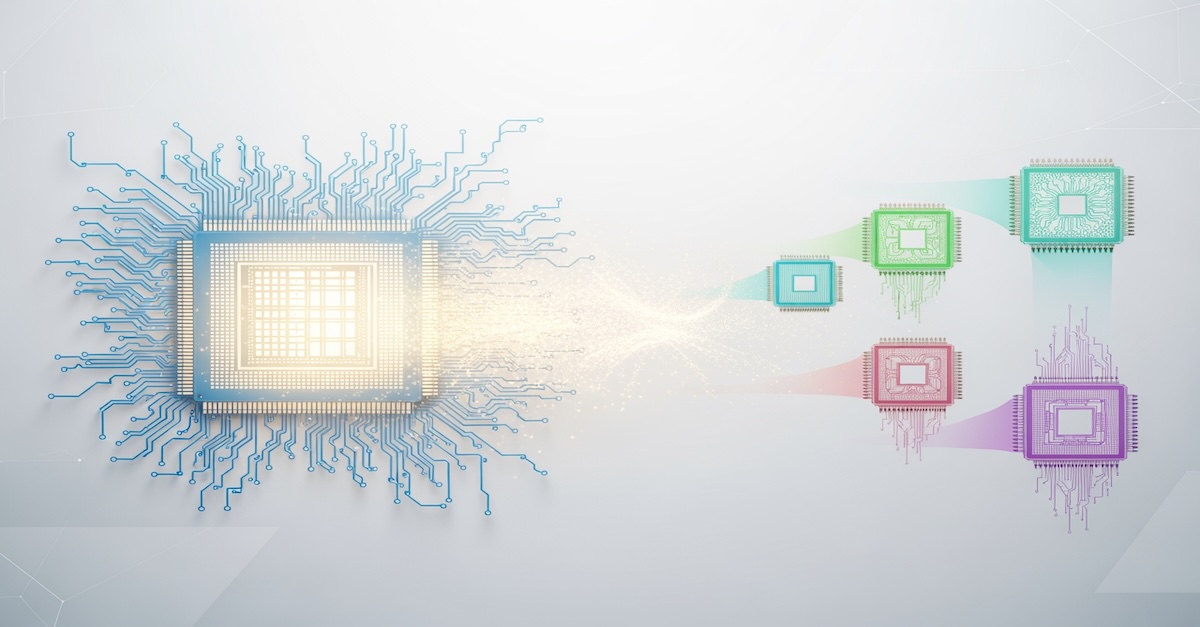
  • The Semiconductor Shift Toward Heterogeneous AI Compute

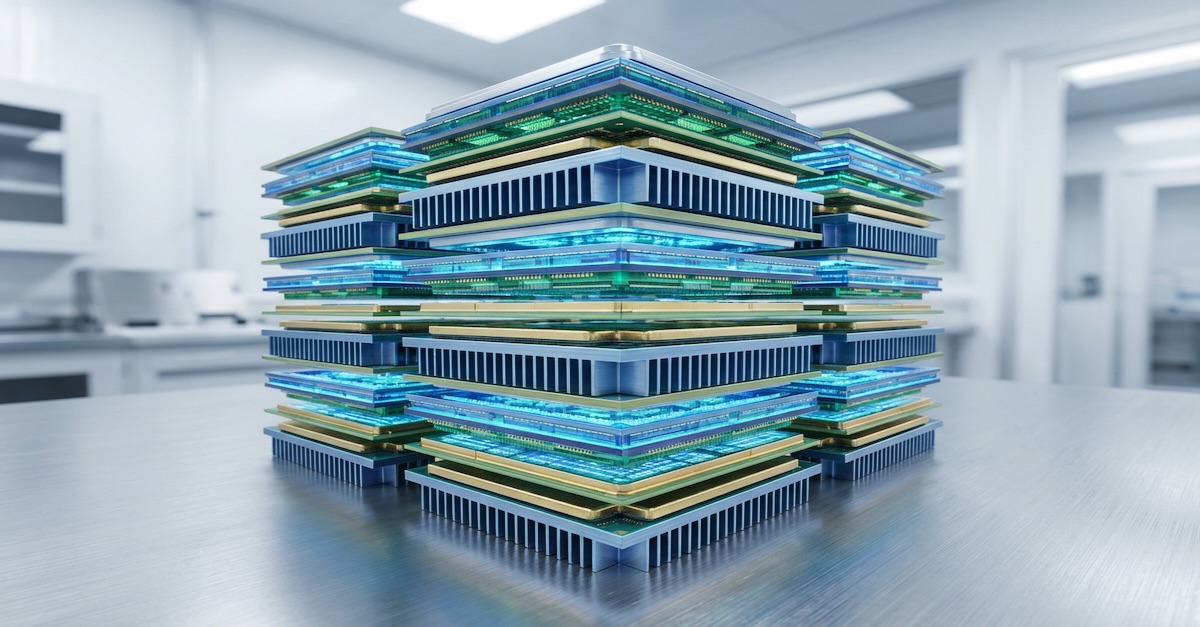
    Image Generated Using Nano Banana


    The Changing Shape Of AI Workloads

    AI workloads have rapidly evolved. They have shifted from lengthy, compute-intensive training runs to an ongoing cycle. This cycle includes training, deployment, inference, and refinement. AI systems today are expected to respond in real time, operate at scale, and run reliably across a wide range of environments. This shift has quietly but fundamentally changed what AI demands from computing hardware.

    In practice, much of the growth in AI compute now comes from inference rather than training. Models are trained in centralized environments and then deployed broadly. They support recommendations, image analysis, speech translation, and generative applications. These inference workloads run continuously. They often operate under tight latency and cost constraints. They favor efficiency and predictability over peak performance. As a result, the workload profile is very different from the batch-oriented training jobs that initially shaped AI hardware.

    At the same time, AI workloads are defined more by data movement than by raw computation. As models grow and inputs become more complex, moving data through memory hierarchies and across system boundaries becomes a dominant factor. It impacts both performance and power consumption. In many real deployments, data access efficiency matters more than computation speed.

    AI workloads now run across cloud data centers, enterprise setups, and edge devices. Each setting limits power, latency, and cost in its own way. A model trained in one place may run in thousands of others. This diversity makes it hard for any one processor design to meet every need. It pushes the field toward heterogeneous AI compute.


    Why No Single Processor Can Serve Modern AI Efficiently

    Modern AI workloads place fundamentally different demands on computing hardware, making it difficult for any single processor architecture to operate efficiently across all scenarios. Training, inference, and edge deployment each emphasize different performance metrics, power envelopes, and memory behaviors. Optimizing a processor for one phase often introduces inefficiencies when it is applied to another.

    AI Workload TypePrimary ObjectiveDominant ConstraintsTypical Processor StrengthsWhere Inefficiency Appears
    Model TrainingMaximum throughput over long runsPower density, memory bandwidth, scalabilityHighly parallel accelerators optimized for dense mathPoor utilization for small or irregular tasks
    Cloud InferenceLow latency and predictable responseCost per inference, energy efficiencySpecialized accelerators and optimized coresOverprovisioning when using training-class hardware
    Edge InferenceAlways-on efficiencyPower, thermal limits, real-time responseNPUs and domain-specific processorsLimited flexibility and peak performance
    Multi-Modal PipelinesBalanced compute and data movementMemory access patterns, interconnect bandwidthCoordinated CPU, accelerator, and memory systemsBottlenecks when using single-architecture designs

    As AI systems scale, these mismatches become visible in utilization, cost, and energy efficiency. Hardware designed for peak throughput may run well below optimal efficiency for latency-sensitive inference, while highly efficient processors often lack the flexibility or performance needed for large-scale training. This divergence is one of the primary forces pushing semiconductor design toward heterogeneous compute.


    What Makes Up Heterogeneous AI Compute

    Heterogeneous AI compute uses multiple processor types within a single system, each optimized for specific AI workloads. General-purpose processors manage control, scheduling, and system tasks. Parallel accelerators handle dense operations, such as matrix multiplication.

    Domain-specific processors target inference, signal processing, and fixed-function operations. Workloads are split and assigned to these compute domains. The decision is based on performance efficiency, power constraints, and execution determinism, not on architectural uniformity.

    This compute heterogeneity is closely tied to heterogeneous memory, interconnect, and integration technologies. AI systems use multiple memory types to meet different bandwidth, latency, and capacity needs. Often, performance is limited by data movement rather than arithmetic throughput.

    High-speed on-die and die-to-die interconnects help coordinate compute and memory domains. Advanced packaging and chiplet-based integration combine these elements without monolithic scaling. Together, these components form the foundation of heterogeneous AI compute systems.


    Designing AI Systems Around Heterogeneous Compute

    Designing AI systems around heterogeneous compute shifts the focus from individual processors to coordinated system architecture. Performance and efficiency now rely on how workloads are split and executed across multiple compute domains, making system-wide coordination essential. As a result, data locality, scheduling, and execution mapping have become primary design considerations.

    Building on these considerations, memory topology and interconnect features further shape system behavior. These often set overall performance limits, more so than raw compute capability.

    Consequently, this approach brings new requirements in software, validation, and system integration. Runtimes and orchestration layers must manage execution across different hardware. Power, thermal, and test factors must be addressed at the system level.

    Looking ahead, as AI workloads diversify, heterogeneous system design enables specialization without monolithic scaling. Coordinated semiconductor architectures will form the foundation of future AI platforms.

  • The Semiconductor Compute Shift From General-Purpose To Purpose-Specific

    Image Generated Using Nano Banana


    The End Of Architectural Consensus

    The semiconductor industry is undergoing a fundamental architectural break. For over 50 years, general-purpose computing has prevailed thanks to software portability, transistor-driven scaling, and the absence of workloads that demanded radical alternatives. That era is over.

    With Moore’s Law slowing to single-digit gains and Dennard scaling effectively dead, the hidden energy and performance subsidy that made CPUs “good enough” has vanished. Meanwhile, AI workloads now require 100x to 10,000x more compute than CPUs can provide economically, forcing a shift to purpose-built architectures.

    What has changed is not that specialized processors are faster, which has always been true, but that the performance gap is now so large it justifies ecosystem fragmentation and platform switching costs.

    Specialized architectures win because their optimizations compound. They align parallelism with workload structure, tune memory access patterns, scale precision to algorithmic tolerance, and embed domain-specific operations directly in hardware.

    These advantages multiply into 10,000x efficiency improvements that approach thermodynamic limits. General-purpose chips cannot close that gap, regardless of how many transistors they add.


    Vertical Integration For Purpose-Specific Silicon Design

    The shift toward custom silicon marks one of the most consequential strategic pivots in modern computing. For decades, the industry relied on merchant silicon vendors to supply general-purpose processors, enabling broad ecosystem access and a relatively level competitive field. That balance is now collapsing.

    When companies like Google, Amazon, and Meta invest billions to design their own chips, once the domain of specialized semiconductor vendors, they are not simply optimizing compute units. They are vertically integrating the computational stack.

    The table below describes the mechanism and path by which vertical integration in silicon is leading to the reconcentration of computing power:

    PhaseCompute Architecture ModelSilicon StrategyCore Capability RequirementsWhere Value Is CapturedIndustry Structure
    Phase 1General Purpose ComputingMerchant siliconProcurement, standardization, software portabilityChip vendors, CPU platformsBroad, horizontal, open ecosystem
    Phase 2Accelerated Computing (GPU era)Domain-optimized acceleratorsParallel programming models, runtime frameworksSilicon + software stacksEarly signs of consolidation
    Phase 3AI-Native Compute PlatformsLight customization, firmware-level tuningPackaging, interconnect tuning, software toolchainsSilicon + compiler + runtimeCompute access becomes bottleneck
    Phase 4Vertically Integrated ComputeIn-house or deeply co-designed acceleratorsArchitecture, EDA, compiler, systems designSilicon + system + cloud economicsAdvantage shifts to those controlling full stack
    Phase 5Silicon-Native InfrastructureFull-stack co-optimization: chip, system, workloadAlgorithm + hardware co-design, multi-year roadmapsEnd-to-end platform controlReconcentration, winner-take-most dynamics

    The economic logic is clear: even small efficiency gains, measured in single-digit percentage improvements, translate into hundreds of millions in savings when spread across millions of processors and tens of thousands of AI clusters.

    At the same time, custom silicon enables performance and efficiency profiles that off-the-shelf solutions cannot match. The result is not just faster chips, but the ability to architect entire data centers, scheduling systems, memory fabrics, and cooling environments around silicon they control years in advance.


    Components of An AI Server | Image Credit: Mckinsey & Company

    The Two-Tier Computing Economy And Consequences

    A structural divide has emerged in modern computing, characterized by a two-tier computing economy, where traditional workloads continue to run efficiently on commodity CPUs. At the same time, AI and frontier applications require specialized accelerators that general-purpose processors cannot support.

    This split mirrors the evolution of high-performance computing, where systems like Frontier had no choice but to adopt thousands of GPU accelerators to reach exascale within power and cost constraints.

    The same dynamic now extends beyond HPC. Apple Silicon demonstrates how custom chips deliver performance-per-watt advantages that are impossible with merchant x86 processors, while Tesla’s autonomous driving processors show that real-time AI inference under tight thermal limits demands entirely new silicon architectures.

    The consequence is a computing landscape divided by capability, economics, and accessibility. Those with the scale, capital, and technical depth to design or co-design silicon gain access to performance and efficiency unattainable through merchant hardware.

    Everyone else must either rent access to specialized accelerators through hyperscalers, creating a structural dependency, or remain constrained to slower, less efficient CPU-based systems.

    In effect, computing is entering a new era where advanced capabilities are increasingly concentrated, echoing the mainframe era but now driven by AI, thermodynamics, and silicon control at a planetary scale.


    Image Credit: Mckinsey & Company

    Strategic Implications And The Post-General-Purpose Landscape

    As computing splinters into purpose-specific architectures, the tradeoff between optimization and portability becomes unavoidable. The collapse of the “write once, run anywhere” model forces developers to choose between sacrificing up to 30 to 90 percent of potential performance on general-purpose hardware or investing in architecture-specific optimization that fragments codebases.

    In AI alone, models running unoptimized on CPUs can perform 50 to 200 times slower than on accelerators designed for tensor operations. Every new accelerator also demands its own toolchains, compilers, profilers, and programming abstractions. This is why companies now spend more on their AI engineering effort adapting models to specific silicon targets, rather than improving the models themselves.

    The economics create a structural divide. Custom silicon becomes cost-effective only at a massive scale, typically involving one to three million deployed processors, or under extreme performance constraints such as autonomous driving or frontier AI training. Below that threshold, organizations must rely on cloud accelerators, locking them into hyperscaler pricing and roadmaps. The strategic dimension is equally clear.

    Control over custom silicon provides supply security and technology sovereignty, especially as export controls and geopolitical friction reshape semiconductor access. The result is a rapidly diverging compute landscape. Innovation accelerates as specialized architectures explore design spaces that general-purpose CPUs never could.

    Still, the cost is a fragmented ecosystem and a concentration of computational power among those with the scale, capital, and silicon capability to shape the post-general-purpose era.


  • The Modular Semiconductor Supercomputing

    The Modular Semiconductor Supercomputing

    Photo by Robert Linder on Unsplash


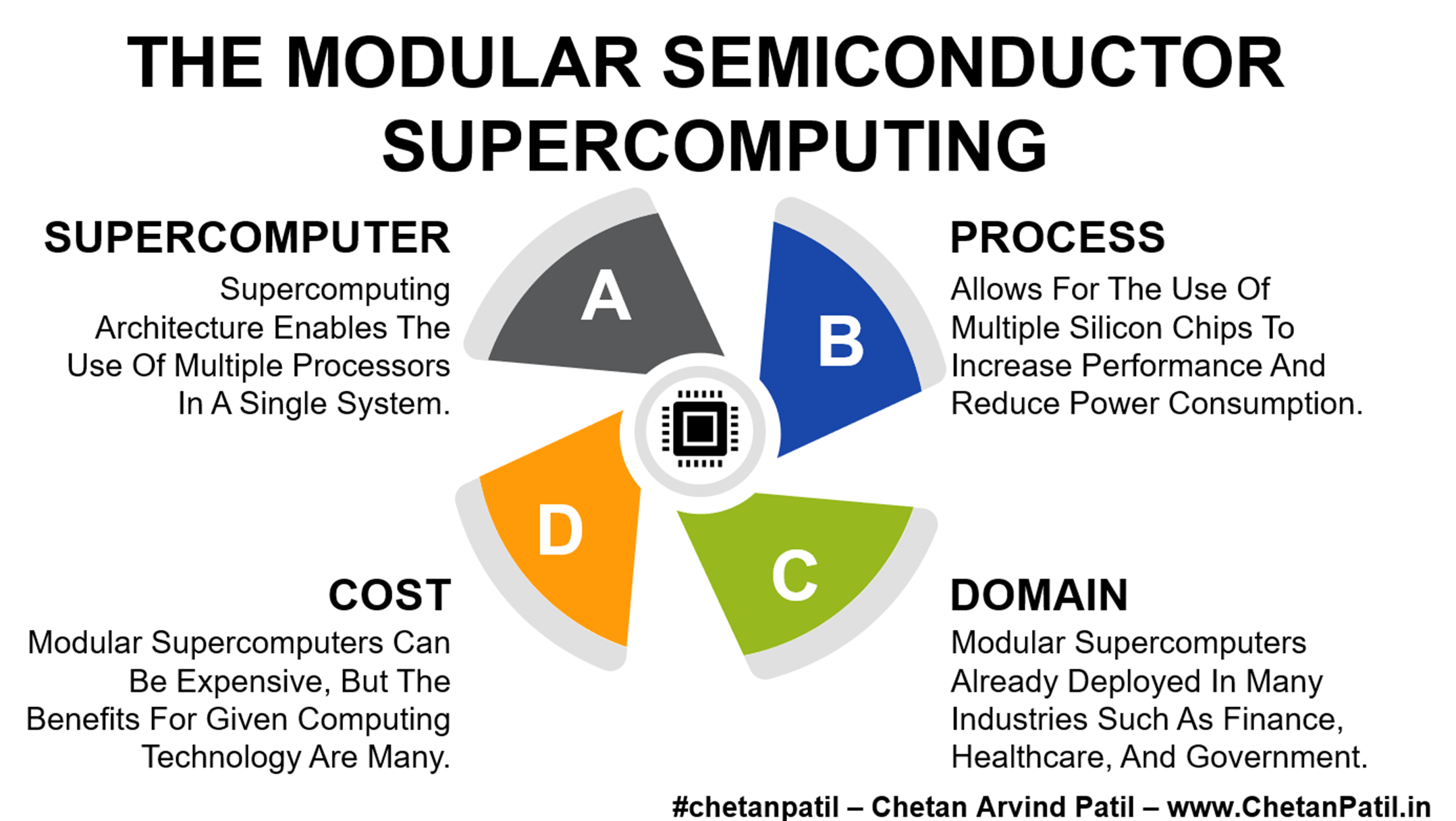
    Modular supercomputing semiconductor is a type of architecture that enables the use of multiple processors in a single system. It provides high speed, low latency, and high throughput for applications that require large amounts of data processing.

    This type of architecture allows for the use of multiple silicon chips to increase performance and reduce power consumption. It also provides for the efficient distribution of workloads across multiple processors, allowing users to get more out of their computing resources.

    Supercomputer: Architecture That Enables The Use Of Multiple Processors In A Single System.

    Process: Supercomputing Architecture Enables The Use Of Multiple Processors In A Single System.

    Modular supercomputing semiconductors cater to various applications such as artificial intelligence, machine learning, big data analytics, and more. With their ability to provide increased speed and performance while reducing power consumption, modular supercomputing semiconductor is becoming an increasingly popular choice for businesses looking to maximize their computing resources.

    However, there are several hurdles to making modular supercomputing semiconductors viable for businesses. These include performance, scalability, cost, and power consumption issues. Additionally, there are challenges associated with integrating modular supercomputing semiconductors into existing systems and networks.


    Picture By Chetan Arvind Patil

    Modular supercomputing semiconductors have overcome different hurdles and have evolved to meet the ever-increasing demands of data load and workload requirements. It is a process that involves integrating multiple components into one system, allowing for improved performance and faster processing flow.

    Over time, as technology advanced, so did the need for more powerful servers with higher performance capabilities. It led to the development of modular supercomputers, now used in many industries such as finance, healthcare, and government.

    Domain: Modular Supercomputers Already Deployed In Many Industries Such As Finance, Healthcare, And Government.

    Cost: Modular Supercomputers Can Be Expensive, But The Benefits For Given Computing Technology Are Many.

    Today, Modular Supercomputing Semiconductor is an essential part of any organization’s IT infrastructure as it helps them manage their data load and workload requirements efficiently while providing improved performance and faster processing flow.

    The cost associated with this technology can vary depending on the complexity and size of the project. Investing in modular supercomputing semiconductors can be expensive, but it can also provide significant savings in time and money compared to traditional computing methods.


  • The Rise Of Semiconductor Powered Neuromorphic Computing

    The Rise Of Semiconductor Powered Neuromorphic Computing

    Photo by Alex Motoc on Unsplash


    The computing industry relies on semiconductor products to enable faster processing. And, to drive real-time processing semiconductor industry has to keep innovating. This two-way hand-shake reliance has grown over the last decade (due to new software demand) and will only grow more in the decades to come.

    For decades, the use case of computers (and the silicon chip inside it) has been to perform tasks that humans will take years to perform manually. However, year on year, this processing by generic systems (or XPU) has become repetitive and slow. Today, industries that rely on computational resources are looking for solutions that are adaptive, smarter, and efficient all at the same time.

    Neuromorphic Computing Utilizes Semiconductors To Mimic Neuro-Biological Architectures To Drive Adaptive Computing.

    Several adaptive solutions are already around. All of these rely on model-driven neural networks. However, the time and cost involved in developing such solutions are very high. To overcome these two drawbacks, both the software and the hardware industry have already embarked on the interdisciplinary process of bringing together the basic and applied science to empower the neuromorphic computing ecosystem.

    Industry and academia have heavily focused on neuromorphic computing and have come up with brain-inspired silicon biological nervous systems that today can allow more accurate and real-time computation. Robotics already uses such and some other vision systems that demand a human way of processing data.

    This rise of semiconductor-powered neuromorphic computing is eventually a sum of several benefits that it provides. These benefits are in line with the future requirements as required by several silicon-dependent industries.

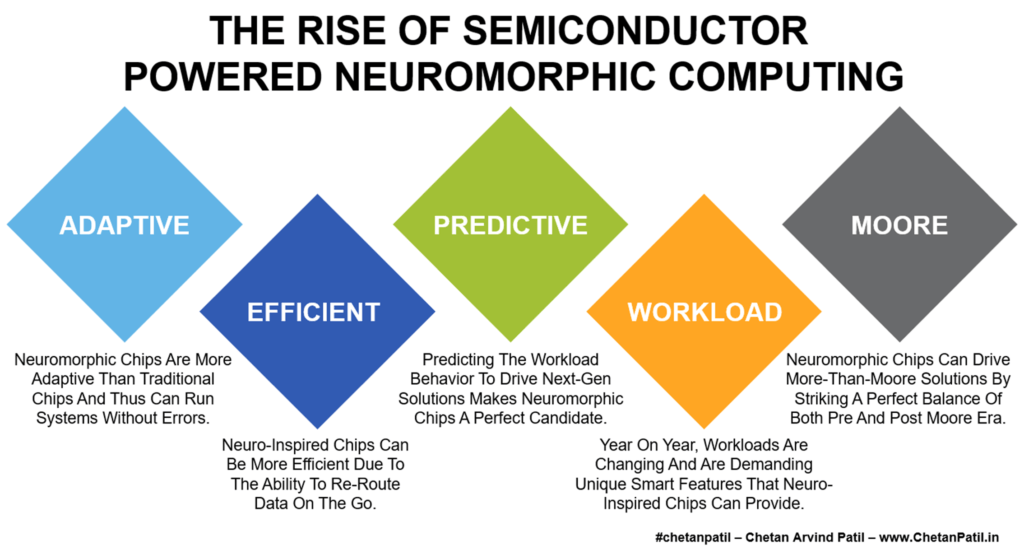
    Adaptive: Real-time computation is heavily dependent on silicon chips, and over the last few decades, the silicon processing units have been rigid. Neuromorphic computing enables the development of neuro-inspired chips that can be more adaptive (and may drive error correction) and efficient than any other XPUs.

    Efficient: High-performance silicon chips have to work non-stop, and that too without adding any bottlenecks. Neuro-inspired chips can provide a way to re-architect the routing protocols to make the system more efficient and bottleneck-free.

    Predictive: Smart technologies are on the rise, and silicon chips need to do more than process the data as it is. On another side, traditional chips do not change after production. However, neuro-driven silicon chips provide a way to predict future workload requirements and then enable internal circuits accordingly.

    There is always a question about how adaptive and predictive neuromorphic computing can be. And whether it is suited for a specific purpose only. An enterprise-grade data center with power-hungry servers might find a good fit for neuromorphic computing solutions rather than a laptop where the applications are still performing the basic operations.

    Neuromorphic computing is a domain-specific solution today. As more innovative approaches come out, part of the silicon solution might get incorporated into the more generic semiconductor solutions.


    Picture By Chetan Arvind Patil

    Computation of any data (text, visual, audio, video, etc.) has always required two components to come together: Software and hardware. The software industry has already advanced a lot, and it is time for the hardware industry to play the catch-up game.

    Brain-inspired chips can drive a new era of adaptive circuits, which today are more rigid. It may also provide a way to correct the errors on the go, instead of starting from the pre-silicon stage of re-launching the new version of the product.

    Workload: As the use of data grows further, the type of workloads can change drastically. Next-gen workloads will require silicon architectures (XPU) that are efficient both for compute-intensive and memory-intensive tasks. The on-the-go learning capability for neuro-inspired chips can provide a perfect platform for such future workloads.

    Moore: In the end, all solutions at the silicon level follow Moore’s law. The semiconductor industry is already on its way to hitting the node wall. Neuromorphic chips can provide a way forward by enabling more with the same node. However, such a solution will be limited to specific high-performance domains (servers, etc.).

    One of the fundamental reasons the hardware/semiconductor industry has played (with software) the catch-up game is small to no room for errors. In semiconductors, it becomes difficult to correct any errors in the mass-produced chip. Neuromorphic computing-driven semiconductor chips might provide a way ahead for the semiconductor industry here, but only for specific silicon chips.

    As both industry and academia speed up the research on brain-inspired silicon chips, the adoption of neuromorphic chips for next-gen computation will grow too. In the end, to enable successful innovations like neuromorphic, it will be crucial to provide long-term research funding. For such activities, government support is a must, and thus the countries providing continuous research incentives will eventually win the neuromorphic race.