Category: DATA-CENTERS

  • The Semiconductor Foundations To Drive Data Center Networking

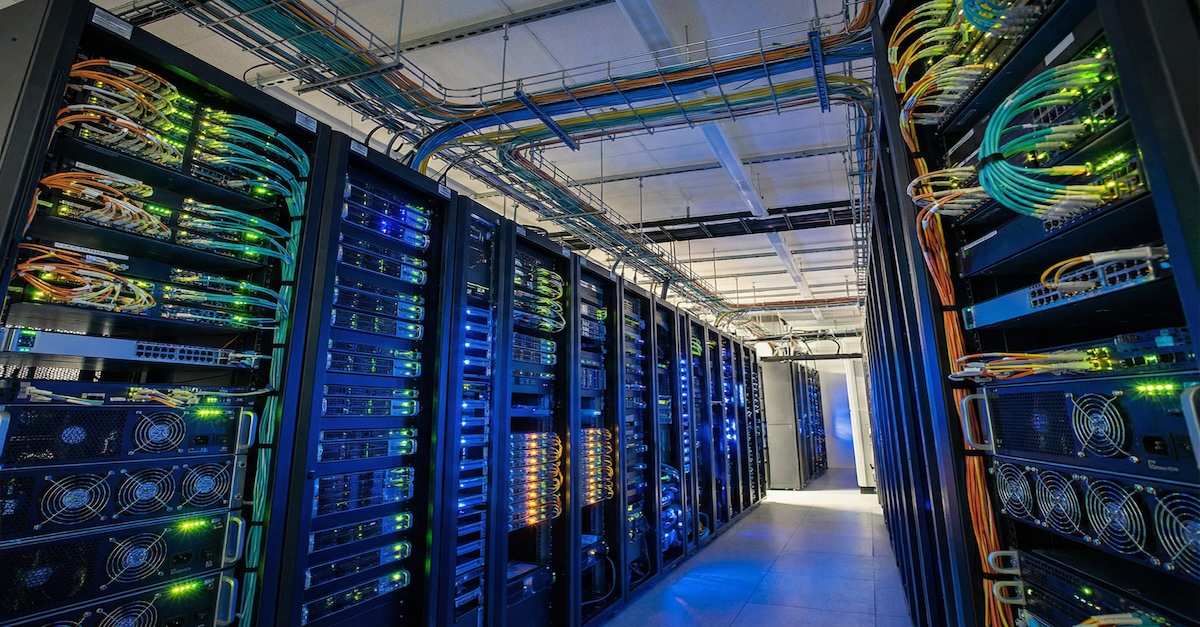
    Image Generated Using Nano Banana


    Data Center Networking Became A Silicon Problem

    Data center networking has moved from a background enabler to a key driver of performance. In cloud and AI environments, network speed and reliability directly affect application latency, accelerator usage, storage throughput, and cost per workload.

    As clusters expand, the network evolves from a minor role to a system-level bottleneck. At a small scale, inefficiencies go unnoticed. At a large scale, even slight latency spikes, bandwidth limits, or congestion can idle expensive compute, leaving GPUs or CPUs waiting on data transfers.

    Modern networking advances are now propelled by semiconductor breakthroughs. Faster, more stable data movement relies less on legacy design and more on cutting-edge high-speed silicon: custom ASICs, NICs, SerDes, retimers, and the supporting power and timing architectures.

    Meanwhile, networking progress is constrained by physical limits. Signal integrity, packaging density, power delivery, and thermal management set the upper bound for reliable bandwidth at scale. Today’s data center networks increasingly depend on semiconductors that can deliver high throughput and low latency within practical power and cooling limits.


    Networks Are Being Redesigned For AI Scale

    The shift from traditional enterprise traffic to cloud-native services and AI workloads has reshaped data center communication. Instead of mostly north-south flows between users and servers, modern environments see heavier east-west traffic where compute, storage, and services constantly exchange data. This increases pressure on switching capacity, congestion control, and latency consistency.

    AI training further intensifies the challenge. Distributed workloads rely on frequent synchronization across many accelerators, so even small network delays can reduce GPU utilization. As clusters grow, networks must handle more simultaneous flows and higher-bandwidth collective operations while remaining reliable.

    As a result, data center networks are no longer built just for connectivity. They are engineered for predictable performance under sustained load, behaving more like a controlled system component than a best effort transport layer.


    Building Blocks That Define Modern Networking

    Modern data center networking is increasingly limited by physics. As link speeds rise, performance depends less on traditional network design and more on semiconductor capabilities such as high speed signaling, power efficiency, and thermal stability.

    Custom ASICs and advanced SerDes enable higher bandwidth per port while maintaining signal integrity. At scale, reliability and predictable behavior also become silicon-driven, requiring strong error correction, telemetry, and stable operation under congestion and load.

    Data Center Networking NeedSemiconductor Foundation
    Higher link bandwidthAdvanced high-speed data transfer techniques, signaling, equalization, clocking design
    Low and predictable latency at scaleEfficient switch ASIC pipelines, cut through forwarding, optimized buffering
    Scaling without power blowupPower efficient switch ASICs, better voltage regulation, thermal aware design
    Higher reliability under heavy trafficError detection, improved silicon margins
    More ports and density per rackAdvanced packaging, high layer substrates, thermal co-design

    A key transition ahead is deeper optical adoption. Electrical links work well over short distances, but higher bandwidth and longer reach push power and signal integrity limits, making optics and packaging integration a growing differentiator.


    Means For The Future Of Data Center Infrastructure

    Data center networking is certainly becoming a platform decision, not just a wiring decision.

    As AI clusters grow, networks are judged by how well they keep accelerators busy. Networks are also judged by how consistently they deliver bandwidth and move data per watt. This shifts the focus away from peak link speed alone and toward sustained performance under real congestion and synchronization patterns.

    For the computing industry, this means infrastructure roadmaps will be shaped by semiconductor constraints and breakthroughs. Power delivery, thermals, signal integrity, and packaging density will set the limits. These factors determine what network architectures can scale cleanly.

    As a result, future data centers will place greater emphasis on tightly integrated stacks. These stacks will combine switch silicon, NICs or DPUs, optics, and system software into a coordinated design.

    The key takeaway is simple. Next-generation networking will not be defined only by racks and cables. Semiconductor technologies will define bandwidth that is predictable, scalable, and energy-efficient at AI scale.

  • The Semiconductor Supernodes Era

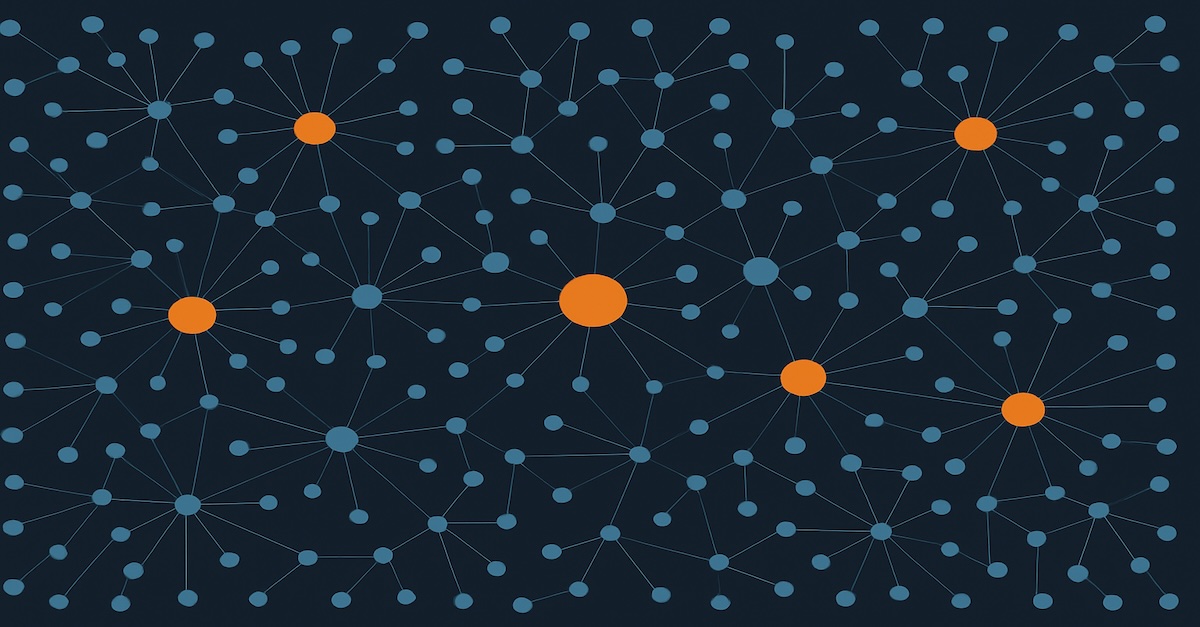
    Image Generated Using DALL·E


    What Are Supernodes

    Supernodes are tightly integrated compute domains that combine multiple accelerators into a single, coherent processing unit. Unlike traditional clusters of servers, they operate as one logical system with shared memory, timing, and synchronization. This eliminates the overhead of networking layers, enabling near-instantaneous data movement across all components.

    At their core, supernodes rely on specialized interconnect fabrics that provide extremely high bandwidth and low latency between chips. These links allow accelerators to exchange data as if they were on the same die, maintaining coherence and performance even as scale increases. Parallel operations, such as tensor synchronization and gradient updates, occur directly through hardware rather than network protocols.

    Supernodes: The Architecture Beyond Servers

    Memory and control are also unified. High-bandwidth memory is pooled and accessible to all compute elements, while hardware-level orchestration ensures deterministic synchronization across the domain. This coherence allows workloads to scale efficiently without the communication bottlenecks that limit conventional systems.

    Physically, supernodes function as compact, high-density compute islands. They integrate their own power delivery and cooling systems to sustain massive computational loads. Multiple supernodes can be linked together to form large-scale compute facilities, defining a new class of infrastructure built for coherent, high-performance processing at a global scale.


    Requirements Of A Supernodes

    Creating a supernode requires a complete rethinking of how compute, memory, and communication interact. It is not simply an arrangement of accelerators, but an engineered coherence domain and one that must sustain extreme data movement, deterministic timing, and efficient power conversion within a compact physical footprint.

    Every layer of the system, from silicon to cooling, is optimized for tight coupling and minimal latency.

    Requirement LayerPurpose
    Semiconductor PackagingEnable multiple dies to function as a unified compute plane
    Memory ArchitectureMaintain shared, coherent access to large data pools
    Interconnect FabricProvide deterministic, high-throughput communication across accelerators
    Synchronization & ControlCoordinate compute and data movement with minimal software overhead
    Power DeliverySupport dense, high-load operation with stability and efficiency
    Thermal ManagementMaintain performance under extreme heat density
    Reliability & YieldPreserve coherence across large physical domains

    Meeting these requirements transforms the traditional boundaries of system design. Each component, chip, interposer, board, and enclosure, functions as part of a continuous fabric where data, power, and control are inseparable.

    Supernodes thus represent the convergence of semiconductor engineering and system architecture, where every physical and electrical constraint is optimized toward a single goal: sustained coherence at scale.


    Applications That Benefit From Supernodes Era

    Supernodes benefit workloads where communication, not computation, limits performance.

    By allowing accelerators to operate as a single, coherent system with shared memory and ultra-fast data exchange, they eliminate the delays that slow down large, synchronized tasks.

    The most significant gains are observed in AI training, scientific simulation, and real-time analytics, domains where rapid, repeated data exchange is crucial. Unified fabrics and coherent memory let these workloads scale efficiently, turning communication into a built-in hardware capability rather than a software bottleneck.

    Ultimately, supernodes mark a structural shift in computing. As workloads grow more interdependent, progress depends on integration, not expansion.


    Why Transition Towards The Supernodes Era

    The move toward supernodes stems from the breakdown of traditional scaling methods.

    For years, data centers grew by adding more servers, relying on networks to tie them together. This model fails for modern AI and simulation workloads that require constant, high-speed communication between accelerators. Network latency and bandwidth limits now dominate system behavior, leaving much of the available compute underutilized.

    Supernodes solve this by bringing computation closer together. Instead of linking separate servers, they combine multiple accelerators into a single, coherent domain connected through high-speed, low-latency fabrics. This eliminates the need for complex synchronization across networks, allowing data to move as if within a single device. The result is higher efficiency, lower latency, and predictable performance even at massive scale.

    Energy efficiency further drives the shift. Concentrating computation in coherent domains reduces redundant data transfers and power losses across racks. Localized cooling and power delivery make dense, sustained performance practical.

    In essence, the transition toward supernodes is not optional, it is a response to physical and architectural limits. As transistor scaling slows, coherence and integration become the new sources of performance, making supernodes the logical evolution of high-performance computing and AI infrastructure.


  • The Semiconductor AI Centers Are Coming

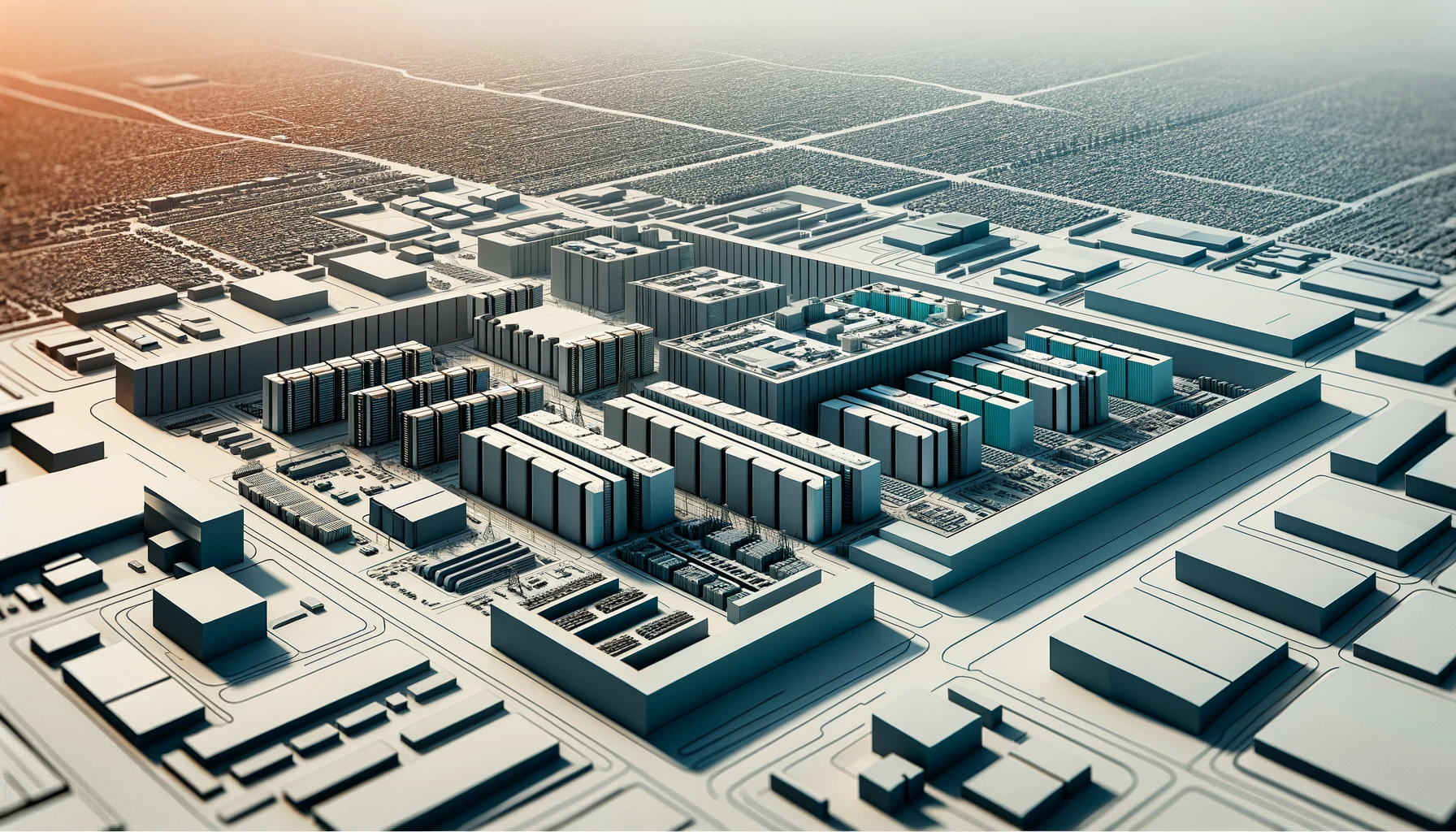
    Image Generated Using DALL-E


    AI Ushering New Era Of Data Centers

    As artificial intelligence (AI) incorporates itself into various industries, the demand for more sophisticated computing power is rising. At the core of this technological evolution is the development of semiconductor AI centers, a concept that promises to redefine the future of computing.

    This transition is marked by several key projects, such as Microsoft and OpenAI’s ambitious plan to build a supercomputer named “Stargate,” rumored to be one of the most advanced and costly (more than $100 Billion) endeavors in computing history.

    Such semiconductor AI centers are about more than just scaling up. They represent a shift towards custom chip designs, aiming to break free from traditional dependencies and push the boundaries of what’s possible with AI.

    The implications for the semiconductor industry are profound, signaling a move towards more specialized, efficient, and powerful computing solutions.


    How AI-Center Differ From Traditional Data Centers

    These specialized AI center facilities provide enhanced computational power and efficiency and will facilitate groundbreaking AI research and application innovations.

    Below is a comparison of critical differences between AI-centered and traditional data centers.

    FeatureAI-Centered Data CenterTraditional Data Center
    Computational Power Customized for AI workloads, equipped with specialized processors (GPUs, TPUs) for high-performance computing.General-purpose computing, relying on standard CPUs with limited AI optimization.
    Energy EfficiencyDesigned with energy-efficient technologies and cooling systems to manage the high power consumption of AI processing.Often less efficient in energy use due to older designs and cooling technologies.
    ScalabilityHighly scalable to meet the exponential growth of AI demands, supporting large-scale AI model training and inference.Scalability is limited by the design and technology of traditional computing and storage systems.
    NetworkingAdvanced networking capabilities, including high-bandwidth connections and low-latency networks for AI data processing.Standard networking setups, which may not support the high-speed data transfers needed for intensive AI tasks.
    Innovation FocusAimed at pioneering AI research and development, pushing forward new AI applications and technologies.Focused on maintaining operational efficiency and reliability for a broad range of IT services.

    Picture By Chetan Arvind Patil

    Challenges For AI-Centers

    However, with the benefits comes the challenges, and addressing these challenges is crucial for leveraging AI’s full potential and ensuring the sustainable growth of AI-centered infrastructures.

    Energy Consumption: AI centers consume vast amounts of electricity for processing and cooling, posing sustainability and cost challenges.

    Heat Management: The high-performance computing units generate significant heat, requiring advanced cooling solutions.

    Data Security: Protecting the massive data pools processed and stored in AI centers from breaches and attacks.

    Skilled Workforce: There is a high demand for professionals with expertise in AI, machine learning, and data center management.

    Technology Advancement: Keeping up with the rapid pace of AI and computing (mainly silicon) technology advancements to remain competitive.


    Near-Term Roadmap Of AI-Centers

    The near-term roadmap for AI centers will address scalability, energy efficiency, and computational challenges to meet the growing demands of AI applications.

    Priorities include integrating advanced cooling technologies, developing sustainable energy sources, and adopting next-generation computing architectures.

    These efforts will enhance AI model training and deployment capabilities while minimizing environmental impact and operational costs.

    Nevertheless, the development of the AI center promises to enhance AI computational capabilities and open new avenues for innovation across industries, heralding a new era of technological advancement.