Category: DATA

  • Technology Is Building Smart Spaces

    Technology Is Building Smart Spaces

    Photo by Peerapon Chantharainthron on Unsplash

    When smart systems are deployed at every location, it leads to the creation of Smart Spaces. These Smart Spaces can be a residential area, a business zone, an educational institute, or a parking lot. As long as, day to day activities are tracked by the use of the technological solution to enable faster decision making a place qualifies as Smart Spaces.

    Over the last decade, the affordability of smart devices and smartphones have to lead to an exponential increase in the deployment and adoption of such places. The reason is the information from smart devices provided with help of sensors can be accessed in real-time. Which can then be used for important decision making.

    It is critical to understand different sub-zones within the Smart Spaces along with its impact, innovation, and the future.


    SMART SPACES

    Smart Spaces mainly comprises of six major components: Smart Security, Smart Maintenance, Smart Energy, Smart Utilities, Smart Connectivity, and Smart Parking.

    Smart Places by default have Smart Security. Smart Security is built on top of an efficient hardware capable of running advanced motion detection along with real-time notification software. These devices are capable of ensuring the area covered is secure and also the incident reports are available to the public. It is also one of the domains that have recently attracted the attention of big technology giants. Amazon a few years ago acquired Ring and recently Google even after acquiring Nest invested in ADT.

    The next important piece of Smart Spaces is Smart Parking. Many companies are engaging with local city authorities in order to make parking decisions easy for the public. It involves tracking of spots that are available for parking along with pre-booking to ensure that anyone can pre-plan the visit and be free from the decision about where to park the car. Smart Parking can be a standalone software-based solution by tracking the entry and exit at specific location. However, many of the Smart Parking solutions are also based on the sensors thus requiring a lot of hardware deployment.

    Smart Energy is critical too. Without proper utilization of the energy that minimizes the impact on the environment, a Smart Space will for sure not qualify as one. Smart Energy is built with a net-zero impact. In order to achieve this the source of energy has to be environment friendly. Solar or wind energy is usually the main source of energy supply to the Smart Spaces. Smart Energy is also enabled by deploying heating/cooling solution such that same single source can be used by specific area or citywide population. It can be a centralized water-based cooling like Phoenix Downtown has. Smart Energy is also about tracking utilization in real-time for adaptive decision making.

    Picture By Chetan Arvind Patil

    Smart Utilities are another aspect of Smart Spaces. It ensures that gas and water supply are available all the time by ensuring efficient usage. Numerous data points are collected to allow for timely delivery of these resources. Such data points allow families and businesses to understand the real use versus waste. By capturing such details, the city authorities can also come up with adaptive and smart incentives for residents.

    Smart Maintenance is all about predicting when a specific location or service is going to see a downtime and in advance how to act on it. This is done with the help of data tracking that provides life and aging details of the components deployed across the Smart Spaces. This can range from sensors in the water supply system to building structure maintenance to electric sub stations. Smart Maintenance also ensures that human resources are used wisely and in a timely manner.

    The last and critical piece of Smart Spaces is Smart Connectivity. Without access to the high-speed networks from the internet to a cellular connection, it is difficult to make any solution to work in a Smart Space. Data generated out of the different aspects of Smart Spaces requires connected systems that can work only if always-on connectivity is provided. The decision making for other critical zones within the Smart Spaces is also relying on connectivity. With the deployment of 5G and smart Wi-Fi 6, Smart Connectivity is going to see much more innovative use than in the last decade.


    SMART IMPACT

    Deployment of Smart Spaces across cities and countries is only possible on a large scale if the impact of such Smart Spaces is understood. There are many benefits to having Smart Spaces, but the critical Smart Impact are savings, opportunities, complexity, dependency, and ease of use. These impact are combination of the good and the bad.

    Savings is the most important reason for making any space a smart one. The real-time usage of securing the place helps in long term planning with eventually leads to savings not only for the residents but also for the businesses. It can be understanding what services work and don’t work, thus making a decision to switch or do away with such service. Maybe it can be about understanding what room temperature works for one by utilizing sensors such that the temperature of the cooling system can be adaptive accordingly. Scaling these savings at larges scale eventually leads to savings of resources.

    Immense opportunities are created by Smart Spaces. From employment to small business to large scale industries. Smart Spaces deployment ensures that different new opportunities from regular maintenance to data to security analysts are available for better decision making. Thus opening up new skill-based employment. It also ensures that the business providing smart solutions are able to create a supply chain that drives other business.

    Picture By Chetan Arvind Patil

    All this leads to ease of living life. Ensuring that not only the spaces are safe but are also smart based on data generation. It allows efficient utilization of resources that improves day to day life activity and thus provide ease by which goals can be achieved.

    One of the biggest drawbacks of Smart Spaces is dependency. The more the smart systems are deployed, the more dependent the people and businesses become. If one or two things go out of service, the day to day routine suffers. It also impacts decision making.

    The biggest challenge when deploying Smart Spaces is to ensure that all these Smart Impacts are in balance. Anyone thing that grows more than the other will lead to critical security to safety issues. This means Smart Spaces are very complex too due to inter-dependent systems.


    Always On Connected Sensors Taking Decision Will Run Smart Spaces


    SMART INNOVATION

    Necessity is the mother of invention. It is correctly applied by any industry that is fighting to survive the market competition.

    For the software businesses, it is important to ensure that there are always new and better programming environments along with the tools to develop advanced and smarter software systems. This also means new business opportunities by showcasing efficiency and cost gain over existing tools and solutions.

    The same is applicable for the hardware businesses by ensuring that there are new solutions available as the market demand grow and the need changes. These can be an efficient sensors that allow more savings over existing and previous generations. To ensure such a solution exists in the future, continuous research and development is required.

    Picture By Chetan Arvind Patil

    Smart Innovation around Smart Spaces is built on top of the savings that the existing system provides. This can be due to the data generated across the zones within the Smart Spaces that lead to deployment of cost efficient solutions. Which was in turn used at large scale by businesses. These savings can also be built on top of dynamic pricing which is applicable mostly for housing and real estate business but is also getting deployed for smart energy and utilities.

    A combination of data and dynamic pricing built on top of Smart Innovation by Smart Spaces will eventually lead to New Products and New Services.

    The more the savings, the better the future solutions from companies in the domain of software and hardware.


    SMART FUTURE

    Everyone talks about Smart Spaces, but what is the Smart Future going to be like?

    There can be different takes on how the Smart Spaces will evolve. It can be dependent on how the industry innovates to keep up with the growing demand for the smart solutions. It will also depend on cities’ and citizens’ comfort to adapt to a fast-changing smart environment.

    In short, there are four key aspects of how the Smart Future of Smart Spaces is dependent.

    Picture By Chetan Arvind Patil

    The first is being connected. It ensures that the information generated from the Smart Spaces is always available. These connected systems will run on top of the sensors. It is already deployed across many cities and real estate. However, unless and until everyone in such location is able to utilize to full extent, it will be difficult to ensure that the connected sensors are efficiently used. Thus the second requirement of a smart future is sensors. The third critical piece is always on. Without which it is not useful to deploy connected sensors. The last part is the decision. If these always-on connected sensors cannot make a decision with or without human input, then it is a waste of money and time.

    Opportunities and possibilities are numerous. All technological solutions certainly improve life as long as the users are able to afford the same. Only time will show how Smart Spaces will evolve, but are certainly going to be everywhere.


  • 5G And Wi-Fi 6 Will Transform Digital Life

    5G And Wi-Fi 6 Will Transform Digital Life

    Photo by Thimo Pedersen on Unsplash

    The next decade is going to be all about enhanced digital experience built on top of the most advanced wireless data communications technologies ever: 5G and Wi-Fi 6.

    These two wireless technologies are not only going to increases the data throughput but also provide much better connectivity experience with minimum power impact, thus making them suitable from home to industry-wide applications.

    5G has already started to take over the world and along with Wi-Fi 6 proliferation, the always-on connectivity is going to ease day to day information-enabled digital life.


    WHAT IS 5G

    5G is the next generation of voice and data communication solution that is capable of providing 20x more data speed compared to current 4G deployed all over the world. It does so by enabling low latency by deploying a wide array of networks that allows multiple users with multiple inputs and multiple output data transmission.

    5G is also capable of running at a different spectrum from below 1GHz to above 24GHz.


    WHAT IS Wi-Fi 6

    Wi-Fi 6 is the next IEEE 802.11ax standard designed for the future data, increasing nodes and security needs. It is going to provide much better seamless connectivity without getting affected by the number of active users. It can do so by providing high capacity via Orthogonal Frequency-Division Multiple Access (OFDMA) with minimal energy requirements.

    Poor connectivity and network interference at home and offices are going to be a thing of past with Wi-Fi 6. Wi-Fi 6 is capable of using both 2.4 and 5 GHz frequencies. With recently introduced Wi-Fi 6E which supports 6GHz may allow easy interoperability with 5G.

    One of the benefits of Wi-Fi 6 is its backward compatibility, which allows previous Wi-Fi generation devices to work with Wi-Fi 6 certified products. For better user experience, it is always good to have all the infrastructure upgraded with both transmitting and receiving systems capable of running Wi-Fi 6 protocol.


    5G vs Wi-Fi 6

    It is often said that 5G and Wi-Fi 6 are supposed to compete for the same services. In reality, 5G is designed specifically to cater to the mobility needs, while Wi-Fi 6 for better location aware requirements.

    Picture By Chetan Arvind Patil

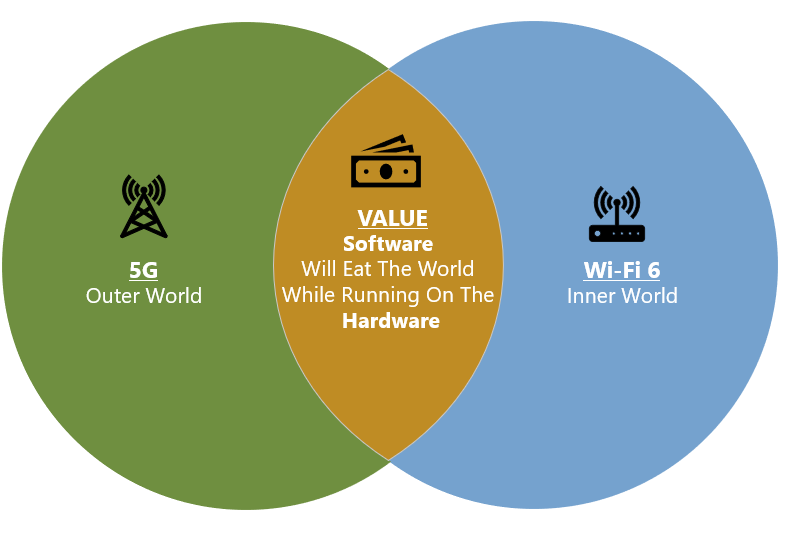
    5G will dominate on-the-go connectivity by providing faster data and voice speed. Wi-Fi 6 on other hand will cater to the smart solution (while taking the help from 5G) without worrying about the number of nodes, access points, and security.

    In the end, 5G and Wi-Fi 6 are going to work in harmony and create value for the next digital decade.


    5G IS FOR THE OUTER WORLD

    Every wireless technology has a perfect use case. Near-Field Communication is designed for secure transactions like paying via NFC enabled credit card or Mobile Wallet. Same is true for Bluetooth which is designed for short-range communication like connecting to streaming devices or car’s infotainment.

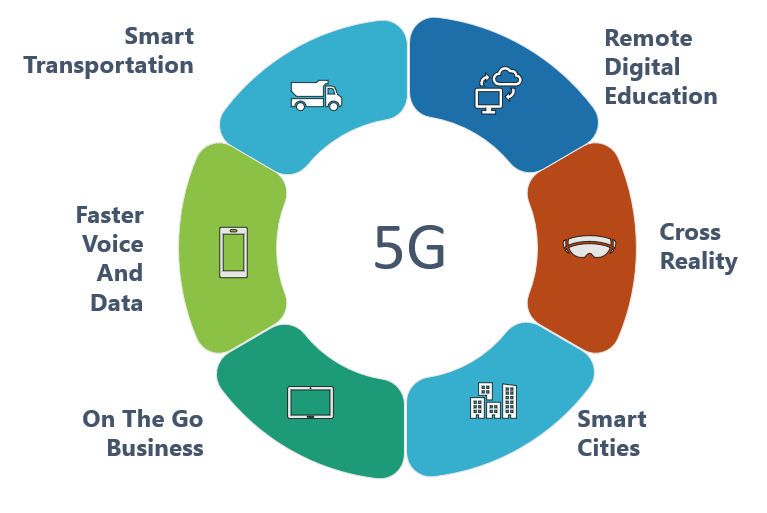
    Similarly, 5G has been designed and developed over the last decade with future demand in mind. It is going to be the de-facto wireless solution for anything that requires a remote connection. Whether it is the remotest place that requires high-speed data to enabling cross reality in places where it is difficult today. It will also ensure that digital education is accessible at affordable cost to anyone with 5G equipment and networks.

    Picture By Chetan Arvind Patil

    5G is going to benefit both consumers and businesses due to the real-time fastest possible access to the data. Smart cities around the world will provide public service on top of 5G networks from remote kiosks to online utility access and payment solutions.

    Over The Top (OTT) is a terminology that allows content to thrive, scale, and monetize on top of an existing technological solution. Not only 5G is going to enable software-driven OTT, but many hardware OTT are also going scale on top of 5G.

    All of this is going to enable the next trillion-dollar market with huge employment opportunities for every sector.


    Wi-Fi 6 FOR THE INNER WORLD

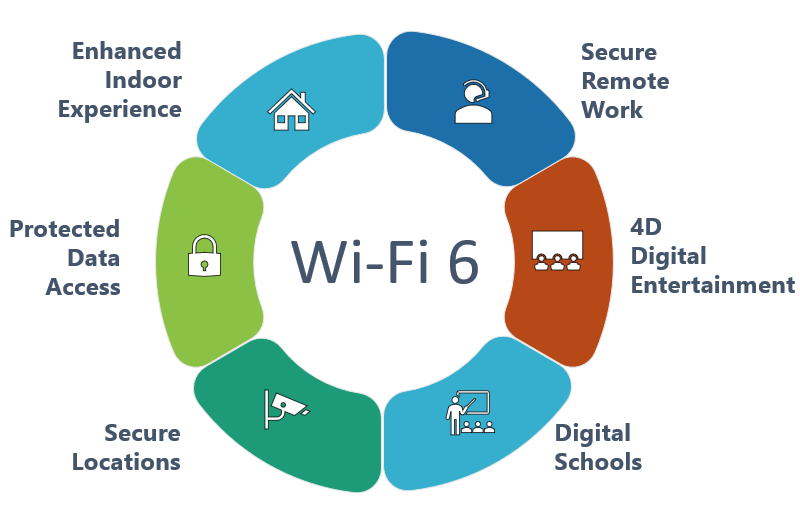
    While 5G is supposed to transform the outer world, Wi-Fi 6 is going to enhance the experience of indoor digital activity to the next level.

    There are fundamentally bigger differences between 5G and Wi-Fi 6. One of the simplest to understand is that 5G requires full infrastructure upgrade including smart devices like smartphones. On the other hand Wi-Fi 6 is about connecting to the access point with Wi-Fi 6 protocol enabled and thereby leveraging existing high-speed bandwidth network. This is why Wi-Fi 6 is more suitable for the inner world like home, public areas, offices, and schools as these are already equipped with high speed wired networks.

    Picture By Chetan Arvind Patil

    For Wi-Fi 6 too full upgrade of receiver and transmitter (Wi-Fi 6 certified) is preferred, however since it is backward compatible thus only one device (receive/transmitter) needs to be using Wi-Fi 6 certified. However, from technical point of view it still doesn’t mean full Wi-Fi 6 experience. With Wi-Fi 6, the routers will allow better performance irrespective of number of active IoT devices. WPA3 (security standard used by Wi-Fi 6) will also ensure the secure transaction are more hack-proof.

    Only time will tell if the routers itself will be used as hardware devices that will run more digital applications thus ushering new ways to provide OTT services. In any case, new era of home connectivity will enrich digital experience.


    HURDLES WITH OPPORTUNITIES

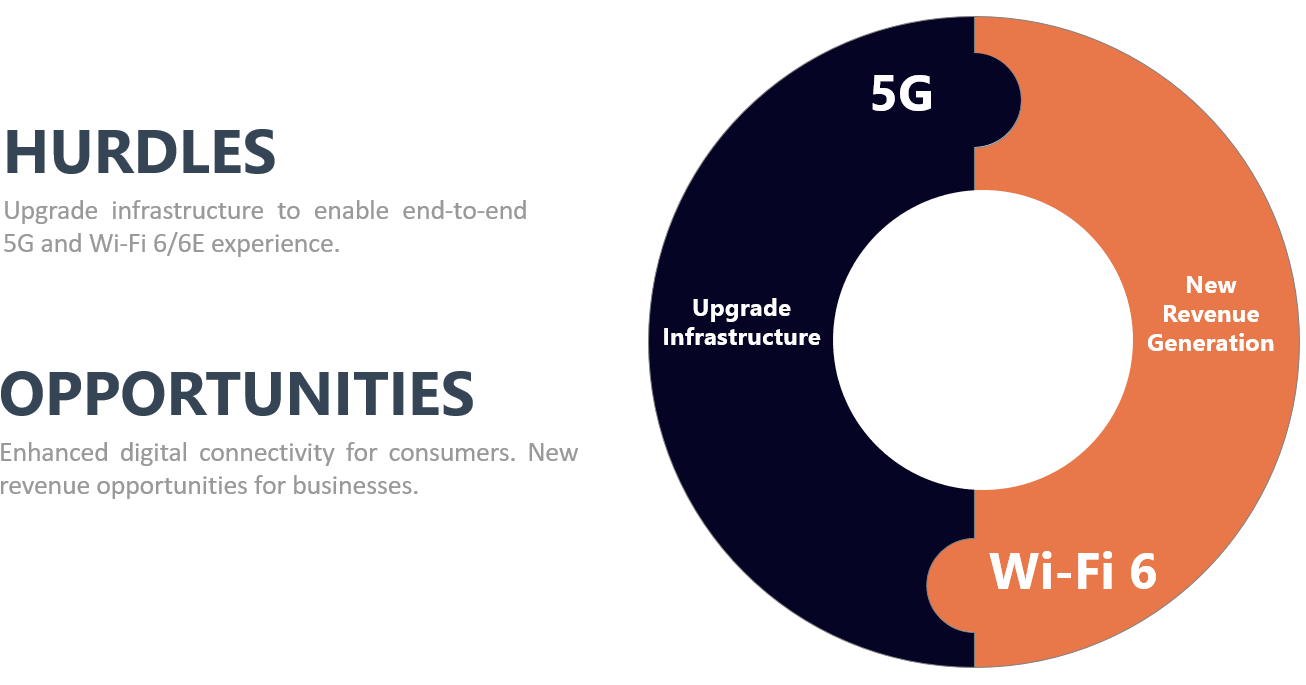
    The biggest hurdle for both 5G and Wi-Fi 6 is to ensure that not only new devices are capable of communicating using the two new protocol but the infrastructure required to deliver the true promises these two solutions hold is deployed massively across the globe. It will be critical to implement in India, where millions of users are still using 3G and older Wi-Fi certified devices.

    For 5G, the smart devices need to have electronic chips capable of encoding/decoding the packets that will be sent to and from the nearby cell towers. Telecom operators will have to invest and upgrade all of the networks to ensure 5G protocols can run smoothly on top of the existing 4G infrastructure. Given that some countries still have more than 350 million 2G users, it will take half a decade to move many of the current 3G/4G users to 5G.

    Wi-Fi is backward compatible, thus it only needs one of the two communicating devices to be running on the newer protocol. However, OEMs have started launching laptops, smartphones, and smart devices with Wi-Fi 6. Network equipment also have started to come Wi-Fi 6 certified. Similar to 5G, Wi-Fi 6 large scale adoption is also expected to take more than half a decade as many business that are going through the financial impact due to COVID-19 will be focusing more on revenue re-generation than upgrading existing infrastructure at large.

    Picture By Chetan Arvind Patil

    With hurdles come opportunities. Upgrading all the devices (or one of the nodes for Wi-Fi 6) that will access these protocols at different frequencies, also means tremendous revenue opportunity from OEMs to Distributors. It will also provide platform for the new markets to tap into the hardware manufacturing and assembly opportunities.

    Another possibility is merging 5G with Wi-Fi 6E (a step ahead of Wi-Fi 6), and that is going to ensure that the investment to implement these infrastructure today pays off in the long term when devices and nodes can easily switch between these two wireless frequency technology without upgrading.

    It may also drive innovation as both 5G and Wi-Fi 6E solutions can reside on the same System-On-Chip, thus allowing optimization on the designing and reducing manufacturing cost.


    DIGITAL TRANSFORMATION ROAD MAP

    As the world moves towards post-COVID-19 new normal, digital connectivity across the globe will be the priority. Governments will push for newer and better wireless connectivity to enable end-to-end digital transformation road map. 5G and Wi-Fi 6 are going to ensure that every digital offering is experience the new innovation.

    Picture By Chetan Arvind Patil

    The digital transformation road map will be a 360-degree view on how daily home to business to industry activity is going to be always-on data enabled. Whether it is accessing information at home, commuting to the office, shopping at local stores, running in the park, producing products in heavy industry, going for health check-ups to making cities smarter.

    All of this is going to drive change, thus allowing 5G And Wi-Fi 6 to transform digital life.


    PSA

    For the technical audience:


  • The Data-Driven Approach Towards Semiconductor Manufacturing

    The Data-Driven Approach Towards Semiconductor Manufacturing

    Photo by Vishnu Mohanan on Unsplash


    THE GROWTH OF DATA IN THE SEMICONDUCTOR MANUFACTURING

    The growth of digitization has led to the generation of massive amounts of data on day to day basis. The data explosion has pushed several industries to adapt to data-driven analysis and decision-making processes. The same is true for the semiconductor industry.

    Data was always an integral part of semiconductor design and manufacturing. The need for data has increased further due to the cost and risk involved in designing products that are becoming smaller and smarter. The cost to fabricate semiconductor products is high and that is why during the design phases innovative simulations/modeling approaches are used to validate product design against specification before sending the final design files to the semiconductor fabrication houses. The risk of not spending time to collect and review semiconductor data both during the design and the manufacturing stage can cost a lot of money and time if the product starts failing in the field. 

    Data-Driven Approach Is Raising The Bar Of Semiconductor Manufacturing

    As the technology-node and package technology have advanced, so needs to take a data-driven approach to semiconductor manufacturing. The goal of the data-driven approach is to ensure that the products being are defect-free. The sophisticated tools and equipment used by the semiconductor manufacturing process have only gotten more advanced. The de-facto feature of these system-driven tools is to capture data and present it in a form that makes the decision-making process easier and faster.

    The data-driven approach is required to meet the following two important requirements of semiconductor manufacturing:

    Quality: Qualifying every semiconductor products is vital. It has to meet different industrial standards. Automotive semiconductor products have to go through one of the most stringent qualifying processes to ensure the product can work seamlessly everywhere. It is vital to ensure the manufacturing process established meets the high standards of quality requirement, which is possible only if the data captured to drive the decision-making process.

    Waste: Every data point tells a story. In semiconductor manufacturing, data can be about the design or the manufacturing tools, or handling issues, and many more. Every semiconductor data type counts towards ensuring the wafers and assembled parts are not getting scrapped. Scrapping raises yield concerns and indirectly impacts the cost.

    Without investing time and money in the data-driven approach to manufacturing semiconductor products, the semiconductor companies run into the risk of overlooking the quality metric. Driven by the need to ensure the products using the semiconductor solutions meet user satisfaction, the customers/companies using the semiconductor products are increasingly using Defective Parts Per Billion (DPPB) as a new metric than Defective Parts Per Million (DPPM).

    The need to capture, process and review semiconductor manufacturing data is becoming vital when there is a possibility that the semiconductor device might end up powering critical infrastructures likes satellites to aerospace to automotive (and many other solutions).

    All this is why the semiconductor industry is becoming more data-driven than ever before. The manufacturing part of the semiconductor process is not complete without letting the data speak.


    Picture By Chetan Arvind Patil

    THE PROCESS TO CAPTURE DATA IN THE SEMICONDUCTOR MANUFACTURING

    The semiconductor manufacturing process is a well-established flow. While every product has different requirements driven by the specification it is supposed to work within, some standard flows/stages are common across numerous semiconductor products.

    These processes use tools/solutions/recipes to capture data, which eventually drives a data-driven decision-making approach in semiconductor manufacturing.

    Following are the major process that leads to capturing of semiconductor manufacturing data:

    Fabrication: The first step towards semiconductor manufacturing is to fabricate the product on the wafer. Every layer/mask/stage of the semiconductor device fabrication is data-driven. If the data does not align at the etch or the lithography stage (for example), the wafer/lot cannot move forward. Several modules are placed in the kerf region of the wafer to data of the devices (that eventually make up the full die) to ensure is no deviation in the semiconductor wafer. All this data is unique to the technology-node. At the end of the wafer fabrication, data in the form of visual images ensure no particles or scratches are present on the wafer/die.

    Wafer Test: The defect-free wafer coming from the semiconductor fabrication facility gets sent to the test facility. The wafer test stage ensures all the die on the wafer gets electrically tested with the test program to validate whether the die meets the specification or not. The good and the bad die are marked accordingly. All this is possible due to ATE tools and probing hardware. The data is analyzed to understand any excursion, which eventually gets debugged to ensure no test escapes. 

    Final Test: The final test can be performed on the wafer (Wafer-Level Chip Scale Package (WLCSP)) or on the assembled parts (non-WLCSP). The final test uses similar testing criteria and tools like the wafer test). The major difference is the packaging testing versus dies testing. The data points are specific to the package testing. This is often the last electrical data point the semiconductor manufacturing process generates before the parts are shipped to the end customer or assembly.

    Assembly Inspection: Post assembly, the visual inspection of the assembled parts is carried out. The tools used for visual inspection capture all sides of the assembled parts. The data in the form of images show if chipping/defects occurred during the assembly process. If so, then the root cause needs to be determined. The data in the form of images often requires a highly automated system to alert any defects.

    System Testing: A final system (like a smartphone) not only uses one specific semiconductor product but several others. All the different semiconductor products are assembled onto the Printed Circuit Board (PCB) and should work in harmony. If anything fails, then the data relevant to the failing semiconductor product is capture and sent to the company that fabricated it. System testing also drives the semiconductor manufacturing process from the customer side.

    Miscellaneous: The last data point in the semiconductor manufacturing are from the equipment that enables the different process. These need periodic maintenance to avoid breakdown. All the equipment connected via a Manufacturing Execution System (MES) is monitored to capture every activity the equipment/tools perform. This data is vital for keeping the semiconductor manufacturing facility up 24x7x365.

    The above data points are vital in ensuring the semiconductor manufacturing process is fabricating/testing the high-quality products that meet the stringent quality requirements. To ensure, the high-quality demand data-driven process is critical in semiconductor manufacturing.


    Picture By Chetan Arvind Patil

    THE ADVANCED DATA APPROACH IN THE SEMICONDUCTOR MANUFACTURING

    Even though data exploration in semiconductor manufacturing is not new, the need to take a different data analysis approach is growing. The main reason is due to the high cost required to generate the semiconductor data. In the smallest data available, the semiconductor engineers need to predict that the products will work in the market as per the specification.

    To lower the time taken to move the wafers to the next stage, the semiconductor manufacturing process is relying on different advanced approaches to enable data-driven semiconductor manufacturing:

    Algorithm: Due to the proliferation of fast systems that can crunch data on the go has led to the development of algorithmic solutions that can detect scratches, clusters, excursions, particles, etc., faster than ever. The algorithms deployed can capture the patterns to raise an alert if there are issues with the semiconductor manufacturing process. These algorithms take the help of numerical data or visual data. Visual data is more vital as it shows gate-level details using an advanced microscope. There are already solutions, but there is a need to minimize the time taken for decision making as spending more time to decide on the correctness of the product means holding the lot/wafer from releasing, which can be costly.

    Analytic: Data lying without insights is not useful. Given that every die/chip that gets shipped out of the semiconductor manufacturing flow is visualize/tested, it is important to develop an analytical approach that uses computational analysis of statistics to drive data exploration. It helps the semiconductor data engineers to visualize data using diverse statistical methods to find issues/outliers. Analytical solutions are already available in the market/industry, but often requires skills to look beyond what is being presented on the dashboard.

    Tool: Tools are required to view the detailed history of every die that gets manufactured. The standard process to capture and store is already defined. The end-to-end semiconductor manufacturing data analysis still requires different tools to visualize and critically analyze the data. One single data tool may not be enough. It is good to test and use data analytical tools (or programming methodologies) as per the need to drive the decision-making process.

    Decision: Eventually, the goal of data analysis in semiconductor manufacturing is to either hold or release the product. It requires the perfect combination of computer and human. Computers can enable data collection and storage. However, the data wrangling is still on humans. In semiconductor manufacturing, every new data requires a new inspection approach as every new product is different from the last one. All this means every changing data-driven approach to decision-making (hold or release).

    The speed at which the semiconductor industry is driving towards the shirking technology-node year-on-year, the process to scrutinize the data will also change, and the semiconductor data inspection process will keep getting directed towards new ways to enable the smarter data-driven approach towards the semiconductor manufacturing.


  • Data Enabled End-To-End Manufacturing

    Data Enabled End-To-End Manufacturing

    Photo by Laurel and Michael Evans on Unsplash

    Industry 1.0 was all about the transfer of manufacturing from humans to machines. Industry 2.0 increased productivity by using technology-enabled information and faster transfer of goods. With Industry 3.0, computers took over machines and allowed efficient manufacturing compared to Industry 2.0.

    Today, we are in Industry 4.0. This is all about data gathering at each stage of end-to-end manufacturing to allow the right product at the right place at the right time with minimal waste and downtime.

    In order to fully achieve Industry 4.0, there is a need to understand how efficiency can be achieved, and to do so one has to look at each stage from a data point of view. Without capturing data information at every stage of manufacturing, it is difficult to remove bottlenecks.

    Photo By Chetan Arvind Patil

    PROCUREMENT

    Procurement is the defacto process for any manufacturing domain. Does not matter what type of products are being developed, manufacturers have to keep track of inventory.

    During the pre-computer era, this process required manual bookkeeping and then actions would need to be taken based on when raw materials are going to be out of stock. This meant the raw materials were ordered without understanding whether the market demand, thus leading to waste of manufactured goods and money.

    In the post-computer era, this process moved from books to computers. Software was deployed that could keep track and alert beforehand. However, this process was still similar to the pre-computer era, except that humans could do be used for more productive work than bookkeeping.

    Photo By Chetan Arvind Patil

    In today’s day and age, the need is to make procurement more real-time, smart and market demand-driven. Toyota Production System follows the concept of Just-In-Time (JIT) manufacturing since the 1970s. It is more relevant today where cost saving is critical while ensuring market demand is met. In order to achieve efficient manufacturing, data from different vendors need to be connected in real-time. This allows the end customer to understand how late OR how early they should procure the raw material based on the demand of the product.

    Enterprise Resource Planning tools are increasingly being used to provide such solutions. However, they cost a fortune to deploy and manage. Dedicated teams are required. A big enterprise might find it easy to make use of such tools, but small manufacturers will financially struggle to get such a system deployed.

    With the advancement in connectivity and computing if such gaps can be filled while ensuring minimum impact on the expense, then procurement (the stepping stone of manufacturing) can be made more efficient by tapping into the data information.

    MANUFACTURING

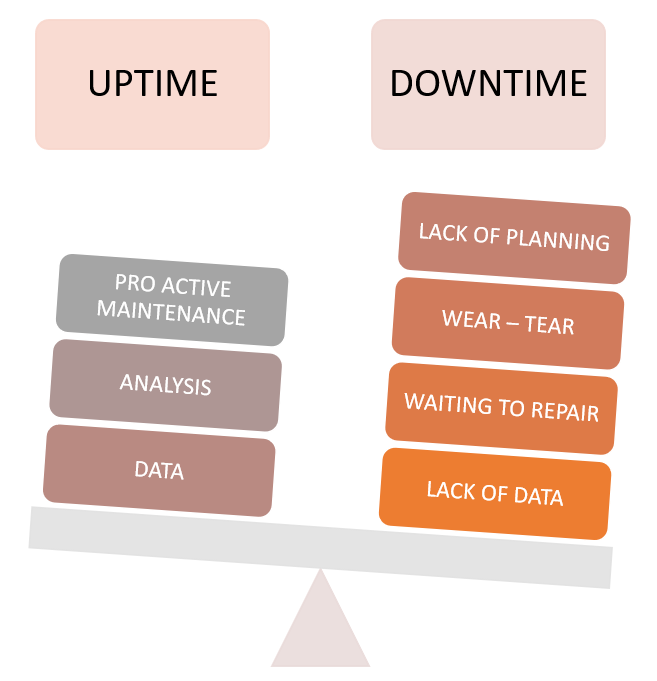
    After procurement, comes the real task of manufacturing. When goods are being manufactured the focus is on cost efficiency by achieving maximum uptime with minimum downtime. We are living in an always-on world, where things need to keep running 24×7 to achieve more profits year on year. The same applies to machines that are churning out goods. Here too, does not matter what domain is being catered; machines and tools need to be up and running all the time. An idle machine in manufacturing is a liability.

    In order to achieve 100% uptime, a critical factor is to predict downtime. Predictive downtime requires capturing real-time data. Data can be about how old the parts are, have parts are aging based on usage, when should parts be replaced and serviced, when should machine go through calibration, is demand going to keep machine idle, how can resources be planned efficiently and many other data points.

    Photo By Chetan Arvind Patil

    Oil and gas production has to be up and running 100% of the time. To achieve 100% uptime, the oil and gas industry has taken an advanced approach and adapted to data-enabled production. Manufacturing in today’s date is not just about production engineering, it has to have a data engineering aspect where data is captured, stored, analyzed, and presented for pro-active action.

    Capturing all such data points and presenting in a single dashboard can provide much more insight into the manufacture than waiting for the machine to go down. All of this requires a drastic change in the way of working so that resource planning for manufacturing is made more data-driven. Data-enabled manufacturing solutions are already present and it is time many manufacturers start taking data aspect into production to achieve 100% uptime.

    TESTING

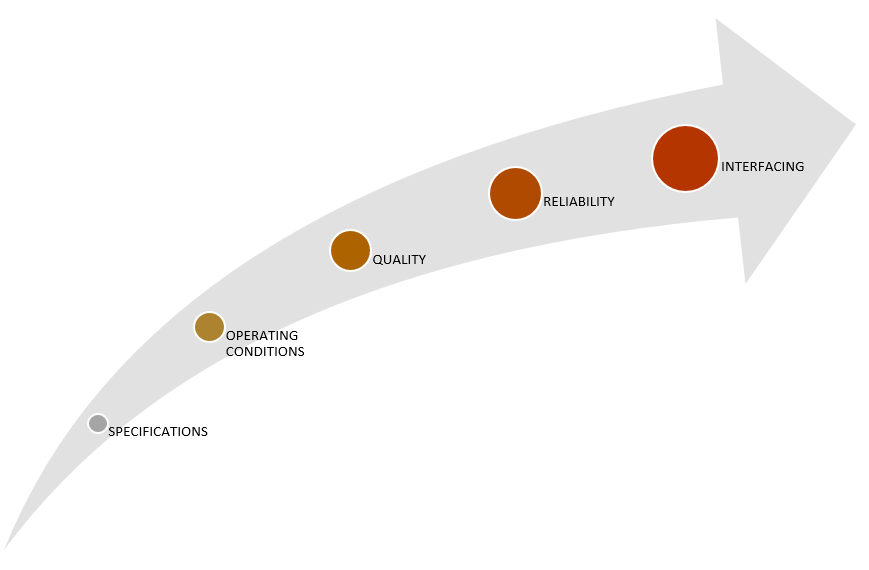
    Testing is the most critical process during manufacturing. Now only the product should meet all the requirements under quality, reliability, and operating conditions, the data generated during the testing process should also be analyzed thoroughly and stored in case of any customer return.

    Photo By Chetan Arvind Patil

    The last thing the manufacture wants is another Samsung Galaxy Note 7 situation where the smartphone exploded due to faults in the battery. Depending on the product the test data can be captured using different tools and processes. This requires implementing a software interface that can log the data during the testing process. Then, based on the specifications applicable, it can be then put through different operating conditionsquality, and reliability checks before putting through interface testing for a real-world application.

    Today, there are different analytical tools that are available in the market that are proving to be critical for productivity and probability. Data generation, data analysis, data action, and data storage in itself going to be a trillion-dollar industry. The solutions provided for manufacturing analytics with respect to testing are many. It is critical for product development and manufacturing companies to embrace and find ways to implement data-driven testing within the manufacturing cycle.

    After all the testing and quality requirements have been met the product can move to the next stage of manufacturing.

    PACKAGING

    In the US alone, 165 Billion packages are shipped every year and this is just e-commerce data. 50% of these packages end up being waste and not getting recycled. This clearly points to the need to make packaging more efficient.

    LimeLoop and Repack provide solutions to enable re-use of packaging. However, this requires tracking of where the package is being used and then need to re-ship the empty packages. This is not a practical solution for a custom manufacturer dealing directly with businesses that are not into e-commerce like car manufacturers, electronic design and manufacturing, and many other domains.

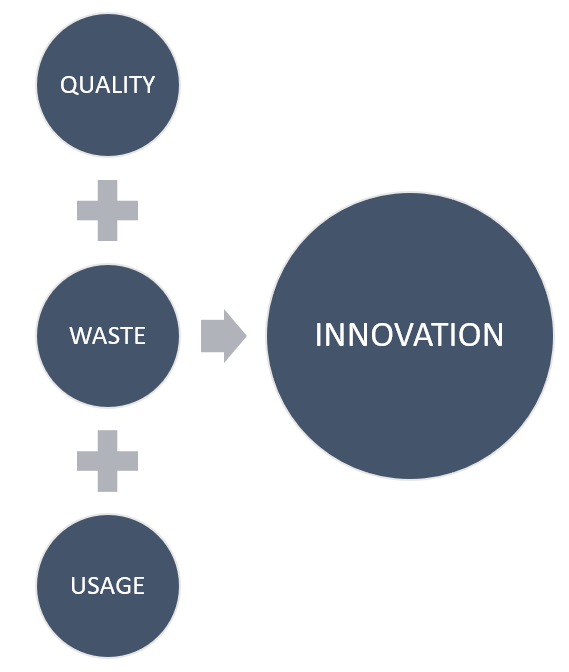
    In order to achieve efficiency in packaging, manufacturers need to follow data enabled packaging by considering following points:

    • Quality
    • Waste
    • Usage
    Photo By Chetan Arvind Patil

    Quality enables whether the product being manufactured and being shipped in certain packaging meets the required industry standards. This means tracking the data points of happenings with respect to packaging. The old-age process of using cardboards to package is only going to add cost and eventually leads to waste. To understand where cost savings can be achieved, it is critical to capture data points on the usage of the package. All this eventually allows innovation within the packaging domain to make more informed decisions.

    For example: Is there a way to package products in small form factors which can in turn save packaging cost including on shipping? This cannot be achieved by package innovation, which requires data capturing of the packaging within the manufacturing unit.

    LOGISTICS

    Out of all the blocks of manufacturing, logistics is the most advanced and has embraced data faster than any other sector. It has been the leader in data usage and driving it for the efficient delivery of goods.

    For manufacturer data usage in logistics means tracking the market for the least expensive way to ship the goods from point A to point B. Traditionally, big manufacturers try to save cost by means of entering contracts with giants like UPS, FedEx and DHL, which will provide cheaper cost for a certain number of shipments for the agreed period. However, smaller or mid-scale manufacturers do not have this luxury.

    Thanks to data sharing there are more than ever data points on the way to ship goods from one place to another and also understand a cheaper way to ship the product to the end customer. There are already many companies that have started to provide data-driven logistics to small and medium scale industries.

    To save cost, the planning team also needs to become more data-aware and then find ways to implement strategies to utilize cost effect logistics.

    Photo By Chetan Arvind Patil

    Currently, the majority of the manufacturer is shipping even before understanding market needs. That also means manufacturing before capturing demand. To save cost and be more efficient demand can be re-factored by implementing just in time stocking to save cost on shipping the product earlier than required.

    Logistics data analytics just does not apply to final goods, but to also to the raw materials. This is why the scope to save costs is much broader than one can imagine. It is time manufacturers embrace data tools to provide more insights to cost savings on logistics.

    DISTRIBUTION

    Distribution is more about after-sales handling when manufactured goods have shipped out. Data in the distribution has been more critical for e-commerce where manufacturers can directly engage with customers by eliminating distributors.

    In the age of data drove process and decision making, it is more critical to understand how data allows distributors to manage inventory and tap into the next era of the supply chain. For manufacturers, the less the number of stops from the factory to end customers, the more profits they can make. For distributors to be relevant, they need to keep track of industry demand and come up with a supply chain system that provides cost-saving and at the same time real-time delivery.

    Photo By Chetan Arvind Patil

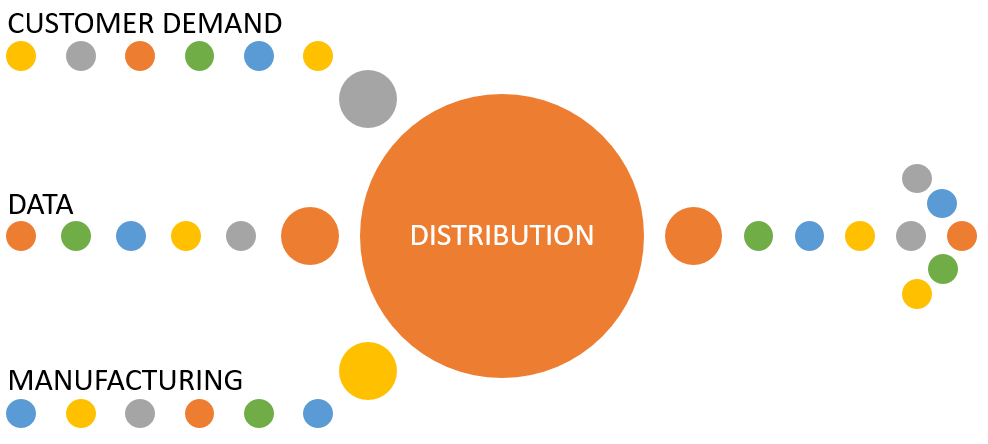
    If the customer needs the parts as soon as possible for the critical task that is stopping the production, then it becomes all about who can provide the needed goods in the fastest way possible. For such scenarios, it is important to tap into the data points in terms of usage and manufacturing.

    • From customers, distributors need to understand ways to leverage real-time usage of the parts so that they can ship when required and in some cases beforehand considering the aging the raw material has wen through.
    • From the manufacturer’s side, they need to keep track of real manufacturing throughout. This has to be the balance of demand and supply without getting into waste.

    This requires the implementation and usage of data tools that can provide distributors more than just inventory stock. There are already solutions out in the market, it is just about investing and understanding how distribution make most of the data-driven manufacturing.


    INDUSTRY 5.0

    As manufacturer look to increase the EBITDA, industry 4.0 is going to be a big driver for it by leveraging data points at each step of the manufacturing.

    Photo By Chetan Arvind Patil

    In a few years, the industry will soon transition to Industry 5.0 which will be more about smart automation with respect to decision making. These smart decisions will be towards reducing waste, enabling efficient processes hopefully without impacting human resources, and delivering what the customer needs by adapting products to their requirement.

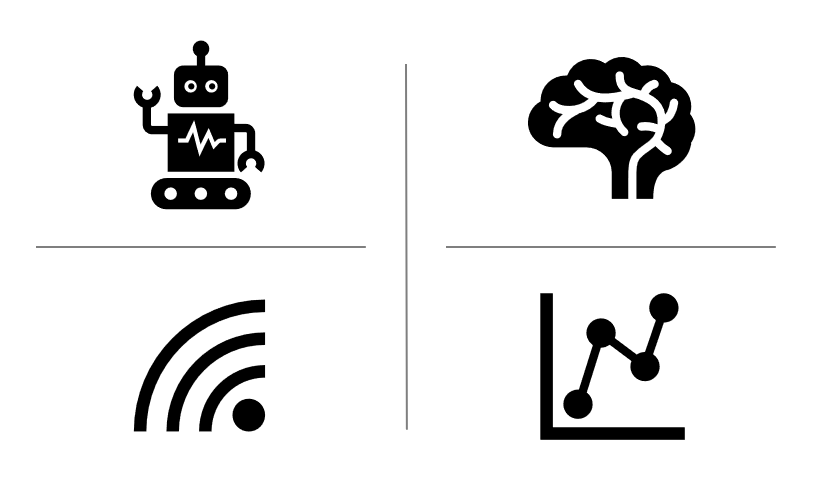
    It is going to be a combination of Data, Connectivity, Intelligence, and Automation. May be 3D Printers are the first step towards Industry 5.0.


    PSA

    McKinsey & Company has useful resources for those interested in learning more about data enabled manufacturing.