Category: DIGITAL

  • The Benefits Of Digital Twins For Semiconductor Product Development

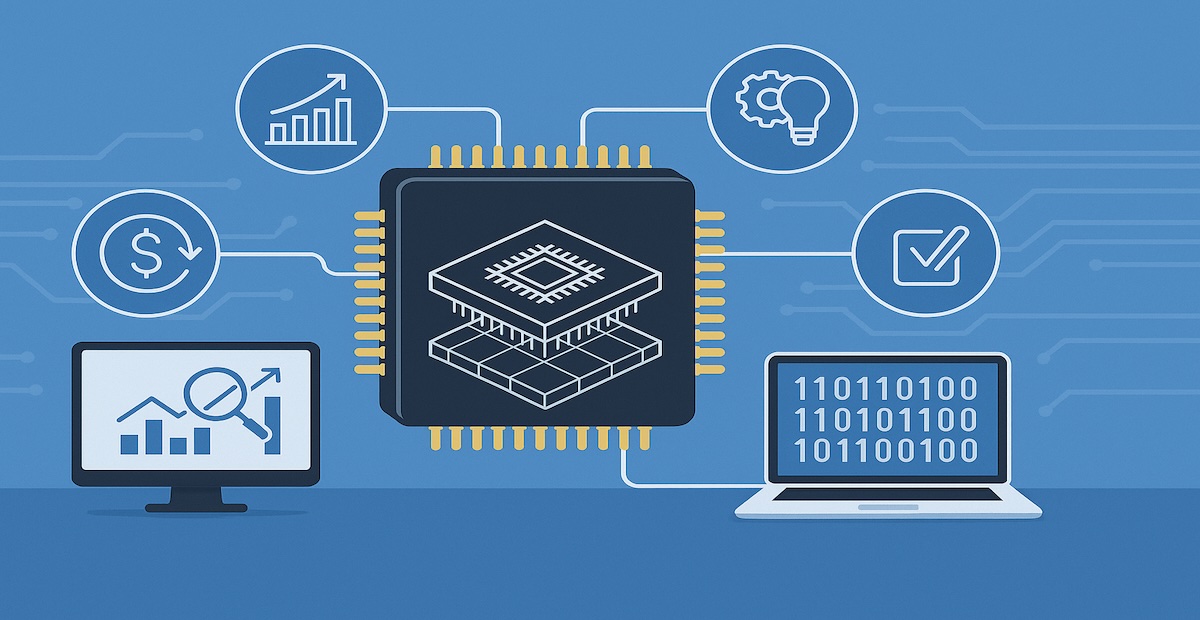
    Image Generated Using DALL·E


    The semiconductor industry is at a turning point. For decades, progress followed a well-defined path: scale transistors, shrink nodes, and watch performance and efficiency improve.

    However, as I discussed in The Role of Simulation in Semiconductor Product Development, this formula alone is no longer sufficient. Physical and economic barriers are making each new node more expensive, more complex, and slower to deliver.

    In this environment, innovation cannot rely solely on lithography advances, it has to come from how we design, validate, and manufacture chips.

    This is where digital twins are emerging as a critical enabler. Unlike static simulations, digital twins are dynamic, data-driven models that replicate the behavior of physical components, equipment, and processes in real-time.

    They represent not just a tool, but a new way of thinking about product development, one that connects design, manufacturing, and reliability into a continuous loop of learning and improvement.


    Why Digital Twins

    At their core, digital twins aim to bridge the gap between the physical and the virtual. They allow engineers to build a living, breathing model of a chip, a process, or even an entire fab, one that evolves with real-time data and can be tested under countless scenarios. Unlike traditional simulations, which are static and limited to a specific design phase, digital twins continuously adapt, creating a feedback loop between design, manufacturing, and reliability.

    As I explored in The Semiconductor Smart Factory Basics, smart factories already rely on sensors and analytics to monitor performance and drive efficiency. Digital twins extend this idea further by enabling the virtual modeling of entire systems, optimizing recipes, validating workflows, and reducing risks before they reach the production floor. The value extends beyond the fab.

    In The Semiconductor Reliability Testing Essentials, I discussed how AI-driven modeling can anticipate failures long before physical tests are complete. Digital twins take this predictive approach to the next level, embedding reliability into the earliest stages of design and ensuring that potential weaknesses are addressed before chips even leave the drawing board.

    By reducing costly iterations, lowering the reliance on physical prototypes, and enabling continuous learning across the product lifecycle, digital twins are becoming not just a competitive advantage but a necessity in the post-Moore era.


    Digital Twins In Action

    The promise of digital twins becomes clear when we examine how they transform specific stages of semiconductor product development, design, reliability, and manufacturing.

    Smarter Design Cycles: Instead of relying on lengthy trial-and-error processes with physical prototypes, digital twins enable the validation of architectures and exploration of design trade-offs virtually. In The Role of Simulation in Semiconductor Product Development, I discussed how simulation already reduces risks and accelerates iteration. Digital twins extend this idea by creating dynamic models that update with real-world data, ensuring that the “virtual chip” always reflects the current state of development.

    Predictive Reliability: Reliability is one of the most expensive and time-consuming parts of the semiconductor lifecycle. As noted in The Semiconductor Reliability Testing Essentials, AI-driven prediction can reduce reliance on long burn-in tests. Digital twins add another layer by modeling how devices behave under stress, heat, or aging, allowing engineers to simulate years of use in hours. This helps identify weak points early and deliver more robust products.

    Yield and Process Optimization: Yield is the ultimate measure of success in manufacturing. In Data-Driven Approaches to Yield Prediction in Semiconductor Manufacturing, I highlighted how analytics can drive better yield outcomes. Digital twins take it a step further by simulating entire fab processes, testing different recipes, and identifying bottlenecks without risking live wafers. This leads directly to higher throughput, less scrap, and more predictable manufacturing outcomes.

    Continuous Learning: The most transformative aspect of digital twins is how they turn every stage of development into a feedback loop. Each test, each process tweak, and each reliability check feeds back into the virtual model, making it smarter over time.


    Bottlenecks To Overcome

    For all their promise, digital twins in semiconductors face significant hurdles. As I noted in The Semiconductor Data-Driven Decision Shift, traditional EDA tools were never designed for system-level interactions across chiplets, packaging, and fab processes.

    Scaling digital twins requires integrating data from design simulations, equipment sensors, and reliability testing into one unified model, a challenge compounded by siloed workflows and the sheer volume of data modern fabs generate. Without seamless interoperability, the value of the twin remains limited.

    Economic and practical constraints add another layer of complexity. Building high-fidelity digital models, validating them across various operating conditions, and maintaining their accuracy in real-time is a resource-intensive process.

    As noted in The Economics of Semiconductor Yield, profitability often hinges on razor-thin margins. For digital twins to scale, the industry must establish standards, reduce the costs of adoption, and prove clear ROI. Until then, many companies will hesitate to embrace this transformative approach despite its long-term potential fully.


    Ultimately the companies that master digital twins will not only reduce risks and accelerate product cycles but also redefine what progress looks like in the post-Moore era. Just as chiplets and AI are reshaping architectures, digital twins are reshaping development itself.
  • Electronic ID – Authentication From Anywhere

    Electronic ID – Authentication From Anywhere

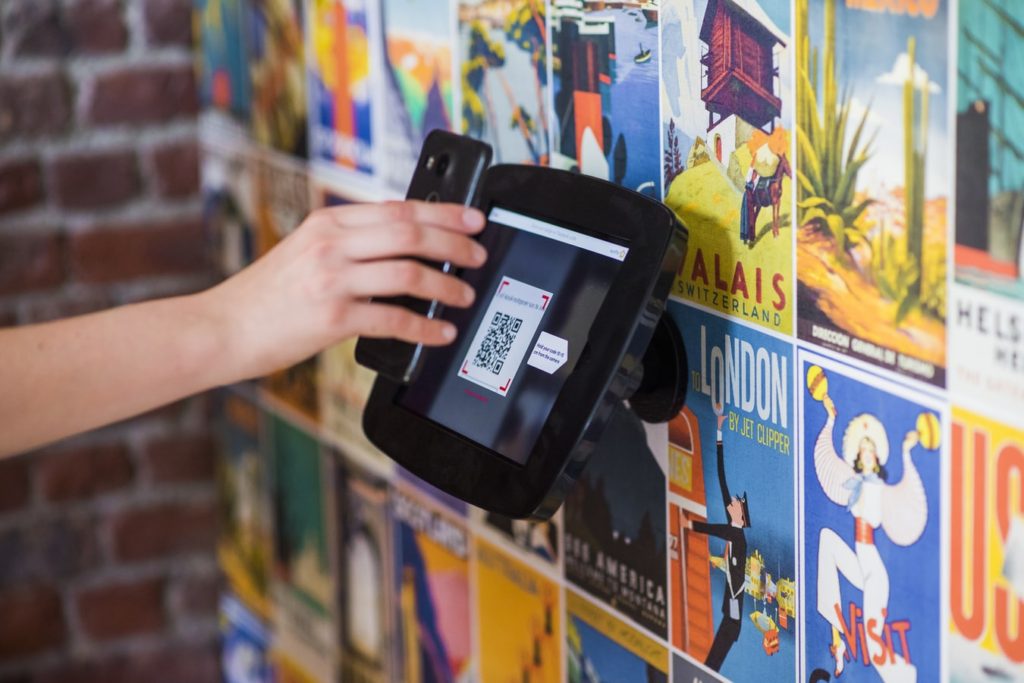
    Photo by Proxyclick Visitor Management System on Unsplash

    Identity is the backbone of Know Your Customer (KYC) process. Every country and company has its process and technology to ensure that the correct people have access to the correct resources. In the digital world, the Know Your Customer is moving to Electronic Know Your Customer (eKYC).

    Today, the world still relies on different types of identity documents for different services, with each service generating its identity numbers. From driving license to passport the list to have unique identity numbers and identity documents to prove the authentic identity of the owner never ends.

    On top of this, the majority of the countries have national identification programs that capture demographic or/and bio-metric information and connect it to an unique identification number. For example, the United States of America has Social Security Number, and then India has Aadhaar.

    Such national identification programs have met with a lot of criticism, but the fact is that the digital world will eventually rely on these centralized systems to shift from the traditional approach to have a separate identity document and identification number which used to prove the ownership.

    There is a dire need to move away from this process of providing a unique identity to each of the service types so that not only the process is centralized and relies on unique identification number and management but is also fast, secure, and enables cost-saving.

    The unique identification number and management solutions are important and critical in the digital world, and demands advanced solutions like Electronic ID (eID).


    IDENTITY PROBLEM

    To implement and use unique identification numbers and management, connected and secured infrastructure is required to ensure that the identity of the person and entity is preserved without compromising on security.

    Even though these unique identification programs have been implemented and in use, some gaps are there which still exist.

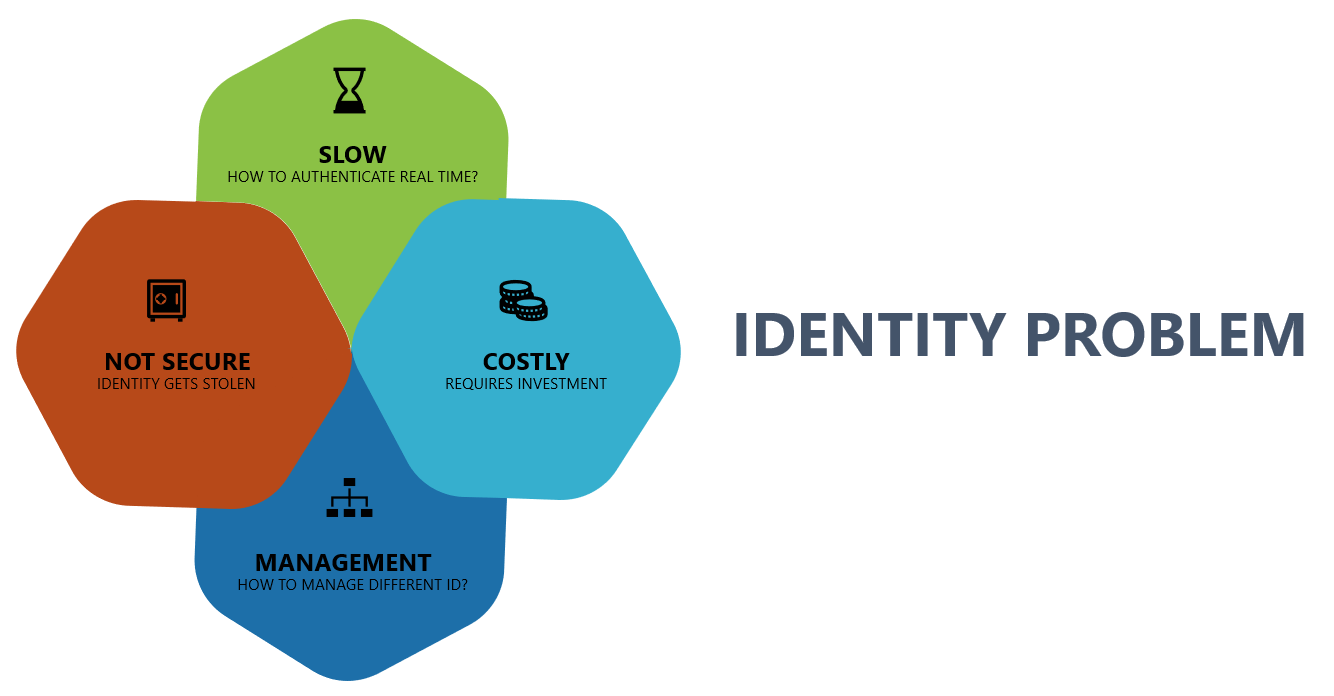
    Authentication on a connected system after producing identity card details is still not secure, costly, unreliable, and a slow process. Another fact is that all this requires an investment in infrastructure that validates the identity and makes the system costly for the business authenticating the details. Eventually, all these charges are passed to the consumer which makes it a costly process in the long term.

    Picture By Chetan Arvind Patil

    Data management is another issue because lack of standardization leads to add on investment in order to upgrade the systems to accept the new unique identification features while ensuring backward-compatibility.

    After all these investments and infrastructure to authenticate, there is no guarantee that the system is secure. With all the advanced approaches, the identity still gets stolen and thus invites fraud.

    All these issues make a strong case for unique identification number and management but using Electronic Identity (eID).


    IDENTITY SOLUTION

    One of the most talked-about solutions to solve identity management crises is Electronic ID (eID), which makes use of sensors and NFC enabled Electronic Identification Card (eIC) to authenticate the identity of the people.

    eID relies on demographic or/and bio-metric information to validate correct details. These details are already part of many national identification programs. By making use of eID, these programs can solve the identity crisis by ensuring security and centralization by data storage.

    Picture By Chetan Arvind Patil

    The smart cards that use eIDs are called eICs which are equipped with electronic chips to ensure that the data is stored securely and also transferred with encryption when required. Along with these features, these eICs also make use of the Trusted Platform Module (TPM) that enhances security and avoids theft.

    There are already many solutions in the market catering to the need for eICs. Like NXP’s National Electronic ID (NeID) solution not only secures the information but also allows high return on investment. A similar solution is also available from Infineon that is also targeted toward NeID.

    With EU going for Electronic IDentification, Authentication, And Trust Services (eIDAS), the adoption of eICs is going to be faster than anticipated.


    IDENTITY INNOVATION

    Many innovative solutions around eICs are already available. Countries have already started to make use of eICs in their national identification program where the true potential of eICs is.

    For example, Estonian Identity Card program is one of the earliest programs to make use of eICs to register its citizen. This innovation allows easy access to various public services and also secures the identity of the users.

    The VideoID, SmileID, and SignatureID solutions created by eID is another example of how to make the most of the technology to allow faster onboarding of customers by ensuring that the information provided is accurate and is not falsified.


    IDENTITY FUTURE

    Given how both software and hardware is taking over the world, it is certain that the future of identity is the body. Technology is going to make Microchip Implant a day to day activity. Certainly, this is going to be voluntary.


    It will be interesting to see the development and adoption of eICs. Given the digital world in the future, eICs will certainly take over traditional identity cards. The question is how soon.

    Many advanced eID based technological solutions will come out of innovative startups around the world. Creating businesses and solutions on top of the eIDs and eICs will also open up new market.

    With Work From Anywhere, the identity authentication is also going to be from anywhere with the help of Electronic ID (eID).


  • The Wireless Charging World

    The Wireless Charging World

    Photo by Lucian Alexe on Unsplash

    The major reason smart devices, mainly smartphones, are immensely useful is due to the portability they provide with the help of the battery management system. This allows consumers to make use of the device without direct supply for an extended period.

    Even though every new smart device is more efficient compared to the last concerning the power consumption and battery life, there are still gaps on the battery technology innovation side that have not kept up with the growing software and hardware demand.

    To tackle this critical gap, the industry is moving from wired to wireless charging solutions as it provides charging wire-free and aims to make it ubiquitous. The solution has gained traction in the smartphone domain where charging points are increasingly being switched to wireless hotspots than wired.

    By 2030, Wireless Charging Will Be $50 Billion Market

    The concept of wireless electricity is not new and has been in existence since 1900s. The major gap has been in adoption in the areas where there is need to have wireless charging solution to ensure consumers and businesses never run out of power.

    With the popularity of electric vehicles, it will be quite interesting to see what type of innovative solutions come out to provide hassle-free charging.


    WHY WIRELESS CHARGING

    With the growing demand to perform day to day activity on the go also means the power required to run the smart devices should be available any time. Most of the devices that reside at one location like smart cameras, smart sensors, and so on, can be hooked directly to the power outlet to draw electricity 24x7x365. This does not apply to the devices that have to be used remotely like smartphones, laptops, or an electric car.

    Though these devices can get hooked to the power outlet, but do suffer from the fundamental issue of requiring a different set of adapter for each of the devices.

    How useful will it be if the source or the adapter is capable of adapting the current and voltage requirement of the device so that one adapter device fits all?

    Picture By Chetan Arvind Patil

    This will not only drastically decrease the need to have different types of charging points and devices, but will also make the system smart by providing always-on charging capability. This adds one more ease of use layer on top of what is currently provided by the smart devices concerning compute and connectivity.

    In the end, the demand to use smart portable devices and solutions will not go down. The form factor may change, but the need will always be there. It is about time that the way these smart devices get powered also becomes smart, and wireless charging is the way to do it.


    IMPACT OF WIRELESS CHARGING

    Imaging a scenario where you have four different types of smart devices to charge, with each using different power adapter, and on top of this, there is only one power outlet to use. What do you do? The simple answer is charge as per the priority of the device that needs to be active for a critical task. Is this a smart way to charge smart devices in a smart world?

    Wireless Charging Is Not About Smart Devices But About Smart World

    If the answer is no, then certainly the way to power these devices should change. This can be with the use of Quick Charge technology, but it requires that the device is equipped with a specific System on Chip (SoC).

    Another important factor is that charging in the future will not be limited to consumer electronic smart devices only. The definition is going to extend to automotive and all the connected systems that will go wireless.

    The impact of wireless charging is huge not only from the market demand point of view but also on how much good change and impact it will have on the usage.

    Wireless charging will extend the life of using the device and will ensure that the smart systems never run out of the power. These always-on systems will make use of a smart sleeping mechanism to provide savings to businesses, industries, and consumers.

    Picture By Chetan Arvind Patil

    Wireless charging will drive innovation by introducing solutions that are built on top of next-gen connectivity standard. The portability wireless charging will add will also ensure standardization by eliminating the need to have different types of adapters, cables, and power outlets.

    The opportunity and solutions around wireless charging are also going to drive faster adoption of an electric vehicle by providing more mileage without worrying about the stoppage to charge the car as roads and the nearby system itself can provide wireless charging solutions.

    The wireless charging system by default is COVID-19 compliant.


    WIRELESS CHARGING INNOVATION

    The innovation around wireless charging is going to be the key factor in faster adoption. There are already many interesting ideas that are out in the market that showcase the power of wireless charging.

    AiraPower’s FreePower technology shows how customized solution that provides multi-device wireless charging is going to change the day to day charging points at home, automotive, and business zones.

    Energous also showcases different possible ways wireless charging is going to be part of the daily life. It provides a unique approach to how the smart devices can draw energy wirelessly the moment the battery level goes down a specific threshold.

    Semiconductor companies have already started to provide solutions that can be deployed around the city to enable the charging of electric vehicles an enjoyable and more innovative. The current solution focuses on dedicated parking spots with wired cables that can be used by electric vehicles. Imagine parking the vehicle in a shopping mall and it charges using the wireless pads in the parking spot while one enjoys the shopping.

    All this leads to a true benefit when the electric vehicle cannot be refilled as fast as a fossil fuel-powered vehicle.

    These are a few of the many solutions out in the market. The next year or two more innovative and advanced approaches will show up with more smart devices starting to adopt wireless charging.


    FUTURE OF WIRELESS CHARGING

    It is important to understand the future of wireless charging. The current use cases are well defined, with more emphasis on smartphones than any other consumer electronics.

    Currently, the wireless solution is confined to specific locations like a couple of devices at home and in the workplace. Going forward, there are going to be three key areas which will see faster and exponential adoption this leading to the standardization of wireless charging solutions.

    These three domains are: automotive, home and work place.

    In automotive, the electric vehicles are going to adapt to the wireless charging more than any other solution. It will showcase the true potential of an inductive charging for high power devices like a motor car or a bus. China being one of the fastest-growing markets will lead the way in showcasing innovative approaches concerning wireless charging and electric vehicles.

    Picture By Chetan Arvind Patil

    For home, the solutions will move beyond smartphones to television and cooking appliances. The number of power outlets will decrease, and home buyers and renters will see how real estate will make use of wireless charging solutions to provide Over The Top (OTT) services. This may add cost to the buyers and renters, but will also see a balance by removing the need to have different types of power outlets and adapters.

    Workplace (including business and entertainment zones) will start adopting to the solutions whenever there is a gathering of employees or the number of visitors in a business zone is more than the number of power outlets. Such places will see more wireless charging stations that will not require cables and will only have pads that will act as charging points.


    This decade with advanced connectivity will demand always-on devices. This is going to push for the faster adoption of wireless charging. It will be interesting to see what other innovative use cases of wireless charging come up as adoption grows.


  • 5G And Wi-Fi 6 Will Transform Digital Life

    5G And Wi-Fi 6 Will Transform Digital Life

    Photo by Thimo Pedersen on Unsplash

    The next decade is going to be all about enhanced digital experience built on top of the most advanced wireless data communications technologies ever: 5G and Wi-Fi 6.

    These two wireless technologies are not only going to increases the data throughput but also provide much better connectivity experience with minimum power impact, thus making them suitable from home to industry-wide applications.

    5G has already started to take over the world and along with Wi-Fi 6 proliferation, the always-on connectivity is going to ease day to day information-enabled digital life.


    WHAT IS 5G

    5G is the next generation of voice and data communication solution that is capable of providing 20x more data speed compared to current 4G deployed all over the world. It does so by enabling low latency by deploying a wide array of networks that allows multiple users with multiple inputs and multiple output data transmission.

    5G is also capable of running at a different spectrum from below 1GHz to above 24GHz.


    WHAT IS Wi-Fi 6

    Wi-Fi 6 is the next IEEE 802.11ax standard designed for the future data, increasing nodes and security needs. It is going to provide much better seamless connectivity without getting affected by the number of active users. It can do so by providing high capacity via Orthogonal Frequency-Division Multiple Access (OFDMA) with minimal energy requirements.

    Poor connectivity and network interference at home and offices are going to be a thing of past with Wi-Fi 6. Wi-Fi 6 is capable of using both 2.4 and 5 GHz frequencies. With recently introduced Wi-Fi 6E which supports 6GHz may allow easy interoperability with 5G.

    One of the benefits of Wi-Fi 6 is its backward compatibility, which allows previous Wi-Fi generation devices to work with Wi-Fi 6 certified products. For better user experience, it is always good to have all the infrastructure upgraded with both transmitting and receiving systems capable of running Wi-Fi 6 protocol.


    5G vs Wi-Fi 6

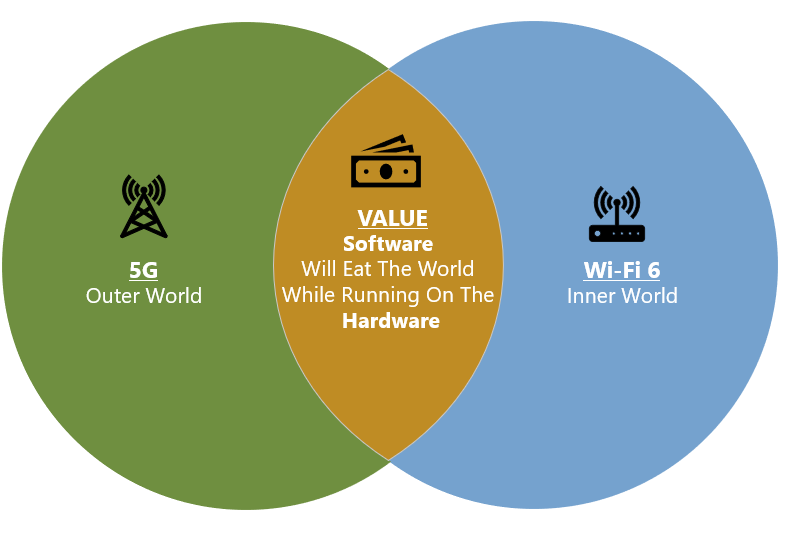
    It is often said that 5G and Wi-Fi 6 are supposed to compete for the same services. In reality, 5G is designed specifically to cater to the mobility needs, while Wi-Fi 6 for better location aware requirements.

    Picture By Chetan Arvind Patil

    5G will dominate on-the-go connectivity by providing faster data and voice speed. Wi-Fi 6 on other hand will cater to the smart solution (while taking the help from 5G) without worrying about the number of nodes, access points, and security.

    In the end, 5G and Wi-Fi 6 are going to work in harmony and create value for the next digital decade.


    5G IS FOR THE OUTER WORLD

    Every wireless technology has a perfect use case. Near-Field Communication is designed for secure transactions like paying via NFC enabled credit card or Mobile Wallet. Same is true for Bluetooth which is designed for short-range communication like connecting to streaming devices or car’s infotainment.

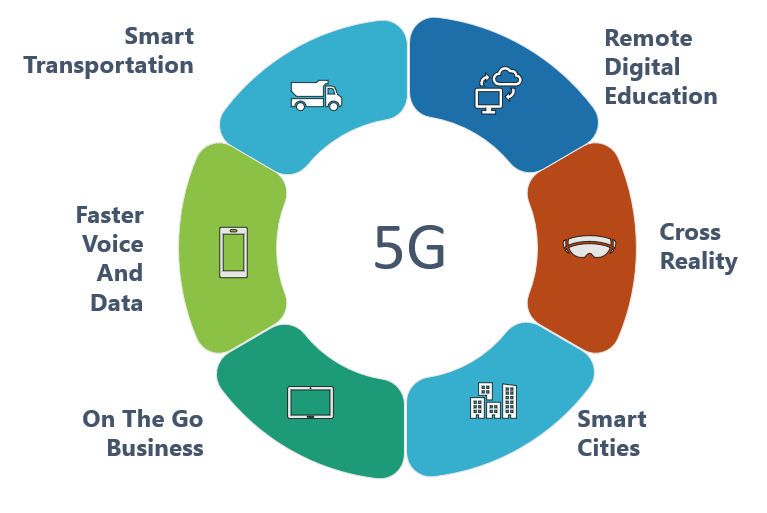
    Similarly, 5G has been designed and developed over the last decade with future demand in mind. It is going to be the de-facto wireless solution for anything that requires a remote connection. Whether it is the remotest place that requires high-speed data to enabling cross reality in places where it is difficult today. It will also ensure that digital education is accessible at affordable cost to anyone with 5G equipment and networks.

    Picture By Chetan Arvind Patil

    5G is going to benefit both consumers and businesses due to the real-time fastest possible access to the data. Smart cities around the world will provide public service on top of 5G networks from remote kiosks to online utility access and payment solutions.

    Over The Top (OTT) is a terminology that allows content to thrive, scale, and monetize on top of an existing technological solution. Not only 5G is going to enable software-driven OTT, but many hardware OTT are also going scale on top of 5G.

    All of this is going to enable the next trillion-dollar market with huge employment opportunities for every sector.


    Wi-Fi 6 FOR THE INNER WORLD

    While 5G is supposed to transform the outer world, Wi-Fi 6 is going to enhance the experience of indoor digital activity to the next level.

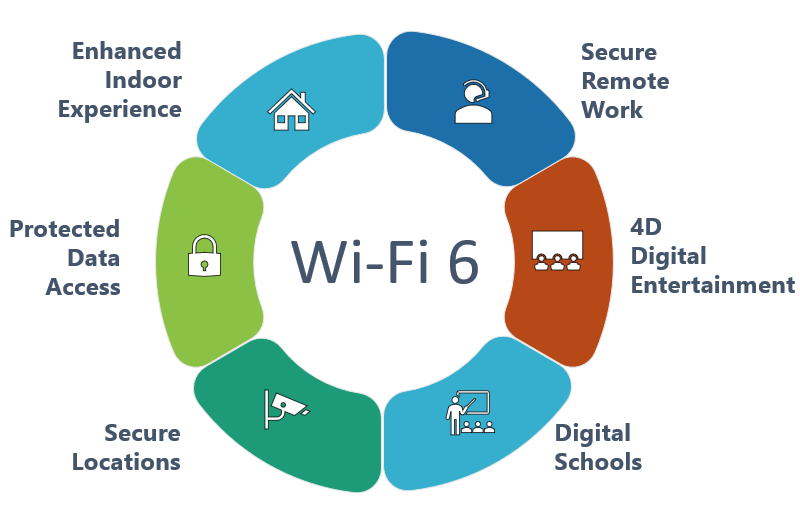
    There are fundamentally bigger differences between 5G and Wi-Fi 6. One of the simplest to understand is that 5G requires full infrastructure upgrade including smart devices like smartphones. On the other hand Wi-Fi 6 is about connecting to the access point with Wi-Fi 6 protocol enabled and thereby leveraging existing high-speed bandwidth network. This is why Wi-Fi 6 is more suitable for the inner world like home, public areas, offices, and schools as these are already equipped with high speed wired networks.

    Picture By Chetan Arvind Patil

    For Wi-Fi 6 too full upgrade of receiver and transmitter (Wi-Fi 6 certified) is preferred, however since it is backward compatible thus only one device (receive/transmitter) needs to be using Wi-Fi 6 certified. However, from technical point of view it still doesn’t mean full Wi-Fi 6 experience. With Wi-Fi 6, the routers will allow better performance irrespective of number of active IoT devices. WPA3 (security standard used by Wi-Fi 6) will also ensure the secure transaction are more hack-proof.

    Only time will tell if the routers itself will be used as hardware devices that will run more digital applications thus ushering new ways to provide OTT services. In any case, new era of home connectivity will enrich digital experience.


    HURDLES WITH OPPORTUNITIES

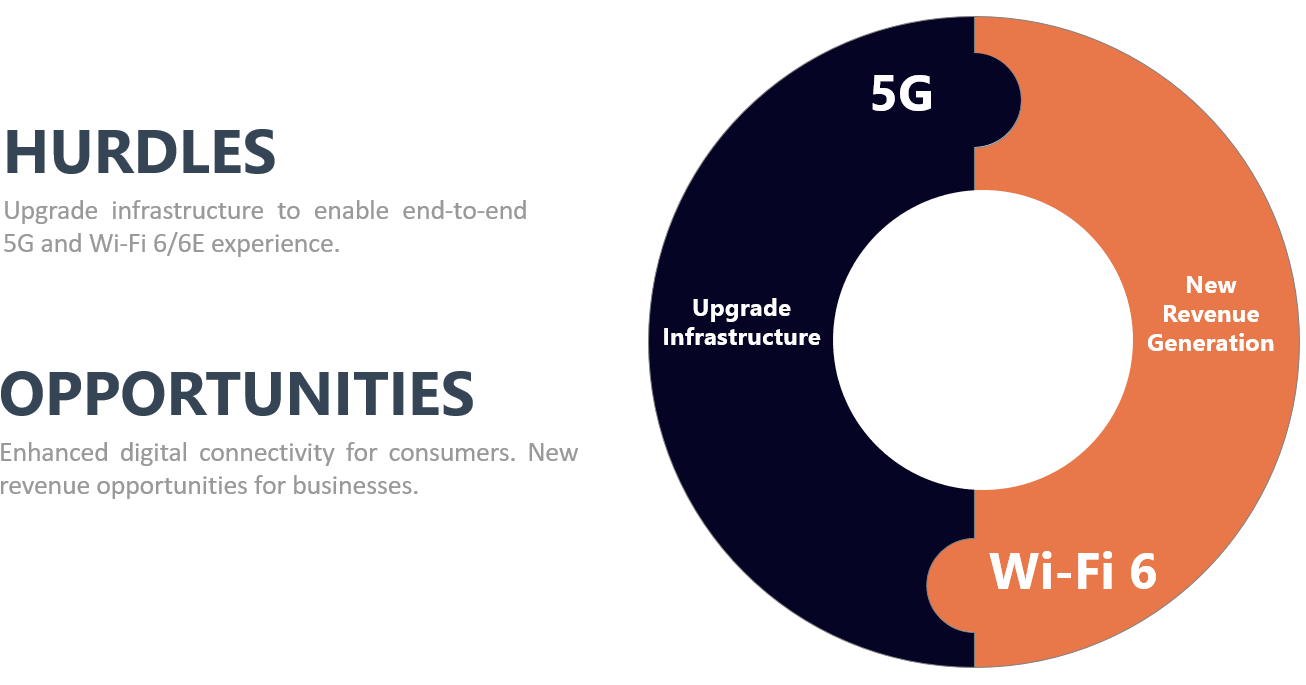
    The biggest hurdle for both 5G and Wi-Fi 6 is to ensure that not only new devices are capable of communicating using the two new protocol but the infrastructure required to deliver the true promises these two solutions hold is deployed massively across the globe. It will be critical to implement in India, where millions of users are still using 3G and older Wi-Fi certified devices.

    For 5G, the smart devices need to have electronic chips capable of encoding/decoding the packets that will be sent to and from the nearby cell towers. Telecom operators will have to invest and upgrade all of the networks to ensure 5G protocols can run smoothly on top of the existing 4G infrastructure. Given that some countries still have more than 350 million 2G users, it will take half a decade to move many of the current 3G/4G users to 5G.

    Wi-Fi is backward compatible, thus it only needs one of the two communicating devices to be running on the newer protocol. However, OEMs have started launching laptops, smartphones, and smart devices with Wi-Fi 6. Network equipment also have started to come Wi-Fi 6 certified. Similar to 5G, Wi-Fi 6 large scale adoption is also expected to take more than half a decade as many business that are going through the financial impact due to COVID-19 will be focusing more on revenue re-generation than upgrading existing infrastructure at large.

    Picture By Chetan Arvind Patil

    With hurdles come opportunities. Upgrading all the devices (or one of the nodes for Wi-Fi 6) that will access these protocols at different frequencies, also means tremendous revenue opportunity from OEMs to Distributors. It will also provide platform for the new markets to tap into the hardware manufacturing and assembly opportunities.

    Another possibility is merging 5G with Wi-Fi 6E (a step ahead of Wi-Fi 6), and that is going to ensure that the investment to implement these infrastructure today pays off in the long term when devices and nodes can easily switch between these two wireless frequency technology without upgrading.

    It may also drive innovation as both 5G and Wi-Fi 6E solutions can reside on the same System-On-Chip, thus allowing optimization on the designing and reducing manufacturing cost.


    DIGITAL TRANSFORMATION ROAD MAP

    As the world moves towards post-COVID-19 new normal, digital connectivity across the globe will be the priority. Governments will push for newer and better wireless connectivity to enable end-to-end digital transformation road map. 5G and Wi-Fi 6 are going to ensure that every digital offering is experience the new innovation.

    Picture By Chetan Arvind Patil

    The digital transformation road map will be a 360-degree view on how daily home to business to industry activity is going to be always-on data enabled. Whether it is accessing information at home, commuting to the office, shopping at local stores, running in the park, producing products in heavy industry, going for health check-ups to making cities smarter.

    All of this is going to drive change, thus allowing 5G And Wi-Fi 6 to transform digital life.


    PSA

    For the technical audience: