Category: FUTURE

  • The Semiconductor Coal

    Image Generated Using DALL-E


    The research from the University of Illinois Urbana-Champaign, the National Energy Technology Laboratory, Oak Ridge National Laboratory, and the Taiwan Semiconductor Manufacturing Company has unveiled a novel use of coal in microelectronics. It leads to the question of whether coal (a resource that is widely available in many countries) can drive the semiconductor industry by enabling some breakthrough solutions. The answer might be yes.

    The fundamental appeal of coal in semiconductor production lies in its carbon content. When processed into graphene, a form of carbon only one atom thick, exhibits exceptional electrical, thermal, and mechanical properties. These properties make graphene an ideal candidate for various semiconductor applications. Unlike traditional semiconductor materials like silicon, graphene allows for potentially faster and more efficient electronic devices, paving the way for next-generation technologies.

    Let us take a look at a few promising coal-based solutions that can power the future needs of computing:

    Carbon For Silicon Carbide (SiC) Semiconductors: Silicon Carbide, a compound semiconductor material, is essential in high-power, high-frequency applications. Formed by combining silicon and carbon, coal is an abundant carbon source. SiC semiconductors are widely used in power devices, high-temperature sensors, and high-frequency devices. It could be one way to mass-use coal to enable SiC. However, there are several hurdles in the form of purity to producing high-quality coal. Nevertheless, Touchstone Research Laboratory has done a study on a comprehensive evaluation of how coal can be used in making porous silicon carbide. It recommends using coal tar pitch as the principal carbon source since it does not have an ash constituent, has a high carbon yield, and is an excellent binder.

    Graphene Production: Graphene, a form of carbon only one atom thick, exhibits exceptional electrical, thermal, and mechanical properties. It is used to make faster and more heat-efficient transistors than traditional silicon transistors. Coal is a potential source for graphene production due to its high carbon content. Researchers at the Georgia Institute of Technology have already created the world’s first functional semiconductor made from graphene. As the research advances, this could be a significant breakthrough for the semiconductor industry.

    Precursors For Carbon Nanotubes: Carbon nanotubes (CNTs), with their remarkable electrical conductivity and mechanical strength, are promising in various electronic applications. Coal can serve as a raw material for the production of CNTs. Researchers from Northwestern University have already shown the future of carbon nanotube (CNT) transistors, which are emerging as a potential replacement for silicon in transistors.


    Picture By Chetan Arvind Patil

    The above three are only a few use cases of carbon/coal in the semiconductor industry. Several researchers have been focusing on how to improve microelectronics using coal. If the technology and business world align, coal-driven carbon can push the computing industry to new levels.

    Moreover, using coal-derived carbon in semiconductor manufacturing could significantly reduce costs. Coal is abundant and inexpensive, especially compared to rare or hard-to-process materials currently used in semiconductor fabrication. By tapping into this resource, the industry can lower production costs while maintaining high-performance standards. This cost-effectiveness could lead to more affordable electronic devices, making cutting-edge technology more accessible to a broader range of consumers.

    In conclusion, the integration of coal into the semiconductor industry represents a significant step forward. It combines the benefits of advanced material science with the practicality of using an abundant resource.

    This innovation promises to enhance the performance and reduce the cost of electronic devices and contributes to a more sustainable approach to technological advancements. As research and development in this field continue, one can expect to see a new era of electronics powered by the unlikely hero – coal.

  • The Future Of Semiconductors: Advancements And Innovations To Watch Out For

    Photo by Carlos Irineu da Costa on Unsplash


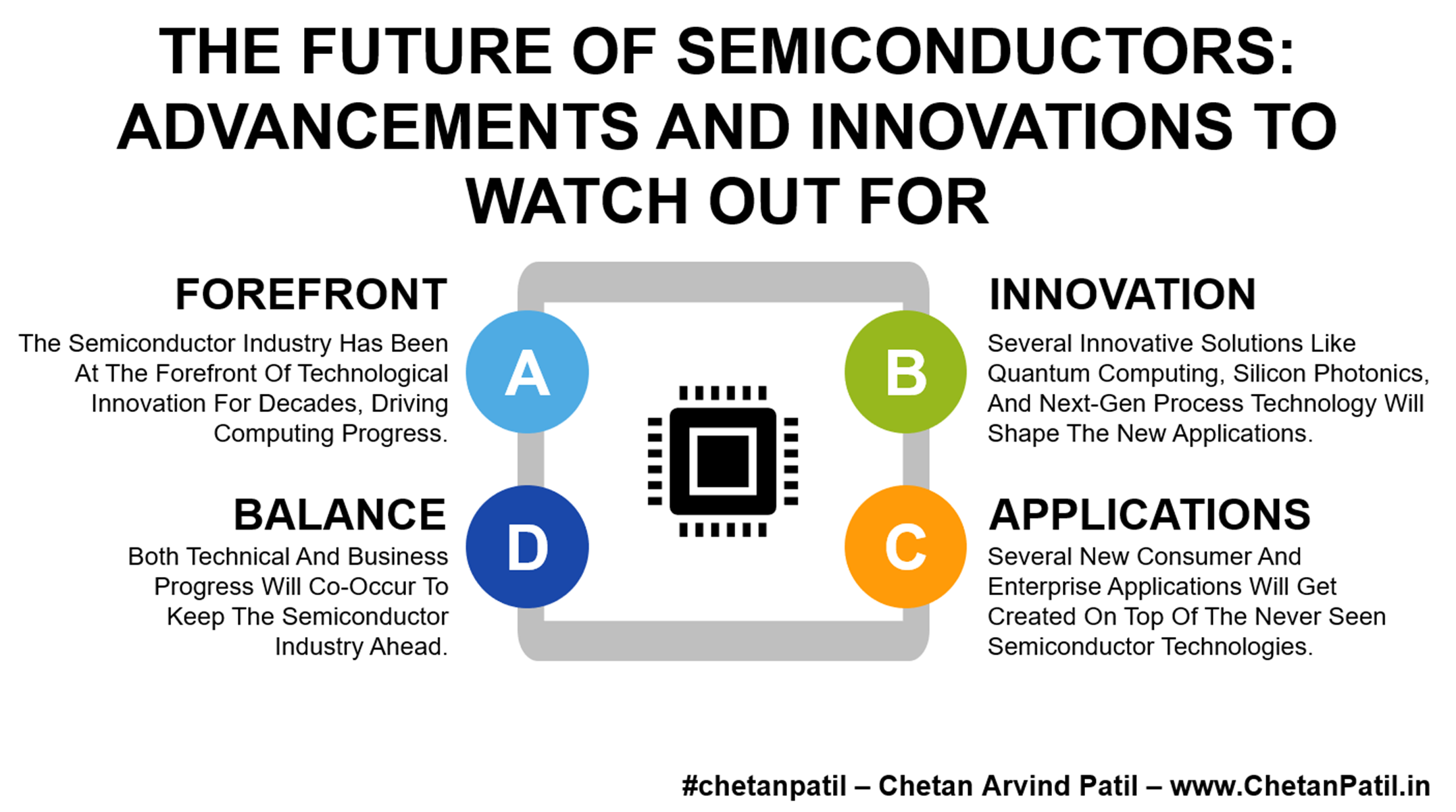
    The semiconductor industry has been at the forefront of technological innovation for decades, driving progress in computing, communications, and consumer electronics. In recent years, the industry has seen significant advancements in materials science, with the development of new materials and processes that enable the creation of smaller, faster, and more energy-efficient chips.

    For example, using high-k dielectrics and metal gates has allowed for creation of transistors with better performance and lower power consumption. Additionally, the industry has seen a shift towards heterogeneous integration, where different types of chips are combined in a single package to improve performance and reduce power consumption.

    As years go by, the speed of innovation is going to increase further, and there are some exciting innovations and trends to watch out for in the semiconductor industry:

    Quantum Computing: Quantum computing is an emerging technology that has the potential to revolutionize the semiconductor industry. It requires new types of semiconductors that can operate at low temperatures.

    Neuromorphic Computing: Neuromorphic computing involves the development of computer chips that mimic the structure and function of the human brain. It has the potential to revolutionize the computing industry and could lead to the development of more efficient and intelligent machines.

    Silicon Photonics: Silicon photonics is a technology that uses light to transfer data between computer chips. It has the potential to revolutionize data centers, as it can move data faster and with less power than traditional copper wires.

    Advanced Packaging: Advanced semiconductor packaging technologies are playing a critical role in enabling the development of high-performance and power-efficient electronic devices. These packages offer a range of benefits, including improved thermal management, higher bandwidth, smaller form factors, and greater integration density.

    Memory Solutions: With the rise of big data, artificial intelligence, and machine learning, there’s a growing need for advanced memory solutions such as High Bandwidth Memory (HBM), 3D NAND flash, and other emerging memory technologies.

    Next-Gen Process Technologies: New process technologies, such as Extreme Ultraviolet (EUV) lithography and FinFET transistors, will enable the manufacturing of smaller and more powerful semiconductors.

    Above advancements are already setting up the platform for several types of new-age applications and use cases. Among all, there are specific sets of applications that will be game changers. These will enable better utilization of computing resources, thus bringing more attention to the semiconductor solutions and critical future requirements.


    Picture By Chetan Arvind Patil

    Some of the top and growing application fields where advanced semiconductor solutions will play a key role are:

    Artificial Intelligence (AI): AI is becoming increasingly important in various industries, and the semiconductor industry is no exception. With semiconductors’ helps, AI applications can perform complex calculations and tasks quickly and efficiently.

    Autonomous Vehicles: The development of autonomous vehicles is driving demand for semiconductors that can handle large amounts.

    Neuromorphic Vision Sensors: These sensors are being developed to mimic the human eye and brain and could lead to the development of more efficient and intelligent image-processing systems.

    Wide Bandgap Semiconductors: Wide bandgap semiconductors, such as silicon carbide and gallium nitride, can enable more efficient power conversion and management in various applications, such as electric vehicles and renewable energy systems.

    Given the wide range of semiconductor advancements, including the ability to create a new set of applications, semiconductors will continue to shape the future of the computing industry, with both technical and business implications.

    On the technical side, the continued development of new materials, processes, and packaging technologies will create even smaller, faster, and more power-efficient chips. It will allow for the development of new types of devices and applications that were previously impossible, such as wearable computing devices, autonomous vehicles, and advanced medical devices.

    On the business side, the semiconductor industry will be a significant driver of economic growth, with companies investing heavily in research and development to stay competitive. Additionally, the increasing demand for semiconductors will drive new business models, such as chiplets and system-in-package, eventually enabling greater customization and modularity in electronic systems.

    Overall, the semiconductor industry is poised to play a critical role in shaping the future of the computing industry, driving innovation and economic growth for years to come.


  • The Semiconductor Market And Design Correlation

    The Semiconductor Market And Design Correlation

    Photo by Vishnu Mohanan on Unsplash


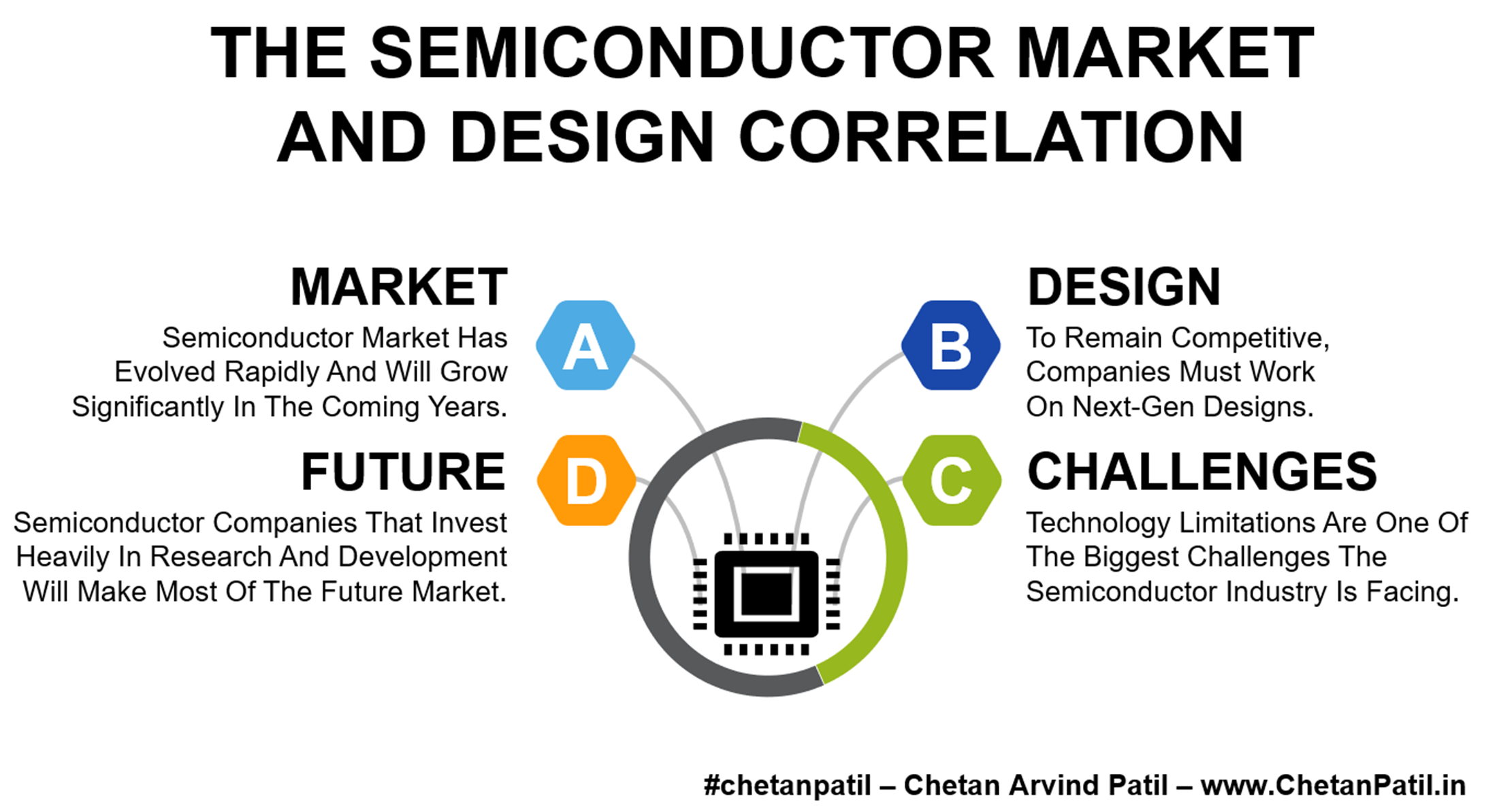
    The semiconductor market has evolved rapidly and will grow significantly in the coming years. The emergence of new areas, such as artificial intelligence, machine learning, and autonomous vehicles, will drive this growth. However, this growth will also bring challenges, such as increased competition and the need for more efficient production processes.

    To remain competitive in this ever-changing market, companies must stay ahead of the curve by investing in research and development to create innovative products that meet customer needs. They should also prepare to face any potential challenges that may arise due to changes in technology or regulations.

    Market: Semiconductor Market Has Evolved Rapidly And Will Grow Significantly In The Coming Years.

    Design: To Remain Competitive, Companies Must Work On Next-Gen Designs.

    One such challenge is launching new chip solutions to meet the demand for faster, more powerful devices. With the increasing need for data processing and storage, chip solutions must provide high performance while reducing power consumption. Developing such solutions has become increasingly difficult.

    On top of all this, semiconductor design is a complex process requiring much innovation and creativity. It involves designing features that meet the customer’s requirements while also considering the various bottlenecks in the process. All of these require a lot of time and eventually increase the cost.


    Picture By Chetan Arvind Patil

    The challenges in semiconductor design are numerous. It ranges from meeting customer requirements to dealing with technological limitations. Designers must be able to think outside the box and come up with new solutions to overcome these challenges. Additionally, they must stay up-to-date on the latest trends and technologies to ensure their designs are competitive and efficient.

    Semiconductor design time to market is also an essential factor for any business. It determines the time, cost, and resources needed to bring a product from concept to market. The faster a product can be designed and manufactured, the more money it can generate for the company.

    Challenges: Technology Limitations Are One Of The Biggest Challenges The Semiconductor Industry Is Facing.

    Future: Semiconductor Companies That Invest Heavily In Research And Development Will Make Most Of The Future Market.

    With technological advances, semiconductor design time to market has become shorter and more efficient. Companies can now reduce their costs and resources while promptly producing high-quality products. However, achieving such results demands deploying a process that requires investment.

    The semiconductor market will generate more than $400 billion in revenue by 2025, and companies that invest heavily in research and development will make the most of it. Companies overcoming design challenges to create or expand the market will certainly grow tremendously.