Category: RELIABILITY

  • The Semiconductor Reliability Standards That Shape Automotive IC Cost And Complexity

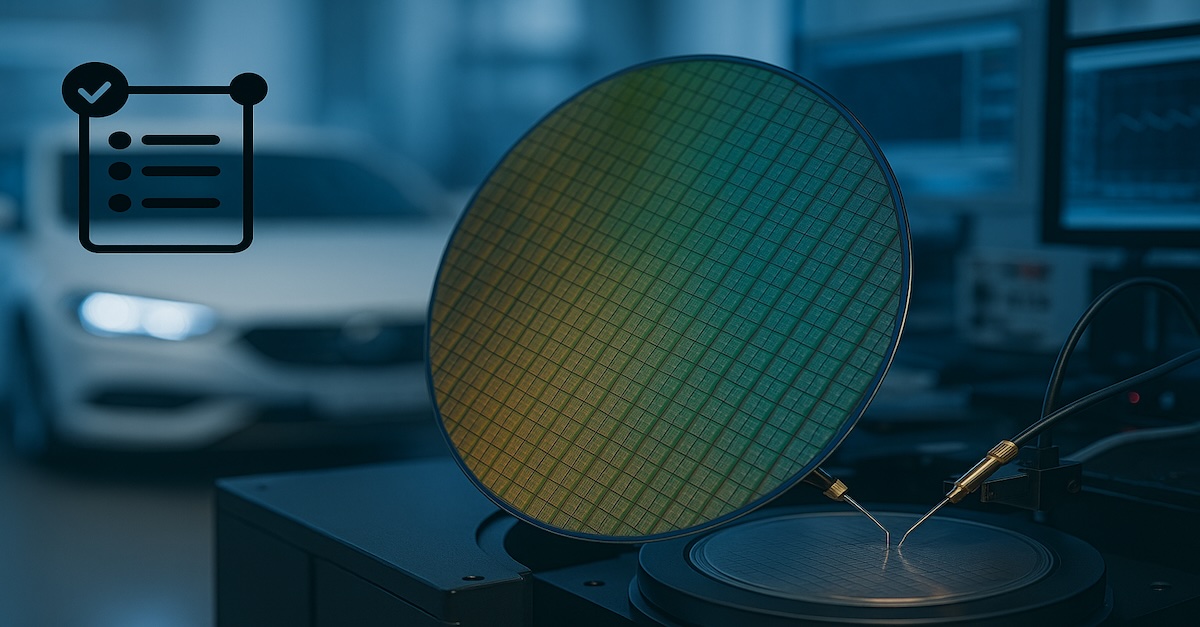
    Image Generated Using 4o


    The Purpose of Reliability Standards

    Automotive semiconductor devices are expected to perform reliably over extended lifetimes in harsh and variable conditions. Unlike consumer electronics, where occasional failure may be tolerated, failure in an automotive system can result in critical safety hazards.

    Thus, reliability standards were developed to ensure that every chip meets a defined threshold of durability, robustness, and long-term functional performance before being deployed in the field.

    These standards serve several purposes:

    • Establish a common framework to evaluate product reliability across suppliers and regions
    • Define stress test methods that accelerate aging and failure mechanisms for early detection
    • Enable qualification decisions based on controlled, repeatable test conditions
    • Provide confidence to automakers that ICs can survive temperature extremes, electrical stress, and mechanical vibration over time
    • Reduce the risk of field returns, warranty claims, and catastrophic failure in safety-critical applications

    By aligning design, process, and testing practices to reliability standards, semiconductor manufacturers reduce ambiguity and gain clarity on the path to automotive-grade qualification.

    This alignment is crucial for scaling production and meeting the stringent safety and operational requirements of modern vehicles.


    The Core Standards Driving Qualification

    Automotive IC reliability is not validated through a single test or metric. It is shaped by a suite of interlinked standards developed by global bodies to ensure that components meet strict quality, durability, and safety expectations. These standards define the stress tests, sampling plans, measurement techniques, and safety documentation required for a semiconductor device to be considered automotive grade.

    The core standards originate from multiple organizations, each addressing a distinct layer of qualification, ranging from physical stress to functional safety. Together, they form a structured path that guides semiconductor manufacturers through qualification, validation, and risk mitigation.

    Standard / BodyFocus AreaPurpose / ApplicationExamples / Test Conditions
    AEC Q100 / Q101 / Q104 / Q200Automotive qualification for ICs, discretes, modules, passivesDefines stress tests such as HTOL, TC, HAST, ESD, and mechanical shock−40°C to 150°C, 1000 hours HTOL, 1000 cycles TC
    JEDEC JESD47, JESD22 seriesGeneric stress test methodsStandardizes procedures for HTOL, temperature cycling, humidity, ESD, and othersJESD22 A108 HTOL, A104 Temp Cycling, A110 HAST
    IEC 60068 seriesEnvironmental and mechanical reliabilityVibration, shock, humidity, and thermal stress testingMechanical shock, damp heat, low temperature storage
    ISO 26262Functional safety of E and E systemsLifecycle safety process for hardware and software in automotive systemsASIL determination, FMEDA, SPFM, LFM, Safety Manual
    IEC 61508Generic functional safetyParent framework for safety integrity, adopted across multiple industriesUsed as baseline for ISO 26262
    ISO 7637 seriesElectrical transient immunityTests IC immunity to load dumps, surge pulses, and conducted transientsPulse 1 to 5A simulations on 12V and 24V lines
    ESDA and JEDEC ESD StandardsESD protection and robustness testingDefines Human Body Model HBM, Charged Device Model CDM, and Machine Model MMJESD22 A114 HBM, A115 MM, A112 Latch up
    IEEE 2851 and relatedSafety and reliability data modelingStandardized data formats for exchanging reliability and safety metadataEnhances tool chain interoperability in FuSA and DFM workflows
    ISO PAS 19451, ISO 21448 SOTIFGuidance on IC safety and non fault based hazardsSOTIF addresses risks not caused by failures, such as sensor limitationsComplements ISO 26262 for autonomous systems

    These standards are not standalone. They interact across product development stages. For example, AEC Q100 qualification of an automotive SoC includes JEDEC-defined stress tests, ESD evaluations from ESDA, functional safety analysis based on ISO 26262, and mechanical robustness checks from IEC 60068.

    As semiconductors take on increasingly critical roles in safety and automation, adherence to this multi-standard framework becomes essential. Each standard brings specific requirements and test methodologies, but collectively they shape the technical and commercial feasibility of launching a reliable automotive IC.


    Impact On Cost And Complexity

    Meeting automotive reliability standards comes at a significant cost. While these standards ensure that ICs perform reliably over time, they also introduce added layers of design, validation, testing, and documentation. Each requirement adds pressure on resources, time to market, and operational flexibility.

    Key drivers of cost and complexity:

    1. Extended Qualification Time: Automotive-grade stress tests such as HTOL, temperature cycling, and HAST often run for weeks. Each test requires carefully controlled conditions, instrumentation, and monitoring. This extends development cycles and delays product release if failures occur.
    2. Increased Test Coverage and Burn-In: To meet AEC and JEDEC qualification flows, manufacturers must adopt broader test coverage across process corners, operating conditions, and packaging configurations. Additional burn-in or screening steps may be introduced, which raise the test cost per unit.
    3. Design and Layout Constraints: Reliability standards often require wider spacing rules, guard rings, redundant structures, and protection circuits to ensure optimal performance. These consume silicon area, limit routing freedom, and reduce the potential for aggressive scaling.
    4. Cost of Failure Analysis and Re-qualification: Any failure during qualification necessitates a root cause analysis, corrective action, and subsequent re-qualification. This involves engineering resources, debug equipment, and potentially redesigning the chip or package.
    5. Documentation and Functional Safety Compliance: Standards such as ISO 26262 require detailed documentation of architecture, safety mechanisms, fault analysis, and test results. Maintaining and reviewing these artifacts adds overhead to both engineering and quality teams.
    6. Packaging and Assembly Requirements: High-reliability applications may need specific packaging materials, mold compounds, and interconnects that are qualified for thermal and mechanical cycling. This limits packaging choices and increases the complexity of procurement and manufacturing.

    Together, these factors can increase the cost of an automotive IC program by 20% to 50% compared to a consumer-grade equivalent. This is not only due to physical material and labor, but also engineering effort, risk mitigation, and compliance management.

    For companies targeting the automotive market, the cost and complexity introduced by reliability standards are a strategic trade-off. Committing to these flows enables access to high-volume, long-lifecycle programs but requires upfront investment, rigorous process discipline, and long-term support capabilities.


    Navigating The Tradeoffs

    Eventually, balancing reliability requirements with cost, time, and design flexibility is one of the most critical challenges in the development of automotive semiconductors. Not every product demands the highest qualification grade or full functional safety coverage.

    Product development teams must assess the intended application, risk profile, and customer expectations before committing to the depth of testing and documentation. Over-qualification adds unnecessary cost, while under-qualification risks product failure or rejection during audits.

    The most effective strategies focus on targeted qualification, platform reuse, early design margining, and customer collaboration. By reusing qualified IPs, applying modular safety elements, and involving OEMs early in the process, companies can reduce complexity without compromising safety or compliance.

    Success lies in making reliability an intentional part of product planning, not an afterthought late in the cycle.

  • The Semiconductor Reliability Testing Essentials

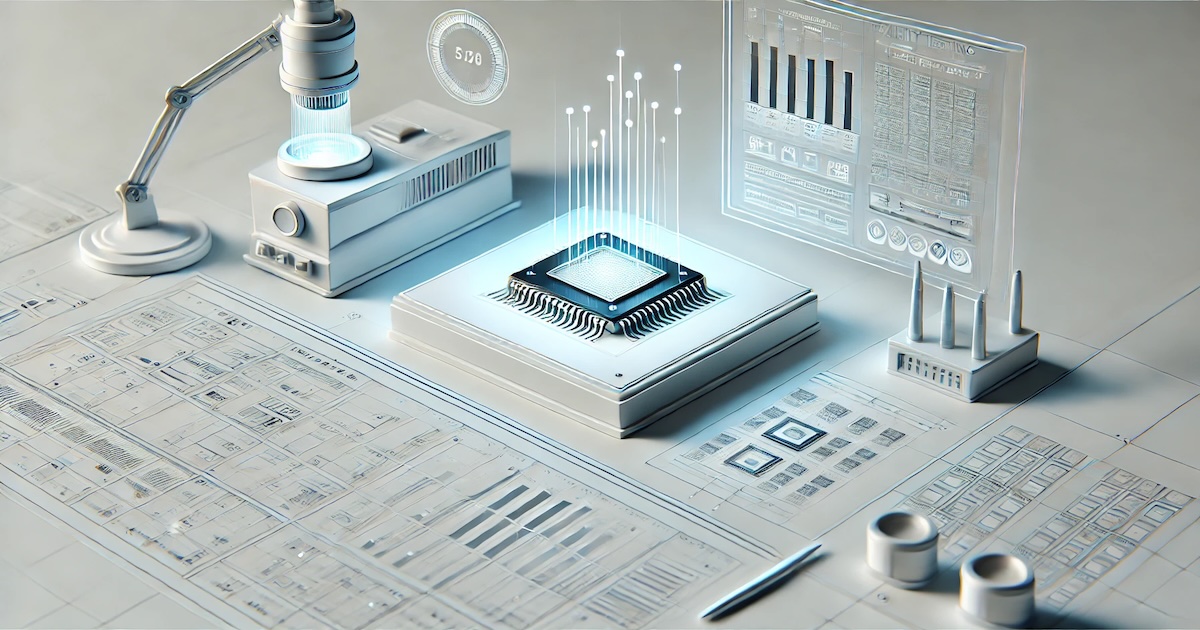
    Image Generated Using DALL-E


    Semiconductor Reliability Matters

    The semiconductor industry thrives on precision, performance, and longevity, from microcontrollers to processors, semiconductors power nearly every aspect of modern life. However, their reliability is not guaranteed, making rigorous testing essential.

    Reliability testing thus plays a crucial role in ensuring that semiconductors can withstand real-world conditions and function as expected. Failures in automotive, aerospace, medical, and telecommunications applications can have severe consequences. By identifying potential issues early, reliability testing minimizes risks, enhances product longevity, and maintains safety in mission-critical environments.

    Example of what different silicon applications need to guarantee from a reliability perspective:

    • Automotive Electronics: Withstand extreme temperatures and mechanical vibrations
    • Aerospace-Grade Chips: Endure radiation exposure and harsh environments
    • Medical Devices: Ensure high precision and failure-free operation
    • Telecommunications: Operate under high data loads and power surges
    • Industrial Automation: Tolerate electrical noise, humidity, and mechanical stress
    • Defense And Military Electronics: Function in extreme temperatures, shock, and vibration
    • HPC And AI Chips: Handle intense workloads with efficient thermal management

    Reliability Testing For Semiconductors

    Reliability testing involves subjecting semiconductor components to accelerated stress conditions to simulate real-world aging and failure mechanisms. By exposing devices to high temperatures, voltage stress, humidity, and mechanical strain, semiconductor designers and manufacturers can assess their long-term performance and durability. This process helps predict how components behave over time and under extreme operating conditions.

    In short, reliability in semiconductors ensures:

    • Consistent Performance: Over time, despite environmental and operational stresses.
    • Lower Failure Rates: Reducing costly recalls and replacements
    • Compliance With Industry Regulations: Ensuring semiconductor components meet stringent safety and quality standards

    Overall, semiconductor reliability tests assess lifetime performance, failure mechanisms, and environmental resilience. Key tests include HTOL, ELFR, HAST, TC, ESD, and latch-up, ensuring components withstand thermal, electrical, and mechanical stress under real-world conditions. The table below shows key semiconductor reliability standards, what they cover, and their application areas, providing a structured overview of industry benchmarks for qualification and testing.

    Test TypePurposeCommon Standards
    High-Temperature Operating Life (HTOL)Evaluates long-term operational reliability under high-temperature stress.JESD22-A108, AEC-Q100
    Early Life Failure Rate (ELFR)Detects infant mortality failures in semiconductor devices.JESD22-A113, AEC-Q100
    Highly Accelerated Stress Test (HAST)Tests device reliability under high humidity and temperature.JESD22-A110, AEC-Q100
    Temperature Cycling (TC)Simulates thermal expansion and contraction to assess mechanical stress.JESD22-A104, AEC-Q100
    Electrostatic Discharge (ESD)Tests a device’s resistance to ESD events that can damage circuitry.AEC-Q100-002 (HBM), AEC-Q101-001 (HBM), JESD22-A114 (HBM), JESD22-C101 (CDM)
    Latch-Up TestingEvaluates IC vulnerability to latch-up conditions.JESD78, AEC-Q100-004
    Solderability And Board-Level Reliability (BLR)Ensures robust solder joints and package integrity.JESD22-B102, AEC-Q200-005
    Soft Error Rate (SER) TestingEvaluates susceptibility to radiation-induced bit flips.JESD89

    Eventually, the ultimate goal of reliability testing is to predict component lifespan, identify failure mechanisms such as electromigration, oxide breakdown, and package degradation, and ensure compliance with industry standards like AEC, JEDEC, and MIL-STD. Adhering to these standards is essential for qualifying semiconductors in automotive, aerospace, and high-reliability applications, where failure can result in significant safety risks and financial losses.


    Reason Industry Adheres To Reliability Data

    Failures in automotive, aerospace, and medical devices can have serious consequences. To prevent this, the industry follows strict reliability testing frameworks and standards. These ensure compliance and optimize manufacturing, reduce failures, and build supply chain trust.

    Product Longevity And Safety: Reliability failures in semiconductors can lead to serious consequences, especially in industries where safety and precision are critical. Automotive electronics must function under extreme conditions, medical devices require high accuracy, and aerospace systems must withstand radiation and harsh environments. Without rigorous reliability testing, unexpected failures can cause significant risks, financial losses, and even loss of life.

    Compliance With Industry Standards: Industry standards establish a universal framework for semiconductor reliability, ensuring consistent performance across different applications. Organizations like AEC, JEDEC, and MIL-STD define stringent temperature, stress, and failure analysis test methods. Compliance with these standards is mandatory for market approval and prevents costly recalls. Without standard adherence, semiconductor components risk rejection from significant industries.

    Cost And Yield Optimization: Early defect detection and continuous reliability testing help semiconductor manufacturers improve production yield while minimizing costs. They identify weak components before deployment, reduce failures in the field, and avoid expensive warranty claims and replacements. Reliability testing enhances product robustness and helps optimize fabrication by identifying design or material weaknesses early.

    Customer And Supplier Trust: OEMs and Tier-1 suppliers prioritize reliability when selecting semiconductor vendors. A supplier with a proven track record of meeting industry reliability standards gains a competitive advantage. Customers expect consistency in performance, and reliability testing ensures that each batch meets the same high-quality standards. Establishing a strong reliability record leads to long-term partnerships and repeat business.

    As semiconductor technology advances, rigorous reliability strategies will be key to maintaining a competitive edge.


    Different Types Of Standards And What Do They Cover

    Multiple standards organizations govern semiconductor reliability. These standards specify testing methodologies, failure criteria, and environmental conditions. This table provides a comprehensive view of the most widely used reliability standards, their scope, and application domains.

    StandardWhat It CoversApplication Area
    AEC-Q100Reliability qualification for automotive ICs. Covers HTOL, ELFR, HAST, TC, and ESD testing.Automotive microcontrollers, sensors, SoCs.
    AEC-Q101Reliability qualification for discrete semiconductors like diodes and transistors.Power MOSFETs, BJTs, diodes in automotive.
    AEC-Q102Reliability qualification for optoelectronic semiconductors.Automotive LEDs, laser diodes, photodiodes.
    AEC-Q103Reliability qualification for MEMS sensors used in automotive applications.MEMS accelerometers, gyroscopes, pressure sensors.
    AEC-Q104Reliability qualification for multichip modules (MCMs).Automotive multi-chip power modules.
    AEC-Q200Reliability qualification for passive components (capacitors, resistors, inductors).Automotive-grade passive components.
    JEDEC JESD47General reliability qualification for integrated circuits (ICs). Covers HTOL, ELFR, TC, HAST.Consumer, industrial, telecom, military applications.
    JEDEC JESD22 SeriesDefines various reliability test methods, including HTOL, HAST, TC, solderability, and SER testing.Broad semiconductor applications.
    MIL-STD-883Reliability test methods for military microelectronics. Covers radiation testing, environmental stress testing, and reliability qualification.Aerospace, defense, high-reliability electronics.
    MIL-STD-750Reliability testing for discrete semiconductor devices.Defense-grade diodes, transistors, thyristors.
    Telcordia GR-468Reliability qualification for optoelectronic components in telecom applications.Fiber-optic components, laser diodes, photodetectors.
    Telcordia GR-1221Reliability requirements for passive optical components.Optical amplifiers, couplers, splitters.
    IEC 60749 SeriesReliability test methods for semiconductor devices. Similar to JEDEC standards.Consumer electronics, industrial applications.
    ISO 26262Functional safety standard for automotive electronics.Automotive ADAS, ECUs, microcontrollers.


    The Future Of Semiconductor Reliability Testing

    With the rise of advanced packaging, AI-driven chips, and heterogeneous integration, traditional reliability testing is evolving to address new challenges. 3D ICs, chiplets, and high-density SoCs introduce complex thermal and mechanical stresses that standard tests may not fully capture.

    Electromigration, interconnect reliability, and thermal cycling in these advanced nodes demand more precise predictive modeling and simulation-based reliability assessments. Digital twin technology and AI-driven failure prediction are becoming integral to reliability engineering, reducing the need for prolonged physical testing.

    AI accelerators, neuromorphic chips, and quantum processors also require new reliability methodologies. Unlike conventional silicon devices, these architectures experience unique failure modes, including voltage instability, AI workload stress, and cryogenic reliability challenges.

    As semiconductor applications expand into autonomous systems, edge computing, and high-performance computing (HPC), reliability testing must adapt with real-time monitoring, in-field predictive diagnostics, and advanced accelerated aging techniques to ensure long-term performance and robustness in these next-generation devices.