Category: SEMICONDUCTOR

  • The Strategic Crossroads Of AI SoC Development

    The Strategic Crossroads Of AI SoC Development

    Image Generated Using Nano Banana


    Strategic Context

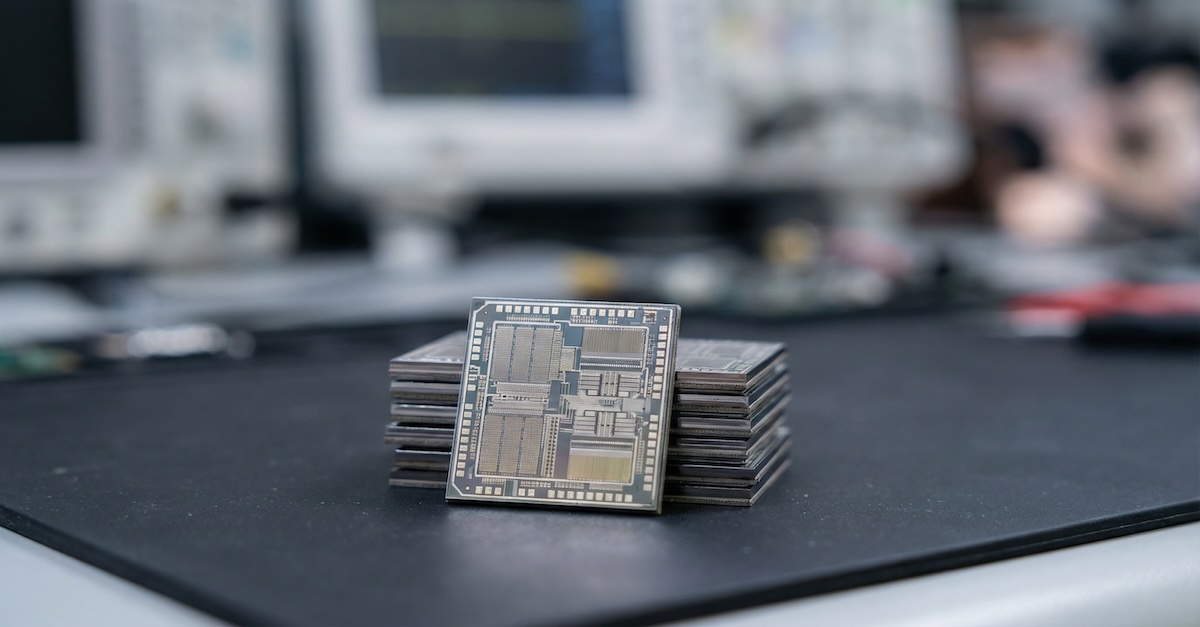
    AI SoC development is now a board-level strategic choice, not just a technical decision. The question is no longer if AI acceleration is needed, but who should own the silicon. As AI workloads grow and diversify, companies must decide whether to build custom silicon in-house or outsource it. This decision affects performance, organization, capital, and long-term competitive standing.

    On top, this crossroads marks a more profound shift in how value is created in semiconductors. AI models, data pipelines, software stacks, and silicon architectures are tightly coupled. When this coupling is strong, silicon becomes strategic. Where workloads are fluid or experimental, flexibility matters more than ownership. Companies must understand where they fall on this spectrum before choosing a path.

    To make the right choice, companies must first gain clarity on their own priorities, capabilities, and competitive context. Only then can they decide whether to pursue custom silicon or leverage vendor solutions for AI.


    In-House Control

    Developing AI SoCs in-house offers a level of architectural and system control that is difficult to replicate through outsourcing. Companies can tailor compute, memory hierarchy, interconnects, and power management directly to their dominant workloads.

    Over time, this alignment compounds into meaningful advantages in performance per watt, latency predictability, and system efficiency, especially for large, recurring AI workloads.

    In-house development also establishes a direct feedback loop between silicon performance and deployment data. Real-world data informs ongoing design refinement and model optimization, which is critical as AI usage continually evolves.

    This level of control, however, comes at a high cost. In-house AI SoC initiatives require long-term investment, cross-disciplinary talent, and internal management of risks such as yield, packaging, software, and supply chains. For organizations lacking scale or extended product timelines, these demands may outweigh the advantages.


    Outsourcing Tradeoffs

    Outsourcing AI SoC development, whether through merchant silicon or semi-custom partnerships, prioritizes speed, flexibility, and risk reduction. It allows companies to deploy AI capabilities rapidly. Organizations can adapt to evolving model architectures. They can also leverage mature software ecosystems without bearing the full cost of silicon ownership. For many organizations, this is not a compromise but a rational optimization.

    Merchant platforms also benefit from aggregated learning across multiple customers. Yield improvements, reliability insights, and software tooling mature faster when spread across a broad user base. This shared progress can be hard for a single in-house program to match and is particularly true in the early stages of AI adoption.

    DimensionIn-House AI SoCOutsourced AI SoC
    Architecture controlFull, workload-specificLimited to vendor roadmap
    Time to deploymentMulti-year cyclesRapid, months-scale
    Upfront investmentVery highLower, predictable
    Long-term cost curveOptimizable at scaleVendor-dependent
    Software–hardware co-designDeep, iterativeConstrained, abstracted
    Supply-chain exposureDirect ownershipShared with vendor
    Differentiation potentialHighModerate to low

    That said, outsourcing inevitably limits differentiation at the silicon layer. Roadmap, dependency, supply constraints, and pricing dynamics are externalized risks. As AI becomes central to product identity or cost structure, these dependencies can become strategic bottlenecks. Convenience can turn into constraint.


    Hybrid Direction

    In practice, the industry is converging towards hybrid strategies rather than absolute positions. Many companies train AI models on merchant platforms but deploy custom silicon for inference. Others start with outsourced solutions to validate workloads. They internalize silicon once scale and stability justify the investment. This phased approach reduces risk and preserves future optionality.

    What matters most is intentionality. In-house development should be driven by clear workload economics and platform strategy, not prestige. Outsourcing should be a strategic choice, not a default from organizational inertia.

    The hybrid path works best when companies know which layers of the stack truly differentiate them. They should also know which layers are better left to ecosystem partners.

    At this strategic crossroads, AI SoC decisions are about ownership of learning, not just ownership of transistors. Companies that align silicon strategy with data, software, and long-term business intent will navigate this transition successfully.


  • The Semiconductor Foundations To Drive Data Center Networking

    Image Generated Using Nano Banana


    Data Center Networking Became A Silicon Problem

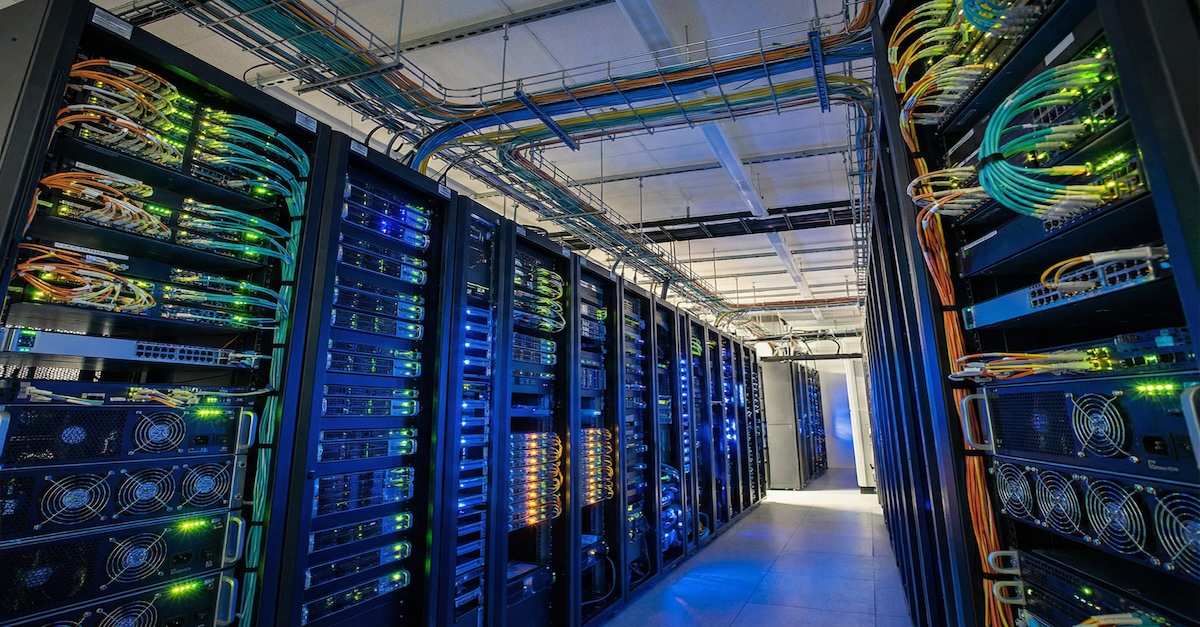
    Data center networking has moved from a background enabler to a key driver of performance. In cloud and AI environments, network speed and reliability directly affect application latency, accelerator usage, storage throughput, and cost per workload.

    As clusters expand, the network evolves from a minor role to a system-level bottleneck. At a small scale, inefficiencies go unnoticed. At a large scale, even slight latency spikes, bandwidth limits, or congestion can idle expensive compute, leaving GPUs or CPUs waiting on data transfers.

    Modern networking advances are now propelled by semiconductor breakthroughs. Faster, more stable data movement relies less on legacy design and more on cutting-edge high-speed silicon: custom ASICs, NICs, SerDes, retimers, and the supporting power and timing architectures.

    Meanwhile, networking progress is constrained by physical limits. Signal integrity, packaging density, power delivery, and thermal management set the upper bound for reliable bandwidth at scale. Today’s data center networks increasingly depend on semiconductors that can deliver high throughput and low latency within practical power and cooling limits.


    Networks Are Being Redesigned For AI Scale

    The shift from traditional enterprise traffic to cloud-native services and AI workloads has reshaped data center communication. Instead of mostly north-south flows between users and servers, modern environments see heavier east-west traffic where compute, storage, and services constantly exchange data. This increases pressure on switching capacity, congestion control, and latency consistency.

    AI training further intensifies the challenge. Distributed workloads rely on frequent synchronization across many accelerators, so even small network delays can reduce GPU utilization. As clusters grow, networks must handle more simultaneous flows and higher-bandwidth collective operations while remaining reliable.

    As a result, data center networks are no longer built just for connectivity. They are engineered for predictable performance under sustained load, behaving more like a controlled system component than a best effort transport layer.


    Building Blocks That Define Modern Networking

    Modern data center networking is increasingly limited by physics. As link speeds rise, performance depends less on traditional network design and more on semiconductor capabilities such as high speed signaling, power efficiency, and thermal stability.

    Custom ASICs and advanced SerDes enable higher bandwidth per port while maintaining signal integrity. At scale, reliability and predictable behavior also become silicon-driven, requiring strong error correction, telemetry, and stable operation under congestion and load.

    Data Center Networking NeedSemiconductor Foundation
    Higher link bandwidthAdvanced high-speed data transfer techniques, signaling, equalization, clocking design
    Low and predictable latency at scaleEfficient switch ASIC pipelines, cut through forwarding, optimized buffering
    Scaling without power blowupPower efficient switch ASICs, better voltage regulation, thermal aware design
    Higher reliability under heavy trafficError detection, improved silicon margins
    More ports and density per rackAdvanced packaging, high layer substrates, thermal co-design

    A key transition ahead is deeper optical adoption. Electrical links work well over short distances, but higher bandwidth and longer reach push power and signal integrity limits, making optics and packaging integration a growing differentiator.


    Means For The Future Of Data Center Infrastructure

    Data center networking is certainly becoming a platform decision, not just a wiring decision.

    As AI clusters grow, networks are judged by how well they keep accelerators busy. Networks are also judged by how consistently they deliver bandwidth and move data per watt. This shifts the focus away from peak link speed alone and toward sustained performance under real congestion and synchronization patterns.

    For the computing industry, this means infrastructure roadmaps will be shaped by semiconductor constraints and breakthroughs. Power delivery, thermals, signal integrity, and packaging density will set the limits. These factors determine what network architectures can scale cleanly.

    As a result, future data centers will place greater emphasis on tightly integrated stacks. These stacks will combine switch silicon, NICs or DPUs, optics, and system software into a coordinated design.

    The key takeaway is simple. Next-generation networking will not be defined only by racks and cables. Semiconductor technologies will define bandwidth that is predictable, scalable, and energy-efficient at AI scale.


  • The Key Pillars Of Compute Infrastructure Built On Semiconductor Solutions

    Image Generated Using Nano Banana


    Compute Infrastructure For New-Age Applications

    Modern workloads are AI-heavy, data-intensive, latency-sensitive, and increasingly distributed. These characteristics are reshaping the compute infrastructure. Traditional enterprise applications relied mainly on CPU-centric execution with moderate memory and networking. In contrast, new-age workloads demand sustained high throughput. They also require rapid access to large datasets and efficient scaling across accelerators and clusters.

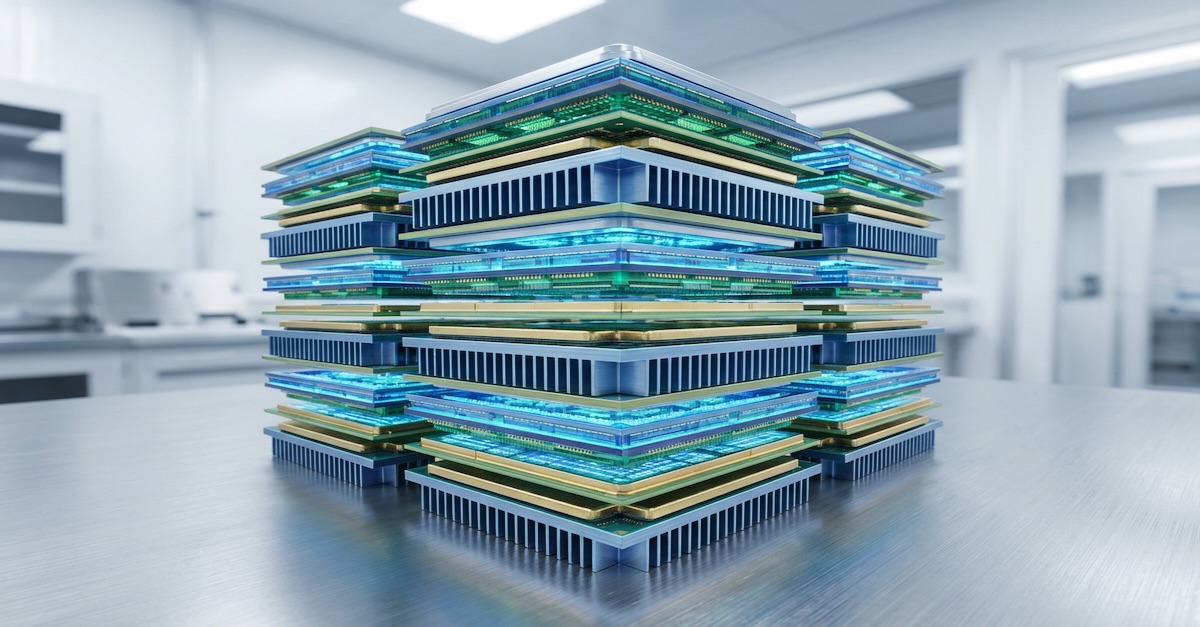
    As a result, compute infrastructure is no longer just a server selection decision. It has become a system-level semiconductor challenge spanning architecture, memory hierarchy, packaging, and high-speed connectivity.

    Modern platforms are therefore evolving into heterogeneous environments. These bring together CPUs, GPUs, NPUs, and workload-specific accelerators. Each is aligned to distinct performance and efficiency requirements. Future infrastructure must support a mix of training and inference, analytics and simulation, and cloud-scale orchestration. Success is increasingly defined by system balance.

    The most capable platforms are not those with the fastest individual engines. They are those that best optimize the end-to-end flow of compute, memory access, and data movement.


    Critical Pillars: Compute, Memory And Interconnect

    Compute forms the foundation of infrastructure. In modern systems, it is no longer a single-CPU-only construct. Instead, it has expanded into a heterogeneous mix of compute engines. These include GPUs (graphics processing units) for parallel acceleration, NPUs (neural processing units) for power-efficient AI inference, DPUs (data processing units) for networking and infrastructure offload, and workload-specific ASICs (application-specific integrated circuits) built for sustained throughput at scale. This evolution enables platforms to better meet new workload demands, such as massive parallelism, mixed-precision execution, and domain-specific performance.

    At the same time, heterogeneous computing also introduces new layers of complexity at the platform level. Scheduling across multiple engines becomes more challenging. Efficiently partitioning workloads and orchestrating dataflow across compute pools are key determinants of real-world performance.

    Ultimately, infrastructure quality now relies on the system’s ability to balance execution, data access, and scalability, not just compute power.

    PillarWhat it RepresentsModern System ComponentsPrimary Workload PressureTypical BottleneckDesign Focus for New-Age Infrastructure
    ComputeExecution engines that run workloadsCPU, GPU, NPU, DPU, ASIC/XPUParallelism, throughput, mixed precision, specializationUnderutilization due to memory/interconnect limitsHeterogeneous compute mapping + efficient workload orchestration
    MemoryData storage and delivery to compute enginesCache hierarchy, HBM, DDR/LPDDR, pooled memoryBandwidth + capacity demand, fast data accessData starvation, cache inefficiency, latencyBandwidth-rich hierarchy + locality-aware architecture
    InterconnectData movement fabric across the systemNoC, chiplet links, PCIe/CXL, cluster networkingDistributed training/inference and scaling across acceleratorsCommunication overhead, link saturation, scaling ceilingLow-latency scalable fabrics + topology-aware communication

    Memory is often the biggest limiter of real performance because modern workloads are fundamentally data-driven. AI, analytics, and streaming applications demand not only large capacity, but also high bandwidth and low-latency access to keep compute engines fully utilized. As a result, memory hierarchy, spanning caches, HBM near accelerators, and system memory, has become a strategic part of infrastructure design.

    Interconnect defines how efficiently data moves across chips, packages, boards, and clusters, and it now acts as a primary scaling constraint for distributed AI and cloud workloads. Even with strong compute and memory, systems can underperform if the interconnect becomes saturated or adds latency, making scalable, low-overhead communication essential for modern infrastructure performance and efficiency.


    Bottlenecks To Overcome

    One of the biggest bottlenecks in next-generation compute infrastructure is the utilization gap. Compute engines can deliver extreme throughput, but they remain underused because memory subsystems cannot supply data fast enough. This is even more severe with AI and parallel workloads. Sustained performance depends on continuously feeding thousands of compute lanes with high-bandwidth, low-latency data access.

    Platforms struggle to convert peak silicon capability into consistent real-world performance without stronger cache efficiency, improved data locality, and bandwidth-rich memory hierarchies.

    A second bottleneck is the interconnect scaling ceiling. Performance stops scaling efficiently as more accelerators and nodes are added. This is especially true in multi-GPU and multi-node environments, where communication overhead dominates. At the same time, rising workload diversity is pushing infrastructure toward heterogeneous compute and specialization. This increases the need for smarter orchestration across the full stack.

    Ultimately, compute infrastructure for new-age applications will be defined by its balance of compute, memory, and interconnect as a unified system. The future will reward platforms that deliver not only faster components, but sustained performance, efficiency, and scalability for evolving workloads.


  • The Semiconductor Shift Toward Heterogeneous AI Compute

    Image Generated Using Nano Banana


    The Changing Shape Of AI Workloads

    AI workloads have rapidly evolved. They have shifted from lengthy, compute-intensive training runs to an ongoing cycle. This cycle includes training, deployment, inference, and refinement. AI systems today are expected to respond in real time, operate at scale, and run reliably across a wide range of environments. This shift has quietly but fundamentally changed what AI demands from computing hardware.

    In practice, much of the growth in AI compute now comes from inference rather than training. Models are trained in centralized environments and then deployed broadly. They support recommendations, image analysis, speech translation, and generative applications. These inference workloads run continuously. They often operate under tight latency and cost constraints. They favor efficiency and predictability over peak performance. As a result, the workload profile is very different from the batch-oriented training jobs that initially shaped AI hardware.

    At the same time, AI workloads are defined more by data movement than by raw computation. As models grow and inputs become more complex, moving data through memory hierarchies and across system boundaries becomes a dominant factor. It impacts both performance and power consumption. In many real deployments, data access efficiency matters more than computation speed.

    AI workloads now run across cloud data centers, enterprise setups, and edge devices. Each setting limits power, latency, and cost in its own way. A model trained in one place may run in thousands of others. This diversity makes it hard for any one processor design to meet every need. It pushes the field toward heterogeneous AI compute.


    Why No Single Processor Can Serve Modern AI Efficiently

    Modern AI workloads place fundamentally different demands on computing hardware, making it difficult for any single processor architecture to operate efficiently across all scenarios. Training, inference, and edge deployment each emphasize different performance metrics, power envelopes, and memory behaviors. Optimizing a processor for one phase often introduces inefficiencies when it is applied to another.

    AI Workload TypePrimary ObjectiveDominant ConstraintsTypical Processor StrengthsWhere Inefficiency Appears
    Model TrainingMaximum throughput over long runsPower density, memory bandwidth, scalabilityHighly parallel accelerators optimized for dense mathPoor utilization for small or irregular tasks
    Cloud InferenceLow latency and predictable responseCost per inference, energy efficiencySpecialized accelerators and optimized coresOverprovisioning when using training-class hardware
    Edge InferenceAlways-on efficiencyPower, thermal limits, real-time responseNPUs and domain-specific processorsLimited flexibility and peak performance
    Multi-Modal PipelinesBalanced compute and data movementMemory access patterns, interconnect bandwidthCoordinated CPU, accelerator, and memory systemsBottlenecks when using single-architecture designs

    As AI systems scale, these mismatches become visible in utilization, cost, and energy efficiency. Hardware designed for peak throughput may run well below optimal efficiency for latency-sensitive inference, while highly efficient processors often lack the flexibility or performance needed for large-scale training. This divergence is one of the primary forces pushing semiconductor design toward heterogeneous compute.


    What Makes Up Heterogeneous AI Compute

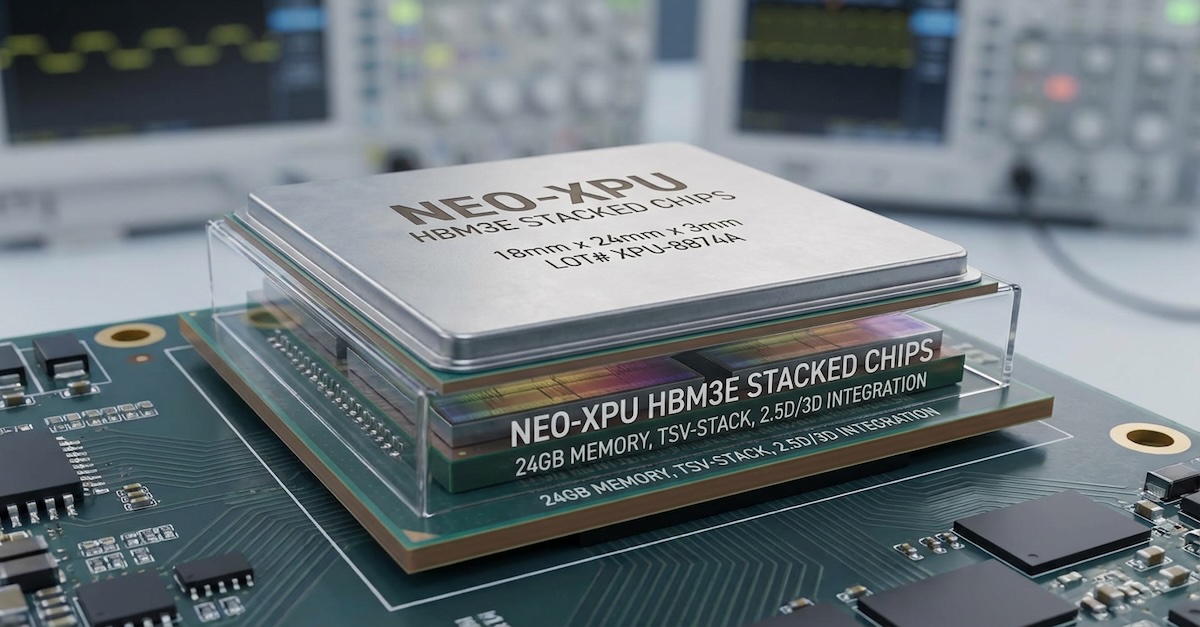
    Heterogeneous AI compute uses multiple processor types within a single system, each optimized for specific AI workloads. General-purpose processors manage control, scheduling, and system tasks. Parallel accelerators handle dense operations, such as matrix multiplication.

    Domain-specific processors target inference, signal processing, and fixed-function operations. Workloads are split and assigned to these compute domains. The decision is based on performance efficiency, power constraints, and execution determinism, not on architectural uniformity.

    This compute heterogeneity is closely tied to heterogeneous memory, interconnect, and integration technologies. AI systems use multiple memory types to meet different bandwidth, latency, and capacity needs. Often, performance is limited by data movement rather than arithmetic throughput.

    High-speed on-die and die-to-die interconnects help coordinate compute and memory domains. Advanced packaging and chiplet-based integration combine these elements without monolithic scaling. Together, these components form the foundation of heterogeneous AI compute systems.


    Designing AI Systems Around Heterogeneous Compute

    Designing AI systems around heterogeneous compute shifts the focus from individual processors to coordinated system architecture. Performance and efficiency now rely on how workloads are split and executed across multiple compute domains, making system-wide coordination essential. As a result, data locality, scheduling, and execution mapping have become primary design considerations.

    Building on these considerations, memory topology and interconnect features further shape system behavior. These often set overall performance limits, more so than raw compute capability.

    Consequently, this approach brings new requirements in software, validation, and system integration. Runtimes and orchestration layers must manage execution across different hardware. Power, thermal, and test factors must be addressed at the system level.

    Looking ahead, as AI workloads diversify, heterogeneous system design enables specialization without monolithic scaling. Coordinated semiconductor architectures will form the foundation of future AI platforms.


  • The Semiconductor Shift When Latency And Throughput Architectures Join Forces

    Image Generated Using Nano Banana


    Two Worlds Of AI Compute Are Finally Colliding

    For more than a decade, AI silicon has evolved along two independent trajectories. On one side sat throughput-optimized architectures built to train massive models across thousands of accelerators. These prioritize raw FLOPS, memory bandwidth, and scaling efficiency. On the other hand, latency-optimized designs were engineered to deliver fast, deterministic inference. They are used at the edge or in tightly constrained data center environments. Each solved a different bottleneck, served a different buyer, and spoke a different architectural language.

    That division made sense when training and inference occurred separately. Training was infrequent and centralized in hyperscale data centers. Inference ran continuously, near users, under strict latency and power limits. Chip companies specialized: some in large-scale matrix math, others in microsecond responsiveness, real-time scheduling, and efficient small-batch execution.

    The AI boom of the last few years has collapsed that neat divide. Large language models, multimodal systems, and agentic AI now blur the boundary between training and inference. Models are fine-tuned continuously and updated frequently. They are increasingly deployed in interactive settings. Here, response time directly shapes user experience. In this environment, solving only for throughput or only for latency is no longer sufficient.

    As a result, a structural shift is underway in the semiconductor industry. Chip companies that historically dominated one side of the equation are responding. They are acquiring, partnering, or redesigning their architectures to address the other side. When latency-first and throughput-first philosophies converge under a single entity, the impact extends far beyond product roadmaps. This shift reshapes how AI computing is designed, deployed, and monetized across the entire ecosystem.


    Latency Versus Throughput And Economic Tradeoffs

    Latency-optimized and throughput-optimized chips differ in almost every major design choice, reflecting different workload, integration, and cost assumptions.

    Latency-focused architectures emphasize minimizing response time for individual requests by optimizing for small batch sizes, predictable execution paths, and efficient handling of workloads with extensive control logic. These chips commonly serve inference for recommendation systems, conversational AI, and autonomous systems.

    In contrast, throughput-focused architectures maximize processing of large, regular workloads through aggressive parallelism, making them suited for the prolonged training of massive neural networks.

    The table below summarizes key architectural distinctions:

    DimensionLatency-Optimized ArchitecturesThroughput-Optimized Architectures
    Primary GoalMinimize response timeMaximize total compute per unit time
    Typical WorkloadInference, real-time AITraining, large-scale batch jobs
    Batch SizeSmall to single-requestLarge, highly parallel batches
    Memory BehaviorLow latency access, cachingHigh bandwidth, streaming
    InterconnectLimited or localizedHigh-speed, scale-out fabrics
    Power ProfileEfficiency at low utilizationEfficiency at high utilization
    Software StackTight HW-SW co-designFramework-driven optimization

    As a result, this convergence exposes inefficiencies when architectures stay siloed. Throughput-optimized chips can struggle to deliver consistent, low-latency inference unless you overprovision. Latency-optimized chips often lack the scaling efficiency needed for large-scale model training. The economic consequence is fragmented infrastructure and a rising total cost of ownership.


    What Happens When One Company Owns Both Sides Of The Equation

    When a single chip company unites the industry’s best latency and throughput solutions, the impact transcends simple product expansion. This move redefines design philosophy, software stacks, and customer value propositions.

    From an architecture standpoint, convergence enables more balanced designs. Unified companies can deliberately trade off between peak throughput and tail latency, rather than blindly optimizing for a single metric. We are already seeing accelerators that support flexible batching, adaptive precision, and mixed workloads, allowing the same silicon platform to serve training, fine-tuning, and inference with fewer compromises.

    Software is where the impact becomes most visible. Historically, separate hardware platforms required separate toolchains, compilers, and optimization strategies. Under one entity, these layers can be harmonized. A single software stack that understands both training and inference enables smoother model transitions from development to deployment, reducing friction for customers and shortening time-to-value.

    The table below highlights how unified ownership changes system-level outcomes:

    AspectFragmented Latency / Throughput VendorsUnified Architecture Vendor
    Hardware PortfolioSpecialized, siloed productsCo-designed, complementary products
    Software StackMultiple toolchainsUnified compiler and runtime
    Customer WorkflowDisjoint training and inferenceSeamless model lifecycle
    Infrastructure UtilizationOverprovisioned, inefficientHigher utilization, shared resources
    Innovation PaceIncremental within silosCross-domain optimization
    Strategic ControlDependent on partnersEnd-to-end platform leverage

    Strategically, this convergence decisively strengthens negotiating power with both hyperscalers and enterprise customers. Vendors delivering a coherent training-to-inference platform command stronger positions in long-term contracts and ecosystem partnerships.

    Consequently, there is also a competitive implication. Unified vendors can shape standards and influence frameworks. They can guide developer behavior in ways fragmented players cannot. As AI computing shifts from a commodity to a strategic asset, control over both latency and throughput becomes industrial power.


    New Center Of Gravity In AI Compute

    The convergence of latency and throughput architectures marks a turning point for the AI semiconductor industry. A technical distinction is now a strategic divide. Some companies offer isolated solutions. Others provide integrated platforms.

    As training and inference workloads merge, chip companies treating AI compute as a continuous lifecycle will win. This approach avoids viewing each step as a separate phase. Combining latency and throughput optimized solutions brings architectural balance. It enables software coherence and economic efficiency.

    This shift marks a new center of gravity for the AI ecosystem, as compute is no longer just about speed or scale. Now, it is about adaptability and utilization.

    It also supports changing AI needs without frequent infrastructure redesign.


  • The Rising Cost Of Semiconductor Test Analytics

    Image Generated Using Nano Banana


    What Is Silicon Test Analytics

    Silicon test analytics refers to the systematic analysis of data generated during semiconductor testing to improve yield, product quality, and manufacturing efficiency. It operates across wafer sort, final test, and system-level test, using test results to understand how silicon behaves under electrical, thermal, and functional stress.

    At a practical level, test analytics converts raw tester outputs into engineering insight. This includes identifying yield loss mechanisms, detecting parametric shifts, correlating failures across test steps, and validating the effectiveness of test coverage. The objective is not only to detect failing devices, but to understand why they fail and how test outcomes evolve across lots, wafers, and time.

    Unlike design-time analysis, silicon test analytics is closely tied to manufacturing reality. Data is generated continuously under production constraints and must reflect real test conditions, including tester configurations, temperature settings, test limits, and handling environments. As a result, analytics must account for both device behavior and test system behavior.

    In advanced production flows, silicon test analytics also supports decision-making beyond yield learning. It informs guardbanding strategies, retest policies, bin optimization, and production holds or releases.

    These decisions directly affect cost, throughput, and customer quality, and as test analytics becomes embedded in daily manufacturing decisions, it becomes increasingly important to understand the rising cost associated with test data analytics.


    What Has Changed In Silicon Test Data Analysis

    The defining change in silicon test data is its overwhelming scale. Modern devices generate much more test information due to higher coverage, deeper analysis, and complex requirements. What used to be manageable files are now relentless, high-volume streams.

    The increase in test data generation results in higher costs due to longer test times, more measurements, more diagnostic captures, and more retest loops. Even precautionary or future-use data incurs immediate expenses, including tester time, data transfer, and downstream handling.

    Storage demands have grown as test data volumes now reach gigabytes per wafer and terabytes per day in production. Storing such volumes requires scalable, governed systems and incurs costs regardless of how much data is actually analyzed, since unused data still consumes resources.

    Analysis has also become more resource-intensive. Larger, more complex datasets mean analysis has moved beyond manual scripts and local tools. Centralized compute environments are now required. Statistical correlation across lots, time, and test stages needs more processing power and longer runtimes, driving up compute costs and placing greater financial pressure on infrastructure budgets.

    Maintaining these integrations adds to system complexity, increases licensing costs, and requires ongoing engineering effort, often resulting in higher overall operational expenses.

    These developments have transformed test analytics from a lightweight task into a significant infrastructure challenge. Data generation, storage, analysis, and integration now drive operational costs and business decisions.


    Image Credit: McKinsey & Company

    Analytics Now Requires Infrastructure And Not Just Tools

    As silicon test data volumes and complexity increase, analytics cannot be supported by standalone tools or engineer-managed scripts. What was once handled through local data pulls and offline analysis now requires always-available systems capable of ingesting, storing, and processing data continuously from multiple testers, products, and sites. Analytics has moved closer to the production floor and must operate with the same reliability expectations as test operations.

    This shift changes the cost structure. Tools alone do not solve problems related to scale, latency, or availability. Supporting analytics at production scale requires shared storage, scalable compute, reliable data pipelines, and controlled access mechanisms. In practice, analytics becomes dependent on the underlying infrastructure that must be designed, deployed, monitored, and maintained, often across both test engineering and IT organizations.

    Infrastructure ComponentWhy It Is RequiredCost Implication
    Data ingestion pipelinesContinuous intake of high-volume tester outputEngineering effort, integration maintenance
    Centralized storageRetention of raw and processed test data at scaleCapacity growth, redundancy, governance
    Compute resourcesCorrelation, statistical analysis, and model executionOngoing compute provisioning
    Analytics platformsQuerying, visualization, and automationLicensing and support costs
    MES and data integrationLinking test data with product and process contextSystem complexity and upkeep

    As analytics becomes embedded in manufacturing workflows, infrastructure is no longer optional overhead, it becomes a prerequisite. The cost of test analytics, therefore, extends well beyond software tools, encompassing the full stack needed to ensure data is available, trustworthy, and actionable at scale.


    Cost Also Grows With Context And Integration

    As test analytics becomes more central to manufacturing decisions, cost growth reflects not just data volume but also the effort to contextualize and integrate data into engineering and production systems. Raw test outputs must be tied to product genealogy, test program versions, equipment configurations, handling conditions, and upstream manufacturing data to deliver meaningful insight.

    Without this context, analytics results can be misleading, and engineering decisions can suffer, forcing additional rounds of investigation or corrective action.

    Building and maintaining this context is neither simple nor cheap. It needs data models that show relationships across disparate systems and interfaces between test data and MES, ERP, or PQM systems. Continuous engineering effort is needed to keep metadata accurate as products and processes evolve. Any change to test programs, equipment calibration, or product variants requires updating these integrations to keep analytics accurate and usable.

    This trend matches broader observations in semiconductor analytics. While data volumes keep growing, many companies use only a small fraction of what they collect for decision-making. Industry analysis shows enterprises worldwide generate vast amounts of data but use only a small percentage for actionable insights. This highlights the gap between collection and effective use.

    Ultimately, the rising cost of test analytics is structural. It reflects a shift from isolated file-based analysis to enterprise-scale systems. These systems must ingest, connect, curate, and interpret test data in context. As analytics matures from a manual exercise to an embedded capability, integration and data governance become major engineering challenges. This drives both investment and ongoing operational cost.

    Eventually, understanding the economics of test analytics today requires looking beyond tools and data volumes. It means focusing on the systems and integrations that make analytics reliable, accurate, and actionable.


  • The Role Of Computer Architecture In Driving Semiconductor-Powered Computing

    Image Generated Using Nano Banana


    What Computer Architecture Is And Why It Matters

    Computer architecture defines a computing system’s structure, component interaction, and trade-offs for performance, efficiency, cost, and reliability at scale. Architecture balances instruction sets, microarchitecture, memory hierarchies, and system-level design to meet workload requirements. Instruction encoding, pipeline depth, and cache topology shape both the physical silicon and the chip’s performance.

    Unlike computer organization or circuit implementation, architecture focuses on what the system does and how it exposes those capabilities to software. This includes the instruction set interface and the abstract execution model visible to compilers, operating systems, and applications.

    In semiconductor-powered computing, these architectural choices shape how transistors, the fundamental semiconductor devices, coordinate to deliver throughput, latency, efficiency, and workload specialization.

    Modern computing systems no longer rely on a single silicon engine for all performance demands. Instead, heterogeneous architectures combine general-purpose cores with specialized accelerators. This enables systems to efficiently handle workloads including sequential control logic, parallel processing, machine learning, graphics rendering, and signal processing.

    This architectural shift is a key lever for innovation as transistor scaling slows and thermal constraints tighten. By tailoring structures to specific workloads, semiconductor-powered computing continues to advance. This occurs even as raw process scaling alone becomes less effective.


    Architectural Paradigms And Workload Mapping

    As computing workloads diversified, no single architectural paradigm could efficiently meet all performance, power, and scalability demands. Computer architecture therefore evolved along multiple paths, each optimized for how computation is expressed, how data moves, and how parallelism is exploited. These paradigms are direct responses to workload characteristics such as instruction complexity, data locality, concurrency, and latency sensitivity.

    Modern systems now integrate multiple architectural paradigms within a single platform. Control-heavy functions run on general-purpose cores, while compute-dense kernels are offloaded to parallel or specialized engines. This workload-driven mapping shapes not only performance, but also silicon area allocation, power delivery, memory hierarchy, and interconnect design.

    Architectural ParadigmArchitectural FocusStrengthsBest-Suited Workloads
    General-Purpose CPU ArchitectureLow-latency execution, complex control flow, instruction-level parallelismFlexibility, strong single-thread performance, fast context switchingOperating systems, application control logic, compilation, transaction processing
    Massively Parallel ArchitectureHigh throughput via many lightweight execution unitsExcellent parallel efficiency, high arithmetic intensityGraphics rendering, scientific simulation, AI training and inference
    Vector and SIMD ArchitecturesData-level parallelism with uniform operationsEfficient execution of repetitive numeric operationsSignal processing, media processing, numerical kernels
    Domain-Specific AcceleratorsHardware optimized for narrow operation setsMaximum performance per watt for targeted tasksNeural networks, image processing, encryption, compression
    Reconfigurable ArchitecturesAdaptable hardware pipelinesFlexibility with hardware-level optimizationPrototyping, edge inference, custom data paths

    Eventually, the effectiveness of an architecture is ultimately determined by how well it matches the workload it is executing. Workloads with heavy branching and irregular memory access benefit from architectures optimized for low latency and sophisticated control logic. Highly parallel workloads with predictable data flow benefit from wide execution arrays and simplified control mechanisms. Data-intensive workloads increasingly demand architectures that minimize data movement rather than raw compute capability.


    Research Frontiers And Product Impacts

    Over the past two decades, computer architecture research has shifted from abstract performance models toward workload-driven, system-level innovation. As transistor scaling slowed and power density constraints tightened, the focus moved from peak compute capability to system interactions. Computation, memory, and data movement are now examined in real systems. Many architectural concepts shaping today’s semiconductor products started in academic research, later refined and scaled by industry.

    Heterogeneous computing is a clear example of this transition. Early research showed that offloading well-defined kernels to specialized hardware could dramatically improve performance per watt. Today, this principle underpins modern system-on-chip designs. General-purpose CPUs are now combined with GPUs and domain-specific accelerators. Apple’s silicon platforms exemplify this approach. They use tightly coupled compute engines and unified memory architectures to reduce data movement and maximize throughput.

    Image Credit: Processing-In-Memory: A Workload-Driven Perspective

    Energy efficiency has also emerged as a dominant architectural driver, particularly for data-centric workloads. Research highlighting the high energy cost of data movement has shifted architectural emphasis. Design now focuses on locality, reduced precision, and memory-centric approaches. These ideas appear in AI accelerators and data center processors. Such chips prioritize high-bandwidth memory and on-chip buffering over traditional instruction throughput.

    At the edge, research into ultra-low-power and domain-specific architectures has shaped embedded processors. These chips now achieve real-time inference and signal processing within tight energy budgets. Across all markets, architectural innovation shapes how semiconductor advances become practical computing. This trend reinforces architecture’s central role in modern systems.


    Architecture As The Linchpin Of Modern Computing

    At its core, computer architecture is the discipline that transforms raw semiconductor capability into practical, scalable computing systems. While advances in process technology determine what is physically possible, architecture determines what is achievable in real workloads. It defines how transistors are organized, how data flows through the system, and how efficiently computation is delivered under power, cost, and thermal constraints.

    As computing has expanded beyond a single dominant workload, architecture has become the critical mechanism for managing diversity. General-purpose processing, massive parallelism, and domain-specific acceleration now coexist within the same systems. Architecture governs how these elements are composed, how responsibilities are partitioned, and how bottlenecks are avoided. In doing so, it enables systems to adapt to evolving application demands without relying solely on continued transistor scaling.

    Looking ahead, the future of computing will be shaped less by uniform scaling and more by intelligent architectural design.

    Heterogeneous integration, chiplet-based systems, and workload-aware architectures will continue to define how semiconductor advances are harnessed. In this context, architecture stands as the linchpin of modern computing, holding together silicon capability, system design, and application needs into a coherent and effective whole.


  • The Semiconductor Economics Driven By Yield

    Image Generated Using Nano Banana


    Yield As The Hidden Profit Engine

    In the economics of semiconductor products, few variables exert as much influence as yield, yet few receive as little attention outside manufacturing circles. Yield quietly governs how much value can be extracted from every wafer, shaping product cost structures, margin resilience, and overall market viability.

    As devices grow more complex and manufacturing costs continue to escalate, yield increasingly acts as a hidden profit engine, amplifying gains when managed effectively and rapidly eroding profitability when overlooked.

    Yield’s impact is cumulative rather than linear. Small improvements at the wafer, assembly, or test stages compound across high-volume production, translating into meaningful reductions in cost per die and measurable gains in gross margin. From a product perspective, yield directly influences pricing strategy, supply predictability, and return on invested capital.

    Products supported by stable, high-yield manufacturing flows gain critical flexibility, whether to compete aggressively on price or to protect margins in premium markets, shaping economic outcomes long before a product reaches the customer.


    Why Yield Is Economic Leverage. Not Just a Metric

    Yield is often discussed as a manufacturing outcome and viewed primarily as an indicator of process stability, defect control, and operational discipline. While this perspective is technically valid, it significantly understates the yield’s broader economic role. It directly determines how efficiently silicon, capital equipment, energy, and engineering effort are converted into sellable product. As wafer costs rise and device complexity increases, yield becomes one of the most effective levers for influencing product cost without altering design targets or market pricing.

    Unlike many cost-reduction initiatives that require architectural trade-offs or performance compromises, yield improvements compound value throughout the entire production lifecycle. Higher yield increases usable output per wafer, stabilizes manufacturing schedules, and reduces losses from scrap, rework, and late-stage failures. From a product and business standpoint, yield therefore functions as economic leverage rather than a passive metric, shaping profitability, pricing flexibility, and capital efficiency simultaneously.

    DimensionYield Viewed as a MetricYield Viewed as Economic Leverage
    Primary FocusProcess health and defect levelsProduct cost, margin, and profitability
    ScopeIndividual manufacturing stepsEnd to end product economics
    Impact HorizonShort term manufacturing performanceLong term financial and competitive outcomes
    Cost InfluenceIndicates loss but does not control itActively reduces cost per die
    Capital EfficiencyMeasured after investmentGuides investment justification and ROI
    Product StrategyReactive inputProactive decision driver
    Business VisibilityLimited to manufacturing teamsRelevant to product, finance, and leadership

    As semiconductor products move toward advanced nodes, heterogeneous integration, and increasingly complex test and packaging flows, the economic sensitivity to yield will only intensify.

    Companies that elevate yield from a manufacturing statistic to a strategic economic variable will be better positioned to protect margins, sustain innovation, and compete effectively in cost-constrained and performance-driven markets.


    Yield’s Impact On Product Economics

    From a product perspective, yield influences economics at every stage of the lifecycle. During early ramps, unstable yields inflate unit costs and delay break-even points. In high-volume production, sustained yield performance protects gross margins and reduces exposure to cost shocks from scrap, rework, or supply disruptions.

    Products manufactured on mature, high-yield processes gain economic resilience, while those burdened by yield variability often require pricing premiums or volume constraints to remain profitable.

    Economic DimensionRole of YieldProduct Level Impact
    Cost Per DieDetermines usable output per waferLower yield increases unit cost and reduces competitiveness
    Gross MarginExpands sellable volume without increasing wafer startsHigher yield improves margin resilience
    Pricing StrategyEnables flexibility between margin protection and market shareStable yield supports aggressive or premium pricing
    Time to MarketReduces rework and ramp delaysFaster revenue realization
    Capital EfficiencyImproves return on fab and equipment investmentHigher ROI on advanced nodes
    Supply PredictabilityStabilizes output forecastsStronger customer commitments and fewer shortages

    Eventually, yield is not merely a manufacturing outcome. It is a core economic variable that defines how effectively a semiconductor product converts technical capability into financial return.

    Products with strong yield performance gain pricing power, margin stability, and supply reliability, all of which are critical in competitive, cost-sensitive markets.

    As semiconductor products continue to grow in complexity and cost, yield will increasingly determine who wins and loses economically.

    Organizations that integrate yield considerations into product planning, financial modeling, and strategic decision making will be better positioned to deliver profitable, scalable, and resilient semiconductor products.


  • The Semiconductor Shift Toward Processor-In-Memory And Processing-Near-Memory

    Image Generated Using Nano Banana


    Reliance Of AI And Data Workloads On Computer Architecture

    AI and modern data workloads have transformed how we think about computing systems. Traditional processors were designed for sequential tasks and moderate data movement. Today’s AI models work with enormous datasets and large numbers of parameters that must move constantly between memory and compute units. This movement introduces delays and consumes significant energy. As a result, memory bandwidth and the distance to the data have become major performance bottlenecks.

    Graphics processors, tensor accelerators, and custom architectures try to address these issues by increasing parallelism. Yet, parallel computing alone cannot solve the challenge if data cannot reach the compute units fast enough. The cost of moving data inside a system is now often higher than the cost of the computation itself.

    This places the spotlight on the relationship between compute location, memory hierarchy, and data flow. As models grow in size and applications demand faster responses, the gap between processor speed and memory access continues to widen.

    The computing industry often refers to this as the memory wall. When AI tasks require moving gigabytes of data per operation, each additional millimeter of distance within a chip or package matters. To break this pattern, new approaches look at placing compute engines closer to where data is stored.

    This shift has sparked interest in Processor In-Memory and Processing Near-Memory solutions.

    Instead of pulling data along long paths, the system reorganizes itself so that computation occurs either within the memory arrays or very close to them. This architectural change aims to reduce latency, cut energy use, and support the growing scale of AI workloads.


    What Is Processor-In-Memory And Processing-Near-Memory

    Processor-In-Memory places simple compute units directly inside memory arrays. The idea is to perform certain operations, such as multiplication and accumulation, inside the storage cells or peripheral logic. By doing this, data does not need to travel to a separate processor. This can lead to significant improvements in throughput and reductions in energy consumption for specific AI tasks, especially those involving matrix operations.

    Processing-Near-Memory keeps memory arrays unchanged but integrates compute units very close to them, usually on the same stack or interposer. These compute units are not inside the memory but sit at a minimal distance from it. This enables faster data access than traditional architectures without requiring significant changes to memory cell structures. PNM often offers a more flexible design path because memory vendors do not need to modify core-array technology.

    Here is a simple comparison of the two approaches.

    FeatureProcessor-In-MemoryProcessing-Near-Memory
    Compute locationInside memory arrays or peripheral logicAdjacent to memory through same stack or substrate
    Memory modificationRequires changes to memory cell or array designUses standard memory with added compute units nearby
    Data movementVery low due to in-array operationLow because compute is positioned close to data
    FlexibilityLimited to specific operations built into memoryWider range of compute tasks possible
    Technology maturityStill emerging and specializedMore compatible with existing memory roadmaps

    Both approaches challenge the long-standing separation between computing and storage. Instead of treating memory as a passive container for data, they treat it as an active part of the computation pipeline. This helps systems scale with the rising demands of AI without relying entirely on larger, more power-hungry processors.


    Research Efforts For Processor In Memory And Processing Near Memory

    Research activity in this area has grown quickly as AI and data workloads demand new architectural ideas. Both Processor In Memory and Processing Near Memory have attracted intense attention from academic and industrial groups. PIM work often focuses on reducing data movement by performing arithmetic inside or at the edge of memory arrays. At the same time, PNM research explores programmable compute units placed near memory stacks to improve bandwidth and latency.

    The selected examples below show how each direction is pushing the boundaries of energy efficiency, scalability, and workload suitability.

    Image Credit: SparseP
    CategoryExample WorkKey FocusWhat It DemonstratesLink
    Processor In MemorySparseP: Efficient Sparse Matrix Vector Multiplication on Real PIM Systems (2022)Implements SpMV on real PIM hardwareShows strong gains for memory-bound workloads by computing inside memory arraysPaper
    Processor In MemoryNeural-PIM: Efficient PIM with Neural Approximation of Peripherals (2022)Uses RRAM crossbars and approximation circuitsShows how analog compute in memory can accelerate neural networks while cutting conversion overheadPaper
    Processing Near MemoryA Modern Primer on Processing In Memory (Conceptual framework)Defines PIM vs PNM in stacked memory systemsClarifies architectural boundaries and highlights PNM integration paths in 3D memoryPaper
    Processing Near MemoryAnalysis of Real Processing In Memory Hardware (2021)Evaluates DRAM with adjacent compute coresProvides methods used widely in PNM evaluation for bandwidth and workload behaviorPaper

    This comparison above captures both experimental implementations and architectural frameworks.

    Together, they show how PIM pushes compute directly into memory structures, while PNM enables more flexible acceleration by placing logic close to high-bandwidth memory.


    Implications And When Each Approach Can Benefit

    Processor-In-Memory is often most useful when the workload is highly repetitive and dominated by simple arithmetic on large matrices. Examples include neural network inference and certain scientific operations. Since operations occur in memory, energy savings can be substantial. However, PIM is less suitable for general-purpose tasks that require flexible instruction sets or complex branching.

    Processing-Near-Memory is a more adaptable option for systems that need performance improvements but cannot redesign memory cells. It supports tasks such as training large AI models, running recommendation engines, and accelerating analytics pipelines. Because PNM units are programmable, they can handle a broader range of workloads while still providing shorter data paths than traditional processors.

    Image Credit: Computing Landscape Review

    In real systems, both approaches may coexist. PIM might handle dense linear algebra while PNM handles control logic, preprocessing, and other mixed operations. The choice depends on workload structure, system integration limits, and power budgets. As AI becomes embedded in more devices, from data centers to edge sensors, these hybrids create new ways to deliver faster responses at lower energy.


    The Direction Forward

    The movement toward Processor-In-Memory and Processing-Near-Memory signals a larger architectural shift across the semiconductor world. Instead of treating compute and memory as separate units connected by wide interfaces, the industry is exploring tightly coupled designs that reflect the actual behavior of modern AI workloads. This shift helps push past the limits of conventional architectures and opens new opportunities for performance scaling.

    As more applications rely on real-time analytics, foundation models, and data-intensive tasks, the pressure on memory systems will continue to increase. Designs that bring compute closer to data are becoming essential to maintaining progress. Whether through in-memory operations or near-memory acceleration, these ideas point toward a future where data movement becomes a manageable cost rather than a fundamental barrier.

    The direction is clear. To support the next generation of AI and computing systems, the computing industry is rethinking distance, energy, and data flow at the chip level. Processor-In-Memory and Processing-Near-Memory represent two critical steps in that journey, reshaping how systems are built and how performance is achieved.


  • The Semiconductor Productivity Gap And Why It Matters

    Image Generated Using Nano Banana


    The Shifting Foundations Of Semiconductor Productivity

    Productivity in semiconductors was once anchored in a predictable formula in which each new node delivered higher transistor density, better performance per watt, and stable cost per transistor. That engine is weakening.

    Design complexity has surged, stretching development cycles from roughly 6-12 months to 12-24 months or more for leading-edge SoCs, driven by more than 1.5 billion verification cycles and verification workloads that account for 55 percent of total effort.

    Manufacturing is under similar strain, as EUV tools consume nearly 1 megawatt per scanner, require over 50% uptime for economic breakeven, and demand more than planned service interventions per year. Costs per reticle, mask, and process layer continue to rise, breaking the traditional assumption that fabs scale efficiently through capital expansion.

    Talent constraints further intensify the challenge. Deloitte’s Semiconductor Workforce Study forecasts a shortage of more than 1 million skilled workers by 2030, with acute gaps in RF, physical, lithography, and packaging. Many of these jobs require 3 to 5 years of training before reaching full productivity, meaning that new fabs deliver immediate capital capacity but delayed human-capacity scaling.

    As complexity, cost, and workforce requirements outpace traditional efficiency levers, the industry faces a widening productivity gap reflected in slower node adoption, rising unit costs, and delayed revenue realization. Closing this gap requires a fundamental rethinking of design automation, manufacturing operations, and the leverage of engineering.


    Why The Productivity Gap Matters For The Global Semiconductor Business

    The productivity gap has significant economic consequences across the semiconductor value chain. Time-to-market pressure is among the most critical. As semiconductor delivery timelines stretch, downstream industries slow correspondingly, creating friction across entire product ecosystems.

    Capital efficiency is also under strain. A modern 5 nm fab requires more than $ 20 billion in investment, yet wafer starts per tool are growing more slowly than capital intensity. SEMI’s 2024 World Fab Forecast reports that leading-edge capacity grew only 6 percent in 2023 while capital intensity rose nearly 12 percent, meaning each incremental wafer requires disproportionately higher investment.

    Combined with slowing node transitions and reduced cost-per-transistor improvements, the traditional economic benefits of scaling are diminishing. This puts pressure on business models that depend on rapid node migration, especially in high-volume mobile and compute markets.

    These effects cascade across supply chains: delayed design inputs slow fab loading, manufacturing bottlenecks delay customer shipments, and product cycles across electronics, automotive, cloud, and AI sectors lose momentum.

    The semiconductor productivity gap, therefore, acts as a drag on global innovation, competitiveness, and economic growth.


    How AI And Automation Can Close The Semiconductor Productivity Gap

    Artificial intelligence and automation are emerging as the most powerful tools to bridge the productivity divide. The goal is not only faster execution but also more thoughtful execution. AI has the potential to collapse design loops, optimize fab operations, and augment the limited engineering workforce.

    In design, AI-driven EDA tools can accelerate RTL generation, automate physical design exploration, and reduce verification workloads. Google’s reinforcement learning floorplanner demonstrated a 10x reduction in layout search time in published results from Nature. AI-based verification triage systems can analyze failing regressions and automatically cluster root causes, reducing engineering debug by hours.

    In manufacturing, AI-enabled process control can stabilize fabs with fewer interventions. Predictive maintenance models for etch and deposition tools can extend mean time between failures, and when fab equipment availability increases, overall fab productivity rises without proportional increases in labor or capital.

    AreaPossible AI TechniqueImpact
    RTL to GDS designGenerative RTL and automated floorplanningFaster architecture exploration and reduced layout search time
    VerificationRegression clustering and failure triageSignificant reduction in debug workload
    LithographyDose and focus machine learning correctionLower variation and fewer rework cycles
    Fab equipmentPredictive maintenance using MLExtended mean time between failures and higher uptime
    Supply chainAI-based demand and risk forecastingImproved continuity and reduced inventory exposure

    The combined effect of these improvements is significant. Even moderate efficiency gains across thousands of design engineers or hundreds of fab tools produce measurable bottom-line impact. AI gives the industry new scaling levers at a time when traditional scaling is slowing.


    Strategic Imperatives For A More Productive Semiconductor Future

    The semiconductor productivity gap is real, expanding, and rooted in structural forces that will not correct on their own. Rapid growth in design complexity, mounting manufacturing challenges, and a global shortage of skilled engineers are stretching development cycles and reducing the economic leverage the industry once relied on.

    These pressures slow innovation, raise costs, and weaken the longstanding assumption that each new node or product generation will automatically deliver meaningful productivity gains.

    Addressing this gap requires coordinated action across technology, workforce, and capital strategy. AI and automation provide the most powerful levers, with the potential to create new productivity curves similar to the early years of EDA and factory automation.

    Companies that embed AI-driven workflows throughout design and manufacturing will move faster, utilize capital more efficiently, and operate more resilient supply chains. By modernizing workflows and strengthening engineering leverage, the industry can rebuild the compounding productivity that once defined semiconductor progress and support the next decade of global technological growth.