Semiconductor manufacturing cost is increasing year on year. The reasons are the high cost to develop new semiconductor manufacturing processes, which often requires constant up-gradation of facilities.
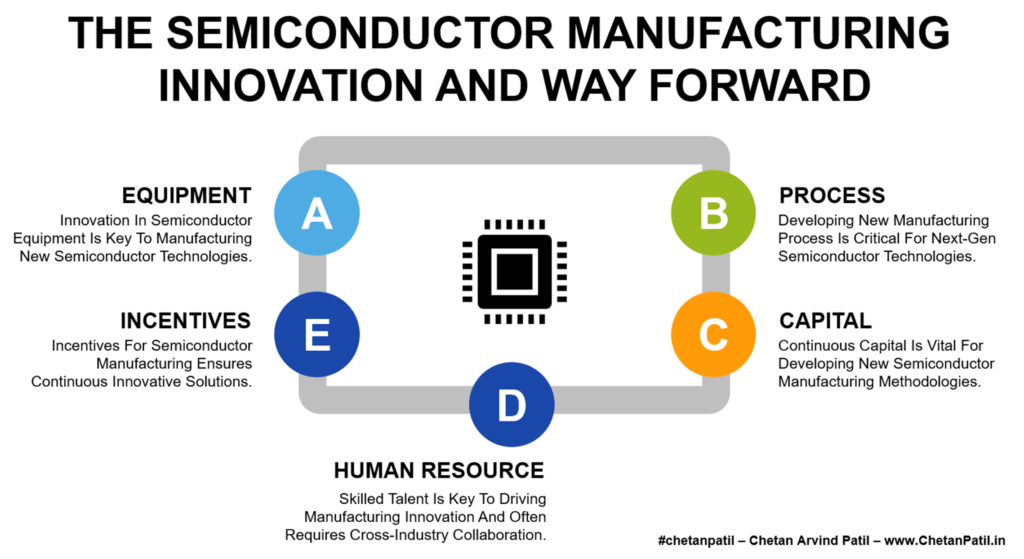
As semiconductor manufacturers expand to new regions, the most critical piece will be the push for innovation. The semiconductor technologies used in the semiconductor product development process have to be defect-free, which demands innovative solutions. It is the primary reason semiconductor companies keep coming up with new technology node processes apart from package technologies.
Equipment: Semiconductor equipment is the backbone for semiconductor manufacturing. Different xUV solutions are required to drive next-gen technology nodes and thus require continuous innovation via research and development activities.
Process: Developing processes that can provide the customer with options to power next-gen solution is the need of the hour. These processes can belong to the same technology node or a new technology node/process. Developing, validating, testing, and releasing these processes is crucial for semiconductor manufacturing innovation.
Capital:The semiconductor manufacturing houses need to focus on the customer requirement apart from the future market demand. Both of which require continuous investment. Thus, making new processes development a very capital-intensive task.
The major hurdles in enabling continuous innovating semiconductors are the cost and time. Cost is critical, mainly because the investment does not generate ROI until the technology is fully developed. The time directly impacts the costs. The longer the research is, the higher the time and thus the cost.
Apart from product development, semiconductor manufacturers also have to balance the research and development activities. Not doing both together will make today’s solution irrelevant in the future. And, without the next-gen in-house developed solution available for future use, the long-term impact might not be good.
Apart from the technical details, several business aspects need to be considered for long-term innovation in semiconductor manufacturing.
One such critical business part is the human resource required to bring innovative ideas into reality. Unless and until the focus is on correctly training the talent to bring the innovation forward, there is no way semiconductor manufacturing will be ready for the semiconductor industry’s requirement for the next century. Doing so often requires collaborating with the universities to train the students to enable human resources for its future requirement.
Human Resource: Talents with a wide range of skills sets are required for enabling future innovation. It often requires both academia and industry to come together and drive a curriculum that can bring more skilled talent to the semiconductor manufacturing industry.
Incentives:Semiconductor manufacturing itself is a high capital-oriented industry. Semiconductor manufacturers thus do require support from government bodies that can help them balance the product development capital versus the capital needed for research.
Another critical business aspect for continuous innovation in semiconductor manufacturing is the incentive part. It comes directly from the state and/or central/federal bodies. A long-term incentive can empower semiconductor manufacturers with the ability to come up with innovations, and at the same time can lower the burden to invest in existing setups and facilities.
Semiconductor manufacturing is critical from the design and also the manufacturing point of view. A manufacturing house cannot survive without a continuous push for next-gen semiconductor technologies. Doing so also requires support from public bodies, which is also a differentiating factor between the new regions that will grow as the next big destination for end-to-end semiconductor solutions.
The next few years will be crucial for semiconductor manufacturing due to the rush towards providing More-Than-Moore manufacturing solutions. The semiconductor manufacturing companies that have invested in such solutions long back will eventually win the race.
The semiconductor industry is vital for high-tech advancement. From smartphones to satellites, a small piece of silicon forms the base for millions to trillions of data points. It is why worldwide, the semiconductor industry is a Key Enabling Technology (KET) provider. Semiconductor product development requires various resources to come together. With the growing demand for smart hardware, the need to develop these resources in-house is more critical than ever.
In semiconductors, no single country wants to be 100% reliant. Countries are ramping up in-country semiconductor design and manufacturing efforts.
The complexity of both the design and the manufacturing aspects of semiconductors makes it a tough business. It takes years and decades to come up with a turnkey ecosystem to drive in-country semiconductor design and manufacturing. The cutting-edge technology that is required to become self-reliant in semiconductor design and manufacturing demands a radically different approach than incentive-based schemes, which the majority of the governments provide.
The End-To-End Semiconductor Cluster Ecosystem Requires In-Country Development And Growth Of Semiconductor To Drive Key Enabling Technology
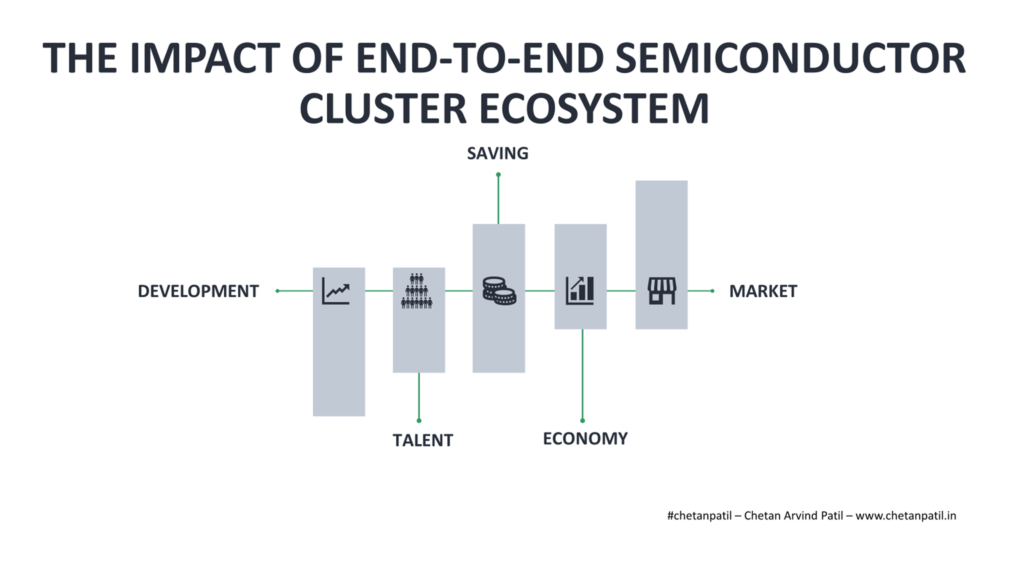
End-To-End Semiconductor Cluster Ecosystem: An end-to-end semiconductor design, manufacturing, and support ecosystem that enables seamless semiconductor product development. It requires different components of the semiconductor product development to be done in-country rather than globally. It drives in-country economic and talent development and is cost and time effective.
The End-To-End Semiconductor Cluster Ecosystem is what countries should focus on building to pitch themselves as a one-stop destination for all semiconductor solutions. However, it is easier said than done. The list of different types of resources and solutions that are required to develop a semiconductor cluster ecosystem is long. Depending upon the market size and focus area, countries can have a different smaller focused end-to-end semiconductor cluster ecosystem that has all the components of semiconductor design to manufacturing to customer delivery.
THE COMPONENTS OF THE END-TO-END SEMICONDUCTOR CLUSTER ECOSYSTEM
Creating a semiconductor cluster ecosystem is not easy. There are different components required to ensure that the environment supports the semiconductor business. Following are the major components of the semiconductor cluster ecosystem:
RESEARCH AND DEVELOPMENT
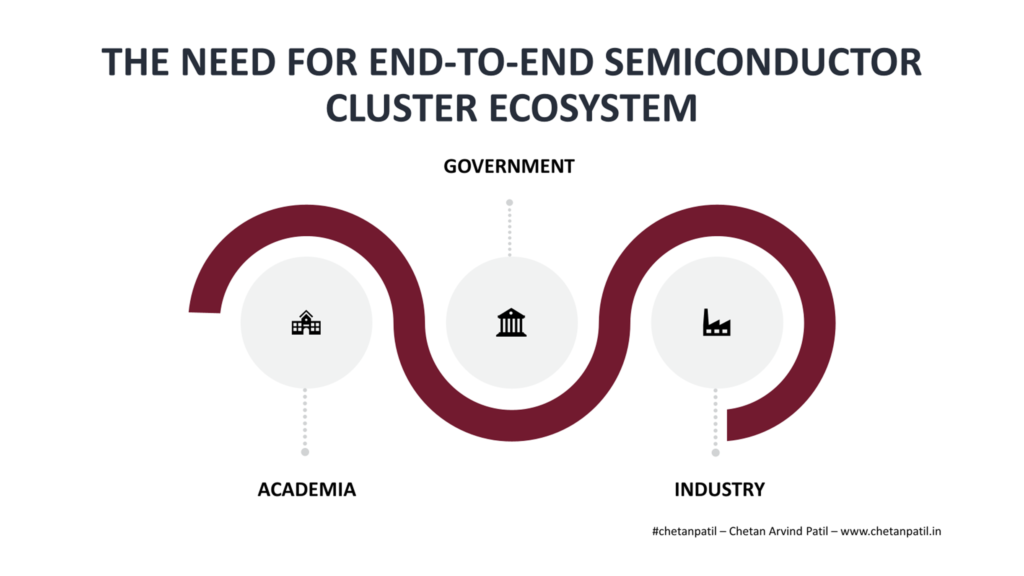
Research and Development (R&D) is key to both basic and applied science innovation. R&D requires the cooperation of government, academia, and industry. Given how complex semiconductor product development is (from technology node to packaging to power requirements), continuous and steady R&D spending is vital as it forms the base of the semiconductor cluster ecosystem.
According to the Semiconductor Industry Association, in 2019, the U.S. semiconductor industry R&D spending was 16.40% of total sales. Europe spending was 15.30% of total sales, while Taiwan, Japan, China, Korea spending was 10.30%, 8.40%, 8.30%, 7.70%, respectively. It clearly shows the importance of R&D spending and how it helps drive the leadership in the semiconductor business.
Countries wanting to implement the semiconductor cluster ecosystem need to increase R&D spending by collaborating with academia and industry, to drive advanced solutions for the market.
DESIGN (FAB-LESS/EDA/IDM):
Without the semiconductor design, there is no manufacturing. Countries around the globe are attracting businesses to design in-country. This requires setting up of FAB-LESS business which can drive the design of Analog, Digital, Processor, Memory, and Sensor-based products. To cater to the needs of FAB-LESS, EDA companies are required who can provide software-based tools to drive circuit to layout design, simulation, and validation. Apart from FAB-LESS, there are several IDMs (Intel, NXP, Marvell, etc.) which cater to the need of both the design and manufacturing aspect of the semiconductor.
The development of an in-country design ecosystem requires a talent pool. This demands universities with excellent infrastructure that can provide deep technical training required to drive gain expertise in semiconductor engineering.
MATERIAL:
No FAB or OSAT in the world produces the materials required to bring the silicon to life. Different chemicals, silicon, photomasks, gases, substrates, compounds, etc., are required to develop the wafers and packaged materials. There is a big dependency on specific countries and companies that provide such materials.
Semiconductor material development and procurements also mean a good understanding of the engineering aspect and as said it requires heavy R&D activities within the country where the materials eventually will get used, either by the FAB or the OSAT.
EQUIPMENT:
Semiconductor equipment is a billion-dollar market. Both FAB and OSAT require heavy machinery to process and assembly wafer silicon. ASML is the largest supplier in the world of lithography systems for the semiconductor industry apart from ASM, Applied Materials, and TEL. On the other hand, ADVANTEST, TEL, and Teradyne are the largest supplier of ATE-related equipment.
Both FAB and OSAT equipment are vital to ensure the materials and design eventually get made in the form of a product. A country with a stronghold on the semiconductor equipment manufacturing market is key to anything semiconductors.
FAB:
Fabrication of semiconductor devices requires dedicated facilities with large clean rooms. The investment to create such a facility is big and is the primary reason why there is only a handful of semiconductor FAB around the world. Even out of the existing FABs, not all are equipped to handle the advanced technology node that the semiconductor industry has ventured into.
TSMC, Intel, GLOBALFOUNDRIES, and Samsung Semiconductor are competing with each other to grab the opportunities presented by technology node 5nm and beyond. To make countries self-reliant in semiconductor, FAB play a vital role. It has pushed governments without any FAB facilities to provide incentives to set up new advanced FAB. However, setting up FAB also requires a supporting ecosystem, and this is why countries should focus on the cluster-based ecosystem that provides in-country end-to-end semiconductor solutions.
OSAT:
Outsourced Semiconductor Assembly And Test (OSAT) is as important as FAB. Packaging the products with the right technology enables long life. Testing every die on the wafer is vital to ensure there is no reliability or test escape. OSAT enables defect-free parts to the customer. They drive the back end of semiconductors, which in itself is a billion-dollar market.
Historically, OSATs have been located in the Asia Pacific and have been dependent on America and Europe due to the R&D and design lead these two continents hold. For a semiconductor cluster ecosystem, all the major components need to be catered to, not only specific ones. This is why OSAT is trying to get into FAB and is also investing in in-house design.
ATMP:
Assembly, Testing, Marking, and Packing (ATMP) is different than OSAT. OSATs take the bare wafer silicon and convert it into a packaged product, which is then shipped to the ATMP houses. ATMP receive packaged semiconductor products from different OSATs and then they assemble it together on a printed circuit board (PCB). All the semiconductor devices are connected to form a working computer system and clear marking details are put on the PCB to ensure traceability of devices. As the last step, the PCB is covered with an aluminum or plastic body before being shipped to the customer in a fancy box.
China is the leader in ATMP. India is another upcoming destination. Dell and Foxconn are the world’s largest ATMP houses. Having ATMP houses in-country provides economic development but at the same time negates the benefits when a country becomes 100% importer of semiconductor products. This is what has happened with India’s ATMP ecosystem.
MISCELLANEOUS:
Apart from all the major components, there are some crucial minor components that are also critical for the semiconductor cluster ecosystem. These include logistics, distribution, and enterprise-level software. Having delivery and development houses for these activities is also critical in ensuring an end-to-end semiconductor cluster ecosystem. Given these solutions are driven mostly by software in today’s day and age, the majority of countries have both development and R&D centers catering to the future of how to efficiently to logistics to distribution with the help of data and software.
SUMMARY: End-to-end semiconductor cluster ecosystem requires all of the above components to be in close proximity. However, as of today, there is not a single full end-to-end semiconductor cluster ecosystem in the world. The majority of the semiconductor cluster ecosystem has one or max three of the above components. Given the race between countries to attract the world’s best semiconductor business and talent, the focus on the end-to-end semiconductor cluster ecosystem needs to increase by leveraging facilities within the same location or country. Having more FABs and then relying on other countries for OSATs and ATMPs is never going make a single country the destination for all semiconductor needs, and that is what the majority of the countries in the last two to three years are trying to achieve. Unfortunately, that is not possible till an end-to-end semiconductor cluster ecosystem is built in-country.
There are a handful of semiconductor cluster ecosystems located in different countries. However, these clusters do not cater to all the components discussed above. It will not be valid to call these centers a semiconductor cluster ecosystem, but it does show the importance of having one or more semiconductor components within vicinity.
Following are a few active semi semiconductor cluster ecosystem but not end-to-end:
Intel – Portland, Oregon, USA And Chandler, Arizona, USA: Intel has advanced FABs in Portland, Oregon, and Chandler, Arizona. There are two big universities in the proximity of these two FAB locations: Portland State University and Arizona State University. Cross-industry and academia collaboration at these two locations have to lead to the launch of several innovative semiconductor solutions. The exchange of talent for research activities has also helped. Intel’s presence in these two locations guided the formation of a semiconductor support environment that has helped its FAB execution. This is also the primary reason why TSMC has chosen Arizona as the destination of their next 5nm plant.
ASE Global – Kaohsiung, Taiwan: ASE Global has multiple OSAT facilities in Taiwan. Kaohsiung plant stands out due to the proximity to other package technology solution providers like Amkor. The competition has helped with the development and availability of the semiconductor raw materials required to smoothly operate an OSAT facility.
TSMC – Hsinchu, Taiwan: TSMC has several FABs around the globe with the majority of the FABs located in Hsinchu, and has helped TSMC develop an ecosystem that has allowed universities and OSAT nearby to thrive. Having OSAT and FAB in the same location also reduces the cost and time of product development.
Newport Wafer Fab – Newport, United Kingdom: Newport Wafer Fab is the latest addition to the semiconductor ecosystem and promises to be the one-stop FAB needs for the UK region. It has tied up with Cardiff University to enable future compound semiconductor development. Showcasing why having universities nearby helps.
Samsung – Gyeonggi, China: Samsung like TSMC has FABs in a different part of the world, with the majority located in Gyeonggi. China being home to both the OSAT and ATMP houses, has allowed Samsung to take advantage of the in-country ecosystem of semiconductors.
TAKE AWAY: Above examples show the importance of having one or more semiconductor cluster ecosystem components in proximity. Imagine having all the semiconductor components in one location and that too within a single country. The benefits from employment, development, and growth will be immense. Whether or not such an ecosystem will end up getting developed, but for sure, countries are racing to attract the best talent and semiconductor businesses to drive in-country semiconductor growth.
THE WAY FORWARD FOR END-TO-END SEMICONDUCTOR CLUSTER ECOSYSTEM
The semiconductor industry is going through massive critical changes. From mergers to acquisitions to new companies to new FABs, all this is shaking up the semiconductor business.
Traditionally, semiconductor design and manufacturing has been all about specific regions/countries in the world having a stronghold on either the design or manufacturing or equipment. Post-2020, the story is going to change. Majority of the country has already started chasing giants of the semiconductor industry to set up their designs for manufacturing houses.
Country With The End-To-End Semiconductor Cluster Ecosystem Will Lead In The Digital Technology World.
Governments need to develop their country as an end-to-end semiconductor cluster ecosystem, with a solution for every component of the semiconductor development cycle. Having one facility and not the other is only going to make the new facilities in the new country dependent on the old facilities in other countries.
The country that can create an end-to-end semiconductor cluster ecosystem is going to have an advantage over others and will lead the digital technology competition.
As technology is progressing, the world is becoming smarter. The decision making is becoming more data-driven rather than experience-driven. People around the globe rely more on smart systems to find solutions to their daily problems. With the proliferation of Artificial Intelligence and its influence on day to day life, the world is only going to become more reliant on smart services and products.
The smart software and hardware systems have already found its way into every consumer product. Cars are becoming more connected. Homes are becoming more energy-efficient due to data-driven decisions. Logistics and transportation are data-enabled too. All this has enabled companies to spend wisely, while being profitable at the same time.
The next decade is going to see the wider adoption of smart devices. The impact of these devices is going to enable a smarter ecosystem. Software companies are also launching smart hardware, which is also helping in the growth of the smart ecosystem market.
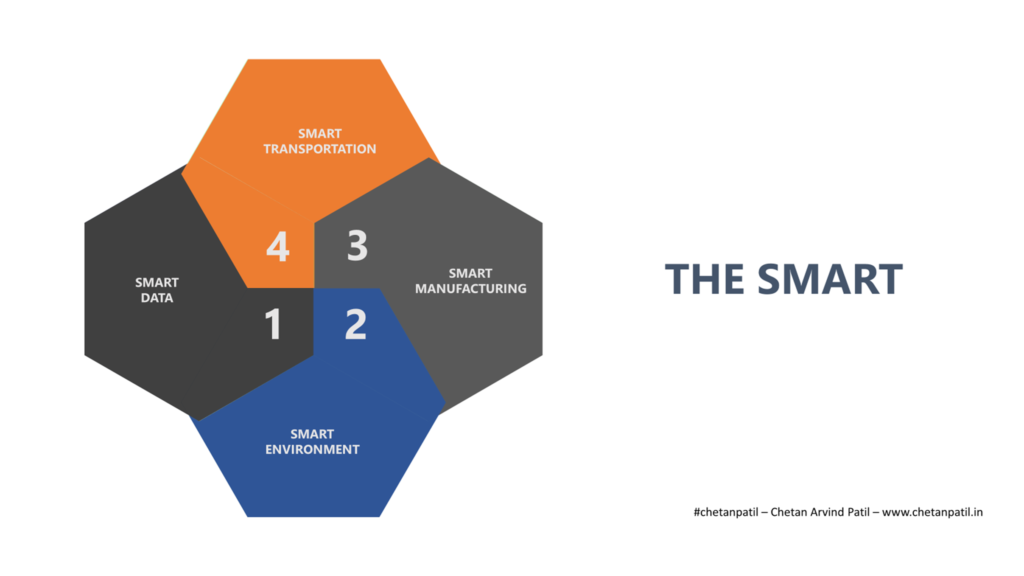
There are certain key areas where smart technology is going to enjoy an exponential growth.
THE SMART KEY AREAS
Major areas where the smart technology is going to be more profitable are:
Smart Data
Smart Environment
Smart Manufacturing
Smart Transportation
Smart Data: The systems that are being deployed across the cities, offices, houses, industrial areas, etc., are by default being designed to monitor the surroundings. The major goal of these systems is to capture the data in the cleanest form possible. The subsequent system doesn’t have to post-process the data and this ensures that the decision is provided in the shortest possible time. The data collection, processing, and the presentation are going to be the critical piece in order to classify a system as smart data ready. Smart data has already seen tremendous growth in the last decade and promises to be on the same path.
Smart Environment: In the last decade, as technology innovation has progressed, so has the use and deployment of it. The turnkey infrastructure projects have embraced the new possibilities that smart solutions are capable of providing. The buildings are becoming more sensor-driven. The cities are becoming more connected. The open spaces are more secure due to smart security cameras. The schools and offices are more eco-friendly. All this is becoming possible due to the efficient use of spaces that are being created with the usage of the smart systems, which can project and provide an optimized solution against the capital expenditure. The net-zero concept is the main driver in enabling the smart environments around the cities and countries. With new infrastructure projects, the smart environment domain is only going to enable the growth and adoption of the smarter technologies.
Smart Manufacturing: Manufacturing is hard. The time and effort required to build a product involves a lot of steps and resources. Any company that is into manufacturing has one major goal: eliminate waste. The waste can be at any stage from the procurement to development to delivery. Money saved in manufacturing without compromising the quality is money earned. Companies are relying more on the robotic decision (while balancing human resources) to optimize the manufacturing process. Smart manufacturing is also relying on artificial data decisions to make a more profound judgment based on the market need, in order to manufacture the products efficiently. Industry 4.0 is here, but in a few years time, the world will move to Industry 5.0, which will rely more on smart manufacturing. As the factories start to invest in smart manufacturing to reduce waste, the opportunities for the smart solution providers will also grow. It has already started happening in automobile and semiconductor manufacturing.
Smart Transportation: It is human nature to move from one place to another in the search of better opportunities. Uber and Lyft have already provided a sneak peek on how future transportation is going to be. With Waymo expanding the driverless riding services, more driverless cars will inevitably be seen around. This points out how the world is going to adopt smart transportation that is connected and statistically geared to be safer than human-driven cars. The logistics domain is also going to adopt to these smart technologies to save on the cost and become more profitable. As more companies and startups put in talent to make vehicles ecosystems smarter, the opportunities in this area will also keep growing.
These are the four key areas, where the smart ecosystem is enjoying (and will keeping doing so) faster adoption and positive growth.
THE SMART FUTURE
The smart solution heavily relies on both the smart software and smart hardware.
Smart software: In the last decade, software has become more advanced that ever. The machine learning, deep learning, and artificial intelligence solution created on top of the vast amount of data collected due to internet adoption, have ensured that the systems can understand the need before it is needed. As more people come on board the online world, the growth and usage of the smart software is also going to increase.
Smart Hardware: Hardware development has kept the pace with the software, however, the hardware innovation has always relied on massive systems that are power-hungry. The supercomputers are capable of providing solutions in seconds, but that comes at a steep cost. Slowly, the hardware is also getting embedded with artificial intelligence, at the architecture design stage, to make it more adaptive and thus ensuring smart solution at low cost. The possibility of performing massive computation at source is going to make the computer systems more smarter and faster than ever.
It will be interesting to see how the growth in the smart software and the smart hardware solutions in the next decade is going to shape the smart world.
The software business delivery model has been constantly changing. It has adapted the need of the market by leveraging all the possible ways to deliver the software solution hassle-free. From installing software using a CD-ROM or USB Flash Drive to installing over the internet, the ease of accessing and using software has changed a lot.
The customers have also adapted to the changing landscape. From worrying about configuring the license key correctly to transitioning to subscription (monthly/yearly) model has provided numerous benefits.
One major change in the software delivery model has been the cloud services, which has pushed the applications from the desktop to the browsers. This has greatly eliminated the need to configure the operating system and environment settings required to ensure that the application works flawlessly. Today, with the click of a button, one can securely log on to the website and access the software tools using any browser without worrying about the underlying operating system.
While the software has certainly made great progress, hardware has not been behind. The sole reason one can access software tools remotely is that the data centers located in the different parts of the world are working in harmony. This is to ensure that all the requests are processed with zero downtime and minimal delay. The underlying network of hardware ensures that, low latency is not a hindrance in accessing the software features. This has removed the need to maintain self-hosted servers and has allowed customers to instead invest in other critical solution to make the day to day task more productive.
The software licensing and delivery model today is termed as Software-As-A-Service (SaaS). It is a subscription-driven model where the application is hosted on a server and can be simultaneously accessed by all the subscribers without any resource constraints. The server will have all the software dependency pre-configured to let the developers focus on the delivery.
To run the SaaS model, a set of hardware tools are required. Instead of spending millions of dollars on the hardware infrastructure and maintenance, many enterprises and solution seekers have moved to the hardware licensing and delivery model and it is termed as Hardware-As-A-Service (HaaS).
The major difference between SaaS and HaaS,is the application. SaaS is primary all about software, while HaaS is not just about computer hardware and system but also about all those smart hardware solutions that are running the SaaS.
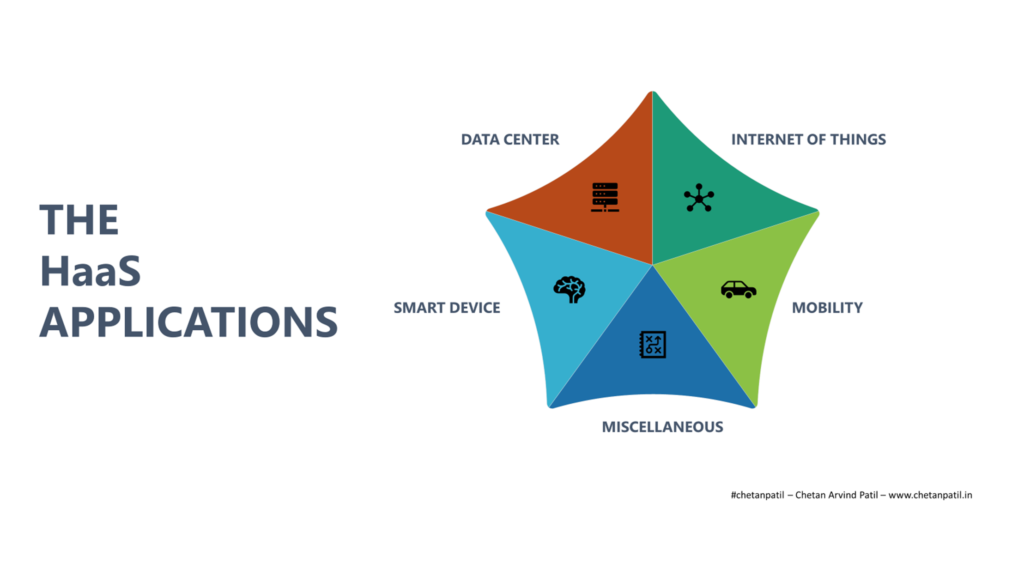
THE HaaS APPLICATIONS
The application areas of any given product is what differentiates it from competitors. In the last decade, the HaaS application has increased and many smart hardware providers have moved to the product-based service model.
The important application area of HaaS has been the data center, where cloud service providers (Amazon, Google, Microsoft, etc.) and content delivery networks (Akamai, Cloudflare, etc.) have created plethora resources to cater the growing need and demand of software enterprises. Anyone can rent as many nodes required and deploy a solution. The shared and dedicated website hosting also falls into the same category. Renting out per month basis than buying the hardware and setting up in the office is more cheaper and reliable. HaaS (Hardware == Data Center) also eliminates the cost of setting up a dedicated team to handle all the data center related issues.
The growth of smart devices has lead to change in the way consumers consume these products. Taking the queue from the smartphone business, it is evident that a new version of the smartphone is launched every year. This automatically prompts consumers to buy a new one due to the attractive features. Shelling out more than $500 every year on a smartphone is not what every consumer would like to do. To tackle this issue, the service providers (mainly cellular one) moved to the HaaS model (Hardware == Smart Device), in which they started providing the smartphone as part of a monthly plan than paying upfront. It certainly has pros and cons, but has provided consumers the ability to switch to better devices as and when required. This smartphone subscription model is now being extended to several other smart devices like cameras, drones, watches, security, T.V., and the list is endless.
Mobility is a very crucial part of the day to day life. In the transportation area, the HaaS model (Hardware == Vehicle) has been in use for decades. The model of renting the vehicle for a specific period is well proven and widely used. Due to the proliferation of vehicles for hire services, the HaaS model is being applied more relentlessly. From car to skateboard to electric bike to bicycle, now everything is available under the HaaS model. The growth of point-to-point will keep extending the application area of the HaaS within the mobility domain. Gen-Z and Gen-Alpha are going to mostly rent the vehicles under the HaaS model than spending money to purchase one.
As countries around the world move towards 5G and Wi-Fi 6, the digital landscape will also change as more consumers will have the ability to connect to the online world. This will demand a vast array of the internet of things that needs to be deployed across cities, states, and countries. The business (internet service providers) will unlikely follow the trend of settings technology on their own. This is where the HaaS (Hardware == Internet of Things) model will come in as a way to save cost while providing services.
Apart from the discussed application areas above, there are still miscellaneous domains where the HaaS model can be applied. It is already in use in the airline industry, where purchasing air crafts has moved to a year-long rental agreement. A similar concept will start to fill in the developing world where services are more vital now than ever.
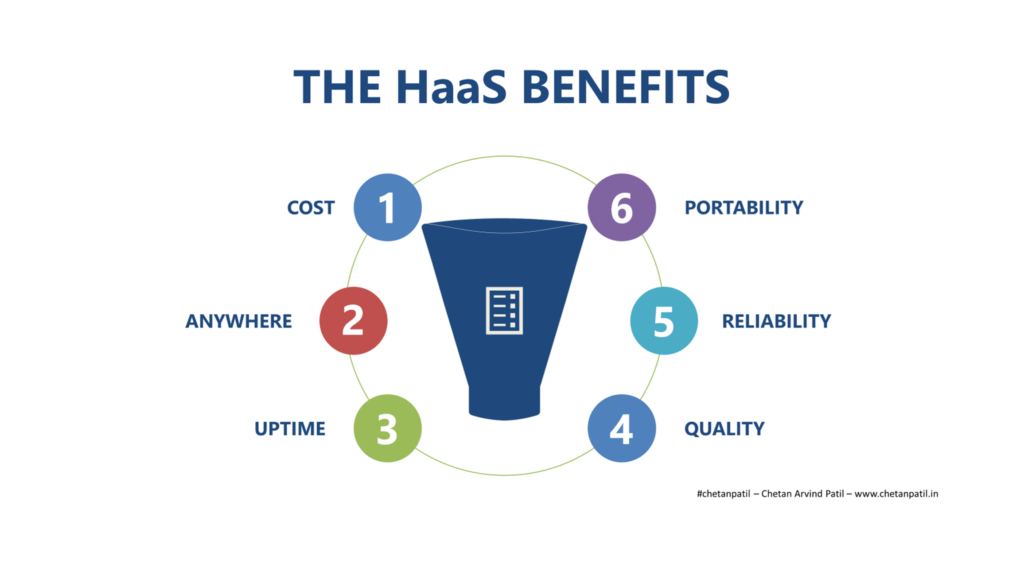
THE HaaS BENEFITS
Technology when applied correctly, provides numerous benefits. SaaS showed many benefits to the software world. Same applies to the hardware world due to the HaaS implementation.
Cost is one of the major benefits of HaaS. The ability to rent out as many nodes for as many days required has provided new way for consumers to manage the cost. In many cases, consumers can spend money wisely in other critical areas. The ability to terminate and forget about the infrastructure is also one keys to why the HaaS model is getting popular.
The HaaS provides a way to access services anywhere. From data centers to mobility all are available at the click of the button. The HaaS will be deployed and available at the doorsteps. Majority of the cities around the world are already equipped with several HaaS services and this has provided reliable uptime to the services.
Portability is another important benefit of HaaS. The option to switch smart devices to a new one without worrying about the cost is one example. Even with data centers, one can move from one cloud HaaS provide to another, without the need to understand the underlying process and technical challenges.
With SaaS, the quality and reliability of software services improved. Always on services and customer support was a great addition to the SaaS model and it has ensured that the customers are never out of help. The same quality and reliability solutions have been extended to the HaaS model and are taking the customer experience to a new level.
Digital transformation, expanding high-speed network, and advancement in the semiconductor solution is only going to improve the HaaS experience.
THE HaaS FUTURE
Given the expansion of the artificial intelligence and autonomous solutions, it is highly unlikely that the HaaS delivery model will change much from the existing one.
The HaaS in the future will keep evolving around the following three important aspects:
Users are the consumers for the HaaS model and paying for the service. Middleware is the connectors between the users and service providers and gets the share of both sides of businesses. Services are the different solution providers with innovative services and products.
It will be interesting to see if the industry moves to a new way of subscribing to the services. Currently, the business is moving around pay as a use model, and it has worked wonders both for the service providers and the consumers. However, every model evolves, and with the rate at which the technology is advancing, it will be important to adapt the business model accordingly. What new way of supporting these services will come, only time will show.
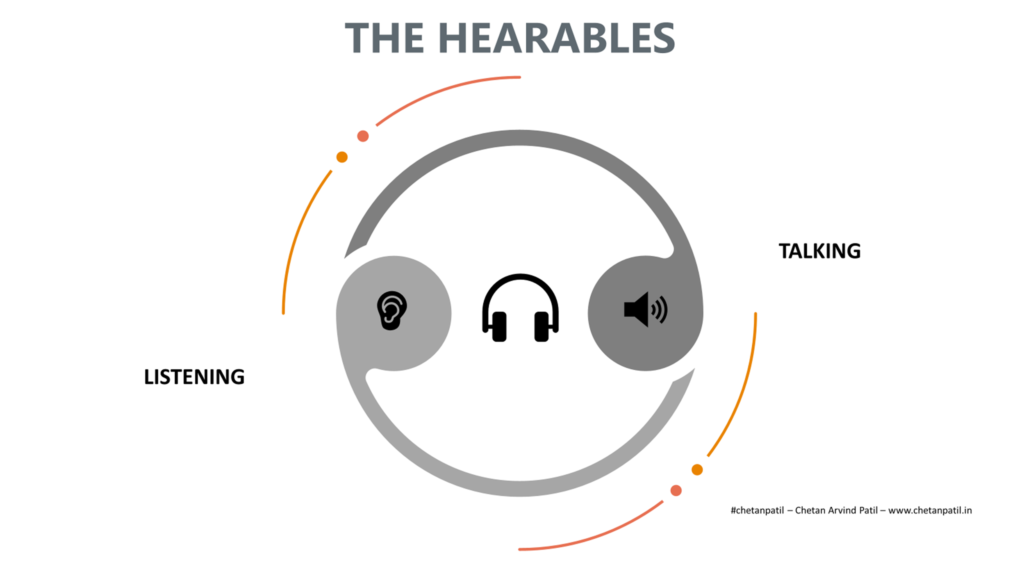
The hearables are the smart technology-enabled over-the-ear or in-the-ear devices that are mainly used for music listening. The natural language assistant has equipped the hearables with the ability to talk. These smart assistant can interactively talk to the user using the inbuilt speakers, and then can also listen to the user with the help of the microphone. The hearables also have inbuilt features like ambient sound control and active noise cancellation.
The majority of the hearables use Bluetooth for wireless connectivity, which allows voice control of the smart phone with the help of the virtual assistant. Though not everyone is comfortable talking to these virtual assistants in public, however with the increasing use, it is becoming a new normal.
Every major smartphone and audio company in the world has launched its own hearables. Technology companies are merging the best of the audio, hardware, and software to create new solutions around the hearables. Google is deploying artificial intelligence-enabled voice assistant, while Amazon is focused on enhancing online shopping and audiobook experience with the help of the hearables.
There are already numerous applications of the hearables and it will be exciting to see what the consumers get to experience in coming years.
THE HEARABLES APPLICATIONS
The application of any technological solutions requires multiple functions to work in harmony. First and foremost is the underlying hardware technology, the second is the connectivity (mainly wireless), third is the software systems running on top of the hardware and fourth is the application ecosystem driven by the developer community.
Starting from pre-internet to the post-internet ear, all the consumer-oriented solutions have relied on these four major points for success. Whether it is Windows powering the majority of the world personal computer or Android changing the landscape of the mobile industry. The same is also applicable for the hearables, except that majority of these underlying solutions (hardware, software, connectivity, and ecosystem) already existed beforehand. With the hearables, the companies have simply taken the existing software/hardware infrastructure and extended it to the hearables. So far, the outcome has become anything but positive.
Entertainment has always been the default application of the hearables. The small form factor and features like active noise cancellation has surely taken the audio experience to the next level. The applications on the mobile devices can now connect to the hearables via Bluetooth, which provides an ability to control different features using the smart gestures.
Another major application of the hearables has been to swiftly interact with the voice assistant. The offloading of tasks after sending instructions via the hearables has made the smart devices more interactive. It can be used to retrieve important information like the weather forecast, nearby places, and many other useful data. All this has been possible due to the underlying smart hardware that can capture and process the natural voice.
The hearables also offer audio privacy and enable one to interact with the party on the other side without compromising the confidential information exchange. There are still gaps, mainly from the speaker’s point of view and it will take a breakthrough technology to overcome some of the gaps.
Cross reality by default requires a pair of devices to connect with ears. The hearables are the perfect candidate due to the smaller form factor. The hearables mixed with cross reality is going to provide new avenues on how to project information in the virtual world.
In the coming decade, the application areas of the hearables will surely expand.
THE HEARABLES OPPORTUNITY
The smart features requires the smartest of hardware and software.
The hearables might be marketed by a specific company, but a lot goes inside these little devices which requires effort from several design, development, and manufacturing companies. The software part is still being handled majorly by the vendors selling the hearables, but the application ecosystem opens up a lot of opportunities for the developers.
Hardware companies, mainly semiconductors, will have a lot of opportunities to launch new low power and smaller electronic audio/voice chip. Noise cancellation system will have to keep improving to consider the work from anywhere scenario, which also opens up new opportunity and revenue for the semiconductor companies. Context-awareness is another promising feature, for which the hearables will require smart sensors in order to adapt to the environment.
Wired charging will be phased out of the market in the next decade, and the hearables will also have to adopt wireless charging system. Already different wireless charging solutions are available in the market, but fast wireless charging will be the key until the battery technology evolves. A portable battery bank cum carrying case for the hearables will be another area that companies can target.
Software innovation will also open up new opportunities. It is expected that going forward the hearables will be able to connect with the cellular towers, and when that happens the services will have to be provided mostly over the voice. This will require smart applications to make most of the hearables. For example, the banking application on the hearables can provide details about the bank balance or initiate transfer with voice commands.
Voice assistants are already in use, but local language support will be the key. Providing local language support will increase the reach of the hearables. Audio control is already part of the hearables. Extending it beyond just the master mobile device will open up new ways to interact with the world. For example, controlling car infotainment using the hearables.
Hardware electronic chips can only cancel 70-80% of the noise. In order to achieve 100% noise cancellation, software adaptive features are required, which can capture and filter out the noise. Innovation around the software noise cancellation will also lower the cost of the hearables, as it will eliminate the need to have a dedicated hardware chip inside the hearables.
The hearables have opened new opportunities for both the hardware and software domains. The domain is expected to grow more in coming years.
THE HEARABLES FUTURE
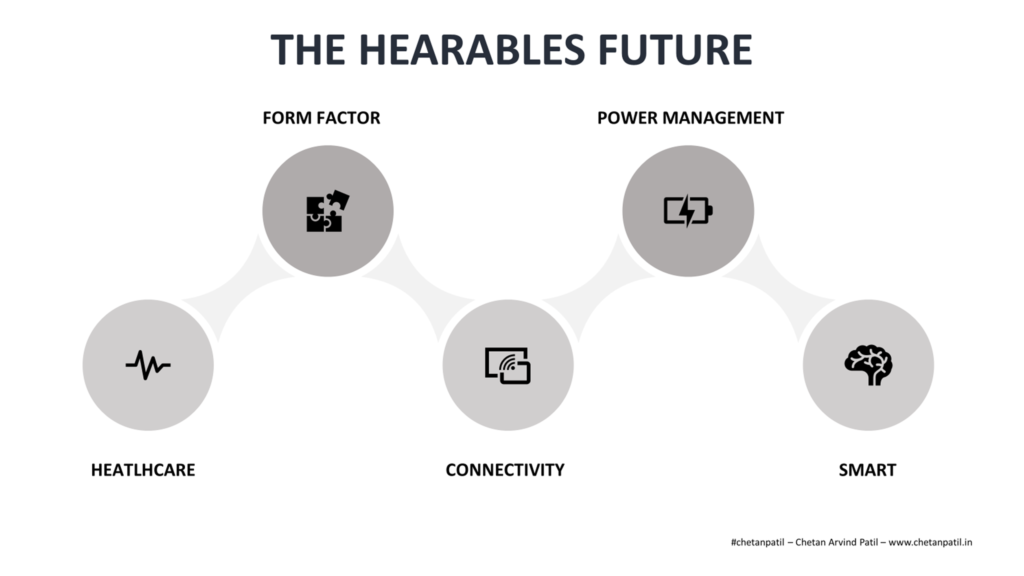
Over the next decade, the adoption of the smart devices will increase, mostly in the developing market. With Google becoming more of an AI service business, many local vendors from the developing market can take advantage of its solution to provide locally manufactured smart hearables.
It is inevitable that Android will also find its way on the hearables and it will make them a standalone device rather an add-on one. However, to make the hearables work as a standalone system, it will be critical to provide better power management. Dynamic task management can only drive efficiency to a certain extend and that is why the advanced battery technology is need of the hour.
Expansion of 5G small cell connectivity will ensure that the hearables can form a network that securely allows sharing of the information within a specific range. This will take the person-to-person voice communication to a new level and make the hearables smarter than ever.
One of the major domains that every smart device eventually tries to target is healthcare. The hearables are yet to enter this market due to the limited use case. It will be exciting to see how the evolution of the hearables occurs over the next decade from healthcare point of view.
The hearables have got lot of traction and have already captured the market faster than other smart devices. Next few years will be exciting as the innovation around the hearables grows.
India has set an ambitious goal of 30% electric vehicle (EV) adoption by 2030. The adoption is expected to be driven majorly by two/three-wheelers and commercial vehicles. This is a daunting task and there are many challenges on way to ensuring faster EV adoption.
EV adoption requires a three-way handshake and the same is true for the Indian automotive market:
First: Automotive manufacturers need to provide an EV alternate to every non-EV model in production
Second: Consumers should be able to afford the EV model
Third: Infrastructure required to ensure end-to-end EV support
The majority of automotive manufacturers around the world have already started working on plans to launch a wide range of EV vehicles for consumers. Some are also working on an alternate EV model for every alternate fuel model in production. The more manufacturers join such initiative, the better it will be for a new market like India.
From the consumer point of view, the major concern is still about the range and the cost. Over the last 5 years, several startups in India have focused on EV solutions to capture the two/three-wheeler market. Some have been very successful in doing so. There are still concerns around the cost and range, as these two/three wheelers still take on an average of 5 hours to get fully charged to provide a range of about 150-200 KM (93-125 Miles).
Infrastructure is another key to the wider adoption of EV. Countries that have a well-developed market for EV (the USA, EU, etc.) have ensured that the policies are suitable for faster EV adoption including incentives for both manufacturers and consumers.
India though has taken a step in all the three points discussed above, there are still challenges on the EV 2030 roadmap.
EV CHALLENGES IN INDIA
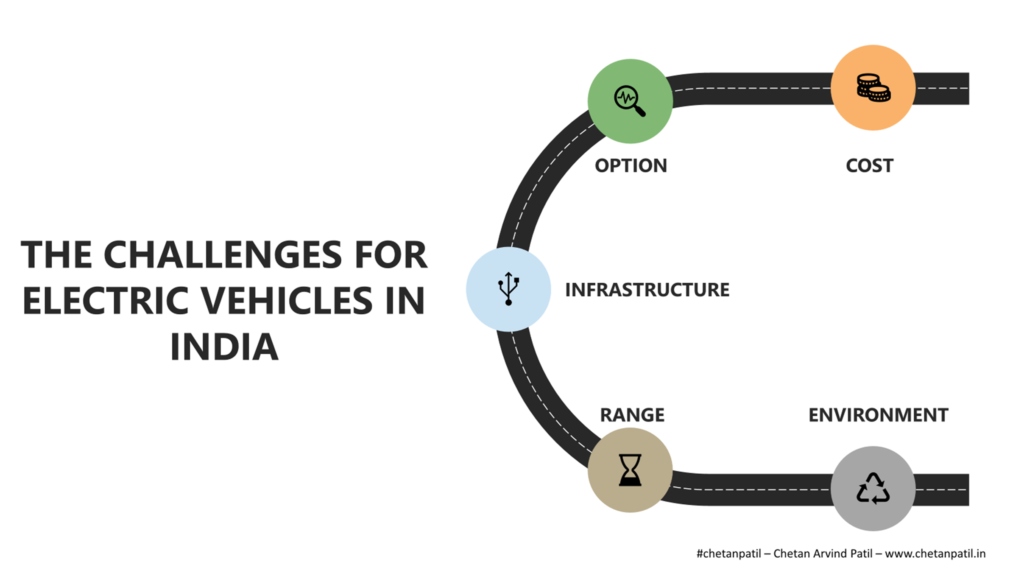
EV growth in India is depended on overcoming the following challenges:
Cost
Range
Option
Environment
Infrastructure
Cost: Given the technology required to develop an efficient EV is fairly new, the cost is becoming the major hurdle in wider adoption. The majority of India’s automotive buyers focus on vehicles that are compact and provide long-term reliability and cost benefits. This choice has driven automotive manufacturers in India to keep churning out new models that are not only compact and reliable, but are low cost too. Any new EV passenger vehicle will have to not only beat the entry-level fuel-powered models but will also need to ensure that there is no compromise on the features.
Range: India is still a fuel-powered automotive market. Users have adapted to the fact that they need not worry about waiting to re-fuel the vehicle. Not all the cities and towns have the EV electric charging infrastructure. On the go charging requires time and that doesn’t help EV adoption. This is a turn off for the EV market. On top, the planning and implementation of such EV charging network is yet to be defined clearly for the Indian market.
Option: In 2020, Indian automotive manufacturers are not providing more than two or three EV model options. This limits the EV options for the consumer. While commercial vehicles by default are slowly getting more EV models, the major market (~70%) is still in the passenger vehicles which is far behind in terms of EV models. Unless automotive manufactures come up with a wide range of options, consumers will still get attracted to fuel-powered vehicles.
Environment: There is still no clear roadmap in India about how the battery charging infrastructure is going to be. Whether it will be re-charging the EV batteries at the charging stations or the battery swapping is going to be an economically viable option. In both cases, the environmental challenges still exist. Taking fossil fuel out of the vehicles still does not mean that the EV is 100% environment friendly. Disposing of the battery after long usage is still a big concern. On top, the raw materials required to develop batteries are not fully environment friendly.
Infrastructure: EV requires a network of charging stations. The developed market already have policies and partners who have worked on creating a network of infrastructure that allows anyone with an EV model to get their EV charged at an affordable cost. The same infrastructure is now being extended to provide EV servicing, in case of breakdowns. India needs a clear policy and partners to ensure that the infrastructure is in place before ramping up the EV production.
EV FUTURE IN INDIA
The future of EV is promising in India. It does come up with challenges. There are already established EV markets to learn from and take the best possible route possible to increase the wider adoption of passenger and commercial EV.
The commercial EV market is growing mainly due to state government policies. The same needs to be applied to passenger vehicles. Two/three-wheelers have already started adopting to the EV business model. If the cost goes down further with an increase in range, the speed of adoption can be faster.
EV market also provides opportunity to the semiconductor companies which can provide electronic based solution to make EV ecosystem smarter.
The mass mobility transition for 1.3+ Billion people is not an easy task. It is an opportunity for all the manufactures that are driving the EV market around the globe. Will be exciting to see how the world helps India drive into the EV world.