Category: SOFTWARE

  • The Edge Computing

    The Edge Computing

    Photo by Tony Stoddard on Unsplash

    In the hardware systems, the cache is used by Central Processing Units (CPU) to reduce the time which is required to access the data from the lower level memory like RAM. It does so by bringing the data beforehand (depending on the policy used) in the cache, which re-sides closer to the CPU.

    This allows CPUs to perform calculations faster as the cycle time gets reduced and the latency is lowered. It also lowers the time and energy required to perform the computation task.

    Same concept is applicable for the software systems, in which caching of data leads to faster access which reduces the response time and improves user experience. Content Delivery Network (CDN) is one of the best examples of software caching. Even web browsers use it.
    Image
    Picture By Chetan Arvind Patil

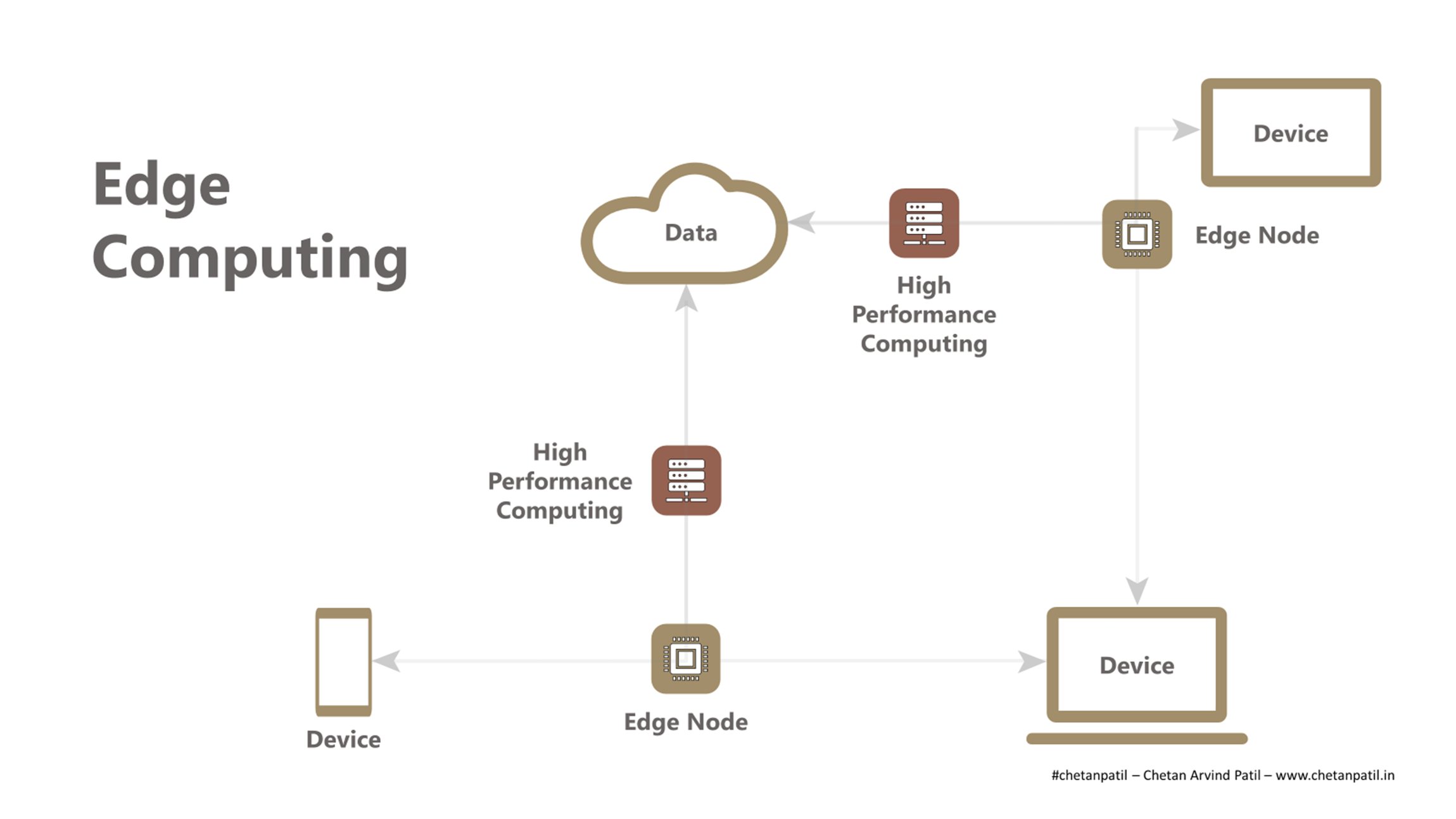
    However, both the hardware and the software caching systems are good from a data point of view, but not for computation. In the hardware systems, data is brought closer to the CPU for processing while in software systems the data is brought closer to the user after processing. For both the systems, if the source data is updated, then new data has to be fetched, which adds cost, time, and energy.

    With the growing digital user base and improved connectivity around the world, the importance of caching is increasing to cater the data and computation demand.

    In order to serve this growing demand, the edge computing is being deployed. In a nutshell, the edge computing provides data and computation closer to the nodes requesting it with the help of widely deployed array of hardware. This leads to faster response time, reduces time to deliver the content, and provides massive distributed processing power.


    EDGE COMPUTING BENEFITS

    Large scale deployment of the edge computing is going to be a win-win situation for both the businesses and the consumers. The hardware and software deployment and development around the edge computing are also going to bring a tremendous amount of skill-based employment opportunities. The edge computing has numerous benefits. There are already several solutions from the semiconductor industry for the edge computing.

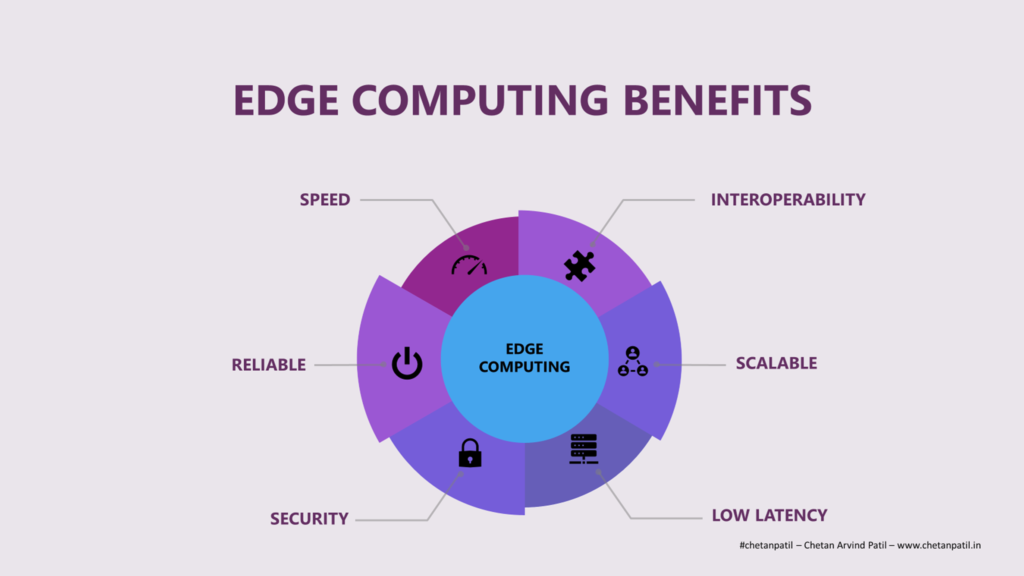
    One of the important benefit of the edge computing is the computation speed. The edge computing can distribute the single task across different edge nodes, which reduces time to accomplish task. With 5G and Wi-Fi 6, the off-loading of the task to nearby edge nodes is going to ensure low latency and reliable service.

    By reducing the number of hopes required to access the computation and data resources, the edge computing will also provide better security. The computation to be performed can be done by nearby nodes and the data to be accessed can also be stored at the same nodes. This process shields against any intruders trying to access the data by reducing the number of hops.
    Picture By Chetan Arvind Patil

    The edge computing is also designed to be scalable. There are no restrictions on the number of edge nodes that a specific network can hold, as long as the edge computing network is balancing the supply and demand requirement, and is not high on cost.

    Adoption of 5G will be a gradual process. Consumers will take time to upgrade devices that are 5G compatible. To cater to the previous generation (2.5G/3G/4G) technology users, interoperability is important. The edge computing is capable of providing interoperability, thus both new and legacy devices can work with the same edge node.

    The major application areas of the edge computing is going to be On-Device Artificial Intelligence (AI), which will allow smart devices (smartphones, cameras, sensors, etc.) to off-load the compute intensive task to the nearby edge nodes.

    The edge computing will take digital experience to the next level.


    EDGE COMPUTING OPPORTUNITIES

    Every new technological solution presents new opportunities for the businesses. Consumers also gain due to the new products and services. From a business point of view, the edge computing provides several ways to generate revenue.

    The edge computing will drive the introduction of new products. Both software and hardware solutions will be introduced. Businesses can explore the edge computing in form of Edge As A Service (EAAS) by allowing smaller companies access to the edge resources in order to provide over the top services. This will also drive revenue.

    Picture By Chetan Arvind Patil

    Computing at the edge also requires a networks of hardware that can accept the task request, process it, and send it back to the requester. To develop such smart hardware for the edge computing, the semiconductor companies are comping with low energy and high-performance electronic chips, which can used by the developers to launch new hardware products. All this opens new revenue opportunity for different segments for smaller, mid to high scale enterprises.

    The edge computing on top of the smart hardware will increase the adoption rate of the digital services. This will also lead to acquisition of new consumers and will open multiple revenue opportunities.


    The edge computing offers exciting benefits and opportunities. Both businesses and consumers are going to be at advantage.

    The major application areas that the edge computing is going drive are smart cars, smart cities, smart industry, smart manufacturing, and smart home automation systems.

    Picture By Chetan Arvind Patil

    It will be interesting to see how the industry comes forward and uses the edge computing to launch new digital solutions for the market.

    The country which will deploy and adopt the edge computing enabled 5G networks faster is going to be the leader in digital services and information technology for the next decade.

  • The Drones Are Flying

    Photo by asoggetti on Unsplash


    DRONE

    Unmanned Aerial Vehicles (UAV) have been in use since 1849. Several countries around the world have invested in massive research and development activities to make use of UAV for surveillance activities by the armed forces. All the military-grade UAVs are distinctly complex and wide-body machines.

    In recent years, due to the development in the semiconductor process technology and the advancement in software development, the form factor of high-tech hardware and software solutions have been shrinking. Along with the improved connectivity and wireless communication technology, the UAVs are now also being used by civilians for personal and professional non-military activities.

    The civilian UAV are more popularly known as drone.

    Picture By Chetan Arvind Patil

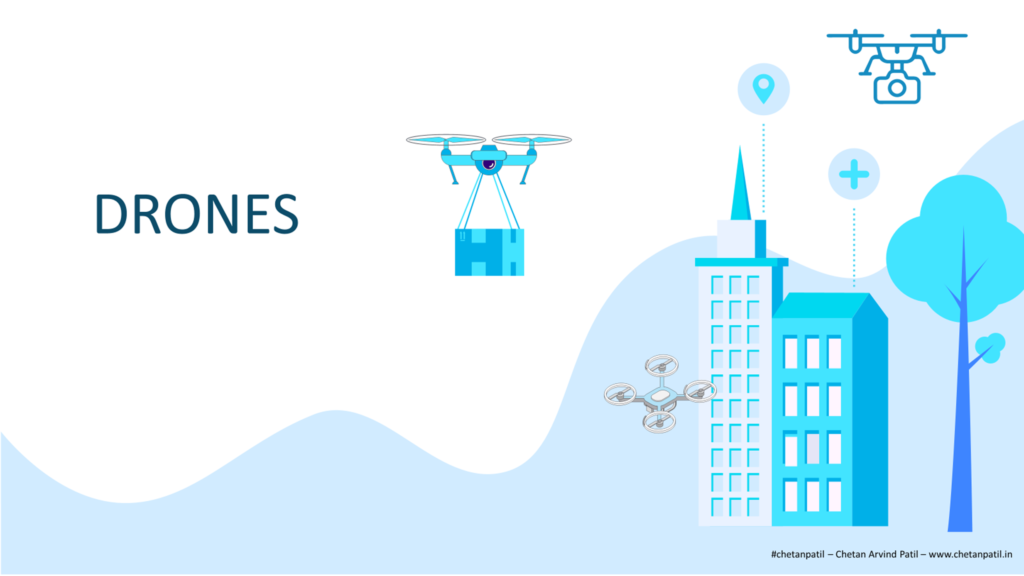
    With the flying capability and ability to get controlled remotely, the drone can reach places easily where humans require heavy machinery to do so.

    The primary usage of the civilian drone has been for aerial photography and videography due to the high-resolution cameras that the drone can fly with. Lately, the application area has widened to agriculture, scientific research, and numerous other business segments.


    DRONE APPLICATIONS

    There are different areas where the drone is useful. Mainly in the areas where deployment of the drone can lead to lower operating cost compared to the existing solutions.

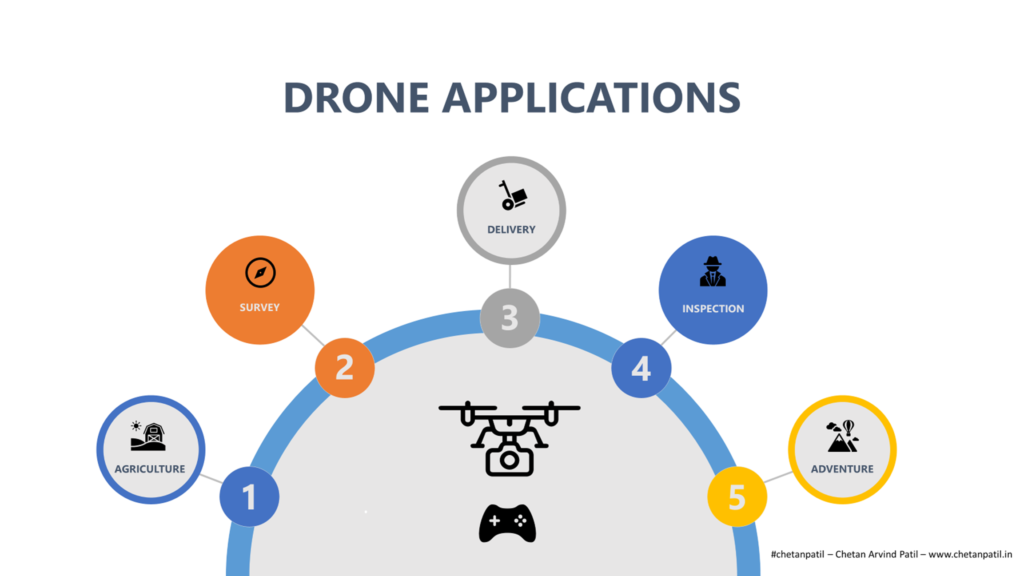
    In Agriculture it is not only important to monitor the yield of the crops but also critical to understand the effect of the new agriculture technique. Going by the traditional approach of performing the acres of land inspection manually is not only time consuming but is a labor-intensive task too. This is where the drone come into the picture. The drone can either fly from nearby centers to monitor the farming or can reside near the field. In both the cases it can be controlled remotely. On top, farmers can also be trained to fly the drone.

    The drone can be programmed with the map of the agriculture land to automatically capture the aerial high-resolution pictures and videos. The data captured can then be uploaded to the cloud servers for further analysis. The farmers can then get the accurate feedback on the progress of their crops, along with live audio/video advice.

    Another important application area of the drone is to perform survey. Surveys can be to understand the structure of a high rise, finding any faults on long pipelines located in terrain land, checking on the high rise electric pole lines, and many other important areas where humans will require heavy instruments (high cost) to reach. The drone can also be very handy in surveying bridges and tunnels. Similar to the agriculture application, the data captured from the cameras can aid in understanding whether maintenance is required or not.

    Picture By Chetan Arvind Patil

    The drone are also being used for adventure activities like capturing videos during a movie stunt, aerial view of national parks and many other adventure activities. The high resolution cameras provide breathtaking view from a point of location that humans cannot read easily.

    The drone is already is use at police and firefighter departments across the world. The primary reason to use the drone by the police departments is to inspect suspicious areas. With the help of sensors and cameras, the drone can per-alert and provide details about whether it is safe enter the area or not. The firefighters are deploying water loaded drones to put off the fire in buildings or complex, where it is not safe for a human to reach. Civil engineering and the oil/gas industry are also increasingly deploying the drone to inspect infrastructures in order to predict maintenance.

    Lately, the most crucial use case of the drone being discussed a lot is the delivery of the packages within the city flying zone. Few of the companies have already got an operating license to do so on a pilot basis. If implemented at large scale across different cities, the cost and time benefits are humongous.

    The drone will also help in reducing the carbon footprint.


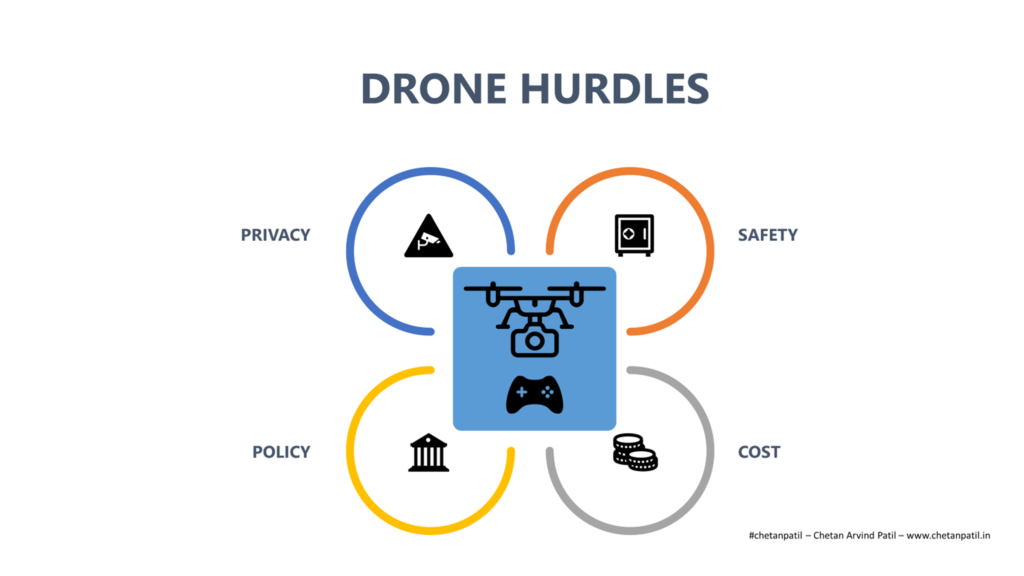
    DRONE HURDLES

    The drone have numerous use cases. Hardware companies are launching new drone concepts every month. At the same time the software companies are making it easier to fly the drone along with data capturing and processing.

    However, with opportunities come hurdles.

    Currently, the biggest battle around the drone is who can use it for the commercial purpose. Many countries are coming up with the state and national level policies on the drone commercial activities. The major (and important) requirement is going to be the basic training and license required to operate the drone. It will take a few more years before the drone policies are aligned between the businesses and governments.

    Picture By Chetan Arvind Patil

    The next big challenge is the privacy. Due to the ability to fly at high altitudes, the drone may capture aerial footage of the private locations. There are already the drone catcher technologies, however these require investment and capital which not everyone can afford. Hence, clear guidelines and laws need to be defined around the drone and the privacy breach.

    Safety is another hurdle. The autopilot has been in use for a long time but only for commercial flights flow by trained pilot. When it comes to the drone, the operator is not trained for hours. It is certainly possible to automate the drone flying, but there are still users who would like to control the drone flight. There is a possibility that the flight control can be lost, thus raising safety concerns.

    The drone are becoming cheaper year-on-year. Every year, new solutions and the software/hardware technologies in the drone is also making it costly. To break even the investment on the drone systems from the business and consumers point of view can be challenging task. A subscription based buying model can be helpful.


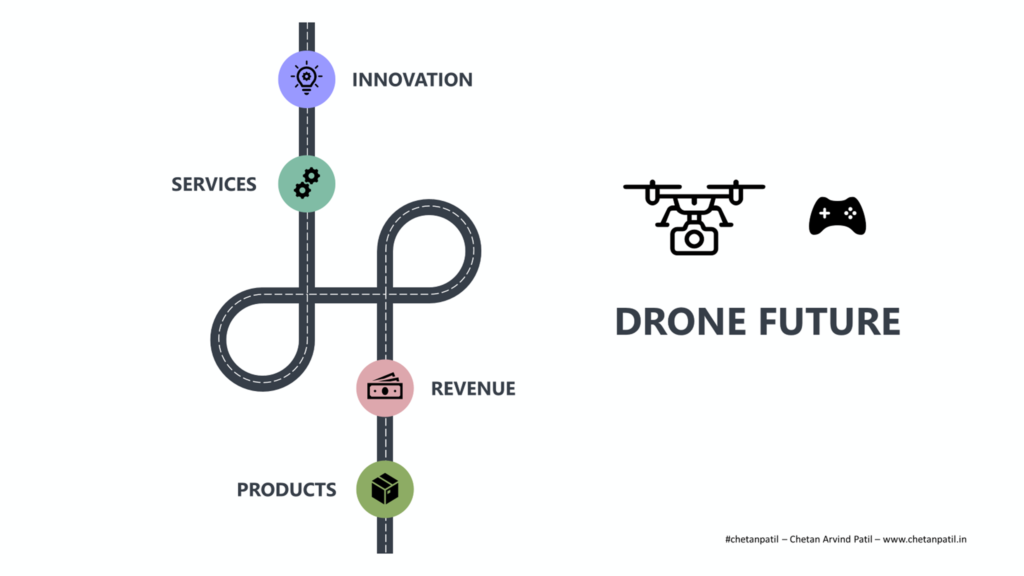
    DRONE FUTURE

    The drone segment is poised to become a $50 Billion market by 2025. The application areas are clearly defined. Many new use cases and promising innovation around the drone technology are being implemented by several companies and startups around the world.

    Ecommerce and logistics companies have already started to experiment with the drone delivery services. Drone enables faster delivery, are more carbon-friendly, and lower the shipping cost. The drone delivery system will be game changer for cities with heavy road traffic.

    Picture By Chetan Arvind Patil

    The drone will also drive innovation of smart hardware and software products. With the expanding market, new electronic sensor-based solutions will be developed along with smart software tools to make drone flying experience safer. All this will open new revenue sources for both the software and the hardware businesses.

    The time for the drone to take off has come.


  • The Modern Ecosystem – Technology Platforms

    The Modern Ecosystem – Technology Platforms

    Photo by Reginar on Unsplash

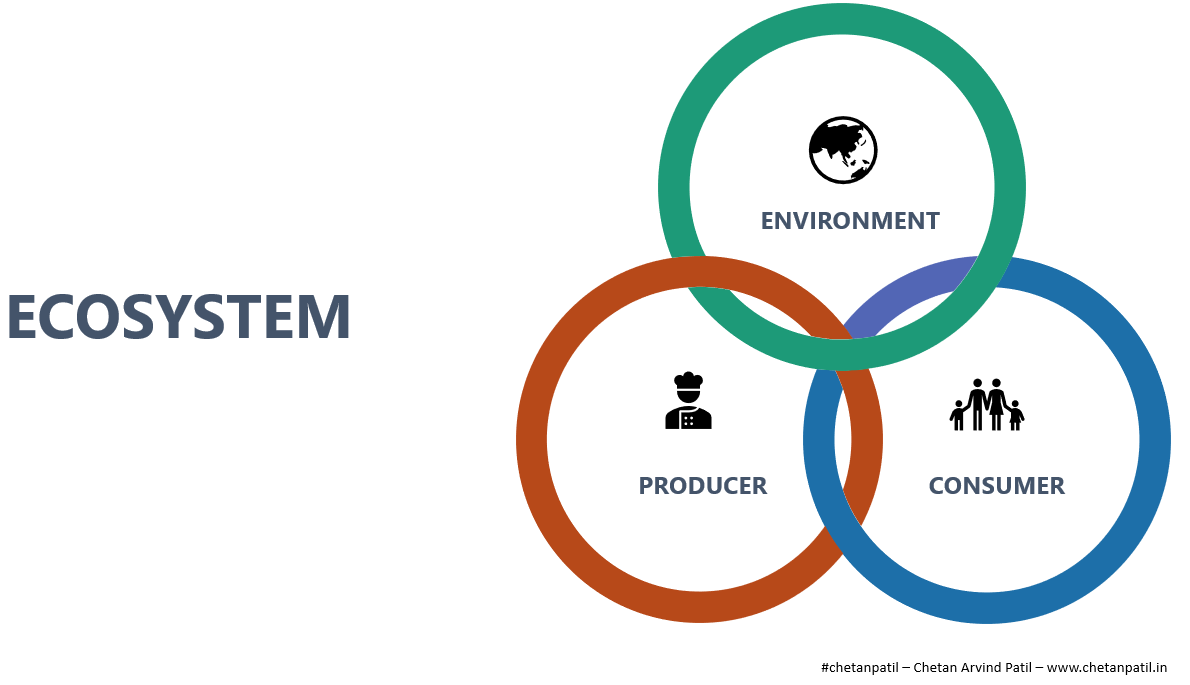
    An ecosystem requires synchronized interaction of a Producer, Environment, and a Consumer. The inter-dependency and synchronous working leads to a perfect ecosystem on which life survives.

    In the last few decades, the definition of the ecosystem has been applied to the technology world. Ecosystem development in different business segments has enabled innovations, which has in turn provided the world with new products and solutions.

    Picture By Chetan Arvind Patil

    In technology, an ecosystem is majorly reliant on the software and hardware systems. Due to the increased proliferation of internet users worldwide, the ecosystem has moved to the digital domain too.

    All the ecosystems in software, hardware, and digital domain have created different platforms for anyone with the right skills to develop elegant solutions. The connected world allows anyone to take advantage of the existing infrastructure to provide products and services directly to the intended consumer.

    However, the development of ecosystems has been limited to each of these three domains only and it is vital to understand how future modern platforms will look like.


    HARDWARE PLATFORMS

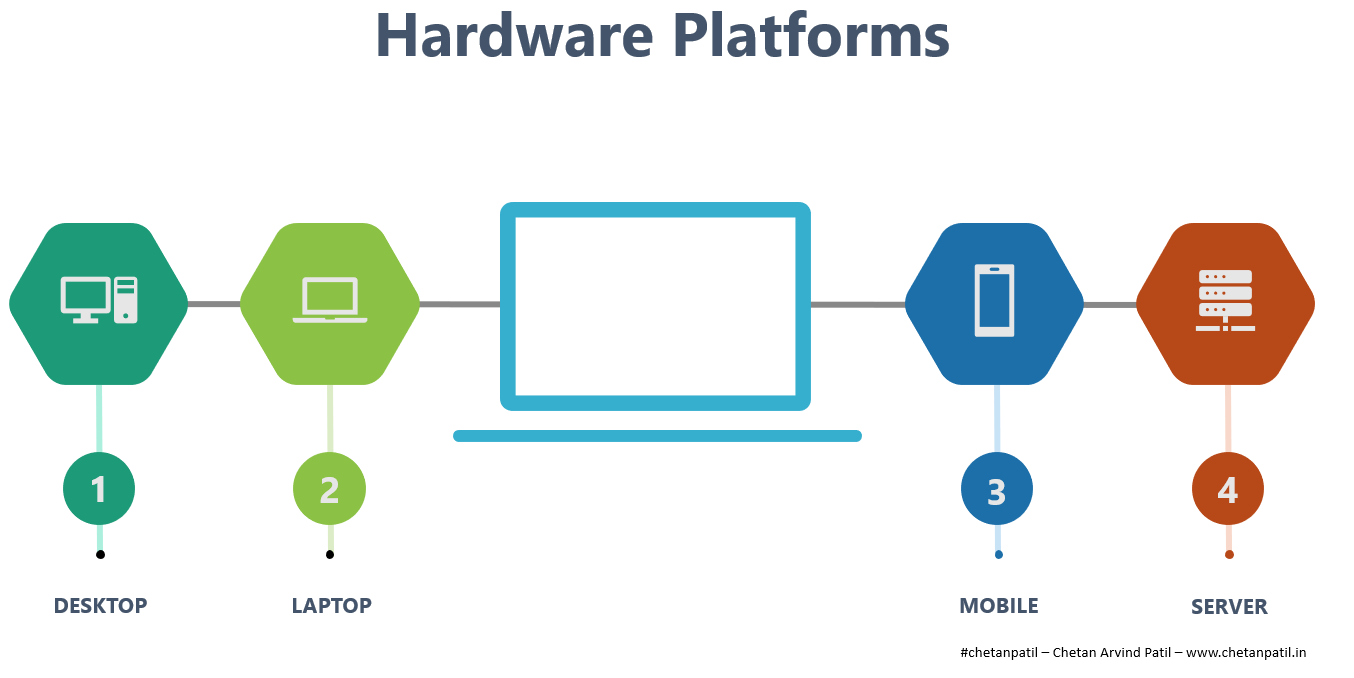
    The invention and innovation of transistors in the last half-century made possible the development of several unique hardware solutions that have taken computing to every corner of the world.

    The form factors of computing devices have changed a lot in the last two to three decades, largely due to the Moore’s law. Every year the world gets to witness incredibly compact and insanely fast computer systems.

    The computers that were only supposed to be part of the research centers in the form of mainframe and servers, transformed into the smaller form factor of desktops in the 1980s and 1990s.

    The desktop allowed everyone to have their personal computers (PCs) at homes and offices. These PCs are capable of performing fast calculations, running high resolution videos and games apart from having ability to run applications that allow completion of numerous tasks in the shortest possible time.

    Picture By Chetan Arvind Patil

    In the late 1990s and early 2000s, portable laptops took over the world. Companies started innovating with advancement processors and graphics, and so were able to deliver content on the go. Businesses also became more mobile.

    Right after laptops, smartphones were launched in the early 2000s which allowed on the go connectivity. Smartphones connected the world at the click of a button. The form factor and battery life made it very easy to capture and consume information in real time.

    All these hardware devices have lead to the creation of hardware platforms that allow anyone to be connected and perform task remotely. The ecosystem of hardware platforms ensures that one can deploy ideas, software, and applications for consumers to use from anywhere on any hardware of their choice.

    The amazing innovative work being done by semiconductors, manufacturing, and assembly companies around the world is also the major reason for the existence of hardware platforms for everyone.

    With the improvement in connectivity, these hardware platforms have become the most critical part of the life. All the smart devices, computers, servers, sensors, and internet routers together drive hardware platforms, that are enabling innovation like never before.


    SOFTWARE PLATFORMS

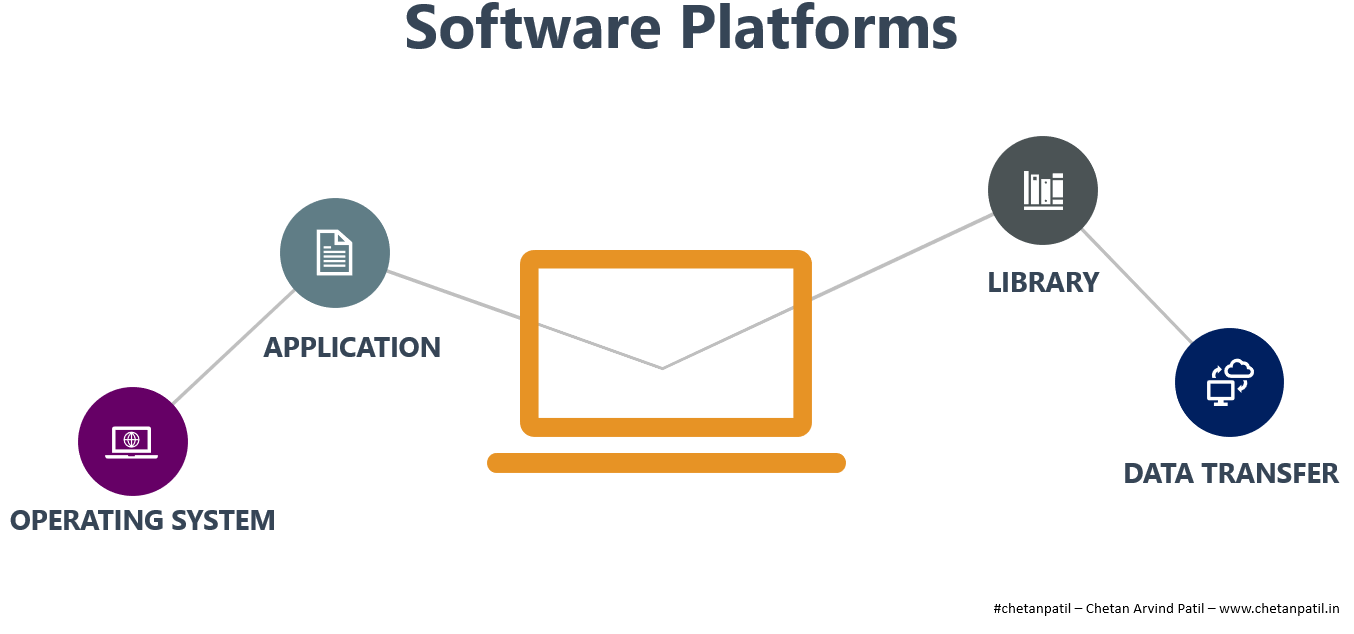
    In parallel to the invention of hardware (transistors and electronics chips), one more innovative work was getting developed. It started with different types of programming languages and then moved to graphical user interface (GUI). A combination of both gave birth to the advanced softwares.

    Software took advantage of the computing capability of the hardware to provide solutions that allowed completion of tasks in hours, which otherwise would take days. Later on, with the introduction of operating systems, the hardware started to become more intuitive and smart.

    UNIX, LINUX, and Microsoft Windows played key role in ensuring that developers can contribute by deploying applications written for hardware systems.

    Picture By Chetan Arvind Patil

    Software innovation has also allowed access to the hardware internals with the help of drivers written using different libraries. With the synchronized working of the operating systems, libraries, and applications on top of a hardware platform enabled data transfer.

    In the pre-internet era, data transfer was largely limited to a floppy disk, hard drive, and a pen drive. However, post-internet era has been all about data packet transfer from one hardware to another with the help of secure software platforms.

    Software, which started a journey on mainframes as punch cards, now could run on the smallest possible hardware and sensors with minimal power consumption. This has lead to the creation of software platforms that allow the world to be digitally connected and is more real-time than ever.


    DIGITAL PLATFORMS

    Hardware and software have been in existence for many years. The last 40 years saw numerous innovations, form factors, and the true potential of these two computer systems. The computer solutions built with hardware and software combination helped building a nexus between people by providing enormous life-enriching smart solutions.

    Today, with the internet becoming part of everyone’s life, the opportunities for the next few decades are infinite. Already, modern services in 2020 are more data-driven which ensure that the right product is available at the right time for the right user.

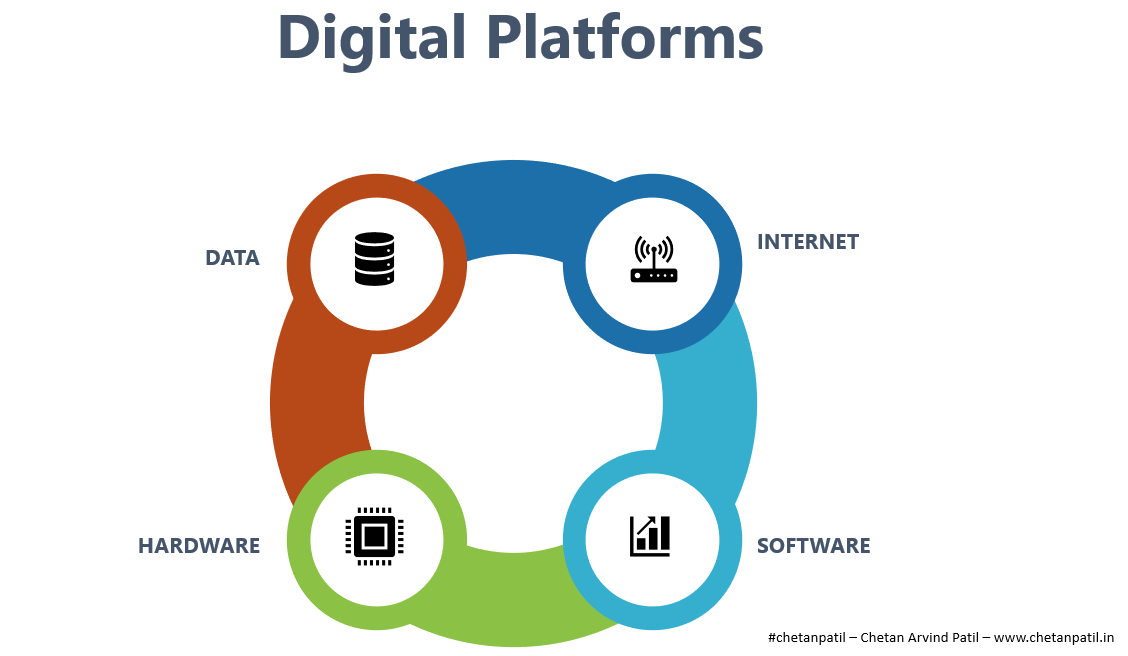
    The combination of hardwaresoftwaredata, and the internet has provided a new platform to the world, called digital platforms.

    Picture By Chetan Arvind Patil

    Digital platforms are built on top of the hardware and software, but it differs from hardware and software platforms due to the additional use of data and the internet to provide over the top product and services. With the help of the internet, products and services can be optimized and delivered remotely.

    The data points generated with the increased usage of the internet allows any business to adapt to the consumer’s needs by accessing demand based on data points from different consumer behavior.

    As the world moves towards more advanced wireless solutions, the innovative solutions on top of the digital platforms are only going to increase.


    TECHNOLOGY PLATFORMS

    In computer programming, the concept of Application Programming Interface (API) is so powerful that it gets overwhelming to realize the elegance of solutions it helps to implement.

    In short, API allows access to the services with the help of the software commands. For example, consider the payment gateway on an eCommerce website using a third party payment solution to process payments. With the help of API, the consumers can pay using different payment modes while the eCommerce website need not be worried about the processing and security of the payment details, as it relies on the secure API from by the third party.

    Similarly, there are other solutions in the market that are API driven.

    Picture By Chetan Arvind Patil

    The technology platform applied using API will play a crucial part in realizing the one world market,

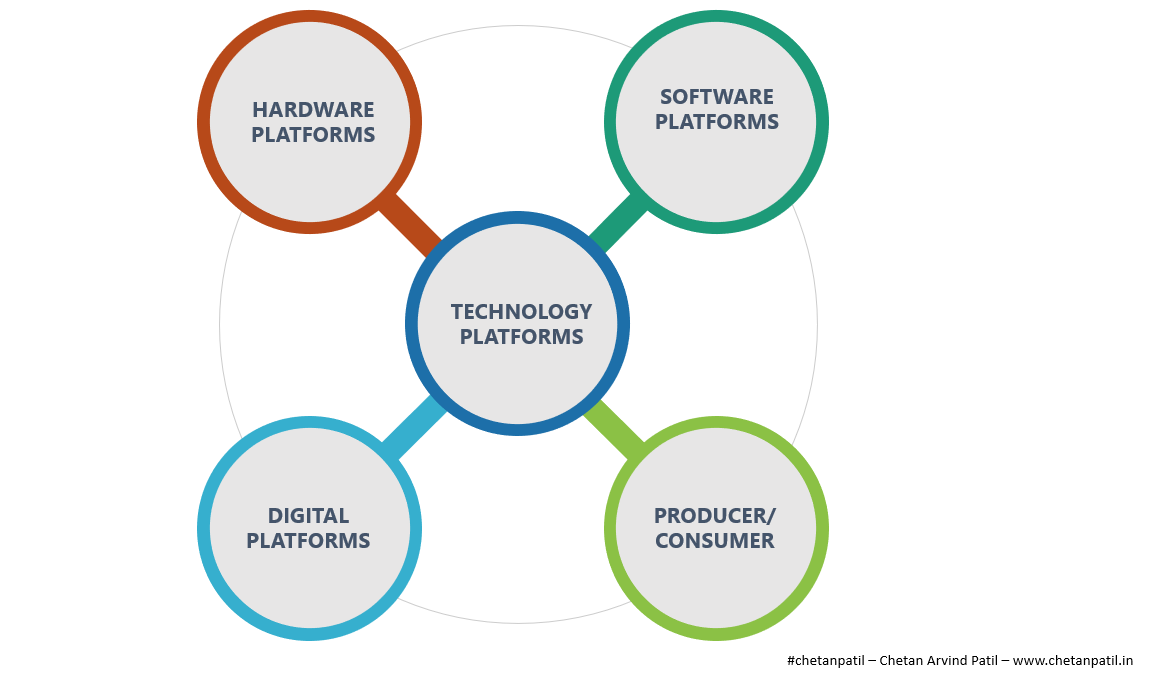
    Technology platforms are a combination of hardwaresoftware, and digital platforms with the added element of a producer and a consumer. It is an open platform that has consumers on board with producers who have become capable of selling products without investing capital in the underlying technology.

    Technology platforms also allow single or combination of other platforms to exists and thrive. The creators of the technology platforms themselves will not be able to make full use of it until and unless the platform itself is open to both the producer and consumer.

    One of the major drawbacks of technology platforms will be the amount of time and capital expenditure it will take to create. Not every company will be able to develop the technology platforms, and thus their number will be limited.


    It is fair to say that the technology platforms were already in the making for the last few decades. Today, these platforms are more relevant than ever. Mobile networks is one example of such platforms that allow hardware to digital platforms creation.

    It will be exciting to see how the next decade with the proliferation of high-speed wireless networks will drive the technology platform innovation.


  • Technology Is Building Smart Spaces

    Technology Is Building Smart Spaces

    Photo by Peerapon Chantharainthron on Unsplash

    When smart systems are deployed at every location, it leads to the creation of Smart Spaces. These Smart Spaces can be a residential area, a business zone, an educational institute, or a parking lot. As long as, day to day activities are tracked by the use of the technological solution to enable faster decision making a place qualifies as Smart Spaces.

    Over the last decade, the affordability of smart devices and smartphones have to lead to an exponential increase in the deployment and adoption of such places. The reason is the information from smart devices provided with help of sensors can be accessed in real-time. Which can then be used for important decision making.

    It is critical to understand different sub-zones within the Smart Spaces along with its impact, innovation, and the future.


    SMART SPACES

    Smart Spaces mainly comprises of six major components: Smart Security, Smart Maintenance, Smart Energy, Smart Utilities, Smart Connectivity, and Smart Parking.

    Smart Places by default have Smart Security. Smart Security is built on top of an efficient hardware capable of running advanced motion detection along with real-time notification software. These devices are capable of ensuring the area covered is secure and also the incident reports are available to the public. It is also one of the domains that have recently attracted the attention of big technology giants. Amazon a few years ago acquired Ring and recently Google even after acquiring Nest invested in ADT.

    The next important piece of Smart Spaces is Smart Parking. Many companies are engaging with local city authorities in order to make parking decisions easy for the public. It involves tracking of spots that are available for parking along with pre-booking to ensure that anyone can pre-plan the visit and be free from the decision about where to park the car. Smart Parking can be a standalone software-based solution by tracking the entry and exit at specific location. However, many of the Smart Parking solutions are also based on the sensors thus requiring a lot of hardware deployment.

    Smart Energy is critical too. Without proper utilization of the energy that minimizes the impact on the environment, a Smart Space will for sure not qualify as one. Smart Energy is built with a net-zero impact. In order to achieve this the source of energy has to be environment friendly. Solar or wind energy is usually the main source of energy supply to the Smart Spaces. Smart Energy is also enabled by deploying heating/cooling solution such that same single source can be used by specific area or citywide population. It can be a centralized water-based cooling like Phoenix Downtown has. Smart Energy is also about tracking utilization in real-time for adaptive decision making.

    Picture By Chetan Arvind Patil

    Smart Utilities are another aspect of Smart Spaces. It ensures that gas and water supply are available all the time by ensuring efficient usage. Numerous data points are collected to allow for timely delivery of these resources. Such data points allow families and businesses to understand the real use versus waste. By capturing such details, the city authorities can also come up with adaptive and smart incentives for residents.

    Smart Maintenance is all about predicting when a specific location or service is going to see a downtime and in advance how to act on it. This is done with the help of data tracking that provides life and aging details of the components deployed across the Smart Spaces. This can range from sensors in the water supply system to building structure maintenance to electric sub stations. Smart Maintenance also ensures that human resources are used wisely and in a timely manner.

    The last and critical piece of Smart Spaces is Smart Connectivity. Without access to the high-speed networks from the internet to a cellular connection, it is difficult to make any solution to work in a Smart Space. Data generated out of the different aspects of Smart Spaces requires connected systems that can work only if always-on connectivity is provided. The decision making for other critical zones within the Smart Spaces is also relying on connectivity. With the deployment of 5G and smart Wi-Fi 6, Smart Connectivity is going to see much more innovative use than in the last decade.


    SMART IMPACT

    Deployment of Smart Spaces across cities and countries is only possible on a large scale if the impact of such Smart Spaces is understood. There are many benefits to having Smart Spaces, but the critical Smart Impact are savings, opportunities, complexity, dependency, and ease of use. These impact are combination of the good and the bad.

    Savings is the most important reason for making any space a smart one. The real-time usage of securing the place helps in long term planning with eventually leads to savings not only for the residents but also for the businesses. It can be understanding what services work and don’t work, thus making a decision to switch or do away with such service. Maybe it can be about understanding what room temperature works for one by utilizing sensors such that the temperature of the cooling system can be adaptive accordingly. Scaling these savings at larges scale eventually leads to savings of resources.

    Immense opportunities are created by Smart Spaces. From employment to small business to large scale industries. Smart Spaces deployment ensures that different new opportunities from regular maintenance to data to security analysts are available for better decision making. Thus opening up new skill-based employment. It also ensures that the business providing smart solutions are able to create a supply chain that drives other business.

    Picture By Chetan Arvind Patil

    All this leads to ease of living life. Ensuring that not only the spaces are safe but are also smart based on data generation. It allows efficient utilization of resources that improves day to day life activity and thus provide ease by which goals can be achieved.

    One of the biggest drawbacks of Smart Spaces is dependency. The more the smart systems are deployed, the more dependent the people and businesses become. If one or two things go out of service, the day to day routine suffers. It also impacts decision making.

    The biggest challenge when deploying Smart Spaces is to ensure that all these Smart Impacts are in balance. Anyone thing that grows more than the other will lead to critical security to safety issues. This means Smart Spaces are very complex too due to inter-dependent systems.


    Always On Connected Sensors Taking Decision Will Run Smart Spaces


    SMART INNOVATION

    Necessity is the mother of invention. It is correctly applied by any industry that is fighting to survive the market competition.

    For the software businesses, it is important to ensure that there are always new and better programming environments along with the tools to develop advanced and smarter software systems. This also means new business opportunities by showcasing efficiency and cost gain over existing tools and solutions.

    The same is applicable for the hardware businesses by ensuring that there are new solutions available as the market demand grow and the need changes. These can be an efficient sensors that allow more savings over existing and previous generations. To ensure such a solution exists in the future, continuous research and development is required.

    Picture By Chetan Arvind Patil

    Smart Innovation around Smart Spaces is built on top of the savings that the existing system provides. This can be due to the data generated across the zones within the Smart Spaces that lead to deployment of cost efficient solutions. Which was in turn used at large scale by businesses. These savings can also be built on top of dynamic pricing which is applicable mostly for housing and real estate business but is also getting deployed for smart energy and utilities.

    A combination of data and dynamic pricing built on top of Smart Innovation by Smart Spaces will eventually lead to New Products and New Services.

    The more the savings, the better the future solutions from companies in the domain of software and hardware.


    SMART FUTURE

    Everyone talks about Smart Spaces, but what is the Smart Future going to be like?

    There can be different takes on how the Smart Spaces will evolve. It can be dependent on how the industry innovates to keep up with the growing demand for the smart solutions. It will also depend on cities’ and citizens’ comfort to adapt to a fast-changing smart environment.

    In short, there are four key aspects of how the Smart Future of Smart Spaces is dependent.

    Picture By Chetan Arvind Patil

    The first is being connected. It ensures that the information generated from the Smart Spaces is always available. These connected systems will run on top of the sensors. It is already deployed across many cities and real estate. However, unless and until everyone in such location is able to utilize to full extent, it will be difficult to ensure that the connected sensors are efficiently used. Thus the second requirement of a smart future is sensors. The third critical piece is always on. Without which it is not useful to deploy connected sensors. The last part is the decision. If these always-on connected sensors cannot make a decision with or without human input, then it is a waste of money and time.

    Opportunities and possibilities are numerous. All technological solutions certainly improve life as long as the users are able to afford the same. Only time will show how Smart Spaces will evolve, but are certainly going to be everywhere.


  • Re-Imagining Algorithms For Outbreak Risk Management

    Re-Imagining Algorithms For Outbreak Risk Management

    Photo by Patrick Assalé on Unsplash

    In 2011, March Andreessen rightly pitched Why Software Is Eating The World. In 2018, I wrote a small note on Hardware Is Running The World. In 2020, algorithms play a crucial role in understanding and thereby catering to the needs of the world for many decades to come.

    These smart systems and context-aware algorithms are capable of capturing market trends, which has been made possible due to the amount of data that is generated every day. All these smart systems are also capable of making decisions for others and are often termed as Artificially Intelligent.

    During a COVID-19 like pandemic, AI systems could have made decisions in favor of the consumers, enterprise, and businesses. Smart systems catering to manufacturing, logistics, transport, eCommerce, and last-mile delivery would know very well that there is going to be a global demand for essential products based on the data world is sharing (as privacy is dead). That would mean more informed decisions were possible and could have driven the production and delivery of essential goods well in advance.

    Example: During COVID-19, a smart algorithm powering manufacturing industry could have projected future outcomes and provided insights to companies to ramp up the production of essential products. Which in turn could have helped adapt logistics and supply chain industry as per the needs of the cities and countries around the globe. This would have also lead to eCommerce to have enough essential products irrespective of the demand, and would have also enabled warehouses and stores to limit how many essential products a consumer is allowed to purchase well before COVID-19 hit the curve. Similar data-driven outbreak predictions can be applied to any industry, not just those producing essential products. 

    However, instead, it seems there was no projection of crises to come, and thus leading to shortage of essential products. 

    It can be questioned that outbreak based algorithms are already in place but are accessible only when one pays for it. However, given how every technological discussion is incomplete today without talking about data, isn’t it expected to have such a solution embedded in the data tools for any industry as default feature? Isn’t prediction the key for making smarter decisions?

    Focusing on the pandemic, there have been numerous attempts to make data available that could provide insight into coming epidemics:

    However, it seems with the COVID-19 crisis such data driven outbreak risk prediction solutions either failed OR were not utilized to full potential.

    Post-COVID-19, the data tool war is only going to get more intensive with the major focus on Data-Enabled Outbreak Risk Management. The important question will be whether these AI-Enabled algorithms are capable of making smart human-oriented decisions during crises.


    PSA:

    Kira Radinsky’s work on data based prediction is really interesting for anyone looking to read more technical details on prediction algorithms. She apparently wrote about importance of algorithms to predict the next outbreak in 2014.