Category: TECHNOLOGY

  • The Trends In Semiconductor Manufacturing

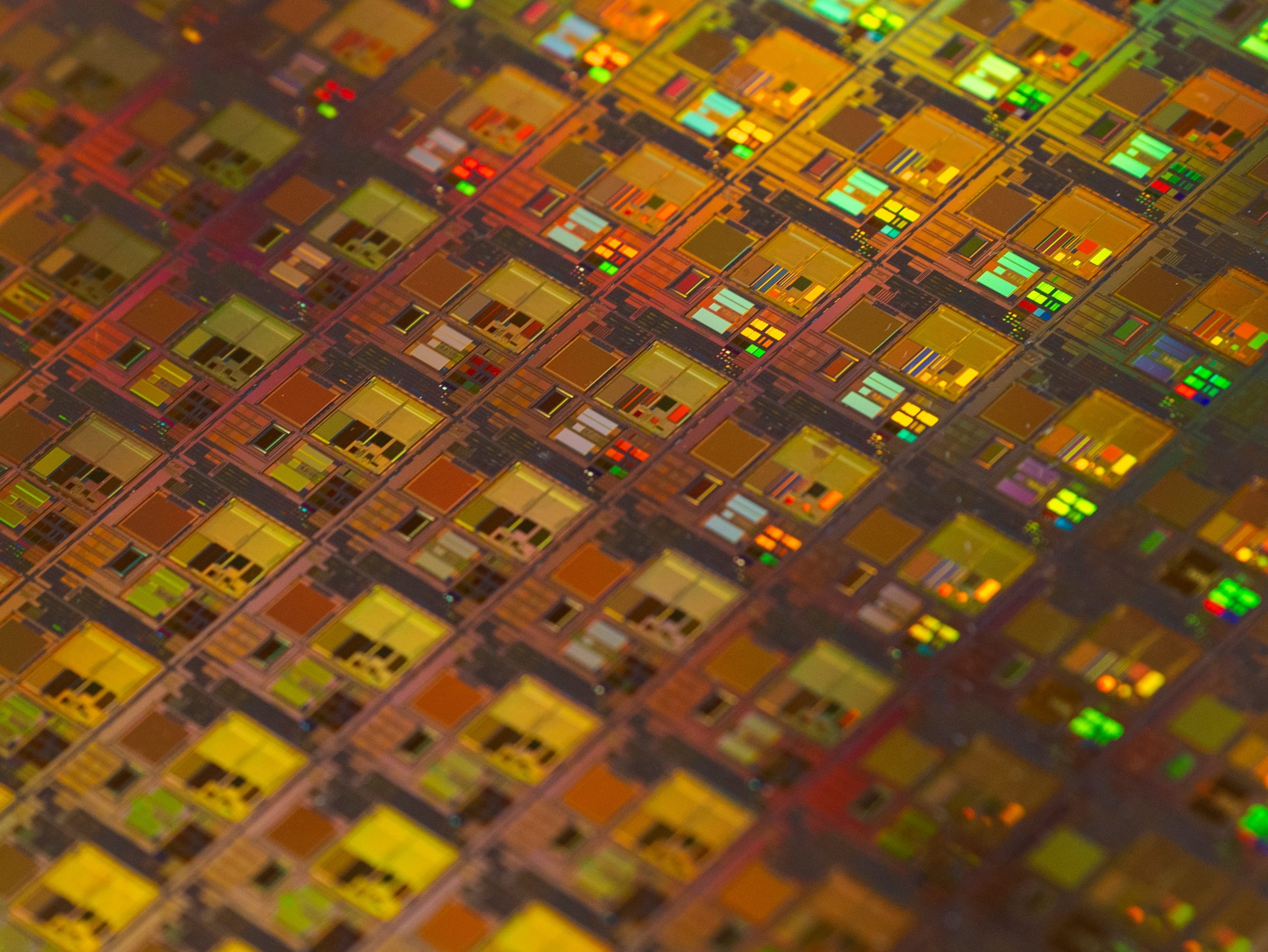
    Photo by Maxence Pira on Unsplash


    These latest trends in semiconductor manufacturing are significantly impacting the industry. These trends lead to faster, more powerful, and more efficient semiconductor chips. It drives demand for semiconductors in various applications, from smartphones and computers to cars and medical devices.

    Thus, it is critical to see the most impactful changes occurring in the semiconductor manufacturing arena. As an example, the following technical trends are changing the future course of semiconductor manufacturing:

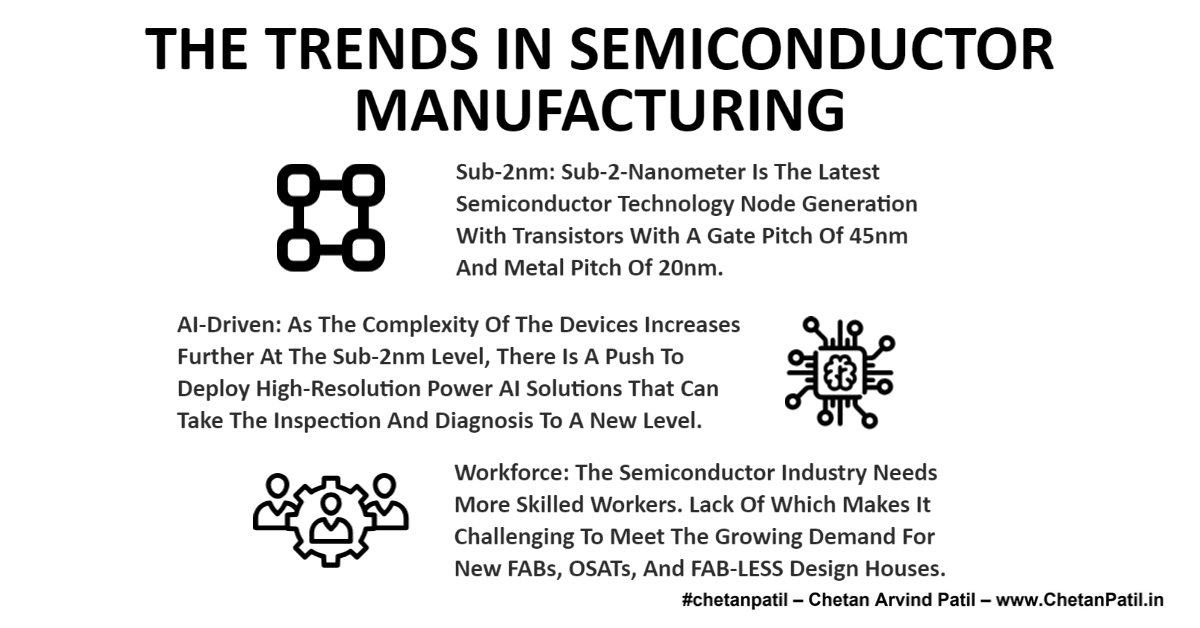
    Sub-2nm: Sub-2-nanometer is the latest semiconductor technology node generation with transistors with a gate pitch of 45nm and metal pitch of 20nm. Depending upon the semiconductor manufacturer, different types of new FET devices will be available at 2nm. Examples: MBCFET, GAAFET, and RibbonFET. Such narrow processes and optimized devices allow more transistors to get packed onto a single chip, which can lead to significant performance improvements.

    Vertical Packing: Continuous rise of 3D stacking to allow stacking of multiple chips. It continues to increase performance and density significantly. Slowly it is becoming more cost-friendly, thus opening avenues for broader use cases.

    Materials: Advanced materials are getting developed that can improve the performance and efficiency of semiconductors. For example, new high-k dielectric materials are to replace the traditional silicon dioxide used in gate insulators. These new materials can improve the performance of transistors by reducing leakage current and allowing for smaller transistor dimensions.

    Workforce: The semiconductor industry needs more skilled workers. Lack of which makes it challenging to meet the growing demand for new FABs, OSATs, and FAB-LESS design houses.

    Having a right set of technical trends that encompasses several aspects of showcases where the semiconductor industry is heading and also how it can utilizes these changes to better blend the next-gen devices.


    Picture By Chetan Arvind Patil

    On the core equipment and tooling side, significant changes are also about to come. Some of these are listed below. However, the cost of manufacturing associated with these will also have a considerable impact.

    xUV: Sub-2nm node is leading to a new type of lithograph equipment. ASML is the leader and targets two types of lithography machines for the market: the 2nm EUV and the 1nm EUV models. The precision of the devices depends on their NA (Numerical Aperture) value. The NA value for the 2nm and 1nm machines is 0.55, while the NXE 3400C has a NA value 0.33. With such High-NA lithography, ASML and other semiconductor equipment developers are about to disrupt the semiconductor processing node.

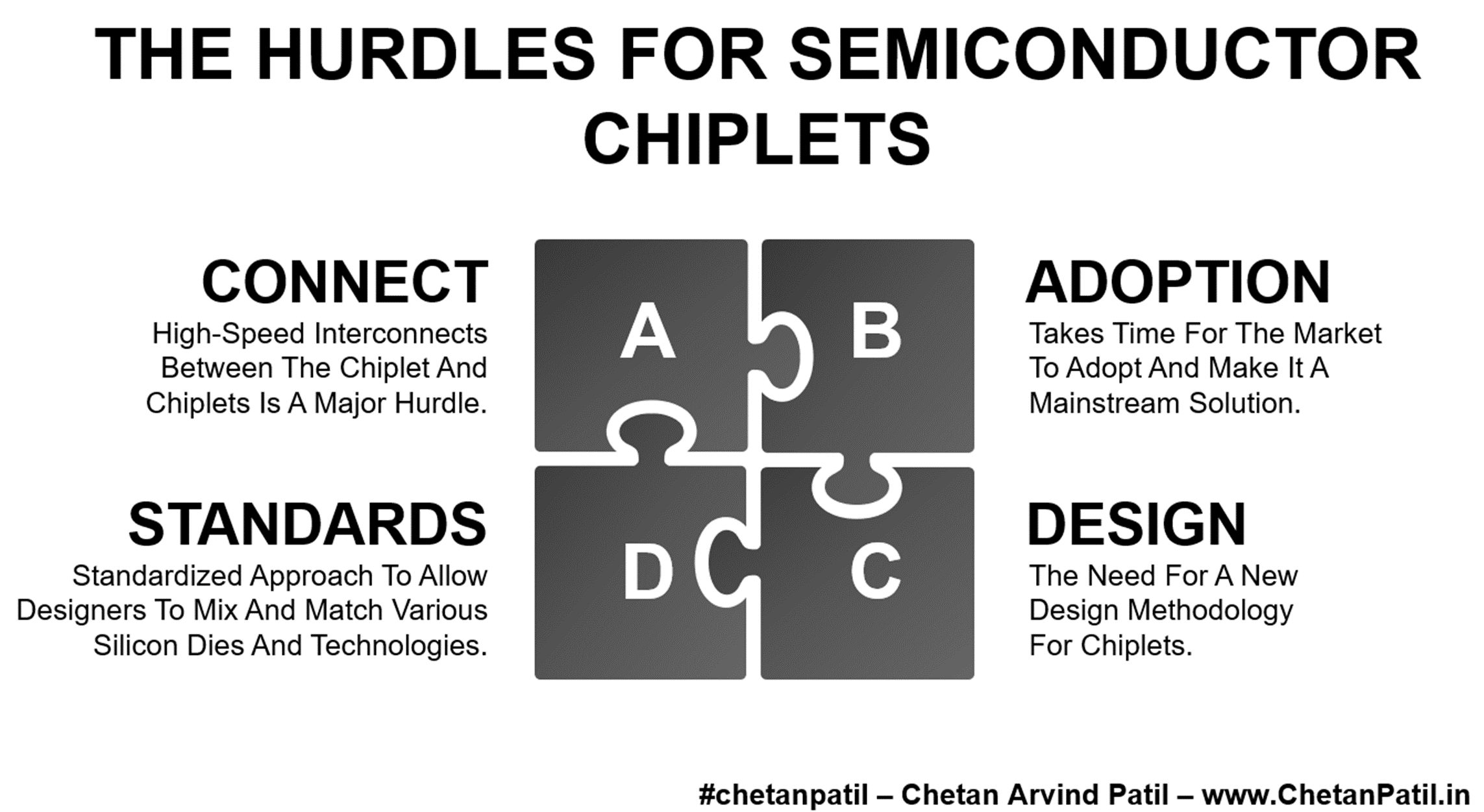
    Chiplets: The way designing an SoC with multiple chiplet is setting new standards for the chip designers and the tools used for it; the manufacturing aspect of it is also changing as it requires managing multiple manufacturing flows and then bringing it all together to drive the next-gen application level system solution.

    AI-Driven: As the complexity of the devices increases further at the Sub-2nm level, there is a push to deploy high-resolution power AI solutions that can take the inspection and diagnosis to a new level, thus enabling high yield, improved performance, and reduced time to market. On the design front, the EDA tool vendor is already deploying solutions leveraging AI to allow chip designers to faster process movement from the previous generation to the future age of nodes.

    Cost: The cost of semiconductor manufacturing is always on the rise. It is leading to low margins. Increasing cost also makes it difficult for the new manufacturing houses to drive faster returns on investment.

    These are only a few of the trends that are shaping the semiconductor manufacturing industry. As the semiconductor industry continues to evolve, it will be interesting to see how these trends play out and what new developments emerge in the years to come.


  • The Semiconductor AI Chip Stack

    The Semiconductor AI Chip Stack

    Photo by D koi on Unsplash


    Artificial intelligence (AI) is rapidly evolving as a critical application enabler. However, the high computational requirements of AI algorithms pose a challenge for semiconductor design and manufacturing. It is where the AI chip stack comes into the picture and will undoubtedly change AI-focused hardware, software, and tools development.

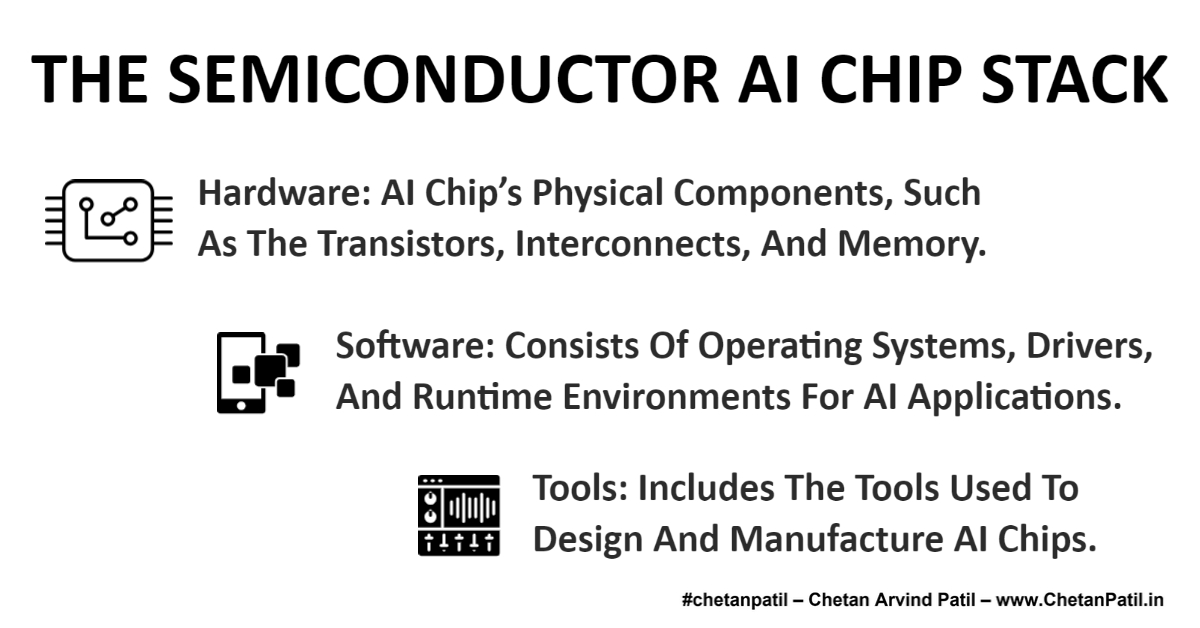
    AI Chip Stack: The AI chip stack is a layered approach to designing and manufacturing AI chips. It consists of three layers:

    Hardware: AI chip’s physical components, such as the transistors, interconnects, and memory.

    Software: Consists of operating systems, drivers, and runtime environments for AI applications.

    Tools: Includes the tools used to design and manufacture AI chips.

    These three layers of the AI chip stack also require IPs. These IPs provide access to the hardware and software components of the chip stack and enable developers to design and manufacture AI chips tailored to their applications’ specific requirements. It will be more relevant to the chiplet way of silicon development.

    These AI chip stack IPs also require software APIs like EDA tools. These tools provide a Graphical User Interface (GUI) for designing and manufacturing AI chips. They also offer a range of features that make creating and manufacturing AI chips easier, such as automated place and route, verification, and timing analysis.


    Picture By Chetan Arvind Patil

    Unfortunately, the AI chip stack is a complex and rapidly evolving field today. However, it offers a promising solution to the challenge of meeting the high computational requirements of AI algorithms. Providing access to the hardware and software components of the chip stack, semiconductor design, and manufacturing APIs enable developers to design and manufacture AI chips tailored to their applications’ specific requirements.

    Some of the benefits offered by AI chip stack flow:

    Increased Performance: The AI chip stack can deliver significantly higher performance than traditional CPU and GPU architectures. It is because the AI chip stack is specifically for the high computational requirements of AI algorithms.

    Reduced Power Consumption: The AI chip stack can consume significantly less than traditional CPU and GPU architectures.

    Increased Flexibility: The AI chip stack can be customized to meet the specific requirements of different AI applications. This flexibility allows developers to create optimized AI applications for their particular needs.

    Challenges faced by the AI chip stack flow:

    High Cost: The AI chip stack is typically more expensive than traditional CPU and GPU architectures. The AI chip stack is a newer technology, and there is less competition in the market.

    Long Development Time: The AI chip stack can take longer to develop than traditional CPU and GPU architectures. It is because the AI chip stack is a more complex technology.

    Limited Availability: The AI chip stack has yet to be widely available. It is because the technology is still in its early stages of development.

    The AI chip stack is a good design process that has the potential to revolutionize the way AI silicon and applications are developed and deployed. As the technology matures and AI chip stack costs decrease, the semiconductor industry can expect to see more AI applications powered by AI chips.


  • The Semiconductor Comparison Between Xeon Phi Knights Landing And MTIA V1

    Photo by Cristiano Firmani on Unsplash


    In 2010, Intel launched a new architecture-based solution for the high-end workstations. Codenamed Intel Xeon Phi Knights Ferry. It was a co-processor that would allow faster processing and training due to the massively parallel thread and memory level optimization with the help of multiple cores sharing high-end channels and memory. The technology node used was 45nm.

    Over the next few years, Intel iterated on the design and launched Knights Corner with 22nm, followed by Knights Landing with 14nm. Knights Landing was a breakthrough architecture, allowing operating systems and applications to run on the architecture itself and eliminating the need to off-load and train. On top of this, the rich set of system and software-level architecture support from Intel and the Open Source community made it easy to use.

    On the architectural level, it provided an elegant way to handle threads by using processing elements coupled with powerful but power budget-friendly cores and the ability of vector processing.

    On the memory front, the Knight Landings used NUMA and memory modes to speed up the data training. There were supercomputers and data centers that started to utilize this architecture, and, to date, they still do – Tianhe-2 is one such supercomputer.

    All these features created a lot of buzzes and focused on Xeon Phi Knights Landing, a breakthrough architecture to compete against the GPU leaders. However, the subsequent few launches of this architecture were supposed to be with sub-10nm, which unfortunately did not go as planned.


    Data Source: Intel And Meta. Picture By Chetan Arvind Patil

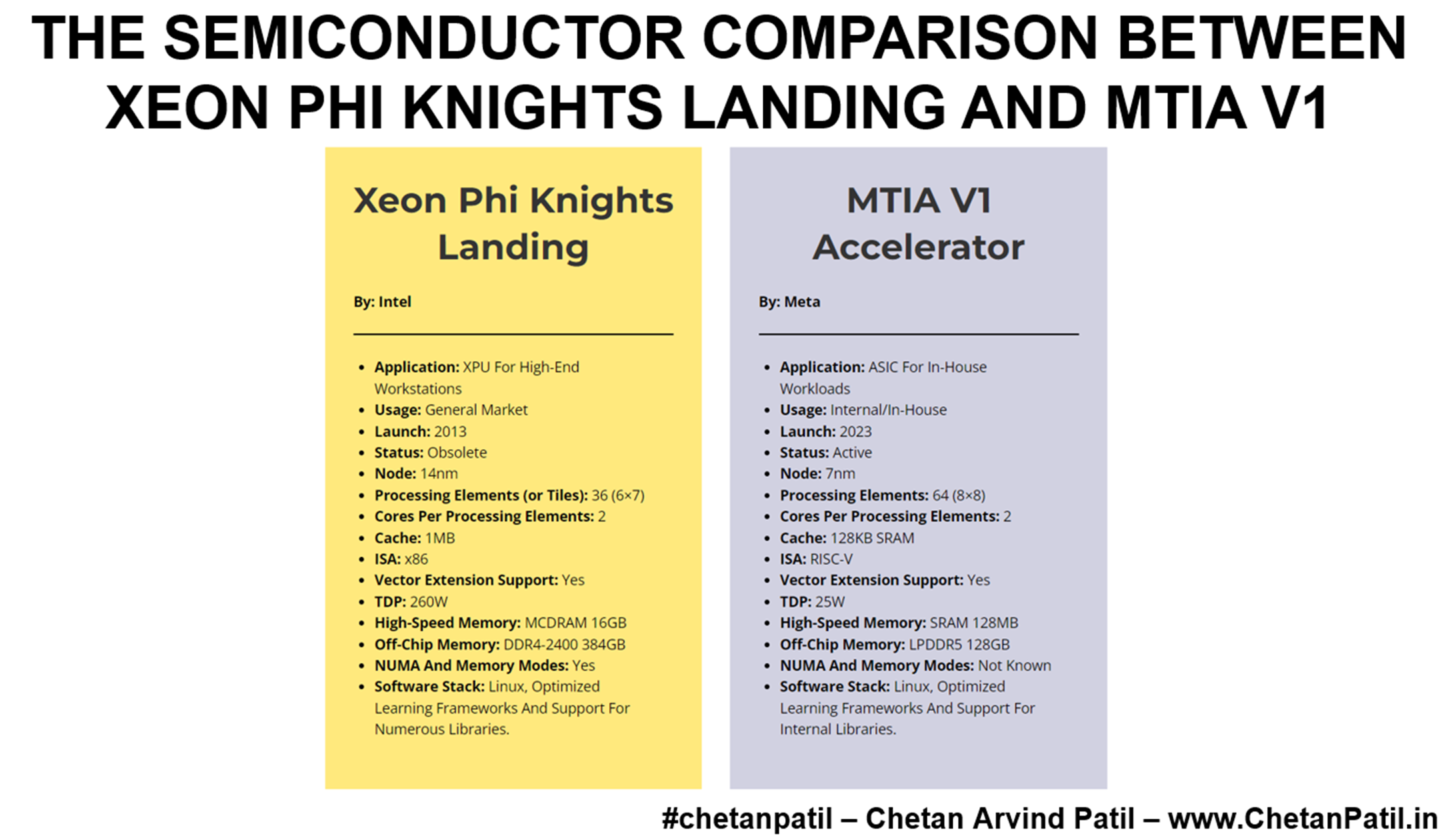
    Even then, the Xeon Phi series set introduced a new way to stack the cores and package them on a chip. The key was the processing elements (a.k.a Tiles) organized in a grid manner and a combination of high-bandwidth memory that could act in different modes to further speed up the end applications.

    Flashback to 2023, Meta launched an accelerator called MTIA V1. It is designed for their in-house workload requirements and will also get deployed in the supercomputers and data centers Meta will run. Though it is not an XPU, it can speed up the applications by focusing on instruction, memory, and thread-level parallelism.

    However, after reading through the available details around this MTIA V1. The inspiration for this architecture is, indeed, now obsolete, Intel Xeon Phi Knights Landing.

    It is evident not only based on how closely the feature sets are but also the way the MTIA V1 uses architectural features like combining two cores into one processing block and making use of vector support to enable the ability to run multi-threading on the processing elements by utilizing the high-speed cache and lower level memories.


    Image Source: Wikipedia And Meta. Picture By Chetan Arvind Patil

    The major differentiating factor between the two is the technology node and how it impacts the TDP. Besides this, MTIA V1 is comparable with Intel Xeon Phi Knights Landing.

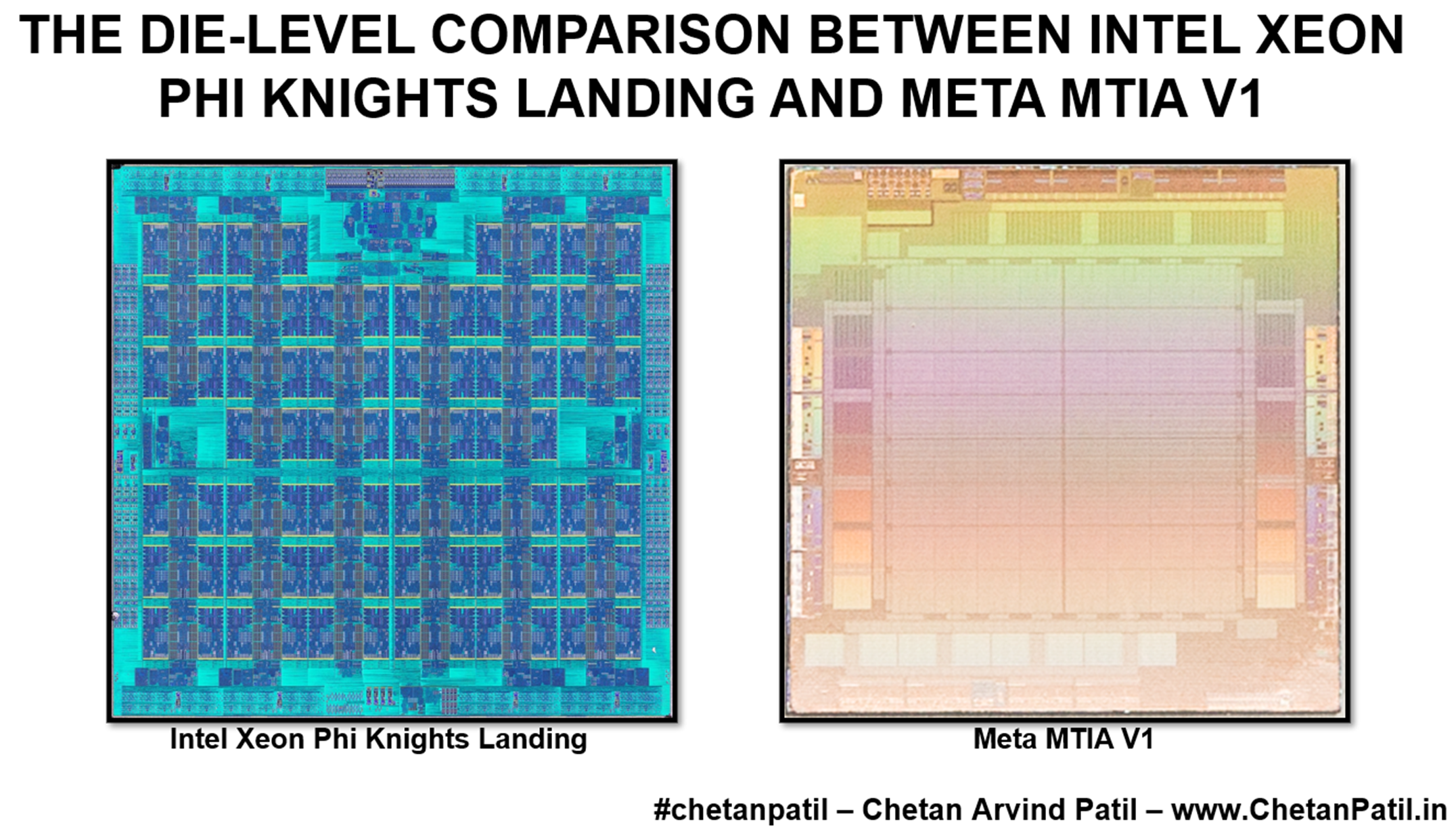
    Even at the die level, the comparisons show the blocks are placed similarly, including the connections from processing elements to the memory and different interconnections.

    This comparison shows that several new AI-focused accelerators and custom chips are looking back at the old designs and improving those for internal requirements. The major innovation is mainly on the software to architecture mapping rather than the architecture itself.

    This approach will extend to architecture design (chiplets) more optimized for the AI workloads. It leads to whether these are breakthrough architectures or inspired architecture packaged with new technology nodes and better software mapping solutions.


  • The Semiconductor Compute, Memory And Interconnect Balance

    Photo by Artiom Vallat on Unsplash


    In computer architecture, computing (compute), memory, and interconnect are the three main components of a computer system and are thus critical in CPU, GPU, and XPU design. These three pillars determine the speed and efficiency of the system. The faster these three blocks are, the faster the system can run programs and perform tasks.

    There has been a trend toward developing faster computer architecture in recent years and mainly driven by the increasing demand for more powerful computer systems. A speedier system helps improve the computer system’s performance by allowing them to transfer data more quickly between the different components of the system.

    Three Pillars:

    Compute: The compute refers to the central processing unit (CPU), the computer’s brain. The CPU performs all the calculations and operations required to run a computer program.

    Memory: Memory refers to the storage of data and instructions used by the CPU. Memory types: primary memory and secondary memory. Primary memory is located on the motherboard and is used to store the data and instructions currently being used by the CPU. Secondary memory is located on storage devices such as hard and solid-state drives and is used to store data and instructions not presently used by the CPU.

    Interconnect: Interconnect refers to buses and wires connecting a computer system’s CPU, memory, and other components. The interconnect allows the CPU to communicate with memory and other members and is responsible for transferring data and instructions between the different parts of the computer system.

    To achieve this goal, feature balance of compute, memory, and interconnect is a must-have.

    Compute blocks have already expanded into different types of architectures. They range from CPU, GPU, and NPU to more ASICs. Memory has kept the pace, but less at the cache level, and thus hinders many applications from fully utilizing the architecture. The interconnect on the other end is still bottleneck driven. Even the elegant architecture with multiple processing elements is impacted by these.

    Even though a lot of effort has gone into bringing harmony across these three XPU blocks, there still seems to be no end to the pursuit of achieving the desired goal, which is also evident from the fact that several AI-focused companies are going in-house to develop there own silicon chips that can drive the future workloads.


    Picture By Chetan Arvind Patil

    One of the fundamental reasons that general-purpose computing systems need to catch up is the ever-changing workload. In the past, most workloads were general-purpose applications such as word processing, spreadsheets, and web browsing. They required significantly less computing. However, in recent years, there has been a shift towards more specialized workloads such as artificial intelligence (AI), machine learning (ML), and data analytics.

    These specialized workloads place different demands on a computer system’s computing, memory, and interconnect components. For example, AI and ML workloads require a large amount of computing power, while data analytics workloads require a large amount of memory.

    The changing workload is forcing CPU, GPU, and XPU designers to rethink how they design these systems. Designers are now looking for ways to improve the performance of these systems for specialized workloads.

    One way designers improve CPU, GPU, and XPU performance for specialized workloads is by using heterogeneous computing. Heterogeneous computing is a technique that uses multiple types of processors to perform a task. For example, a system might use a CPU for general-purpose tasks and a GPU for AI and ML tasks.

    Another way designers improve CPU, GPU, and XPU performance for specialized workloads is by using specialized hardware. Specialized hardware is hardware that is designed specifically for a particular task. For example, there are specialized hardware accelerators for AI and ML tasks.

    Whichever way the computer architect will go. There is no end to the continuous focus to bring the perfect balance across computing, memory, and interconnecting. The research and development activities around these blocks will always continue to find the flawless balance of the three critical pillars of any XPU system.


  • The Semiconductor Processor-In-Memory

    Photo by ThisisEngineering RAEng on Unsplash


    The semiconductor industry is constantly evolving, and one of the most promising new technologies is the semiconductor processor-in-memory (PIM). PIM is a new approach to computing that integrates processing units directly into memory chips. It can significantly improve performance and efficiency, especially for applications that require large amounts of data to be processed quickly.

    There are several technical opportunities and challenges associated with PIM. One of the most significant opportunities is the potential to improve performance. PIM can reduce the time it takes to move data between memory and processing units, leading to substantial speedups for specific applications and can help to improve energy efficiency by reducing the number of transistors to be switched on.

    Key Trends In The PIM market:

    Increasing Demand For AI, ML, And Data Analytics Applications: The increasing demand for learning-driven applications is driving the growth of the PIM market. These applications require large amounts of data to be processed quickly, and PIM is the perfect solution to achieve this goal.

    Development Of New PIM Technologies: New PIM technologies, such as 3D PIM and hybrid PIM, are expected to boost the market’s growth. 3D PIM is a type of PIM that integrates processing units in three dimensions. Hybrid PIM is a type of PIM that combines IMC and NMC.

    Growing Adoption Of PIM In The Automotive And Healthcare Industries: The growing adoption of PIM in the automotive and healthcare industries will drive the market’s growth. In the automotive sector, PIM solutions can improve the performance of self-driving cars. In the healthcare industry, PIM devices can also improve the diagnosis and treatment of diseases.

    High Cost Of PIM Chips: The high cost of PIM chips is a significant challenge for the market. However, as it happens, the cost of PIM chips is expected to decrease as the technology matures.

    However, there are also some challenges associated with PIM. One challenge is that designing and manufacturing PIM chips can be difficult. Integrating processing units and memory cells on a single chip is a complex process that raises yield concerns. Additionally, PIM chips can be more expensive than traditional memory chips.

    Despite the challenges, PIM has the potential to revolutionize the semiconductor industry. PIM can make it possible to create new types of applications that were not possible before, and it can also improve the performance and efficiency of existing applications. As PIM technology develops, it will likely move the computing industry forward faster than planned.


    Picture By Chetan Arvind Patil

    PIM also has several potential business opportunities for semiconductor companies. One of the most significant is the faster-than-ever-before analysis of data, thus reducing the overall time taken by different sets of learning-based applications. These applications are increasing and will continue to grow.

    However, to achieve these goals semiconductor companies must invest heavily in research and development to bring PIM chips to market. Semiconductor companies must develop new business models to sell PIM chips. PIM chips are not a commodity product and will get sold to specific customers who need the performance and efficiency benefits that PIM can offer.

    PIM will have a significant impact on the semiconductor industry in the years to come. PIM chips can improve the performance and efficiency of various applications and can get used in new applications that were not possible before. PIM can potentially create new markets for semiconductor chips. Additionally, PIM can help semiconductor companies to capture a share of the growing demand for artificial intelligence, machine learning, and data analytics.

    Overall, PIM is a promising new technology that has the potential to revolutionize the semiconductor industry. It will also help create new markets for semiconductor chips and help semiconductor companies capture a share of the growing demand for artificial intelligence, machine learning, and data analytics.


  • The Automotive And The Increasing Use Of Semiconductor XPU

    Photo by Vasilis Chatzopoulos on Unsplash


    The automotive industry is increasingly using semiconductor XPUs to power advanced driver assistance systems (ADAS) and autonomous driving features. XPUs perform specific tasks, such as image processing, object detection, and machine learning, much faster than traditional CPUs. Making them ideal for use in ADAS and autonomous driving systems, which require real-time processing of large amounts of data.

    The XPU types include CPU, GPU, and APU. CPU is the most widely used type of XPU in the automotive market. GPU is gaining traction in the market due to its high performance and energy efficiency. APU is a new type of XPU specifically designed for machine learning applications. The choice of which XPU to use in an automotive application depends on several factors, covering the application requirements, the budget, and the desired performance.

    Central Processing Unit (CPU): It executes the instructions that control various vehicle functions. The CPU controls the engine, transmission, braking system, and other electronic systems. The CPU in automotive applications is supposed to be high-speed, low-power, and highly reliable. It is responsible for executing complex algorithms and communicating with other systems in the vehicle. The CPU is a critical component in the vehicle’s electronic system, as it controls the overall performance and safety of the car.

    Graphics Processing Unit (GPU): The GPU is responsible for handling the graphical processing tasks in the vehicle’s infotainment system. The GPU is responsible for rendering 3D graphics, video decoding, and image processing. It also plays a crucial role in ADAS systems and is commonly used for object detection, lane departure warnings, and other visual recognition tasks. The GPU is for parallel processing, which allows it to handle multiple tasks simultaneously. It is an ideal solution for managing complex graphic and visual processing tasks in automotive applications. In automotive applications, power consumption is a crucial factor. That’s why the GPU should get designed to be power-efficient, ensuring its effectiveness.

    Accelerated Processing Unit (APU): The APU is a mix of CPU and GPU in a single chip. The APU provides high-performance computing capabilities while consuming less power. The APU is an ideal solution for automotive applications with limited space and energy. The APU finds applications in various automotive applications, including infotainment systems, ADAS systems, and autonomous driving systems.

    The global automotive XPU market size was valued at USD 1.5 billion in 2021 and will reach USD 10 billion by 2028, growing at a CAGR of 19.2% from 2022 to 2028. The increasing demand for autonomous features in cars is driving the growth of the XPU market, which is crucial in providing real-time processing of large amounts of data, such as sensors, maps, and weather data.


    Picture By Chetan Arvind Patil

    The automotive XPU market by region is segmented into North America, Europe, Asia Pacific, and the Rest of the World. North America is the largest market for automotive XPUs. Europe is the second largest market for automotive XPUs. Asia Pacific is the fastest-growing market for automotive XPUs.

    Several top semiconductor companies invest heavily in research and development to develop new and innovative XPUs. Some details about semiconductor automotive XPU investment for research and development and new product launch:

    Nvidia: In 2022, Nvidia announced a $10 billion investment in automotive over the next four years. This investment will bring new XPUs, software, and services to the automotive industry. Nvidia also plans to launch a new automotive platform called the DRIVE Hyperion 9 in 2025. The DRIVE Hyperion 9 will be a fully integrated platform that includes everything from sensors to software to computing.

    Intel: In 2021, Intel announced a $20 billion investment in self-driving technology over the next decade. This investment will enable the development of new XPUs, software, and sensors for self-driving cars. Intel also plans to launch a new self-driving car platform called the Mobileye EyeQ5 in 2023. The EyeQ5 will be a powerful XPU that can handle the complex computing requirements of self-driving cars.

    Qualcomm: In 2022, Qualcomm announced a $10 billion investment in automotive over the next five years. It is to develop new XPUs, software, and services for the automotive industry. Qualcomm also plans to launch a new automotive platform called the Snapdragon Ride in 2024. The Snapdragon Ride will be a fully integrated platform that includes everything from sensors to software to computing.

    Samsung: In 2021, Samsung announced a $17 billion investment in semiconductor manufacturing over the next three years. This investment will bring new semiconductor factories to fabricate new semiconductor technologies. Samsung also plans to launch a new automotive XPU called the Exynos Auto V10 in 2025. The Exynos Auto V10 will be a powerful XPU that can handle the complex computing requirements of autonomous cars.

    Renesas: In 2022, Renesas announced a $2 billion investment in automotive over the next five years. Such an investment will bring new XPUs, software, and services to the automotive industry. Renesas also plans to launch a new automotive platform called the R-Car V4H in 2024. The R-Car V4H will be a powerful XPU that can handle the complex computing requirements of autonomous cars.

    As the automotive industry continues to evolve and innovate, the demand for processing solutions will only grow. It presents an exciting opportunity for developers and engineers to create new and innovative solutions that will shape the future of the automotive industry.


  • The Semiconductor Fabrication Struggle

    The Semiconductor Fabrication Struggle

    Photo by Mihai on Unsplash


    Semiconductor fabrication is a complex process of designing and manufacturing electronic components such as microchips and transistors. It is a critical component of the electronics industry, providing the backbone for numerous devices such as computers, smartphones, and televisions.

    Despite its importance, the semiconductor fabrication process is fraught with challenges that can impact production and quality. In this blog, we will explore the semiconductor fabrication struggle and the factors contributing to it.

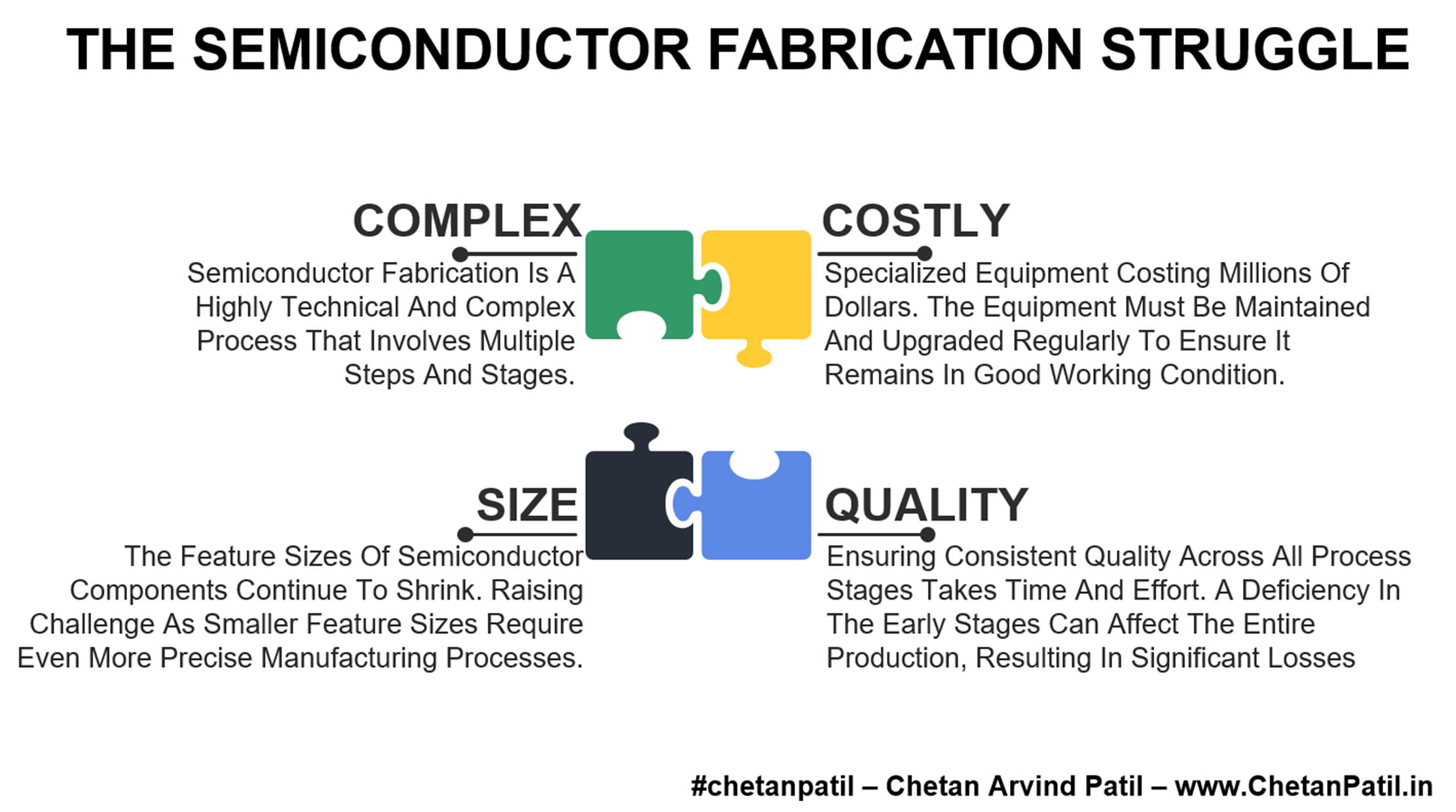
    Complex Process: Semiconductor fabrication is a highly technical and complex process that involves multiple steps and stages. The method includes designing, patterning, etching, and doping, among other things. Each step requires specialized equipment and knowledge, making it challenging to produce high-quality components.

    Costly Equipment: Semiconductor fabrication requires specialized equipment costing millions of dollars. The equipment must be maintained and upgraded regularly to ensure it remains in good working condition. It makes it challenging for smaller companies to enter the market, as they may need more financial resources to invest in the necessary equipment.

    Quality Control: Quality control is a critical component of semiconductor fabrication, as even minor defects can impact the final product’s performance. However, ensuring consistent quality across all process stages takes time and effort. A deficiency in the early stages can affect the entire production, resulting in significant losses. To mitigate this, companies invest in quality management systems and testing procedures to identify defects early on.

    Intellectual Property Protection: Semiconductor fabrication involves the creation of valuable intellectual property. Protecting this intellectual property is crucial for the success and profitability of semiconductor companies. However, protecting intellectual property can be challenging, as the process involves numerous stakeholders, including designers, manufacturers, and suppliers. It is essential to have robust intellectual property protection measures to prevent infringement and ensure that the company’s innovations are kept secret.


    Picture By Chetan Arvind Patil

    Despite the challenges, the semiconductor industry continues to grow and innovate. Companies invest heavily in research and development to find new ways to improve the manufacturing process and produce better-quality components. Additionally, advancements in technology, such as automation and artificial intelligence, are helping to streamline the fabrication process and improve consistency.

    Shrinking Feature Sizes: As technology advances, the feature sizes of semiconductor components continue to shrink. This challenges semiconductor fabrication, as smaller feature sizes require even more precise manufacturing processes. Achieving the necessary precision is complex, and errors can lead to significant failures.

    Supply Chain Disruptions: The semiconductor industry relies heavily on global supply chains. Any disruptions in the supply chain, such as natural disasters, trade disputes, or pandemics, can impact production. It has been particularly evident recently, with the COVID-19 pandemic causing significant supply chain disruptions.

    In conclusion, the semiconductor fabrication struggle results from the complex and technical nature, the high equipment cost, quality control challenges, shrinking feature sizes, supply chain disruptions, and intellectual property protection. However, with continued investment in research and development and technological advancements, the industry is poised for growth and innovation in the years to come.


  • The Need To Address The Skilled Semiconductor Workforce Shortage

    Photo by Ryoji Iwata on Unsplash


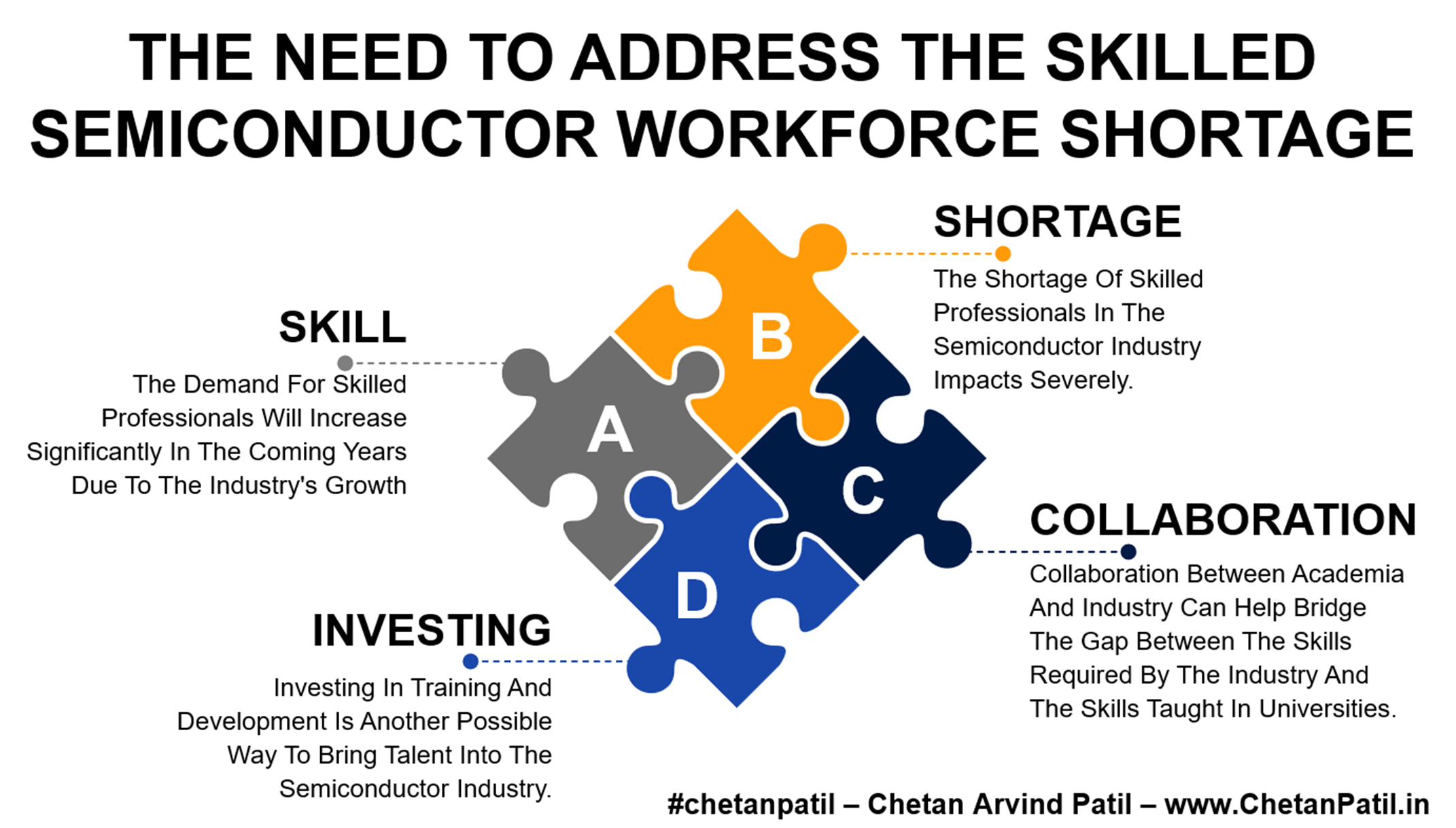
    The semiconductor product finds applications in various solutions, from smartphones to autonomous vehicles. To continually achieve the application requirements, the industry relies on high-tech talent and thus has a strong connection with academia. Academia, therefore, plays a crucial role in training the semiconductor workforce.

    However, despite the significant contributions of academia to the semiconductor industry, there is a growing concern about a potential shortage of skilled semiconductor professionals in the future. The semiconductor industry is highly competitive, and companies are constantly looking for talented professionals to join their workforce. The demand for skilled professionals will increase significantly in the coming years due to the industry’s growth. Nevertheless, the potential shortage of qualified semiconductor professionals can negatively impact the semiconductor industry.

    According to a report by the Semiconductor Industry Association, the global semiconductor market will reach $1 trillion by 2030, with a compound annual growth rate of 6.2%. However, the need for more skilled semiconductor professionals will likely derail this growth. A similar report from Deloitte states that the semiconductor industry will need more than 1 million qualified engineers by 2030, far more than the number of electrical engineering and computer science students that will graduate by 2030. Thus, showcasing the expected workforce gap.

    The shortage of skilled professionals in the semiconductor industry results from several factors. Firstly, there needs to be more interest among students in pursuing careers in the semiconductor industry. It is either students need to be made aware of the opportunities available in the industry and the skills required to succeed. Secondly, the industry is highly competitive, and companies are constantly looking for top talent without looking into the gap in training and practical requirements.


    Picture By Chetan Arvind Patil

    Given the long-term impact, the need for more skilled semiconductor professionals is a significant concern for the semiconductor industry, and taking steps to address it is essential. Some possible solutions to the skilled semiconductor workforce shortage:

    Encourage more students to pursue careers in the semiconductor industry. Achieving the task is possible by creating awareness about the industry and the opportunities available, providing better scholarships and hands-on internships, and collaborating with universities to offer specialized courses in semiconductors.

    Retaining existing talent is equally important as recruiting new talent. Companies can retain talent by offering competitive benefits and opportunities for growth and development.

    Collaboration between academia and industry can help bridge the gap between the skills required by the industry and the skills taught in universities. It is possible through joint research projects, internships, and exchange programs between universities and semiconductor companies.

    Investing in training and development is another possible way to bring talent into the semiconductor industry.

    In conclusion, the semiconductor industry will experience significant growth in the coming years, but the need for more skilled professionals threatens this growth. It is essential to encourage more students to pursue careers in the semiconductor industry, retain existing talent, foster collaboration between industry and academia, and invest in training and development.

    Addressing the shortage of skilled professionals in the semiconductor industry will benefit the industry and contribute to the growth of other industries that rely on semiconductors, such as healthcare, automotive, and telecommunications. Companies and stakeholders in the industry should work together to ensure that the industry has a sufficient supply of skilled professionals to meet the demand and continue to drive growth in the future.


  • The Future Of Semiconductors: Advancements And Innovations To Watch Out For

    Photo by Carlos Irineu da Costa on Unsplash


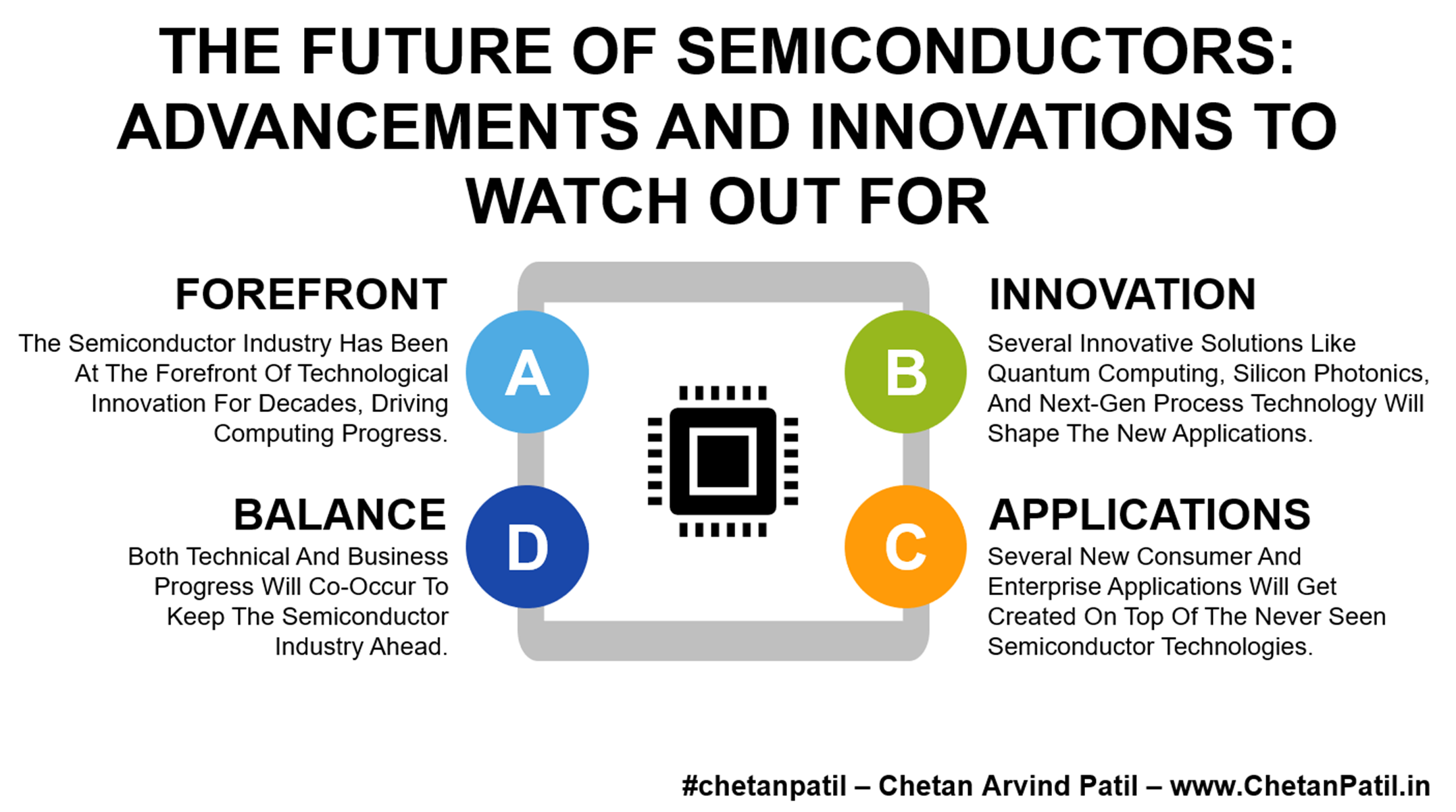
    The semiconductor industry has been at the forefront of technological innovation for decades, driving progress in computing, communications, and consumer electronics. In recent years, the industry has seen significant advancements in materials science, with the development of new materials and processes that enable the creation of smaller, faster, and more energy-efficient chips.

    For example, using high-k dielectrics and metal gates has allowed for creation of transistors with better performance and lower power consumption. Additionally, the industry has seen a shift towards heterogeneous integration, where different types of chips are combined in a single package to improve performance and reduce power consumption.

    As years go by, the speed of innovation is going to increase further, and there are some exciting innovations and trends to watch out for in the semiconductor industry:

    Quantum Computing: Quantum computing is an emerging technology that has the potential to revolutionize the semiconductor industry. It requires new types of semiconductors that can operate at low temperatures.

    Neuromorphic Computing: Neuromorphic computing involves the development of computer chips that mimic the structure and function of the human brain. It has the potential to revolutionize the computing industry and could lead to the development of more efficient and intelligent machines.

    Silicon Photonics: Silicon photonics is a technology that uses light to transfer data between computer chips. It has the potential to revolutionize data centers, as it can move data faster and with less power than traditional copper wires.

    Advanced Packaging: Advanced semiconductor packaging technologies are playing a critical role in enabling the development of high-performance and power-efficient electronic devices. These packages offer a range of benefits, including improved thermal management, higher bandwidth, smaller form factors, and greater integration density.

    Memory Solutions: With the rise of big data, artificial intelligence, and machine learning, there’s a growing need for advanced memory solutions such as High Bandwidth Memory (HBM), 3D NAND flash, and other emerging memory technologies.

    Next-Gen Process Technologies: New process technologies, such as Extreme Ultraviolet (EUV) lithography and FinFET transistors, will enable the manufacturing of smaller and more powerful semiconductors.

    Above advancements are already setting up the platform for several types of new-age applications and use cases. Among all, there are specific sets of applications that will be game changers. These will enable better utilization of computing resources, thus bringing more attention to the semiconductor solutions and critical future requirements.


    Picture By Chetan Arvind Patil

    Some of the top and growing application fields where advanced semiconductor solutions will play a key role are:

    Artificial Intelligence (AI): AI is becoming increasingly important in various industries, and the semiconductor industry is no exception. With semiconductors’ helps, AI applications can perform complex calculations and tasks quickly and efficiently.

    Autonomous Vehicles: The development of autonomous vehicles is driving demand for semiconductors that can handle large amounts.

    Neuromorphic Vision Sensors: These sensors are being developed to mimic the human eye and brain and could lead to the development of more efficient and intelligent image-processing systems.

    Wide Bandgap Semiconductors: Wide bandgap semiconductors, such as silicon carbide and gallium nitride, can enable more efficient power conversion and management in various applications, such as electric vehicles and renewable energy systems.

    Given the wide range of semiconductor advancements, including the ability to create a new set of applications, semiconductors will continue to shape the future of the computing industry, with both technical and business implications.

    On the technical side, the continued development of new materials, processes, and packaging technologies will create even smaller, faster, and more power-efficient chips. It will allow for the development of new types of devices and applications that were previously impossible, such as wearable computing devices, autonomous vehicles, and advanced medical devices.

    On the business side, the semiconductor industry will be a significant driver of economic growth, with companies investing heavily in research and development to stay competitive. Additionally, the increasing demand for semiconductors will drive new business models, such as chiplets and system-in-package, eventually enabling greater customization and modularity in electronic systems.

    Overall, the semiconductor industry is poised to play a critical role in shaping the future of the computing industry, driving innovation and economic growth for years to come.


  • The Semiconductor Manufacturing Management

    Photo by Elly Brian on Unsplash


    The semiconductor manufacturing industry is highly complex, requiring a well-planned and managed resource allocation, product flow, and supply chain.

    Effective management of the factories and other resources is also essential to ensure high-quality semiconductor goods. It includes carefully considering capacity, material planning, logistics, and other aspects of the production process.

    Planning: Semiconductor Manufacturing Is Highly Complex, Requiring A Well-Planned And Managed Resource Allocation.

    Manufacturing: Effective Management Of The Factories And Other Resources Is Also Essential.

    With the right tools and strategies in place, companies can ensure that their semiconductor manufacturing operations smoothly are running while meeting customer demand.

    More so when the capacity and complexity of the wafer production process constantly increase and will become more crucial in the chiplets and More-Than-Moore era.


    Picture By Chetan Arvind Patil

    Additionally, it is vital to have a reliable forecasting system for resource planning and allocation. Moreover, the material flow should adhere to industry standards. With such measures, semiconductor manufacturing can support the end customers far better.

    Along the path to achieving the high-quality management of semiconductor manufacturing, issues like – downtime, cost, and process optimization to resource allocation, people management, logistics, capacity planning, and inventory management – all play an essential factor.

    Quality: High-Quality Management Requires A Detailed Process.

    Cost And Time: Cost And Time Are Factors That Can Impact The Production Process.

    In addition to these operational issues, semiconductor manufacturers must also navigate the ever-changing market landscape and gain insight into customer needs to remain competitive.

    Additionally, cost and time are factors that can impact the production process. Thus, navigating these various hurdles is a critical part of semiconductor manufacturing management as it will ensure optimal production of semiconductors.