Category: TECHNOLOGY

  • V2X – Vehicle To Everything

    V2X – Vehicle To Everything

    Photo by chuttersnap on Unsplash

    Over the last half-century, vehicles have played an important role in everyone’s life. It has enabled point-to-point commute a faster and an efficient process. Whether one is traveling on a public bus or a private car, each of these vehicle types play a very crucial role in enabling ease of living.

    The last decade saw a drastic change in how the automotive industry manufactures vehicles. Vehicles of all forms are now much more fuel-efficient. Alternate fuel technologies are being used on a large scale. Features are provided that make vehicles safer and more aware. Enhanced digital experience by making most of the auto software tools built on top of the Android Auto and Apple CayPlay ecosystem.

    The next big change in vehicles is going to be on the data and communication technologies.

    On the data front, there are already many interesting hardware-based solutions that can capture the data generated by the vehicle. Then present it to the consumers and businesses to understand vehicle behavior and/or to track the vehicle usage. This is possible due to the standardization of the On-Board Diagnostics (OBD) and Controller Area Network (CAN). Data is also critical for the automotive industry to manufacture the products with zero defects.

    There are still many unexplored opportunities in the data domain due to the lack of continuous high speed internet access inside the vehicle. With 5G communication networks even vehicles can be equipped with the high speed internet. This will also allow many over the top service and will enable data driven innovation.

    The next decade is going to change how data is accessed within a vehicle due to the 5G expansion. Due to the different frequency bands 5G can run on, it makes it a perfect solution to enable real-time information access.

    While data and communication will play a major role in the automotive industry, it is also critical to understand the specifics of how this foundation will be laid.


    VEHICLE TO FUTURE

    The answer of how to make use of data and communication in automotive industry lies in the solutions provided under Vehicle To Everything (V2X).

    V2X holds big promises. All the sensors and the data points when combined ensure that vehicles are more secure and aware than ever.

    V2X already enables on the go real-time entertainment, but in the future with 5G and other network infrastructure, on-demand information and entertainment will go hand in hand.

    Picture By Chetan Arvind Patil

    The developments around V2X will provide second by second tracking of the logistics and will prealert any possible issues with traffic, vehicle, and any important information that may lead to shipment delays.

    V2X will also enable different levels of vehicle autonomy apart from securing pedestrians and bicyclists from colliding on vehicles. V2X will also increase the number of small cell networks by converting the vehicle itself as a cellular point of access.

    It is important to understand how V2X does so with the help of different technology domains within V2X.


    VEHICLE TO EVERYTHING

    Vehicle-To-Everything (V2X) is all about how vehicles are able to send the data out and get the data in with the help of advanced communication technologies. With 5G, there is going to be a rapid increase in V2X implementation. Every new vehicle in the market will then act as a data point, router, and network in itself.
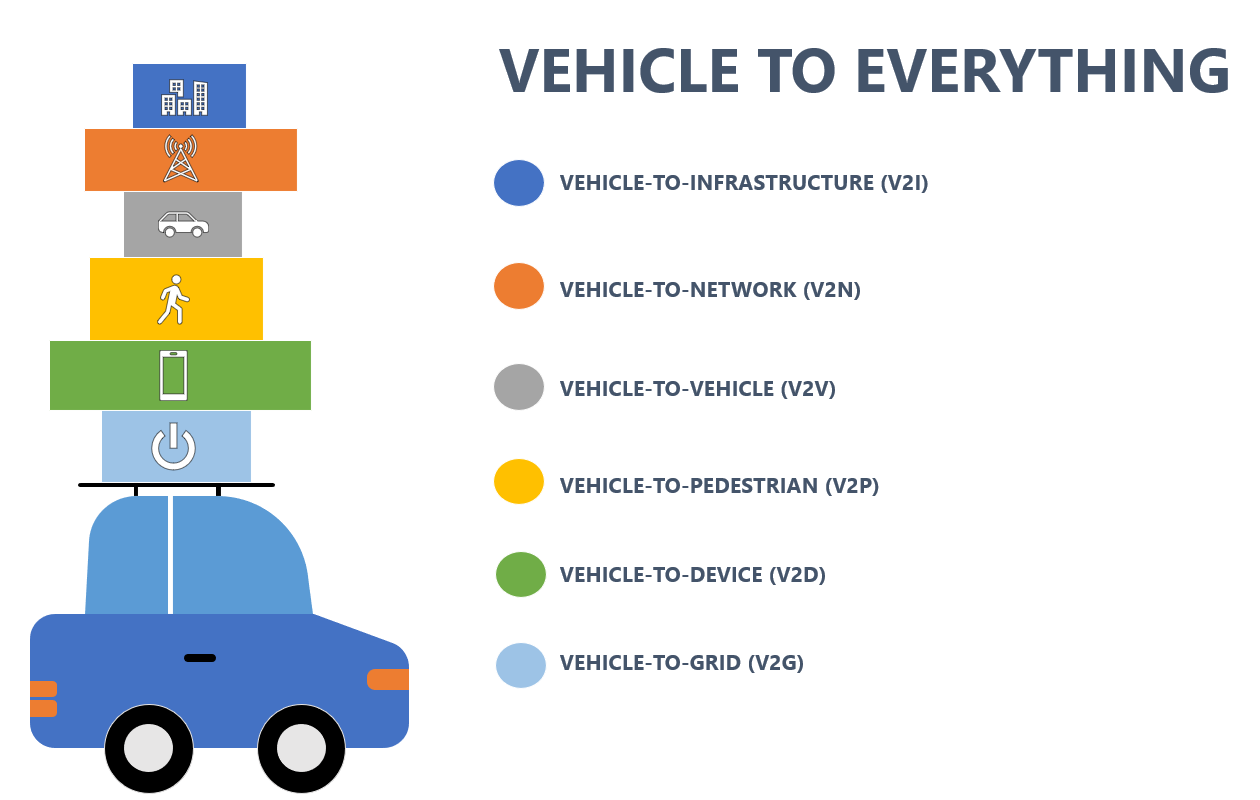
    The X in V2X stands for the different technology domain a vehicle has started being part of.

    Vehicle-To-Network (V2N) – V2N is the foundation of V2X. With the help of widely deployed communication network within and outside the vehicle, high speed data transfer can occur. The important use of V2N is voice and data communication for real-time navigation and entertainment apart from the critical emergency roadside assistance. Internet access using hotspots also comes under V2N.

    Any other V2X technology domain is fully dependent on V2N as without a communication network (specially wireless), none of the other V2X implementations can work.

    Vehicle-To-Infrastructure (V2I) – V2I is critical for level 5 automation where along with LIDAR and other self-driving sensors the data based approximation also is useful. This way vehicles can distinguish between road and obstacles much better than just a single data point coming from the use of vehicle’s own hardware. This is done so by feeding the vehicle with live view of surrounding by communicating directly with near by internet and data nodes. This continuous data feed helps in decision making. Apart from self-driving, V2I can also communicate with the traffic control network directly. Using this information vehicle can adjust/advice speed to ensure that the traffic block miles away does not get more congested.

    Vehicle-To-Vehicle (V2V) – V2V takes the help of V2N along with V2I to capture information from vehicles in close proximity. With V2V, Vehicles can communicate about traffic, speed, collision, and distance. All these data points will enable much safer driving compared to the past decade. A self-driving vehicle is heavily dependent on its sensors to capture, decode, and react to the real time situation. If the same self-driving vehicle gets accurate input that makes the driving safer, then it will also increase the adoption and take safety to the next level. This is where V2V is important and helps drive zero accident occurrence.
    Picture By Chetan Arvind Patil

    Vehicle-To-Pedestrian (V2P) – V2P takes the approach of ensuring that the vehicle is always able to detect and take action in case a pedestrian or bicyclist comes in the way. V2P relies on V2N and V2I data points and then combines it with its data to ensure that any critical scenario like a pedestrian or bicyclist coming in front of the vehicle, is handled without comprising on the safety of the pedestrian or bicyclist and even the passengers. Most of the systems in the vehicle today are already equipped with processing capability to alert the driver for different collision scenarios, but with V2P the data point will allow another layer of security and ensures 100% accurate collision alerts by considering 360 degree view .

    Vehicle-To-Device (V2D) – V2D is already in use in most of the vehicles out in the market. With the help of Bluetooth communication any device can connect with the vehicle and do many tasks from answering calls to playing music to logging data via OBD. The next step in V2D will be to allow smart devices to make use of small cell 5G networks that every vehicle will come equipped with. This will allow vehicles to act as hotspots. V2D will also enable advanced secure keyless vehicle entry along with remote startup, locking, and tracking.

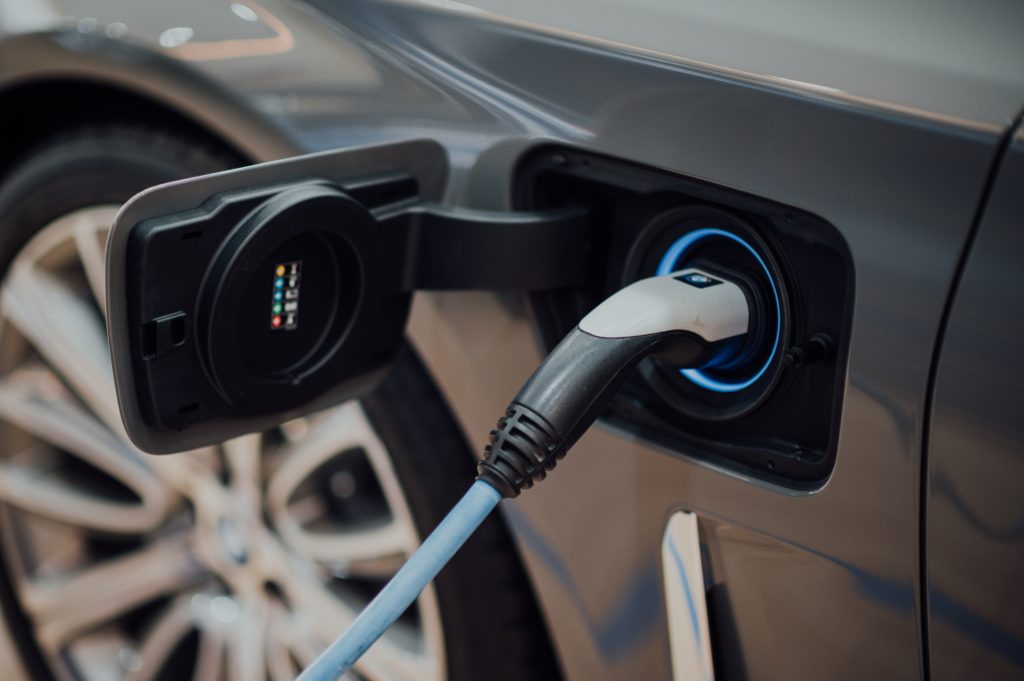
    Vehicle-To-Grid (V2G) – V2G is all about electric vehicles plugging into the electric grids. These grids can be in a parking lot, home, or a roadside charging station. V2G allows real-time tracking of nearby grids that can be used to charge the vehicles. The same grids can also perform a diagnostic check to ensure that the safety of the vehicle is not compromised and the battery to internal electrical networks is intact. Performing such smart checks with V2G will provide more safety than mile based servicing currently followed by the manufacturers. The data points gathered with V2G every time an electric vehicle is charged then can be sent to the central servers to process and understand usage of energy along with other data insights.

    V2X provide unlimited opportunity not only to the automotive industry but also to the hardware and software businesses. The consumers are also going to see rapid increase in the feature list. It will be interesting to see how automotive industry provides V2X features without making it too costly for the consumers. Otherwise, wide adoption of V2X will not be possible.


    Bloomberg technology has an interesting video on 5G and the Future of Connected Vehicles showcasing the importance of having a universal data and communication standard to enable growth of V2X.


  • Electronic ID – Authentication From Anywhere

    Electronic ID – Authentication From Anywhere

    Photo by Proxyclick Visitor Management System on Unsplash

    Identity is the backbone of Know Your Customer (KYC) process. Every country and company has its process and technology to ensure that the correct people have access to the correct resources. In the digital world, the Know Your Customer is moving to Electronic Know Your Customer (eKYC).

    Today, the world still relies on different types of identity documents for different services, with each service generating its identity numbers. From driving license to passport the list to have unique identity numbers and identity documents to prove the authentic identity of the owner never ends.

    On top of this, the majority of the countries have national identification programs that capture demographic or/and bio-metric information and connect it to an unique identification number. For example, the United States of America has Social Security Number, and then India has Aadhaar.

    Such national identification programs have met with a lot of criticism, but the fact is that the digital world will eventually rely on these centralized systems to shift from the traditional approach to have a separate identity document and identification number which used to prove the ownership.

    There is a dire need to move away from this process of providing a unique identity to each of the service types so that not only the process is centralized and relies on unique identification number and management but is also fast, secure, and enables cost-saving.

    The unique identification number and management solutions are important and critical in the digital world, and demands advanced solutions like Electronic ID (eID).


    IDENTITY PROBLEM

    To implement and use unique identification numbers and management, connected and secured infrastructure is required to ensure that the identity of the person and entity is preserved without compromising on security.

    Even though these unique identification programs have been implemented and in use, some gaps are there which still exist.

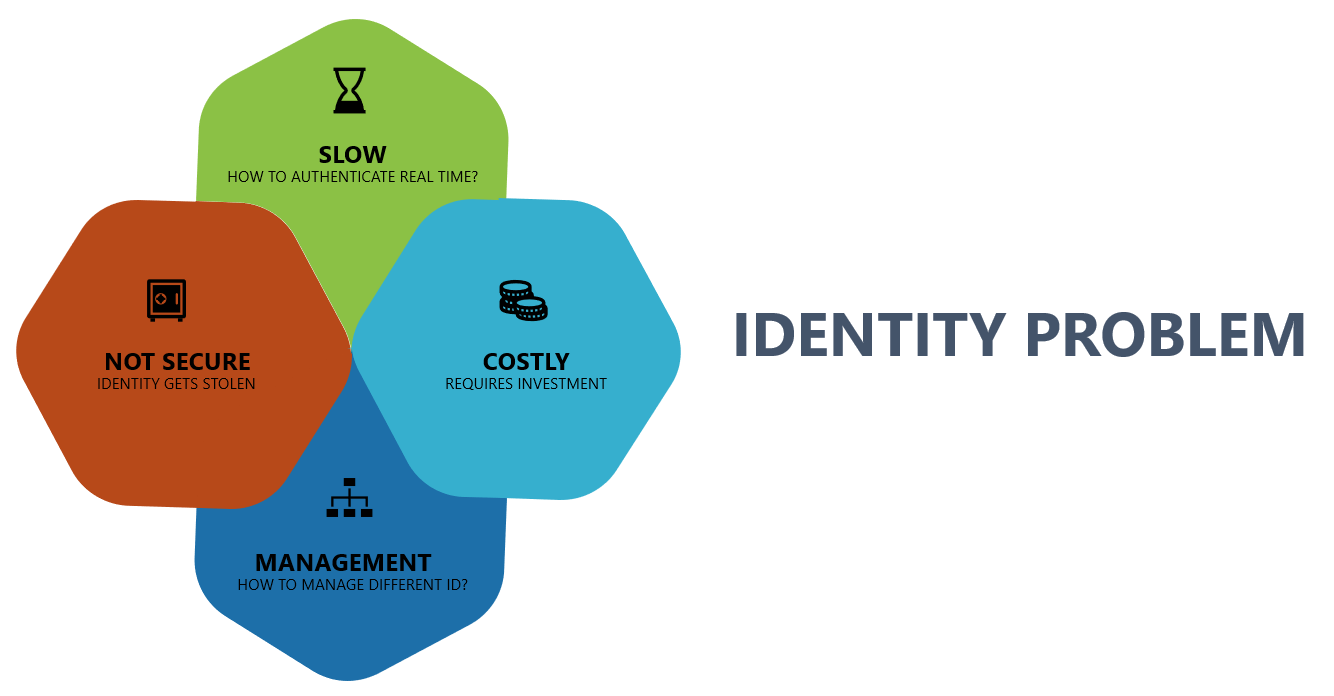
    Authentication on a connected system after producing identity card details is still not secure, costly, unreliable, and a slow process. Another fact is that all this requires an investment in infrastructure that validates the identity and makes the system costly for the business authenticating the details. Eventually, all these charges are passed to the consumer which makes it a costly process in the long term.

    Picture By Chetan Arvind Patil

    Data management is another issue because lack of standardization leads to add on investment in order to upgrade the systems to accept the new unique identification features while ensuring backward-compatibility.

    After all these investments and infrastructure to authenticate, there is no guarantee that the system is secure. With all the advanced approaches, the identity still gets stolen and thus invites fraud.

    All these issues make a strong case for unique identification number and management but using Electronic Identity (eID).


    IDENTITY SOLUTION

    One of the most talked-about solutions to solve identity management crises is Electronic ID (eID), which makes use of sensors and NFC enabled Electronic Identification Card (eIC) to authenticate the identity of the people.

    eID relies on demographic or/and bio-metric information to validate correct details. These details are already part of many national identification programs. By making use of eID, these programs can solve the identity crisis by ensuring security and centralization by data storage.

    Picture By Chetan Arvind Patil

    The smart cards that use eIDs are called eICs which are equipped with electronic chips to ensure that the data is stored securely and also transferred with encryption when required. Along with these features, these eICs also make use of the Trusted Platform Module (TPM) that enhances security and avoids theft.

    There are already many solutions in the market catering to the need for eICs. Like NXP’s National Electronic ID (NeID) solution not only secures the information but also allows high return on investment. A similar solution is also available from Infineon that is also targeted toward NeID.

    With EU going for Electronic IDentification, Authentication, And Trust Services (eIDAS), the adoption of eICs is going to be faster than anticipated.


    IDENTITY INNOVATION

    Many innovative solutions around eICs are already available. Countries have already started to make use of eICs in their national identification program where the true potential of eICs is.

    For example, Estonian Identity Card program is one of the earliest programs to make use of eICs to register its citizen. This innovation allows easy access to various public services and also secures the identity of the users.

    The VideoID, SmileID, and SignatureID solutions created by eID is another example of how to make the most of the technology to allow faster onboarding of customers by ensuring that the information provided is accurate and is not falsified.


    IDENTITY FUTURE

    Given how both software and hardware is taking over the world, it is certain that the future of identity is the body. Technology is going to make Microchip Implant a day to day activity. Certainly, this is going to be voluntary.


    It will be interesting to see the development and adoption of eICs. Given the digital world in the future, eICs will certainly take over traditional identity cards. The question is how soon.

    Many advanced eID based technological solutions will come out of innovative startups around the world. Creating businesses and solutions on top of the eIDs and eICs will also open up new market.

    With Work From Anywhere, the identity authentication is also going to be from anywhere with the help of Electronic ID (eID).


  • The Wireless Charging World

    The Wireless Charging World

    Photo by Lucian Alexe on Unsplash

    The major reason smart devices, mainly smartphones, are immensely useful is due to the portability they provide with the help of the battery management system. This allows consumers to make use of the device without direct supply for an extended period.

    Even though every new smart device is more efficient compared to the last concerning the power consumption and battery life, there are still gaps on the battery technology innovation side that have not kept up with the growing software and hardware demand.

    To tackle this critical gap, the industry is moving from wired to wireless charging solutions as it provides charging wire-free and aims to make it ubiquitous. The solution has gained traction in the smartphone domain where charging points are increasingly being switched to wireless hotspots than wired.

    By 2030, Wireless Charging Will Be $50 Billion Market

    The concept of wireless electricity is not new and has been in existence since 1900s. The major gap has been in adoption in the areas where there is need to have wireless charging solution to ensure consumers and businesses never run out of power.

    With the popularity of electric vehicles, it will be quite interesting to see what type of innovative solutions come out to provide hassle-free charging.


    WHY WIRELESS CHARGING

    With the growing demand to perform day to day activity on the go also means the power required to run the smart devices should be available any time. Most of the devices that reside at one location like smart cameras, smart sensors, and so on, can be hooked directly to the power outlet to draw electricity 24x7x365. This does not apply to the devices that have to be used remotely like smartphones, laptops, or an electric car.

    Though these devices can get hooked to the power outlet, but do suffer from the fundamental issue of requiring a different set of adapter for each of the devices.

    How useful will it be if the source or the adapter is capable of adapting the current and voltage requirement of the device so that one adapter device fits all?

    Picture By Chetan Arvind Patil

    This will not only drastically decrease the need to have different types of charging points and devices, but will also make the system smart by providing always-on charging capability. This adds one more ease of use layer on top of what is currently provided by the smart devices concerning compute and connectivity.

    In the end, the demand to use smart portable devices and solutions will not go down. The form factor may change, but the need will always be there. It is about time that the way these smart devices get powered also becomes smart, and wireless charging is the way to do it.


    IMPACT OF WIRELESS CHARGING

    Imaging a scenario where you have four different types of smart devices to charge, with each using different power adapter, and on top of this, there is only one power outlet to use. What do you do? The simple answer is charge as per the priority of the device that needs to be active for a critical task. Is this a smart way to charge smart devices in a smart world?

    Wireless Charging Is Not About Smart Devices But About Smart World

    If the answer is no, then certainly the way to power these devices should change. This can be with the use of Quick Charge technology, but it requires that the device is equipped with a specific System on Chip (SoC).

    Another important factor is that charging in the future will not be limited to consumer electronic smart devices only. The definition is going to extend to automotive and all the connected systems that will go wireless.

    The impact of wireless charging is huge not only from the market demand point of view but also on how much good change and impact it will have on the usage.

    Wireless charging will extend the life of using the device and will ensure that the smart systems never run out of the power. These always-on systems will make use of a smart sleeping mechanism to provide savings to businesses, industries, and consumers.

    Picture By Chetan Arvind Patil

    Wireless charging will drive innovation by introducing solutions that are built on top of next-gen connectivity standard. The portability wireless charging will add will also ensure standardization by eliminating the need to have different types of adapters, cables, and power outlets.

    The opportunity and solutions around wireless charging are also going to drive faster adoption of an electric vehicle by providing more mileage without worrying about the stoppage to charge the car as roads and the nearby system itself can provide wireless charging solutions.

    The wireless charging system by default is COVID-19 compliant.


    WIRELESS CHARGING INNOVATION

    The innovation around wireless charging is going to be the key factor in faster adoption. There are already many interesting ideas that are out in the market that showcase the power of wireless charging.

    AiraPower’s FreePower technology shows how customized solution that provides multi-device wireless charging is going to change the day to day charging points at home, automotive, and business zones.

    Energous also showcases different possible ways wireless charging is going to be part of the daily life. It provides a unique approach to how the smart devices can draw energy wirelessly the moment the battery level goes down a specific threshold.

    Semiconductor companies have already started to provide solutions that can be deployed around the city to enable the charging of electric vehicles an enjoyable and more innovative. The current solution focuses on dedicated parking spots with wired cables that can be used by electric vehicles. Imagine parking the vehicle in a shopping mall and it charges using the wireless pads in the parking spot while one enjoys the shopping.

    All this leads to a true benefit when the electric vehicle cannot be refilled as fast as a fossil fuel-powered vehicle.

    These are a few of the many solutions out in the market. The next year or two more innovative and advanced approaches will show up with more smart devices starting to adopt wireless charging.


    FUTURE OF WIRELESS CHARGING

    It is important to understand the future of wireless charging. The current use cases are well defined, with more emphasis on smartphones than any other consumer electronics.

    Currently, the wireless solution is confined to specific locations like a couple of devices at home and in the workplace. Going forward, there are going to be three key areas which will see faster and exponential adoption this leading to the standardization of wireless charging solutions.

    These three domains are: automotive, home and work place.

    In automotive, the electric vehicles are going to adapt to the wireless charging more than any other solution. It will showcase the true potential of an inductive charging for high power devices like a motor car or a bus. China being one of the fastest-growing markets will lead the way in showcasing innovative approaches concerning wireless charging and electric vehicles.

    Picture By Chetan Arvind Patil

    For home, the solutions will move beyond smartphones to television and cooking appliances. The number of power outlets will decrease, and home buyers and renters will see how real estate will make use of wireless charging solutions to provide Over The Top (OTT) services. This may add cost to the buyers and renters, but will also see a balance by removing the need to have different types of power outlets and adapters.

    Workplace (including business and entertainment zones) will start adopting to the solutions whenever there is a gathering of employees or the number of visitors in a business zone is more than the number of power outlets. Such places will see more wireless charging stations that will not require cables and will only have pads that will act as charging points.


    This decade with advanced connectivity will demand always-on devices. This is going to push for the faster adoption of wireless charging. It will be interesting to see what other innovative use cases of wireless charging come up as adoption grows.


  • Technology Is Building Smart Spaces

    Technology Is Building Smart Spaces

    Photo by Peerapon Chantharainthron on Unsplash

    When smart systems are deployed at every location, it leads to the creation of Smart Spaces. These Smart Spaces can be a residential area, a business zone, an educational institute, or a parking lot. As long as, day to day activities are tracked by the use of the technological solution to enable faster decision making a place qualifies as Smart Spaces.

    Over the last decade, the affordability of smart devices and smartphones have to lead to an exponential increase in the deployment and adoption of such places. The reason is the information from smart devices provided with help of sensors can be accessed in real-time. Which can then be used for important decision making.

    It is critical to understand different sub-zones within the Smart Spaces along with its impact, innovation, and the future.


    SMART SPACES

    Smart Spaces mainly comprises of six major components: Smart Security, Smart Maintenance, Smart Energy, Smart Utilities, Smart Connectivity, and Smart Parking.

    Smart Places by default have Smart Security. Smart Security is built on top of an efficient hardware capable of running advanced motion detection along with real-time notification software. These devices are capable of ensuring the area covered is secure and also the incident reports are available to the public. It is also one of the domains that have recently attracted the attention of big technology giants. Amazon a few years ago acquired Ring and recently Google even after acquiring Nest invested in ADT.

    The next important piece of Smart Spaces is Smart Parking. Many companies are engaging with local city authorities in order to make parking decisions easy for the public. It involves tracking of spots that are available for parking along with pre-booking to ensure that anyone can pre-plan the visit and be free from the decision about where to park the car. Smart Parking can be a standalone software-based solution by tracking the entry and exit at specific location. However, many of the Smart Parking solutions are also based on the sensors thus requiring a lot of hardware deployment.

    Smart Energy is critical too. Without proper utilization of the energy that minimizes the impact on the environment, a Smart Space will for sure not qualify as one. Smart Energy is built with a net-zero impact. In order to achieve this the source of energy has to be environment friendly. Solar or wind energy is usually the main source of energy supply to the Smart Spaces. Smart Energy is also enabled by deploying heating/cooling solution such that same single source can be used by specific area or citywide population. It can be a centralized water-based cooling like Phoenix Downtown has. Smart Energy is also about tracking utilization in real-time for adaptive decision making.

    Picture By Chetan Arvind Patil

    Smart Utilities are another aspect of Smart Spaces. It ensures that gas and water supply are available all the time by ensuring efficient usage. Numerous data points are collected to allow for timely delivery of these resources. Such data points allow families and businesses to understand the real use versus waste. By capturing such details, the city authorities can also come up with adaptive and smart incentives for residents.

    Smart Maintenance is all about predicting when a specific location or service is going to see a downtime and in advance how to act on it. This is done with the help of data tracking that provides life and aging details of the components deployed across the Smart Spaces. This can range from sensors in the water supply system to building structure maintenance to electric sub stations. Smart Maintenance also ensures that human resources are used wisely and in a timely manner.

    The last and critical piece of Smart Spaces is Smart Connectivity. Without access to the high-speed networks from the internet to a cellular connection, it is difficult to make any solution to work in a Smart Space. Data generated out of the different aspects of Smart Spaces requires connected systems that can work only if always-on connectivity is provided. The decision making for other critical zones within the Smart Spaces is also relying on connectivity. With the deployment of 5G and smart Wi-Fi 6, Smart Connectivity is going to see much more innovative use than in the last decade.


    SMART IMPACT

    Deployment of Smart Spaces across cities and countries is only possible on a large scale if the impact of such Smart Spaces is understood. There are many benefits to having Smart Spaces, but the critical Smart Impact are savings, opportunities, complexity, dependency, and ease of use. These impact are combination of the good and the bad.

    Savings is the most important reason for making any space a smart one. The real-time usage of securing the place helps in long term planning with eventually leads to savings not only for the residents but also for the businesses. It can be understanding what services work and don’t work, thus making a decision to switch or do away with such service. Maybe it can be about understanding what room temperature works for one by utilizing sensors such that the temperature of the cooling system can be adaptive accordingly. Scaling these savings at larges scale eventually leads to savings of resources.

    Immense opportunities are created by Smart Spaces. From employment to small business to large scale industries. Smart Spaces deployment ensures that different new opportunities from regular maintenance to data to security analysts are available for better decision making. Thus opening up new skill-based employment. It also ensures that the business providing smart solutions are able to create a supply chain that drives other business.

    Picture By Chetan Arvind Patil

    All this leads to ease of living life. Ensuring that not only the spaces are safe but are also smart based on data generation. It allows efficient utilization of resources that improves day to day life activity and thus provide ease by which goals can be achieved.

    One of the biggest drawbacks of Smart Spaces is dependency. The more the smart systems are deployed, the more dependent the people and businesses become. If one or two things go out of service, the day to day routine suffers. It also impacts decision making.

    The biggest challenge when deploying Smart Spaces is to ensure that all these Smart Impacts are in balance. Anyone thing that grows more than the other will lead to critical security to safety issues. This means Smart Spaces are very complex too due to inter-dependent systems.


    Always On Connected Sensors Taking Decision Will Run Smart Spaces


    SMART INNOVATION

    Necessity is the mother of invention. It is correctly applied by any industry that is fighting to survive the market competition.

    For the software businesses, it is important to ensure that there are always new and better programming environments along with the tools to develop advanced and smarter software systems. This also means new business opportunities by showcasing efficiency and cost gain over existing tools and solutions.

    The same is applicable for the hardware businesses by ensuring that there are new solutions available as the market demand grow and the need changes. These can be an efficient sensors that allow more savings over existing and previous generations. To ensure such a solution exists in the future, continuous research and development is required.

    Picture By Chetan Arvind Patil

    Smart Innovation around Smart Spaces is built on top of the savings that the existing system provides. This can be due to the data generated across the zones within the Smart Spaces that lead to deployment of cost efficient solutions. Which was in turn used at large scale by businesses. These savings can also be built on top of dynamic pricing which is applicable mostly for housing and real estate business but is also getting deployed for smart energy and utilities.

    A combination of data and dynamic pricing built on top of Smart Innovation by Smart Spaces will eventually lead to New Products and New Services.

    The more the savings, the better the future solutions from companies in the domain of software and hardware.


    SMART FUTURE

    Everyone talks about Smart Spaces, but what is the Smart Future going to be like?

    There can be different takes on how the Smart Spaces will evolve. It can be dependent on how the industry innovates to keep up with the growing demand for the smart solutions. It will also depend on cities’ and citizens’ comfort to adapt to a fast-changing smart environment.

    In short, there are four key aspects of how the Smart Future of Smart Spaces is dependent.

    Picture By Chetan Arvind Patil

    The first is being connected. It ensures that the information generated from the Smart Spaces is always available. These connected systems will run on top of the sensors. It is already deployed across many cities and real estate. However, unless and until everyone in such location is able to utilize to full extent, it will be difficult to ensure that the connected sensors are efficiently used. Thus the second requirement of a smart future is sensors. The third critical piece is always on. Without which it is not useful to deploy connected sensors. The last part is the decision. If these always-on connected sensors cannot make a decision with or without human input, then it is a waste of money and time.

    Opportunities and possibilities are numerous. All technological solutions certainly improve life as long as the users are able to afford the same. Only time will show how Smart Spaces will evolve, but are certainly going to be everywhere.


  • One Breakthrough Technology That Is Must For Work From Anywhere Workplace

    One Breakthrough Technology That Is Must For Work From Anywhere Workplace

    Photo by Andrea Caramello on Unsplash

    Work From Anywhere Workplace is becoming the standard mode of working. Many of the top companies have started providing Work From Anywhere Workplace as an option to the employees. According to the survey by Buffer, 98% of the respondents will prefer remote working if given an option.

    Many software and hardware tools are required to ensure that Work From Anywhere Workplace experience is as good as Work From Office. These resources and tools are only valid when the nature of the job enables employees to work remotely. Unfortunately, not all jobs fall into this category.

    Even though there are so many resources available for Work From Anywhere Workplace, there are still gaps needed to be filled.


    THE TOOLS

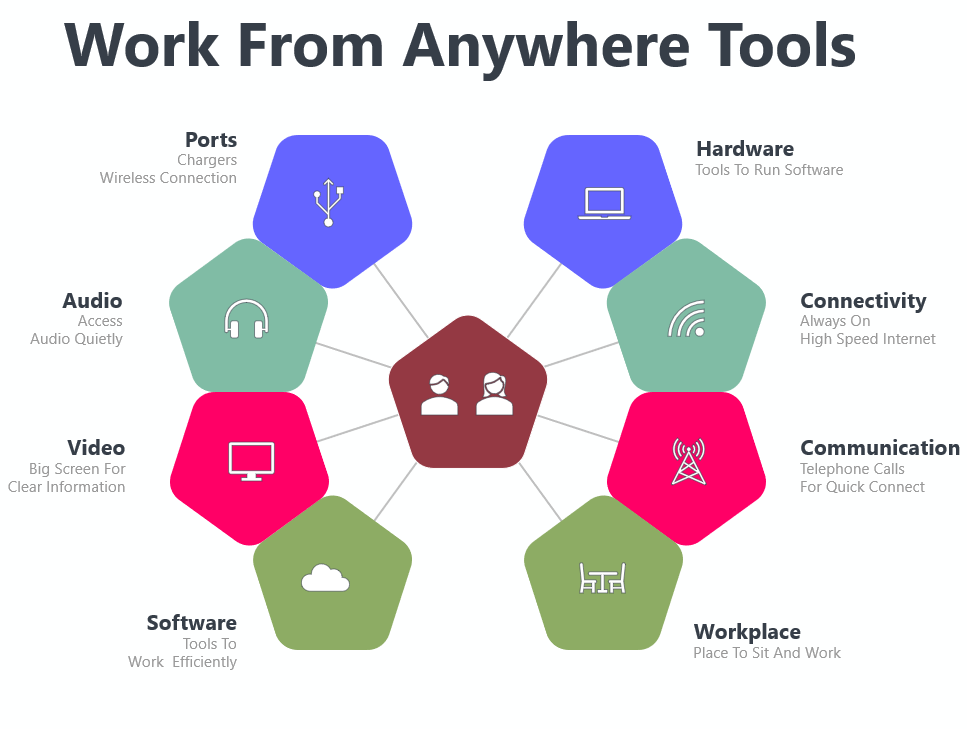
    To work efficiently from anywhere, one needs a set of correct tools. These tools increase productivity.

    Any person working in the technology-enabled domain has to have the basic tools like hardware that establishes connectivity to the external remote work. This hardware tool runs the software. Depending on the need and nature of the work, this can be a smartphone, a tablet, a desktop, a laptop, or an ultra-book.

    To make use of hardware, seamless connectivity is required. Always-on high-speed internet networks are so crucial that without it none of the tools running on top of the hardware can be utilized fully. High-speed connectivity is defacto but still suffers from issues of downtime and intermittent slowness.

    Connectivity also comes in the form of ensuring enough ports are available from the power outlets to multiple USB and HDMI outlets via a docking systems.

    Picture By Chetan Arvind Patil

    Communication is a key aspect of Work From Anywhere Workplace. It requires a reliable cell network for tasks that demand urgent inputs from the team. Many use VoIP tools nowadays, but the fact that calling and asking for solutions establishes resolves issues quickly.

    Audio and Video are key tools to Work From Anywhere Workplace. Getting up from the cubicle and walking to the colleague for help is not possible in remote work. The only way to efficiently hold project presentations and important work calls are by using audio and video compatible tools.

    All these tools discussed above are good to work efficiently from anywhere. Workplace need not be just home but can be any place like an outdoor place, co-working area, or even a coffee shop.

    If all the tools that are required for remote working are available then what is the missing link?


    THE NEED

    A quiet place to work is everyone’s dream setup. No interference mainly from the surrounding noise is key to working efficiently. To eliminate any type of noise, many have started using noise cancellation headphones. These work perfectly and do the job of eliminating noise but are often costly to afford and not everyone is willing to pay the high premium cost. On top, not everyone likes to keep headphones on all the time.

    Another solution to a focused workplace remotely is to have a dedicated room that can allow focused working. However, finding a quiet place in a home environment with family members is not an easy task. If the employee is working from a public places then too it is difficult to find a quiet corner.

    Picture By Chetan Arvind Patil

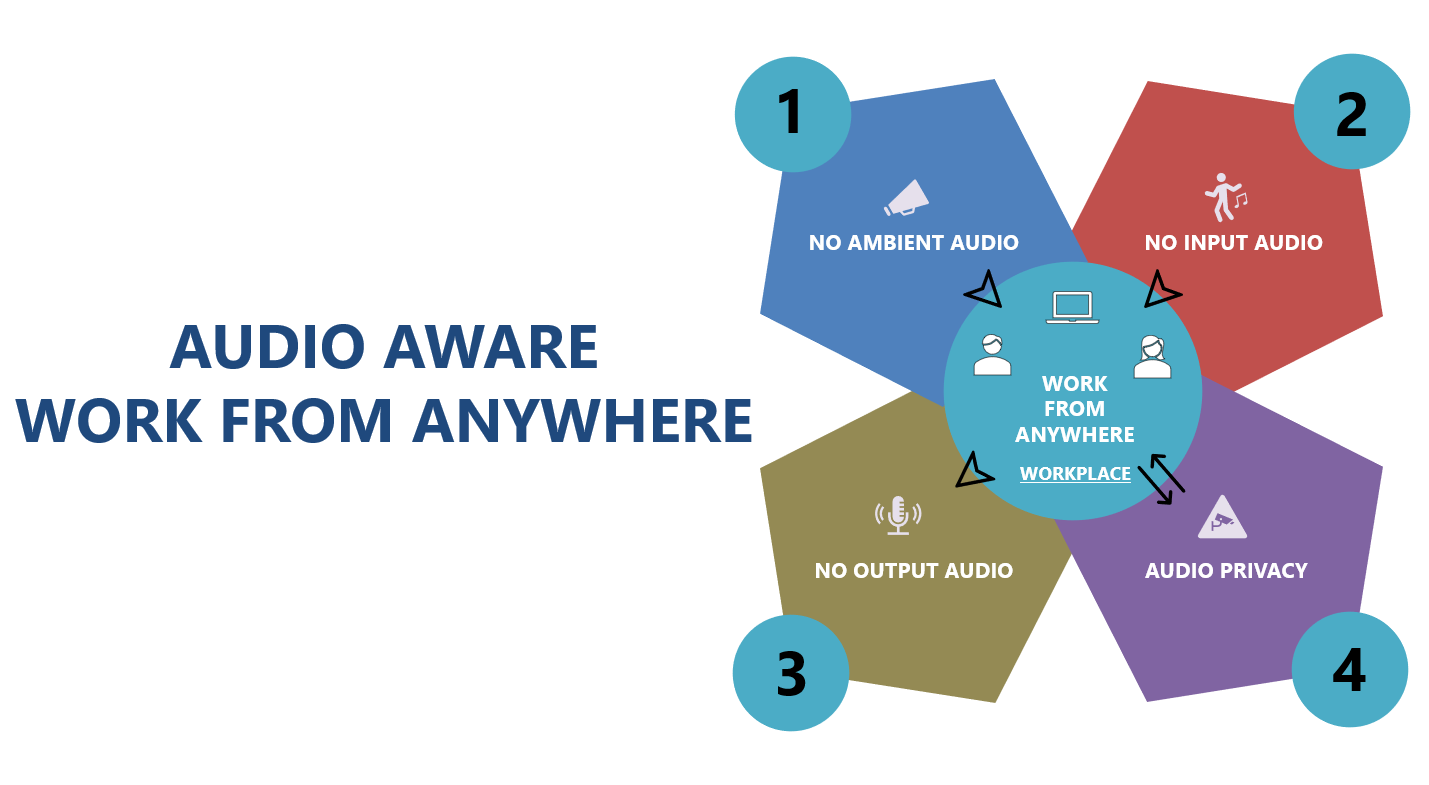
    Apart from noise, there is a privacy concern too. What you hear can be routed through headphones/earphones/speakers, but then when one speaks over the work call, then it is not possible to cancel the outgoing noise. In Work From Anywhere Workplace environment, one can be working next to anyone, thus inviting privacy concerns when sensitive work information is discussed.

    If we take a holistic look, then there are different types of sounds that a person working in an remote working environment has to deal with. These ambient sounds can be from nearby houses or roads, or from people in close proximity. All this leads to audio privacy concerns.

    This audio privacy concern is the missing link from calling a Work From Anywhere Workplace a perfect workplace environment. The question is how to ensure audio privacy with the help of Audio Privacy Technology.


    THE SOLUTION

    Audio Privacy Technology solution involves eliminating noise/sound without the need for a dedicated headphones/earphones. Even if one uses headphones/earphones, then these devices are only capable of eliminating ambient noise but do not ensure that the output audio from the employee is only heard by the employer and the team, and no one else.

    A perfect Audio Privacy Technology will ensure that without using any device and by only having the workstation, one is able to create different focused Work From Anywhere Workplace Zone.

    These focused sound zones work in harmony with the nearby environment to ensure that none of the ambient sounds sneak into Work From Anywhere Workplace Zone. It also ensures that the sound generated from the Work From Anywhere Workplace Zone does not disperse.

    These two features working in synchronization ensure that there is bi-directional audio privacy.

    Picture By Chetan Arvind Patil

    Audio Privacy Technology is audio aware. It provides breakthrough solutions that can not only be used for Work From Anywhere Workplace but can also be applied in different zones like in cars, public areas, airports, flights, and many more places where audio privacy is non-existent.

    Another impact of Audio Privacy Technology is the elimination of headphones/earphones. With the decreasing number of ports in laptops to smartphones, wireless devices are the only solution. With wireless, the solution is not an issue but the degrading battery power when working remotely for longer hours is.

    Thus, having a chip-based feature that is embedded inside the smart devices which is capable of creating audio zones is the need of the hour. This will also make headphones/earphones obsolete. On top of it, not everyone likes to be wired all the time, and having bi-directional audio privacy without the need for headphones/earphones can make people more productive.


    THE BREAKTHROUGH

    There are already Audio Privacy Technology solutions in the market. The key is to make it accessible at large scale. Like the elimination of audio jack lead to the adoption of wireless headphones/earphones. Similarly, one-day electronic chips embedded in the smart devices will remove the need of having headphones/earphones. One less device to carry as embedded chip with Audio Privacy Technology will ensure more privacy and noise cancellation than any other solution currently in use.

    Noveto Systems already have the 

    SeatCentric by Bose already has Audio Privacy Technology. It will be interesting to see how soon they can release products that can be used by employees Working From Anywhere Workplace.

    Video By Bose

    Hyundai also has the Audio Privacy Technology ready, and “>certainly, it looks promising.

    Samsung owned HARMAN also showcased a similar solution back in 2015 CES.


    It will be interesting to see how the future of Work From Anywhere Workplace evolves with Audio Privacy Technology. This breakthrough technology will not only help audiophiles but can literally make headphones and earphones obsolete while ensuring that anyone can work remotely at any given location by soundproofing the work zone.

    Audio Privacy Technology can also be applied in Work From Office environment where one doesn’t like to listen to colleagues speaking loudly, or the noise from table fan used by someone next to the work cube.

    There will be concerns about not being able to hear emergency information from nearby surroundings, but then the same applies when someone is wired in with noise cancellation headphones. Surely, there will be options and features to enable emergency information to sneak in.

    Only time will tell how the solution will evolve, but certainly Audio Privacy Technology breakthrough is must for Work From Anywhere Workplace.


  • The Future Of Information Exchange Is Contactless

    The Future Of Information Exchange Is Contactless

    Photo by Phix Nguyen on Unsplash

    The most critical piece of the global village is the information exchange. In the last few decades, it has moved from wired telephones to wireless and then today runs on top of an interconnected network of computers called the internet.

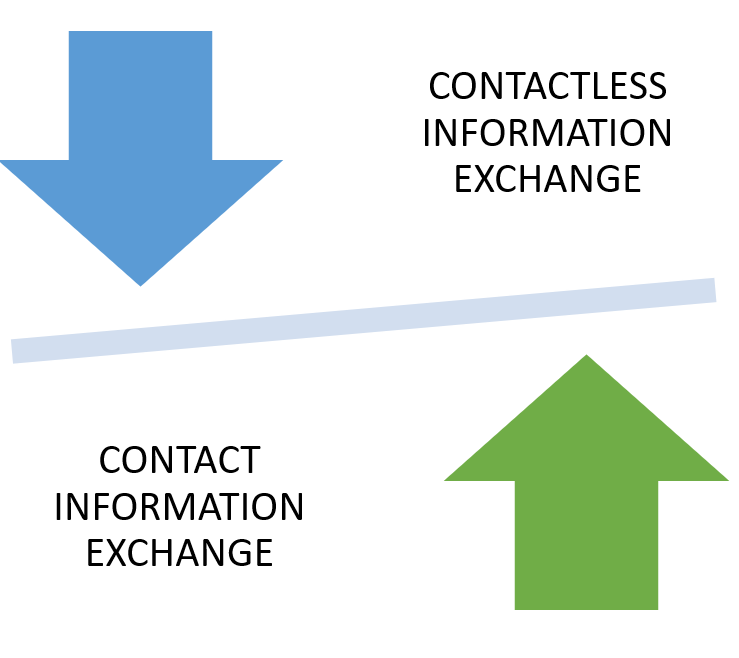
    The exchange of information during pre-COVID-19 was a combination of contact and contactless. In contact information exchange one-to-one communication was the key to working and developing things for good. However, post-COVID-19 the new normal will be contactless, which is getting adopted much faster than expected.

    Contactless Information Exchange (CIE) will find its way into many aspects of life rather than just technology-enabled solutions. CIE is going to make humans far more technology-dependent than they are now. Whether it is driving the car, paying for bills, restaurant outings, etc., every day to day activity is going to see CIE incorporated by default.


    PAYMENT

    Contactless payments are the first major shift that post-COVID-19 is going to bring. Even today in North American alone 50% of the transaction are non-cash mode.

    More and more people are using contactless payment with around 51% of the U.S. payment transactions were contactless mode in the last 6 months. The trend is only going to go up. In Europe, the contactless payment has seen a 97% increase in the last two years, and over the next one year, it is being predicted that almost 100% of the credit and debit card transactions in Europe are going to be contactless.

    There are major benefits of contactless that includes paying without touching different devices. A traditional process of using credit or debit cards at the store often requires handing over the card to the shop owner and then he/she using it on the point of sale (PoS) system. All this process is not pandemic friendly and going on in the future, PoS will be history.

    Change in mode of payment will also dramatically change the equipment business that serves the payment industry. PoS will make the way of wireless technologies like MIFARE, which can securely allow the exchange of information for a service.

    Even smartphones using Square Reader will start coming up with inbuilt systems that will allow contactless payment options. This is going to drastically reduce the cost of accepting payment for small merchants who often end up paying not only for the PoS portable device but also the percentage of the payment received.

    Questions are being raised about security around contactless payments, however, it has been proved again and again that contactless payments are much more secure than traditional contact-based transactions.


    SHOPPING

    Amazon has already shown the world how the future of shopping is going to be contactless by introducing Amazon Go experience. Even though the majority of the shopping during COVID-19 has moved to eCommerce, the traditional way of shopping is going to stay. People would always be willing to go out spend quality time with family and still will be willing to experience the joy of buying in-store.

    What is certainly going to change is that more and more big stores like Walmart etc., are going to ramp up their back end that will not only cater to those shopping in the store but to also ordering online. All of this will be geared towards being contactless.

    IKEA already has shown how one can take advantage of the big store experience by not only catering to the in-store experience that includes dining but also ensuring how the warehouse can be connected to the back end allowing the online experience to be as good in the store.

    Many of the stores are already providing home delivery of goods, but that experience will still take time to scale at large. Part of the reason is being comfortable with someone else coming in contact with your groceries in the post-COVID-19 world. Even though the majority of the delivery services are COVID-19 complaint. With Postmates getting acquired by Uber, the future for door-to-door delivery looks promising.

    In India, Reliance Industries homegrown JioMart has already started connecting the small shops with consumers. This is going to shake up the whole industry with families preferring doorstep deliveries that option to go out.

    Post-COVID-19 future of shopping is not only going to be contactless but the whole experience is going to change.


    TRANSPORTATION

    Moving of goods from one point to another has traditionally involved using trucks for smaller distances. Within cities and towns, much smaller systems are being deployed. Post COVID-19 is going to see the increasing deployment of driverless delivery carts that will reduce the number of contacts for a shipped well drastically.

    In 2017, self-driving trucks were deployed for testing. In 2020, they are ready to take the industry. The approach self-driving trucks are going to bring is ensuring that the goods are picked from the source location and delivered to the destination without stops and that is going to ensure that the goods are safe and went through the contactless process.

    Consumer Brands has already formed a task force to ensure that the future moves to contactless delivery as soon as possible.


    DINING

    Outings are part of life, no one feels being at work and home all the time. The restaurant industry took the biggest hit during COVID-19 with the majority of jobs being lost in this sector. COVID-19 has increasingly prompted the need to ensure that the dining experience also changes in the future.

    Food is a product that does require lots of contacts and it is not possible to make dinning a 100% contactless experience. To ensure that the orders are placed and ready for dining, the future is going to be a move towards pre-orders where the food is ordered before the consumer leaves the house and by the time he/she reaches the food is ready to eat.

    Another approach that is going to involved contactless dining will be placing orders at the restaurants using an application rather than letting servers take the orders.

    There are already many solutions out in the market for restaurant business but the major impact is going to be the additional cost that restaurant owners will eventually have to pass to consumers to survive in a competitive industry.


    HEALTHCARE

    COVID-19 was all about health and well being. There is going to be an increasing need to monitor the health and ensure that the individuals are free of diseases that might turn into a pandemic.

    The Healthcare industry requires the diagnosis of patients and doing it without being in contact is difficult. What the healthcare industry can do is to eliminate the pre and post patient examination process more contactless.

    It is going to involve screening using tools that can detect and advise physicians of steps in advance. Remote sensing is going to be another solution that will be deployed at a larges scale not only in hospitals but in places with more crowd.

    Remote monitoring of patients post-diagnosis is going to be the default way of working in the health care industry. It will eliminate the number of contacts that patients have with others.

    Telehealth is going to be the first point of consultations for non-life-threatening diseases. It is going to also enable many technological solutions like Cross Reality


    Contactless Information Exchange is going to be the future of communication and is going to be the new normal. It will be interesting to see how new solutions are built around the existing technology to provide contactless services.

    Contactless might open up whole new industry and possibilities.


    PSA

    McKinsey&Company has a very informative take on how operations around contactless will evolve in future.


  • The Challenges For Electric Vehicles In India

    The Challenges For Electric Vehicles In India

    Photo by CHUTTERSNAP on Unsplash


    ELECTRIC VEHICLES IN INDIA

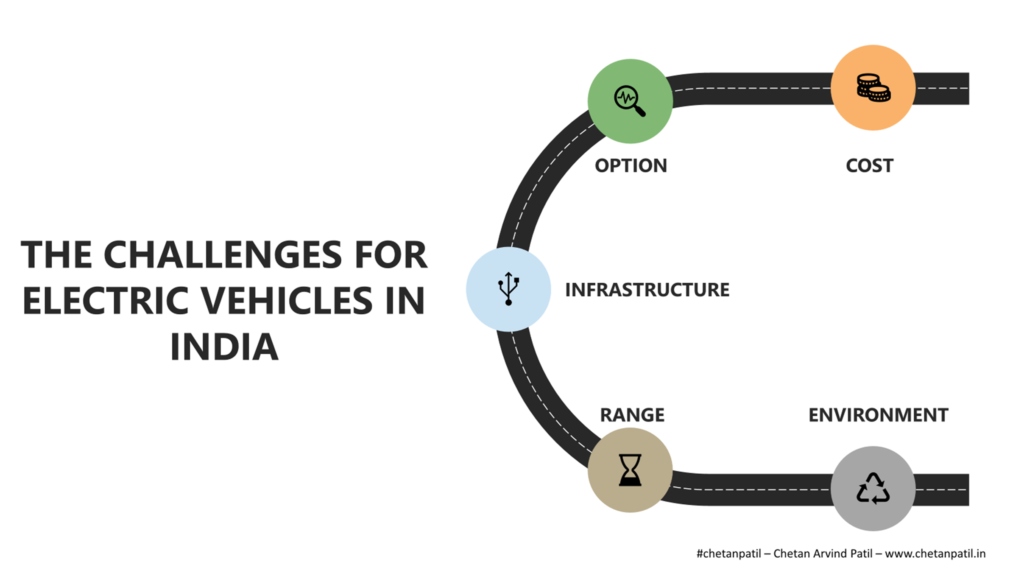
    India has set an ambitious goal of 30% electric vehicle (EV) adoption by 2030. The adoption is expected to be driven majorly by two/three-wheelers and commercial vehicles. This is a daunting task and there are many challenges on way to ensuring faster EV adoption.

    EV adoption requires a three-way handshake and the same is true for the Indian automotive market:

    • First: Automotive manufacturers need to provide an EV alternate to every non-EV model in production
    • Second: Consumers should be able to afford the EV model
    • Third: Infrastructure required to ensure end-to-end EV support

    The majority of automotive manufacturers around the world have already started working on plans to launch a wide range of EV vehicles for consumers. Some are also working on an alternate EV model for every alternate fuel model in production. The more manufacturers join such initiative, the better it will be for a new market like India.

    From the consumer point of view, the major concern is still about the range and the cost. Over the last 5 years, several startups in India have focused on EV solutions to capture the two/three-wheeler market. Some have been very successful in doing so. There are still concerns around the cost and range, as these two/three wheelers still take on an average of 5 hours to get fully charged to provide a range of about 150-200 KM (93-125 Miles).

    Infrastructure is another key to the wider adoption of EV. Countries that have a well-developed market for EV (the USA, EU, etc.) have ensured that the policies are suitable for faster EV adoption including incentives for both manufacturers and consumers.

    India though has taken a step in all the three points discussed above, there are still challenges on the EV 2030 roadmap.


    EV CHALLENGES IN INDIA

    EV growth in India is depended on overcoming the following challenges:

    • Cost
    • Range
    • Option
    • Environment
    • Infrastructure

    Cost: Given the technology required to develop an efficient EV is fairly new, the cost is becoming the major hurdle in wider adoption. The majority of India’s automotive buyers focus on vehicles that are compact and provide long-term reliability and cost benefits. This choice has driven automotive manufacturers in India to keep churning out new models that are not only compact and reliable, but are low cost too. Any new EV passenger vehicle will have to not only beat the entry-level fuel-powered models but will also need to ensure that there is no compromise on the features.

    Range: India is still a fuel-powered automotive market. Users have adapted to the fact that they need not worry about waiting to re-fuel the vehicle. Not all the cities and towns have the EV electric charging infrastructure. On the go charging requires time and that doesn’t help EV adoption. This is a turn off for the EV market. On top, the planning and implementation of such EV charging network is yet to be defined clearly for the Indian market.

    Picture By Chetan Arvind Patil

    Option: In 2020, Indian automotive manufacturers are not providing more than two or three EV model options. This limits the EV options for the consumer. While commercial vehicles by default are slowly getting more EV models, the major market (~70%) is still in the passenger vehicles which is far behind in terms of EV models. Unless automotive manufactures come up with a wide range of options, consumers will still get attracted to fuel-powered vehicles.

    Environment: There is still no clear roadmap in India about how the battery charging infrastructure is going to be. Whether it will be re-charging the EV batteries at the charging stations or the battery swapping is going to be an economically viable option. In both cases, the environmental challenges still exist. Taking fossil fuel out of the vehicles still does not mean that the EV is 100% environment friendly. Disposing of the battery after long usage is still a big concern. On top, the raw materials required to develop batteries are not fully environment friendly.

    Infrastructure: EV requires a network of charging stations. The developed market already have policies and partners who have worked on creating a network of infrastructure that allows anyone with an EV model to get their EV charged at an affordable cost. The same infrastructure is now being extended to provide EV servicing, in case of breakdowns. India needs a clear policy and partners to ensure that the infrastructure is in place before ramping up the EV production.


    EV FUTURE IN INDIA

    The future of EV is promising in India. It does come up with challenges. There are already established EV markets to learn from and take the best possible route possible to increase the wider adoption of passenger and commercial EV.

    The commercial EV market is growing mainly due to state government policies. The same needs to be applied to passenger vehicles. Two/three-wheelers have already started adopting to the EV business model. If the cost goes down further with an increase in range, the speed of adoption can be faster.

    EV market also provides opportunity to the semiconductor companies which can provide electronic based solution to make EV ecosystem smarter.

    The mass mobility transition for 1.3+ Billion people is not an easy task. It is an opportunity for all the manufactures that are driving the EV market around the globe. Will be exciting to see how the world helps India drive into the EV world.


  • The Data-Driven Approach Towards Semiconductor Manufacturing

    The Data-Driven Approach Towards Semiconductor Manufacturing

    Photo by Vishnu Mohanan on Unsplash


    THE GROWTH OF DATA IN THE SEMICONDUCTOR MANUFACTURING

    The growth of digitization has led to the generation of massive amounts of data on day to day basis. The data explosion has pushed several industries to adapt to data-driven analysis and decision-making processes. The same is true for the semiconductor industry.

    Data was always an integral part of semiconductor design and manufacturing. The need for data has increased further due to the cost and risk involved in designing products that are becoming smaller and smarter. The cost to fabricate semiconductor products is high and that is why during the design phases innovative simulations/modeling approaches are used to validate product design against specification before sending the final design files to the semiconductor fabrication houses. The risk of not spending time to collect and review semiconductor data both during the design and the manufacturing stage can cost a lot of money and time if the product starts failing in the field. 

    Data-Driven Approach Is Raising The Bar Of Semiconductor Manufacturing

    As the technology-node and package technology have advanced, so needs to take a data-driven approach to semiconductor manufacturing. The goal of the data-driven approach is to ensure that the products being are defect-free. The sophisticated tools and equipment used by the semiconductor manufacturing process have only gotten more advanced. The de-facto feature of these system-driven tools is to capture data and present it in a form that makes the decision-making process easier and faster.

    The data-driven approach is required to meet the following two important requirements of semiconductor manufacturing:

    Quality: Qualifying every semiconductor products is vital. It has to meet different industrial standards. Automotive semiconductor products have to go through one of the most stringent qualifying processes to ensure the product can work seamlessly everywhere. It is vital to ensure the manufacturing process established meets the high standards of quality requirement, which is possible only if the data captured to drive the decision-making process.

    Waste: Every data point tells a story. In semiconductor manufacturing, data can be about the design or the manufacturing tools, or handling issues, and many more. Every semiconductor data type counts towards ensuring the wafers and assembled parts are not getting scrapped. Scrapping raises yield concerns and indirectly impacts the cost.

    Without investing time and money in the data-driven approach to manufacturing semiconductor products, the semiconductor companies run into the risk of overlooking the quality metric. Driven by the need to ensure the products using the semiconductor solutions meet user satisfaction, the customers/companies using the semiconductor products are increasingly using Defective Parts Per Billion (DPPB) as a new metric than Defective Parts Per Million (DPPM).

    The need to capture, process and review semiconductor manufacturing data is becoming vital when there is a possibility that the semiconductor device might end up powering critical infrastructures likes satellites to aerospace to automotive (and many other solutions).

    All this is why the semiconductor industry is becoming more data-driven than ever before. The manufacturing part of the semiconductor process is not complete without letting the data speak.


    Picture By Chetan Arvind Patil

    THE PROCESS TO CAPTURE DATA IN THE SEMICONDUCTOR MANUFACTURING

    The semiconductor manufacturing process is a well-established flow. While every product has different requirements driven by the specification it is supposed to work within, some standard flows/stages are common across numerous semiconductor products.

    These processes use tools/solutions/recipes to capture data, which eventually drives a data-driven decision-making approach in semiconductor manufacturing.

    Following are the major process that leads to capturing of semiconductor manufacturing data:

    Fabrication: The first step towards semiconductor manufacturing is to fabricate the product on the wafer. Every layer/mask/stage of the semiconductor device fabrication is data-driven. If the data does not align at the etch or the lithography stage (for example), the wafer/lot cannot move forward. Several modules are placed in the kerf region of the wafer to data of the devices (that eventually make up the full die) to ensure is no deviation in the semiconductor wafer. All this data is unique to the technology-node. At the end of the wafer fabrication, data in the form of visual images ensure no particles or scratches are present on the wafer/die.

    Wafer Test: The defect-free wafer coming from the semiconductor fabrication facility gets sent to the test facility. The wafer test stage ensures all the die on the wafer gets electrically tested with the test program to validate whether the die meets the specification or not. The good and the bad die are marked accordingly. All this is possible due to ATE tools and probing hardware. The data is analyzed to understand any excursion, which eventually gets debugged to ensure no test escapes. 

    Final Test: The final test can be performed on the wafer (Wafer-Level Chip Scale Package (WLCSP)) or on the assembled parts (non-WLCSP). The final test uses similar testing criteria and tools like the wafer test). The major difference is the packaging testing versus dies testing. The data points are specific to the package testing. This is often the last electrical data point the semiconductor manufacturing process generates before the parts are shipped to the end customer or assembly.

    Assembly Inspection: Post assembly, the visual inspection of the assembled parts is carried out. The tools used for visual inspection capture all sides of the assembled parts. The data in the form of images show if chipping/defects occurred during the assembly process. If so, then the root cause needs to be determined. The data in the form of images often requires a highly automated system to alert any defects.

    System Testing: A final system (like a smartphone) not only uses one specific semiconductor product but several others. All the different semiconductor products are assembled onto the Printed Circuit Board (PCB) and should work in harmony. If anything fails, then the data relevant to the failing semiconductor product is capture and sent to the company that fabricated it. System testing also drives the semiconductor manufacturing process from the customer side.

    Miscellaneous: The last data point in the semiconductor manufacturing are from the equipment that enables the different process. These need periodic maintenance to avoid breakdown. All the equipment connected via a Manufacturing Execution System (MES) is monitored to capture every activity the equipment/tools perform. This data is vital for keeping the semiconductor manufacturing facility up 24x7x365.

    The above data points are vital in ensuring the semiconductor manufacturing process is fabricating/testing the high-quality products that meet the stringent quality requirements. To ensure, the high-quality demand data-driven process is critical in semiconductor manufacturing.


    Picture By Chetan Arvind Patil

    THE ADVANCED DATA APPROACH IN THE SEMICONDUCTOR MANUFACTURING

    Even though data exploration in semiconductor manufacturing is not new, the need to take a different data analysis approach is growing. The main reason is due to the high cost required to generate the semiconductor data. In the smallest data available, the semiconductor engineers need to predict that the products will work in the market as per the specification.

    To lower the time taken to move the wafers to the next stage, the semiconductor manufacturing process is relying on different advanced approaches to enable data-driven semiconductor manufacturing:

    Algorithm: Due to the proliferation of fast systems that can crunch data on the go has led to the development of algorithmic solutions that can detect scratches, clusters, excursions, particles, etc., faster than ever. The algorithms deployed can capture the patterns to raise an alert if there are issues with the semiconductor manufacturing process. These algorithms take the help of numerical data or visual data. Visual data is more vital as it shows gate-level details using an advanced microscope. There are already solutions, but there is a need to minimize the time taken for decision making as spending more time to decide on the correctness of the product means holding the lot/wafer from releasing, which can be costly.

    Analytic: Data lying without insights is not useful. Given that every die/chip that gets shipped out of the semiconductor manufacturing flow is visualize/tested, it is important to develop an analytical approach that uses computational analysis of statistics to drive data exploration. It helps the semiconductor data engineers to visualize data using diverse statistical methods to find issues/outliers. Analytical solutions are already available in the market/industry, but often requires skills to look beyond what is being presented on the dashboard.

    Tool: Tools are required to view the detailed history of every die that gets manufactured. The standard process to capture and store is already defined. The end-to-end semiconductor manufacturing data analysis still requires different tools to visualize and critically analyze the data. One single data tool may not be enough. It is good to test and use data analytical tools (or programming methodologies) as per the need to drive the decision-making process.

    Decision: Eventually, the goal of data analysis in semiconductor manufacturing is to either hold or release the product. It requires the perfect combination of computer and human. Computers can enable data collection and storage. However, the data wrangling is still on humans. In semiconductor manufacturing, every new data requires a new inspection approach as every new product is different from the last one. All this means every changing data-driven approach to decision-making (hold or release).

    The speed at which the semiconductor industry is driving towards the shirking technology-node year-on-year, the process to scrutinize the data will also change, and the semiconductor data inspection process will keep getting directed towards new ways to enable the smarter data-driven approach towards the semiconductor manufacturing.


  • Data Enabled End-To-End Manufacturing

    Data Enabled End-To-End Manufacturing

    Photo by Laurel and Michael Evans on Unsplash

    Industry 1.0 was all about the transfer of manufacturing from humans to machines. Industry 2.0 increased productivity by using technology-enabled information and faster transfer of goods. With Industry 3.0, computers took over machines and allowed efficient manufacturing compared to Industry 2.0.

    Today, we are in Industry 4.0. This is all about data gathering at each stage of end-to-end manufacturing to allow the right product at the right place at the right time with minimal waste and downtime.

    In order to fully achieve Industry 4.0, there is a need to understand how efficiency can be achieved, and to do so one has to look at each stage from a data point of view. Without capturing data information at every stage of manufacturing, it is difficult to remove bottlenecks.

    Photo By Chetan Arvind Patil

    PROCUREMENT

    Procurement is the defacto process for any manufacturing domain. Does not matter what type of products are being developed, manufacturers have to keep track of inventory.

    During the pre-computer era, this process required manual bookkeeping and then actions would need to be taken based on when raw materials are going to be out of stock. This meant the raw materials were ordered without understanding whether the market demand, thus leading to waste of manufactured goods and money.

    In the post-computer era, this process moved from books to computers. Software was deployed that could keep track and alert beforehand. However, this process was still similar to the pre-computer era, except that humans could do be used for more productive work than bookkeeping.

    Photo By Chetan Arvind Patil

    In today’s day and age, the need is to make procurement more real-time, smart and market demand-driven. Toyota Production System follows the concept of Just-In-Time (JIT) manufacturing since the 1970s. It is more relevant today where cost saving is critical while ensuring market demand is met. In order to achieve efficient manufacturing, data from different vendors need to be connected in real-time. This allows the end customer to understand how late OR how early they should procure the raw material based on the demand of the product.

    Enterprise Resource Planning tools are increasingly being used to provide such solutions. However, they cost a fortune to deploy and manage. Dedicated teams are required. A big enterprise might find it easy to make use of such tools, but small manufacturers will financially struggle to get such a system deployed.

    With the advancement in connectivity and computing if such gaps can be filled while ensuring minimum impact on the expense, then procurement (the stepping stone of manufacturing) can be made more efficient by tapping into the data information.

    MANUFACTURING

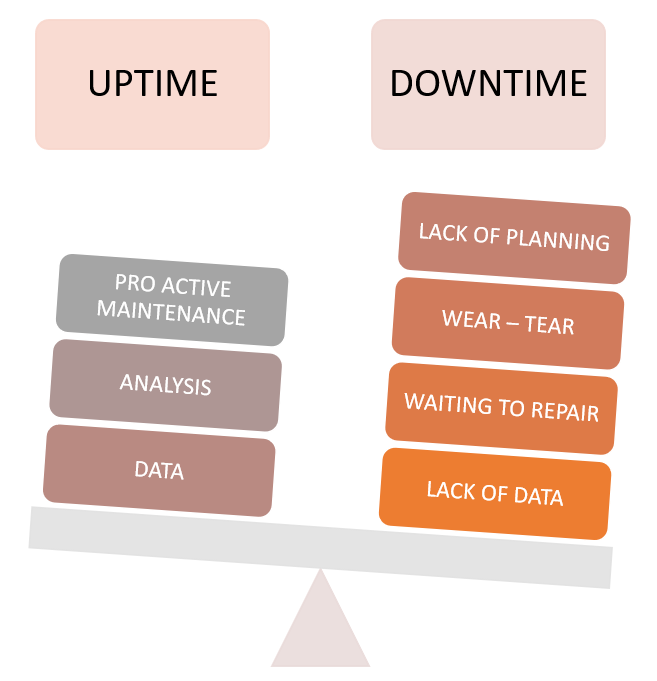
    After procurement, comes the real task of manufacturing. When goods are being manufactured the focus is on cost efficiency by achieving maximum uptime with minimum downtime. We are living in an always-on world, where things need to keep running 24×7 to achieve more profits year on year. The same applies to machines that are churning out goods. Here too, does not matter what domain is being catered; machines and tools need to be up and running all the time. An idle machine in manufacturing is a liability.

    In order to achieve 100% uptime, a critical factor is to predict downtime. Predictive downtime requires capturing real-time data. Data can be about how old the parts are, have parts are aging based on usage, when should parts be replaced and serviced, when should machine go through calibration, is demand going to keep machine idle, how can resources be planned efficiently and many other data points.

    Photo By Chetan Arvind Patil

    Oil and gas production has to be up and running 100% of the time. To achieve 100% uptime, the oil and gas industry has taken an advanced approach and adapted to data-enabled production. Manufacturing in today’s date is not just about production engineering, it has to have a data engineering aspect where data is captured, stored, analyzed, and presented for pro-active action.

    Capturing all such data points and presenting in a single dashboard can provide much more insight into the manufacture than waiting for the machine to go down. All of this requires a drastic change in the way of working so that resource planning for manufacturing is made more data-driven. Data-enabled manufacturing solutions are already present and it is time many manufacturers start taking data aspect into production to achieve 100% uptime.

    TESTING

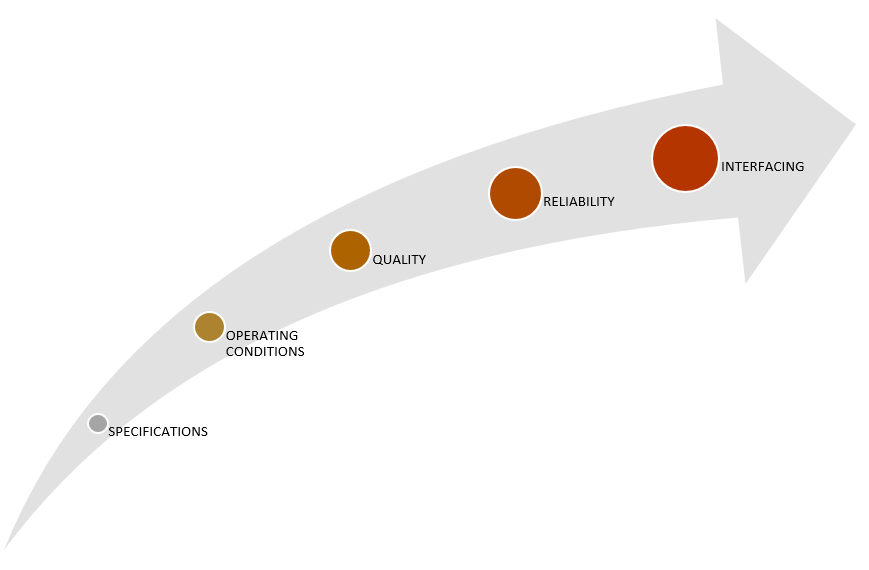
    Testing is the most critical process during manufacturing. Now only the product should meet all the requirements under quality, reliability, and operating conditions, the data generated during the testing process should also be analyzed thoroughly and stored in case of any customer return.

    Photo By Chetan Arvind Patil

    The last thing the manufacture wants is another Samsung Galaxy Note 7 situation where the smartphone exploded due to faults in the battery. Depending on the product the test data can be captured using different tools and processes. This requires implementing a software interface that can log the data during the testing process. Then, based on the specifications applicable, it can be then put through different operating conditionsquality, and reliability checks before putting through interface testing for a real-world application.

    Today, there are different analytical tools that are available in the market that are proving to be critical for productivity and probability. Data generation, data analysis, data action, and data storage in itself going to be a trillion-dollar industry. The solutions provided for manufacturing analytics with respect to testing are many. It is critical for product development and manufacturing companies to embrace and find ways to implement data-driven testing within the manufacturing cycle.

    After all the testing and quality requirements have been met the product can move to the next stage of manufacturing.

    PACKAGING

    In the US alone, 165 Billion packages are shipped every year and this is just e-commerce data. 50% of these packages end up being waste and not getting recycled. This clearly points to the need to make packaging more efficient.

    LimeLoop and Repack provide solutions to enable re-use of packaging. However, this requires tracking of where the package is being used and then need to re-ship the empty packages. This is not a practical solution for a custom manufacturer dealing directly with businesses that are not into e-commerce like car manufacturers, electronic design and manufacturing, and many other domains.

    In order to achieve efficiency in packaging, manufacturers need to follow data enabled packaging by considering following points:

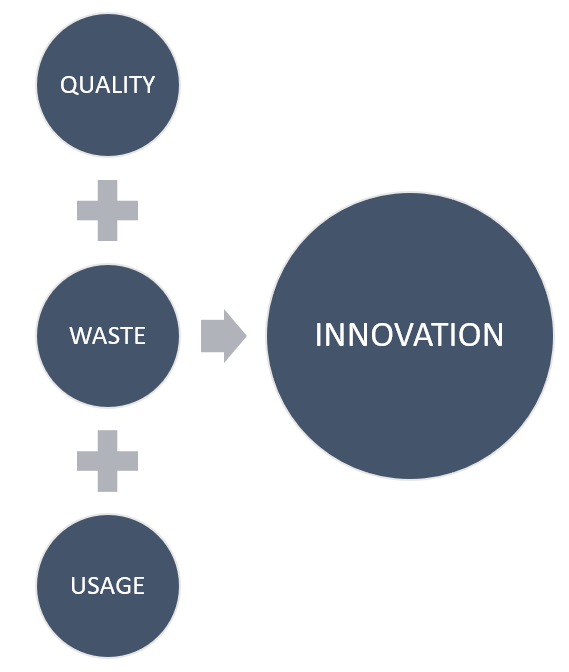
    • Quality
    • Waste
    • Usage
    Photo By Chetan Arvind Patil

    Quality enables whether the product being manufactured and being shipped in certain packaging meets the required industry standards. This means tracking the data points of happenings with respect to packaging. The old-age process of using cardboards to package is only going to add cost and eventually leads to waste. To understand where cost savings can be achieved, it is critical to capture data points on the usage of the package. All this eventually allows innovation within the packaging domain to make more informed decisions.

    For example: Is there a way to package products in small form factors which can in turn save packaging cost including on shipping? This cannot be achieved by package innovation, which requires data capturing of the packaging within the manufacturing unit.

    LOGISTICS

    Out of all the blocks of manufacturing, logistics is the most advanced and has embraced data faster than any other sector. It has been the leader in data usage and driving it for the efficient delivery of goods.

    For manufacturer data usage in logistics means tracking the market for the least expensive way to ship the goods from point A to point B. Traditionally, big manufacturers try to save cost by means of entering contracts with giants like UPS, FedEx and DHL, which will provide cheaper cost for a certain number of shipments for the agreed period. However, smaller or mid-scale manufacturers do not have this luxury.

    Thanks to data sharing there are more than ever data points on the way to ship goods from one place to another and also understand a cheaper way to ship the product to the end customer. There are already many companies that have started to provide data-driven logistics to small and medium scale industries.

    To save cost, the planning team also needs to become more data-aware and then find ways to implement strategies to utilize cost effect logistics.

    Photo By Chetan Arvind Patil

    Currently, the majority of the manufacturer is shipping even before understanding market needs. That also means manufacturing before capturing demand. To save cost and be more efficient demand can be re-factored by implementing just in time stocking to save cost on shipping the product earlier than required.

    Logistics data analytics just does not apply to final goods, but to also to the raw materials. This is why the scope to save costs is much broader than one can imagine. It is time manufacturers embrace data tools to provide more insights to cost savings on logistics.

    DISTRIBUTION

    Distribution is more about after-sales handling when manufactured goods have shipped out. Data in the distribution has been more critical for e-commerce where manufacturers can directly engage with customers by eliminating distributors.

    In the age of data drove process and decision making, it is more critical to understand how data allows distributors to manage inventory and tap into the next era of the supply chain. For manufacturers, the less the number of stops from the factory to end customers, the more profits they can make. For distributors to be relevant, they need to keep track of industry demand and come up with a supply chain system that provides cost-saving and at the same time real-time delivery.

    Photo By Chetan Arvind Patil

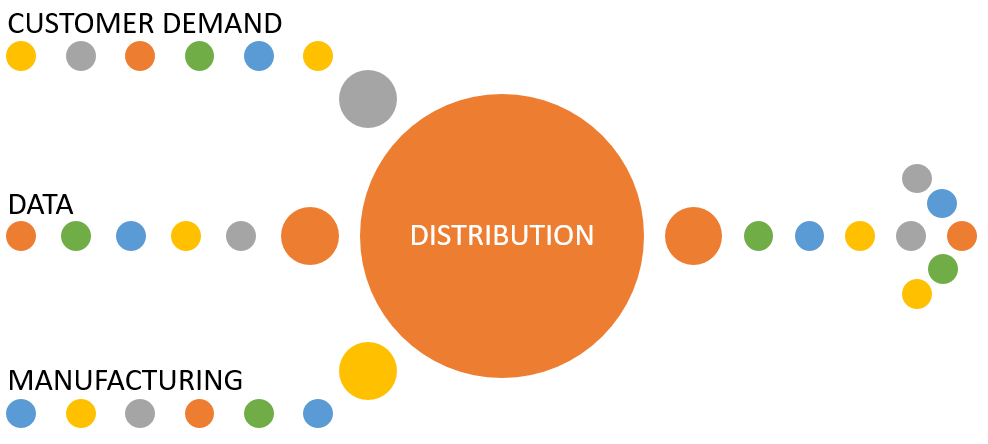
    If the customer needs the parts as soon as possible for the critical task that is stopping the production, then it becomes all about who can provide the needed goods in the fastest way possible. For such scenarios, it is important to tap into the data points in terms of usage and manufacturing.

    • From customers, distributors need to understand ways to leverage real-time usage of the parts so that they can ship when required and in some cases beforehand considering the aging the raw material has wen through.
    • From the manufacturer’s side, they need to keep track of real manufacturing throughout. This has to be the balance of demand and supply without getting into waste.

    This requires the implementation and usage of data tools that can provide distributors more than just inventory stock. There are already solutions out in the market, it is just about investing and understanding how distribution make most of the data-driven manufacturing.


    INDUSTRY 5.0

    As manufacturer look to increase the EBITDA, industry 4.0 is going to be a big driver for it by leveraging data points at each step of the manufacturing.

    Photo By Chetan Arvind Patil

    In a few years, the industry will soon transition to Industry 5.0 which will be more about smart automation with respect to decision making. These smart decisions will be towards reducing waste, enabling efficient processes hopefully without impacting human resources, and delivering what the customer needs by adapting products to their requirement.

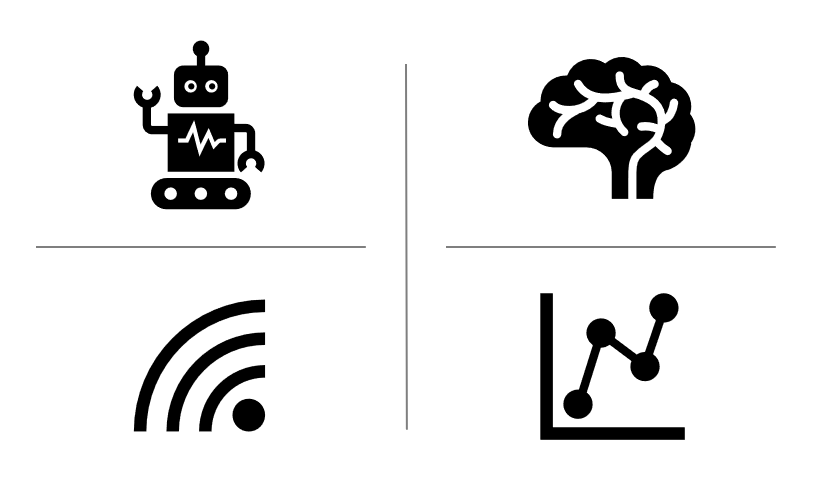
    It is going to be a combination of Data, Connectivity, Intelligence, and Automation. May be 3D Printers are the first step towards Industry 5.0.


    PSA

    McKinsey & Company has useful resources for those interested in learning more about data enabled manufacturing.

  • Remote Monitoring And Management

    Remote Monitoring And Management

    Photo by Chris Liverani on Unsplash

    Monitoring of activities is not a new concept. Pre-computer era too human activities used to get monitored. With advent of high speed connectivity, monitoring has taken remote approach.

    Remote Patient Monitoring System alone is expected to be worth $1.8 Billion by 2026. Considering all possible areas which can make use of remote monitoring and management, the market size is expected to grow 10 to 100 folds. There are many areas which require remote monitoring like utilities, logistics, energy sector, weather research and many more.

    In order to understand and develop a robust Remote Monitoring And Management (RMM) solution. It is critical to capture different functions that needs to work together in order to make it more viable.

    Let us consider a practical health care solution where a patient has been released from hospital after recovering from COVID-19. With the help of RMM, a solution can be developed which ensures that if the symptoms of COVID-19 reappear on patients, then corrective actions are initiated.

    In order to build such RMM following key functions needs to to work in harmony:

    • Smart Hardware —- Data Generation And Acquisition
    • Smart Connectivity —- Data Communication And Monitoring
    • Smart Storage —- Data Storage And Access
    • Smart Software —- Data Analysis And Actions
    Photo By Chetan Arvind Patil

    Smart Hardware For Data Generation And Acquisition

    Hardware for patients RMM will require many components and the most critical are sensors. Sensors play critical role by generating and acquiring data.

    Sensors are capable of capturing activities like change in temperature, movement, heart rate, sweating, and many others. If at source the data is corrupted then any decision taken at later stage will not be accurate. Thus, it is vital to ensure that the accuracy of the sensors is within the acceptable range. Off course, there are other units like DSP, SoC, and WiFi for connectivity, which are also equally important and these come by default in any smart hardware.

    When data is captured, the next stage is to transfer it securely.

    Smart Connectivity For Data Communication And Monitoring

    As soon as the data is generated (with OR without COVID-19 symptoms) at source using smart hardware, then it needs to be transferred for long term storage and analysis. For application under study here, Bluetooth is the most practical solution due to low impact on energy consumption.

    This requires that the smart hardware with sensors is connected and is setup with mobile or desktop application. Sensor will periodically transmit the data using wireless connectivity. However, since connectivity comes with some downtime, the smart hardware will also require enough memory to store data at source. Then as soon as the connectivity is established, data can be transferred. After acknowledgement the memory from smart hardware can be cleared for future data.

    Other smart connectivity solution like WiFi, 3G, 4G and in future 5G can also find use in RMM only if the monitoring smart hardware has direct source of supply. For applications like patient monitoring, will require efficient battery management due to small form factor and thus Bluetooth is preferred compared to other.

    As a next block after the data has been transferred, it becomes important to focus on secure storage.

    Smart Storage For Data Storage And Access

    As soon as the data is available and is stored at the next immediate location (in this case a smartphone), it needs to be transmitted to a server. Once, the data reaches server then physicians can analyze and take actions.

    The critical piece here (Patient related RMM) is that when one applies technology to patients, then HIPPA comes into action. Which basically means that the data related to patients should be kept private, secure and much not be hackable.

    In order to achieve data security, as a first step end-to-end encryption is required by default. It is equally important to make the storage location secure and another layer of monitoring to capture intrusion should be implemented.

    As a final step, analysis of the data is done.

    Smart Software For Data Analysis And Actions

    It is important to understand that physicians are not data scientists. For a data scientist it is easy to play with raw data and take actions. When it comes to commercial application like the case study of patient RMM, physicians are looking for key factors related to specific disease to take corrective actions. Hence, it is important to present results such that any physician can understand it clearly.

    In most of the cases when patient RMM is developed then it is done in collaboration with physicians to ensure that the data presented follows the known medical terminologies.

    Only few of the RMM solutions will make use of existing data analytics tool in the market, but majority of the others will develop there own tools as that allows Over The Top (OTT) features that may allow other possible revenue streams.

    Take Away

    COVID-19 Patient RMM was an example on how RMM needs to be built using four key functions. Same functions can be applied to:

    • Manufacturing to track operations
    • Logistics to capture where about of goods
    • Utilities to understand consumption every second
    • Motor Vehicles to capture health of the vehicle
    • and many others.

    Many of the RMM solutions can be developed without the Smart Hardware, but only when the data to be monitored doesn’t need to be generated and is readily available.

    It will be interesting to see how RMM thrives along with Remote Working.

    Photo By Chetan Arvind Patil

    PSA

    Shirley Ryan AbilityLab in Chicago has been working closely with patients to develop many RMM. It has many useful resources for those interested in learning about RMM at the intersection of academia and industry.