Blog

  • The Semiconductor FAB Construction State

    Image Generated Using DALL-E


    Image Credit: McKinsey & Company


    Image Credit: SIA


  • The Essential Role Of Yield In Ensuring New FAB Competitiveness

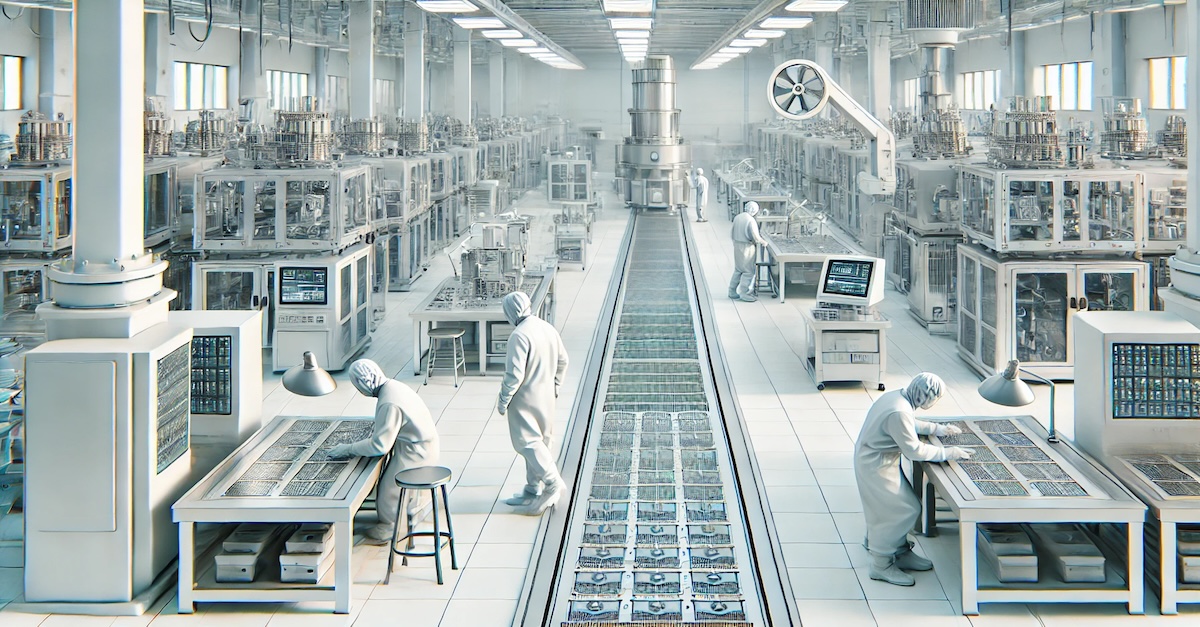
    Image Generated Using DALL-E


    FAB And Yield

    Yield in semiconductor manufacturing is a complex concept that measures the efficiency and effectiveness of the production process. It is usually expressed as the ratio of the number of good dies (functional chips) to the total number of dies made on a wafer.

    As the industry moves towards smaller nodes and more complex architectures, yield becomes increasingly essential. It affects the economic viability of a fabrication facility and plays a pivotal role in determining its competitive advantage in a market that values efficiency and innovation.

    Let us explore the technical aspects of yield in semiconductor manufacturing and its crucial role in ensuring the competitiveness of new fabrication facilities.

    Why Yield Is Vital For New FABs

    Yield is vital for new semiconductor fabrication plants (FABs) because it fundamentally determines their economic success and competitive position in the market. High yield – the proportion of functional devices produced from the total manufactured – directly reduces the cost per functional die, enabling new FABs to offer competitive pricing while maintaining profitability.

    This cost efficiency is crucial given the substantial capital investment required to establish a new FAB. Moreover, achieving high yield early in operations accelerates capital recovery and signals process maturity and reliability to potential customers and partners. It also enhances time-to-market for new technologies, providing a competitive edge in an industry where rapid innovation is critical. High yield also ensures product quality and reliability, strengthening the FAB’s reputation and fostering customer trust.

    In essence, yield impacts every aspect of a new FAB’s success, from financial viability and market competitiveness to technological leadership and brand reputation. Further, below is a table summarizing why yield is vital for new FABs:

    AspectImportanceExplanation
    Economic ViabilityCost EfficiencyHigh yield reduces the cost per functional die, which is crucial for profitability in an industry with tight margins. Lower costs per die improve the overall economic efficiency of the FAB.
    Capital RecoveryMaximizing yield accelerates the return on the substantial capital investments required for new FABs by increasing the output of sellable products, thus improving cash flow and financial health.
    Competitive AdvantageTime-to-MarketHigh initial yields enable new FABs to bring products to market faster, providing a competitive edge in rapidly evolving technology sectors where delays can result in lost market opportunities.
    Customer AcquisitionDemonstrating high yield reflects process maturity and reliability, making the FAB more attractive to potential customers and partners who are seeking dependable manufacturing services.
    Market PositioningSuperior yield can differentiate a FAB in competitive bids, as clients prefer manufacturers capable of delivering high-quality products consistently, enhancing the FAB’s position in the market.
    Technological LeadershipProcess InnovationAchieving high yield signifies successful implementation of advanced manufacturing techniques and technologies, establishing the FAB as a leader in process innovation and capability.
    Scaling Advanced NodesMaintaining high yield at smaller process nodes (e.g., 7nm, 5nm) is challenging; success in this area demonstrates technical prowess and leadership in cutting-edge semiconductor fabrication.
    Quality AssuranceProduct ReliabilityHigh yields generally indicate fewer defects, leading to more reliable and durable products, which is essential for customer satisfaction and long-term success.
    Brand ReputationConsistently high product quality enhances the FAB’s reputation, fostering trust and loyalty among clients and end-users, and can lead to increased business through positive references and word-of-mouth recommendations.

    Picture By Chetan Arvind Patil

    What It Takes To Achieve High Yield

    A new FAB must invest in cutting-edge technology like advanced lithography and metrology tools to ensure precision and minimize defects. Real-time process control systems, such as Advanced Process Control (APC) and Statistical Process Control (SPC), help monitor and adjust manufacturing parameters to maintain optimal conditions.

    Cleanroom management and stringent contamination protocols are equally essential, as even minor particulate contamination can significantly reduce yield. Furthermore, strong partnerships with suppliers ensure high-quality materials and components, while Design for Manufacturability (DFM) practices help optimize chip designs for production efficiency. However, it’s important to remember that a well-trained workforce is not just a part of the process but a critical element in managing complex tools, troubleshooting yield-impacting issues, and contributing to continuous improvement efforts.

    Yield optimization relies heavily on data analytics and AI, which can detect subtle correlations in process data, predict failures, and suggest real-time process adjustments. By focusing on these areas and fostering a culture of continuous improvement and employee engagement, new FABs not only enhance their yield performance and recover capital investments faster but also have the potential to establish a reputation for reliability and quality in the semiconductor market.

    Ultimately, achieving high yield is a multifaceted challenge that requires commitment at all levels, from leadership down to operators on the production floor. With the right strategies in place, new FABs can not only achieve their yield goals but also secure a competitive edge in the fast-paced semiconductor industry, inspiring a sense of ambition and drive in the audience.


    Image Credit: McKinsey & Company

    Yield ROI – The Ultimate Goal

    The ultimate goal of any yield improvement initiative is to drive higher ROI by balancing upfront investments with long-term financial benefits. Yield effectiveness is not just about technical excellence but about aligning process optimization, equipment investments, and workforce expertise to produce maximum value. For new FABs, high-yield effectiveness accelerates capital recovery, improves profitability, and positions the FAB as a cost leader in a highly competitive industry, bringing significant financial benefits and a promising future.

    As a direct indicator of operational efficiency, product quality, and market readiness, yield is the most critical lever a new FAB has for ensuring sustained financial success and achieving the highest possible ROI. It is not just a technical metric but the key to unlocking the economic power of the FAB and reassuring stakeholders about the FAB’s performance.

    Achieving high-yield effectiveness in a new FAB is fundamentally about optimizing Return on Investment (ROI). Yield directly influences an FAB’s ability to produce more functional chips per wafer, reducing the cost per die while maximizing output from a given set of resources. In semiconductor manufacturing, where even a 1% improvement in yield can lead to millions of dollars in cost savings, the relationship between yield and ROI becomes crystal clear.

    The capital-intensive nature of new FABs, with billions of dollars spent on cutting-edge equipment, infrastructure, and personnel, demands that every dollar invested in improving yield leads to measurable financial returns. High yield ensures that the FAB operates most efficiently, turning a significant proportion of raw materials into marketable products and minimizing waste, downtime, and rework.


  • Semiconductor Product Validation, Quality, Reliability, And Root Cause Failure Analysis

    Published By: Silicon India
    Date: 9th September 2024
    Media Type: Digital

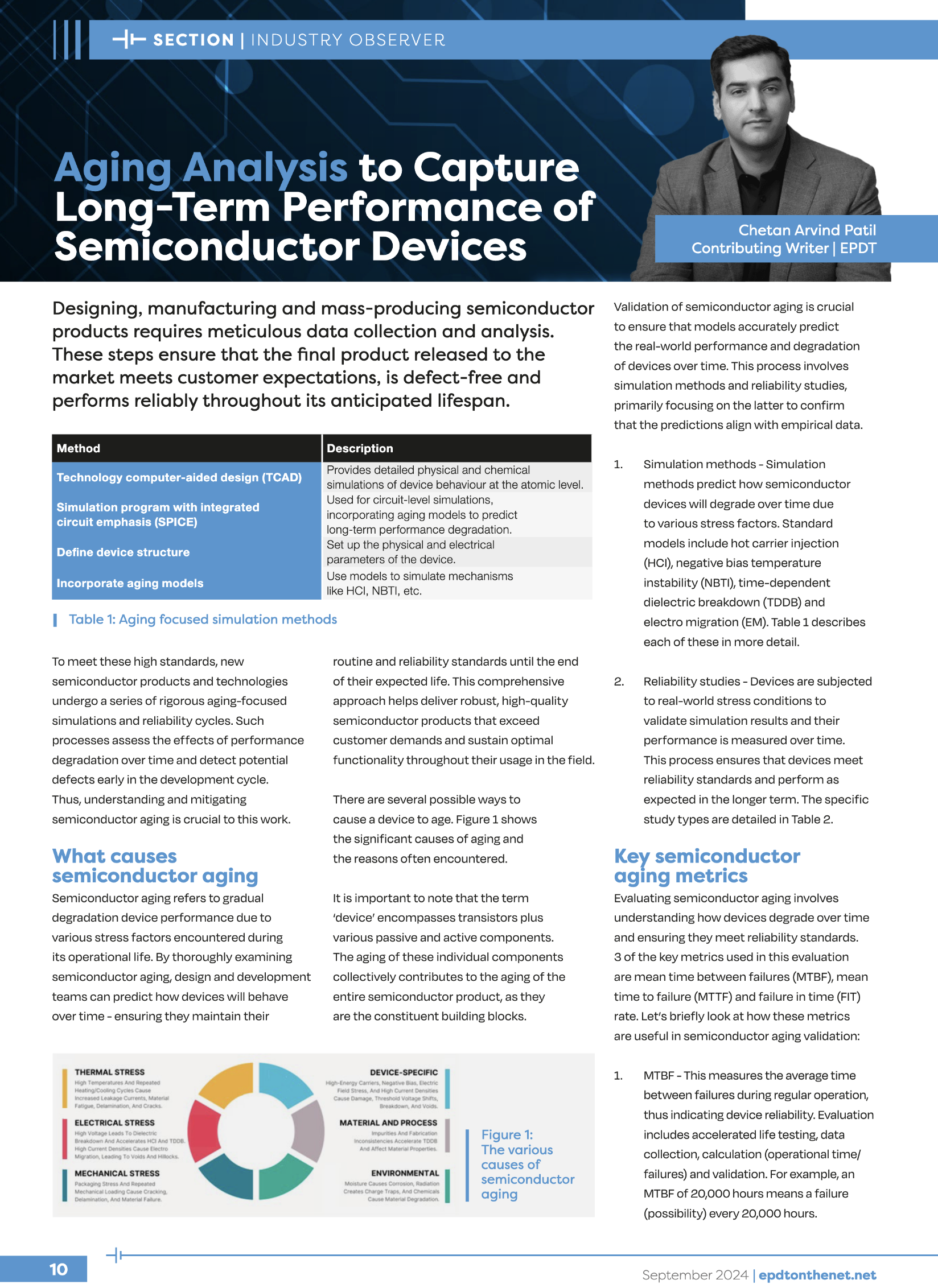
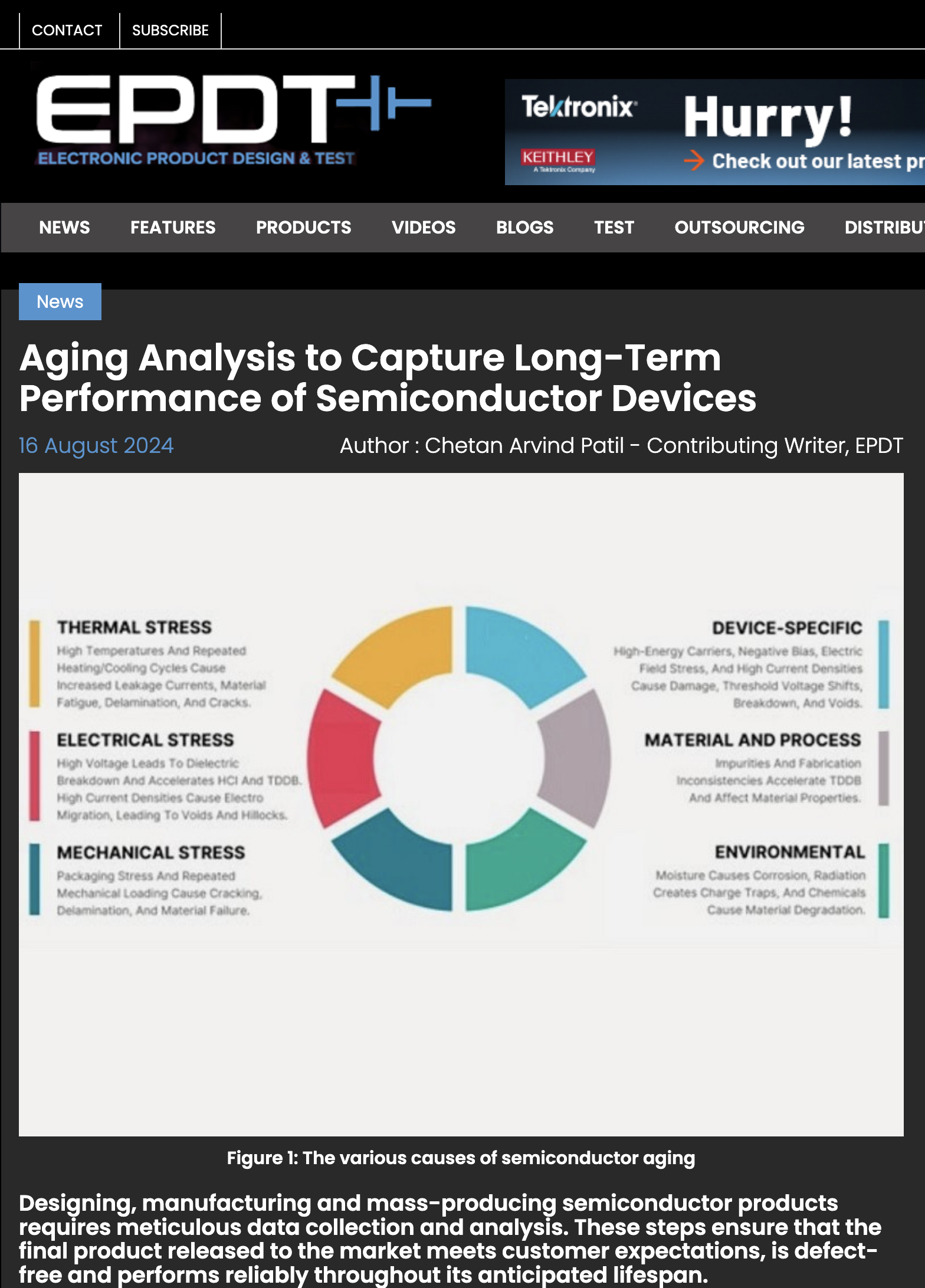
  • Aging Analysis To Capture Long-Term Performance Of Semiconductor Devices

    Published By: Electronics Product Design And Test
    Date: September 2024
    Media Type: Online Media Website And Digital Magazine

  • The Precision Frontier In Understanding Metrology In Semiconductor Manufacturing

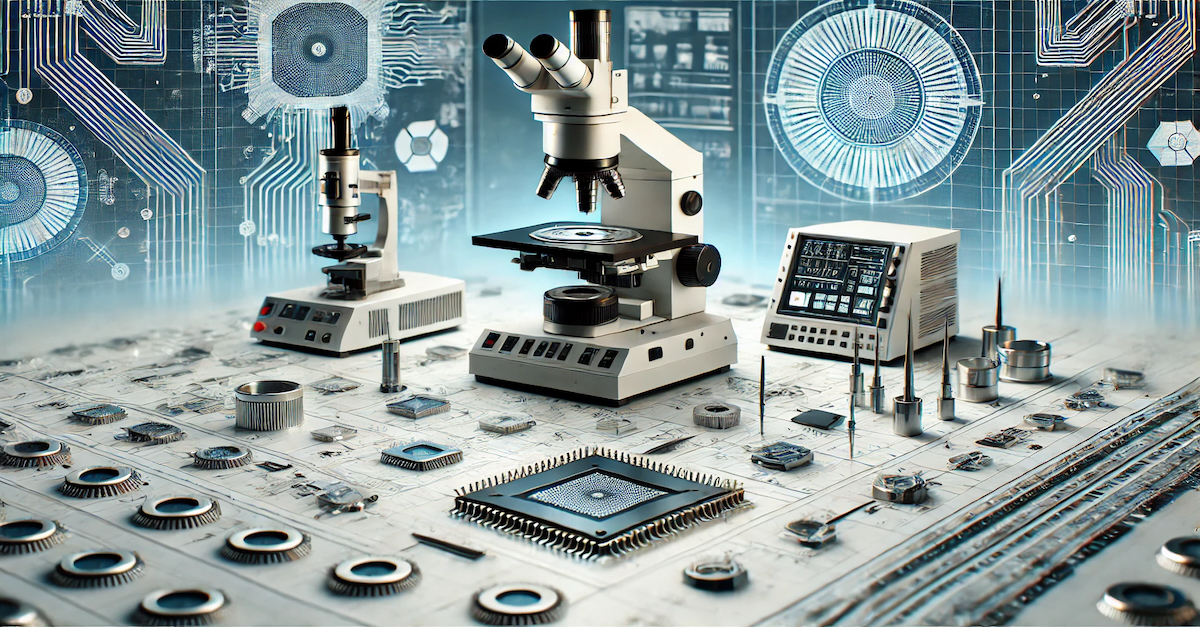
    Image Generated Using DALL-E


    Precision And Semiconductors

    Precision is not just a technical term in semiconductor manufacturing. It is the foundation on which everything is built. As the FET devices get smaller, faster, and more advanced, the margin for error becomes razor-thin. That is where metrology comes in. It is the science of measuring, but it is much more than that in this industry.

    What Is Metrology

    Metrology is the science of measurement, and in semiconductor manufacturing, it ensures every tiny component on a chip is produced with extreme precision. As chips become more complex and feature sizes shrink to the nanometer scale, even the slightest error can impact the performance and reliability of devices.

    Semiconductor metrology involves using advanced tools and techniques to measure everything from the thickness of materials to the alignment of circuits, ensuring that each step in the manufacturing process meets exacting standards. Without metrology, the high-performance technology we rely on, from smartphones to medical devices, would not be possible.

    Application Of Metrology In Semiconductor

    Metrology is applied at nearly every stage of semiconductor manufacturing to ensure precision and reliability. Here are some key areas where metrology plays a crucial role:

    StageMetrology Application
    Wafer ProductionMeasures wafer thickness, flatness, and surface quality to ensure uniformity.
    LithographyVerifies the accuracy of patterns etched onto the wafer, measuring line widths and alignment.
    Etching and DepositionMonitors depth, uniformity, and precision of materials etched or deposited on the wafer.
    Doping and ImplantationEnsures the correct concentration and placement of dopants to alter the wafer’s electrical properties.
    Packaging and AssemblyVerifies dimensions of interconnects, bumps, and solder joints to ensure reliable connections.
    Quality ControlDetects and identifies defects, from contamination to structural flaws, at every stage.
    Final TestingMeasures electrical characteristics, thermal properties, and functionality of the finished product.

    Maintaining the necessary precision at these critical stages of semiconductor production without metrology would not be impossible, leading to lower yields and potentially defective chips.


    Picture By Chetan Arvind Patil

    Semiconductor Equipment To Enable Metrology

    Metrology in semiconductor manufacturing highly depends on using advanced equipment to achieve the precision required at the nanometer scale. These tools ensure that each step of the process, from wafer production to final testing, meets the stringent demands of modern technology, presenting a constant challenge.

    Without the right metrology equipment, measuring, monitoring, and controlling the intricate features that makeup today’s semiconductor devices would be impossible. The following table outlines vital metrology equipment and their critical applications in semiconductor manufacturing.

    EquipmentApplication
    Scanning Electron Microscope (SEM)High-resolution imaging to inspect surface features and dimensions at the nanoscale.
    Atomic Force Microscope (AFM)Measures surface topography, roughness, and mechanical properties at the atomic level.
    Optical MicroscopeInspects larger features and performs quick quality checks for alignment and defects.
    X-ray Metrology ToolsAnalyzes thin film thickness, composition, and structure using X-rays.
    EllipsometerMeasures film thickness and refractive index of deposited layers.
    Critical Dimension Scanning Electron Microscope (CD-SEM)Measures precise feature dimensions, such as line widths, on wafers.
    Fourier Transform Infrared Spectroscopy (FTIR)Identifies chemical compositions of materials used in wafer processing.
    ProfilometerMeasures surface profile and step height, often used after etching and deposition.
    ScatterometryNon-imaging technique to measure periodic features and critical dimensions via light diffraction.
    Overlay Metrology ToolsEnsures proper alignment of multiple layers during chip fabrication.
    Electrical Test EquipmentMeasures electrical properties such as resistance, capacitance, and transistor performance.

    Metrology equipment is the backbone of quality control and precision in semiconductor manufacturing. Each piece of equipment serves a specific purpose, whether inspecting surface features at the atomic level or ensuring proper alignment between layers.

    As semiconductor devices continue to shrink and grow in complexity, the role of metrology tools becomes even more vital in maintaining production quality, yield, and performance. It is thus crucial to invest in the right metrology equipment to keep up with current technology and drive future innovations in the semiconductor industry.

    Data-Dependent Metrology

    Metrology tools generate vast amounts of data, from wafer thickness measurements to defect identification at the atomic scale. This data is critical in ensuring that each semiconductor device component is within its strict design tolerances. In an industry where margins of error are measured in nanometers, capturing, interpreting, and acting on metrology data is essential to quality control and innovation. As an example:

    SEM and AFM data provide insight into surface roughness and dimensions, which are crucial for ensuring the chip performs as designed.

    Electrical Test Equipment is a critical player in this process, producing data on transistor performance that aids in forecasting the overall reliability and efficiency of the semiconductor.

    Overlay Metrology Tools generate alignment data between layers of semiconductors, ensuring multi-layer chips are fabricated without defect.

    Furthermore, this demands a specialized skill set, where engineers and technicians must be proficient in operating metrology equipment and understanding and analyzing the complex data it produces.

    Talent And Skills Needed For Metrology

    RoleDescriptionKey Skills Required
    Metrology EngineerDesigns and manages metrology processes, ensuring accurate measurements and improving tools/techniques.Proficiency in metrology tools (SEM, AFM, profilometers), data analysis, troubleshooting, and semiconductor process knowledge.
    Process Control EngineerMonitors manufacturing processes using metrology data, ensuring stability and preventing defects.Strong analytical skills, statistical process control (SPC), process optimization, and real-time problem-solving.
    Data ScientistAnalyzes and interprets large datasets from metrology equipment to drive predictive analytics and process improvements.Data analysis, machine learning (ML), programming skills (Python, R), and statistical modeling.
    Calibration TechnicianCalibrates and maintains metrology equipment to ensure precise measurements and tool reliability.Understanding of calibration techniques, attention to detail, tool maintenance, and equipment troubleshooting.
    Quality Assurance (QA) EngineerEnsures all products meet quality standards by interpreting metrology data and assessing compliance.Proficiency in quality management systems (QMS), defect detection, metrology data interpretation, and compliance auditing.
    RnD Metrology ScientistDevelops new measurement methods and tools to support advanced semiconductor technologies.Research skills, innovation in metrology techniques, deep knowledge of semiconductor materials, and data interpretation.

    The role of metrology in semiconductor manufacturing goes far beyond just taking measurements. It blends cutting-edge equipment, complex data interpretation, and skilled professionals, ensuring each chip performs reliably.

    As semiconductor technology continues to evolve at a rapid pace (leading to much smaller devices), so will the demands placed on metrology. The professionals who bring this data to life, analyze it, and apply their insights will remain at the forefront of the semiconductor revolution, maintaining quality and driving innovation in one of the world’s most precise industries.


  • The Integration Of LLM Agents Into Semiconductor Production

    Image Generated Using DALL-E


    Understanding LLM And AI Agents

    LLM-based models like GPT have been developed to comprehend, create, and interact with human language on a large scale. Trained on extensive text data, these models can produce coherent and contextually relevant information, making them valuable across various applications.

    LLMs’ full potential is realized when integrated into AI Agents. These Agents, functioning as independent entities, are capable of perceiving their environment, making decisions, and taking action. They function like intelligent assistants, capable of interpreting complex inputs, making informed decisions, and carrying out tasks with minimal human intervention.

    When it comes to semiconductor production, LLM-based AI Agents stand out as a unique opportunity to simplify traditionally intricate and highly specialized processes. Their advanced language understanding and decision-making capabilities can be harnessed to optimize operations, reduce errors, and foster innovation in ways that were previously inconceivable. This unique set of features underscores the potential impact these agents can have in the semiconductor industry.

    So, how exactly can LLM AI Agents revolutionize semiconductor production? Let us explore.

    How LLM AI Agents Can Enhance Semiconductor Production

    In the high-stakes world of semiconductor manufacturing, where precision is paramount and costs are high, LLM AI Agents stand out as a viable and promising solution. Their unique features, such as real-time monitoring, advanced data analytics, and predictive maintenance, offer a distinct advantage. These agents can significantly enhance efficiency, improve quality, and streamline production, making them valuable to any semiconductor production line.

    LLM AI Agents can potentially revolutionize semiconductor production through proactive process optimization. While these agents are already showing promise in various industries, their full impact on semiconductor manufacturing is still emerging.

    The vision is clear: LLM AI Agents could go beyond merely monitoring manufacturing equipment in real-time – they could predict when maintenance might be needed long before any visible issues arise. By leveraging advanced data analytics to detect even the slightest deviations from optimal performance, these agents could help ensure that production lines run smoothly and efficiently, minimizing unplanned downtime and preventing costly disruptions.

    While still being refined and tested, this predictive maintenance concept holds great promise. If fully realized, it could drastically reduce the frequency of unexpected equipment failures, leading to more consistent and reliable production. But the possibilities do not end there. In theory, LLM AI Agents could also dynamically adjust production parameters on the fly, responding to real-time data to optimize processes in previously unimaginable ways.

    For instance, imagine a scenario where a slight change in a deposition process could improve yield. With its advanced analytical capabilities, an LLM AI Agent could identify this opportunity and implement the change immediately, optimizing the process in real time. This would lead to reduced waste, lower costs, and higher throughput – all while maintaining the stringent quality standards that the semiconductor industry demands.

    While these scenarios represent exciting possibilities, it is essential to recognize that they are primarily forward-looking. The full implementation of such capabilities is still on the horizon as researchers and engineers continue to explore and refine how LLM AI Agents can be most effectively integrated into these complex processes.


    Picture By Chetan Arvind Patil

    LLM Potential Use Cases In Semiconductor Manufacturing

    LLM AI Agents could offer various other benefits in semiconductor manufacturing. These include enhancing quality control, optimizing supply chain management, and streamlining design processes. In each of these areas, the advanced capabilities of LLM AI Agents – such as pattern recognition, predictive analytics, and decision-making – could introduce new levels of intelligence and efficiency, paving the way for future innovations.

    Below is an overview of how LLM AI Agents might impact different aspects of semiconductor production if fully realized.

    Use CaseDescriptionBenefits
    Process OptimizationReal-time monitoring and adjustment of manufacturing processes.Reduced downtime, lower costs, higher throughput.
    Quality ControlEarly detection of defects by analyzing production data at various stages.Improved yield, reduced rework, minimized waste.
    Yield EnhancementAnalyzing data to identify factors affecting yield and implementing corrective actions.Higher production yields, increased profitability.
    Test OptimizationAutomating and optimizing test procedures, reducing test times while maintaining accuracy.Faster time-to-market, reduced testing costs.
    Material OptimizationPredicting material performance and optimizing material usage based on historical data.Efficient material use, cost reduction, improved product quality.
    Metrology And InspectionEnhancing metrology techniques by predicting measurement errors and optimizing calibration.Increased accuracy in measurements, reduced inspection times.
    Packaging And AssemblyStreamlining the packaging and assembly processes by optimizing workflows and detecting anomalies.Improved reliability, reduced defects, enhanced assembly efficiency.
    Substrate ManagementMonitoring and optimizing substrate production and handling processes.Improved substrate quality, reduced waste, lower production costs.
    Device ModelingAssisting in device modeling by optimizing simulation parameters and predicting performance issues.Faster design iterations, improved device performance, reduced modeling errors.
    Supply Chain ManagementPredicting bottlenecks, optimizing inventory, and sourcing alternative suppliers.Seamless operations, reduced disruptions, cost savings.

    These use cases illustrate how LLM AI Agents can touch every aspect of semiconductor manufacturing, from the early stages of material selection to the final steps of packaging and assembly.

    By integrating these agents into their operations, manufacturers can unlock new levels of precision, efficiency, and innovation, setting the stage for a future where semiconductor production is more innovative, faster, and more reliable.

    Takeaway: Embracing The Future With LLM AI Agents

    As the demand for smaller, faster, and more efficient semiconductor devices intensifies, LLM AI Agents emerge as a transformative force to meet these challenges. These agents are not just automation tools but intelligent partners that bring new insight and capability to semiconductor manufacturing.

    By integrating LLM AI Agents, semiconductor manufacturers can optimize almost all the stages of semiconductor production, from process control and yield enhancement to supply chain management and device modeling, potentially achieving higher yields, lower costs, reduced waste, and faster time-to-market.

    What truly sets LLM AI Agents apart is their adaptability and continuous learning. Unlike traditional systems, these agents evolve with your processes, constantly improving and adapting to new challenges. This makes them a short-term solution and a long-term strategic asset.

    As the pace of innovation accelerates, those who embrace LLM AI Agents will gain a competitive edge, ensuring they remain at the forefront of the industry. The future of semiconductor manufacturing is not just about keeping up; it’s about leading the way with more innovative, faster, and more efficient operations powered by LLM AI Agents.


  • The Semiconductor Industry And The IP Fear

    Image Generated Using DALL-E


    The Importance Of IP In Semiconductors

    Semiconductors are powering everything from smartphones to advanced AI systems. The IP associated with these technologies, such as patents, trade secrets, and proprietary designs, represents a company’s competitive edge and billions of dollars in investment.

    For example, in 2021, the global semiconductor market was valued at $488 billion and is projected to reach $803 billion by 2028. The stakes are high, and so is the importance of protecting these investments. This underscores the need for constant vigilance and action to safeguard these crucial assets.

    The Growing Threat Of IP Theft

    Along with this semiconductor industry is increasingly vulnerable to IP theft. This growing threat highlights the need for more robust protection measures. Positive industry collaboration and international cooperation are vital in addressing these challenges.

    The industry can create a more secure environment that promotes innovation by sharing best practices, investing in advanced IP protection technologies, and fostering partnerships. This collective effort will help safeguard the industry’s future and ensure continued technological advancement.


    Picture By Chetan Arvind Patil

    Legal And Economic Implications

    The legal battles over IP in the semiconductor industry are not just about protecting individual companies but also about safeguarding national interests. The U.S., through legislation like the CHIPS Act, has committed over $50 billion to strengthen its semiconductor industry. However, the effectiveness of such investments hinges on the ability to protect IP.

    Failure to do so could result in reduced innovation, decreased investment, and a weakened competitive position on the global stage. Moreover, it could lead to significant financial losses and potential job cuts, further underscoring the urgency of IP protection.

    The Role Of AI And LLMs In IP Protection

    Artificial Intelligence (AI) and Large Language Models (LLMs) like GPT-4 are becoming invaluable tools in the fight against IP theft. These technologies can assist in monitoring and analyzing vast amounts of data to detect potential IP infringements.

    AspectCurrent StateImpact of IP FearRole of AI/LLMs
    Global Market Value$488 billion (2021); projected $803 billion by 2028Potential stifling of growth and innovationAI-driven market analysis and prediction
    Key LegislationCHIPS Act: $50 billion investmentEffectiveness reduced by weak IP protectionEnhanced legal frameworks and proactive measures
    IP Theft$600 billion annual loss to U.S. economyReduced RnD, innovation, and competitivenessAI for detecting and preventing IP theft
    Technological LeadershipSelected regions leading in innovationThreatened by aggressive IP theftLLMs for monitoring, analyzing, and securing innovations
    Company-Level ImpactHigh RnD costs; patents as primary protectionRisk of losing competitive edge due to IP breachesAI tools for patent filing, management, and enforcement
    Supply Chain IntegrityVulnerable to geopolitical tensions and bottlenecksDisruptions in production and innovation cyclesAI for predictive analysis and supply chain optimization

    More than that, AI can analyze patent filings, identify suspicious activity, and predict where IP theft is likely. This predictive capability is a game-changer, enhancing IP protection and allowing companies to respond swiftly to threats, minimizing potential damage.

    Navigating The IP Landscape

    The semiconductor industry stands at a critical juncture where the fear of IP theft could stifle innovation if not adequately addressed. Companies must invest in robust IP protection strategies, leveraging AI and other advanced technologies to safeguard their innovations. As the global demand for semiconductors continues to soar, ensuring the security of intellectual property will be vital to maintaining the industry’s growth and technological leadership.

    In conclusion, the semiconductor industry’s future hinges on its ability to navigate the complex IP landscape. By embracing cutting-edge technologies and strengthening legal frameworks, the industry can overcome the challenges posed by IP fear and continue to drive global innovation.


  • Aging Analysis To Capture Long-Term Performance Of Semiconductor Devices

    Published By: Electronics Product Design And Test
    Date: August 2024
    Media Type: Online Media Website And Digital Magazine

  • The Importance Of PCB Industry On Semiconductor Growth

    Image Generated Using DALL-E


    Semiconductors And PCB

    Semiconductors play a crucial role in modern electronic devices by providing processing, memory, and logic functions within microprocessors, memory chips, and integrated circuits. Their precise control of electrical current is essential for today’s complex technology. However, semiconductors require robust support and interconnection infrastructure for practical functionality, where printed circuit boards (PCBs) come into play.

    PCBs offer essential physical and electrical support for semiconductors, serving as the platform for mounting and interconnecting electronic components. Composed of multiple layers of insulating material and copper traces, PCBs manage signal routing, power distribution, and thermal dissipation to ensure optimal performance of semiconductor devices within a system. The design of PCBs is critical for maintaining signal integrity, reducing electromagnetic interference, and supporting the overall functionality of the electronic assembly.

    State Of PCB Industry

    The global Printed Circuit Board (PCB) industry has experienced robust growth, driven by the proliferation of consumer electronics, advancements in automotive technology, and the demand for advanced computing systems. The sector, valued at around USD 60 billion in 2023, is projected to maintain steady growth with a compound annual growth rate (CAGR) of 4-5% in the coming years. The increasing complexity of electronic devices has led to a surge in demand for high-density interconnect (HDI), flexible, and multi-layer boards, reflecting the industry’s exciting shift towards supporting more sophisticated and compact designs.

    Asia holds a significant position in the global PCB industry, with countries like China, Taiwan, South Korea, and Japan leading the production. China, in particular, is the largest producer of PCBs, contributing to more than half of the global output. This dominance is not just about quantity, but also about quality. The region’s abundant raw materials, advanced manufacturing capabilities, and cost advantages ensure that the PCBs produced here are reliable and of high quality. Taiwan and South Korea also play crucial roles, and they are renowned for their expertise in producing high-quality PCBs for advanced applications, especially in the consumer electronics and automotive sectors.

    In recent years, the global PCB industry has witnessed a significant shift, with a growing emphasis on reshoring manufacturing in regions like North America and Europe. This strategic move aims to mitigate supply chain disruptions and geopolitical tensions risks. While Asia remains the primary hub for PCB production, these regions are making substantial investments in developing local capabilities, reducing reliance on foreign suppliers, and bolstering supply chain resilience.

    However, the industry faces a talent shortage, particularly in regions outside Asia, where PCB manufacturing has traditionally been concentrated. Yet, companies are not deterred. They are investing in training programs, partnerships with academic institutions, and technology adoption to automate and streamline PCB design and manufacturing processes. This adaptability to new technologies instills optimism about the future of PCB manufacturing. Integrating AI and advanced design tools also helps to bridge the skills gap by automating complex tasks such as [specific tasks] and enabling faster, more accurate PCB development.


    Picture By Chetan Arvind Patil

    Mutual Reliance Between PCB and Semiconductors

    PCBs provide the physical structure and electrical pathways for semiconductors and play a crucial role in the evolution of electronic systems. They ensure proper signal routing, power distribution, and thermal management, which are not just essential but critical for the reliable operation of semiconductor devices.

    AspectImpact of PCB Industry on Semiconductor GrowthDescription
    Technological AdvancementsEnables Higher Performance SemiconductorsThe PCB industry provides the necessary infrastructure (e.g., HDI, multi-layer boards) to support the increasing complexity and performance demands of semiconductor devices.
    MiniaturizationSupports Smaller, More Efficient DevicesAdvanced PCB designs allow for the miniaturization of electronic devices, which is essential for the development of compact and portable semiconductor-based products.
    Signal Integrity & Power ManagementEnsures Reliable Operation of Semiconductor ComponentsPCBs maintain signal integrity and manage power distribution, which are crucial for the stable and efficient operation of semiconductors in high-performance applications.
    Thermal ManagementProtects Semiconductors from OverheatingEffective thermal management through PCB design prevents overheating, ensuring the longevity and reliability of semiconductor devices.
    Supply Chain IntegrationFacilitates Seamless Production and Integration of Semiconductor DevicesA robust PCB industry ensures that semiconductor manufacturers have a reliable supply chain, allowing for the smooth integration of semiconductors into end-user products.
    Innovation DriverAccelerates the Development of Next-Generation SemiconductorsContinuous advancements in PCB technology (e.g., flexible, rigid-flex boards) are essential for enabling new semiconductor innovations, pushing the boundaries of what’s possible.

    As semiconductors advance, with higher processing power and smaller form factors, the design and complexity of PCBs must also evolve to support these innovations. This dynamic evolution underscores the significance of PCBs in the electronic system. The semiconductor industry’s growth directly drives demand for more sophisticated and capable PCBs, reflecting the industry’s dynamic nature.

    Take Away

    The PCB and semiconductor industries are deeply intertwined, relying on each other for continued growth and innovation. Public policies that support the PCB industry are critical for maintaining the health and competitiveness of the semiconductor sector.

    By addressing supply chain security, fostering innovation, promoting sustainability, developing the workforce, and enhancing economic competitiveness, governments can ensure that the PCB industry remains vital to technological progress and economic prosperity.


  • The Energy Footprint of Semiconductor Manufacturing: Balancing Innovation And Sustainability

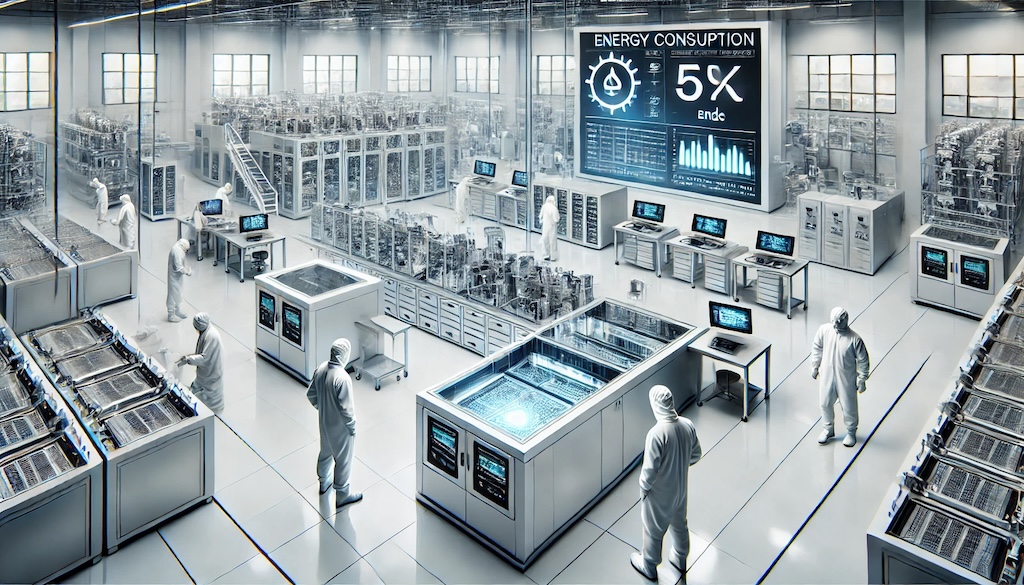
    Image Generated Using DALL-E


    The Dual Imperative Of Innovation And Sustainability In Semiconductor Manufacturing

    Semiconductors are the backbone of countless technologies, from smartphones and computers to medical devices and renewable energy systems. As the demand for more powerful and efficient devices grows, the semiconductor industry faces the dual imperative of driving innovation while committing to sustainability. Thus, the energy-intensive nature of semiconductor manufacturing presents a significant challenge but also underscores the industry’s crucial role in shaping a sustainable future.

    According to the International Energy Agency (IEA) report, semiconductor fabrication plants can consume as much electricity as cities. For instance, a single large fab can use up to 100 megawatts of power per hour, equivalent to the electricity consumption of 80,000 U.S. homes.

    Another Semiconductor Industry Association (SIA) study revealed that the global semiconductor industry consumed about 100 terawatt-hours (TWh) of electricity in 2020, accounting for nearly 0.3% of the world’s total electricity use. This level of consumption not only has significant cost implications but contributes to the industry’s carbon footprint.

    This high energy usage underscores the urgent need for the industry to find a balance between advancing technology and minimizing environmental impact, a task of paramount importance.

    The Energy Footprint Of Semiconductor Manufacturing

    The energy footprint of semiconductor manufacturing is substantial, with significant consumption at every stage of the production process. Each step requires large amounts of energy, from the initial wafer production to photolithography, etching, and testing.

    StageProcess/EquipmentEnergy Consumption
    Wafer ProductionSingle Silicon Wafer Production~1,400 kWh per wafer
    PhotolithographyEUV LithographyUp to 2.5 MW per system
    Traditional DUV Lithography30 times less than EUV
    Photolithography EquipmentUp to 40% of fab’s total energy consumption
    Etching and DepositionPlasma Etching~800 kWh per batch process
    Chemical Vapor Deposition (CVD)~700 kWh per batch
    Clean Room OperationsAir Filtration and ConditioningUp to 50% of total fab energy consumption
    Temperature and Humidity ControlUp to 1 MW per large fab
    Testing and PackagingAutomated Test Equipment (ATE)500 – 1,000 kWh during intensive testing phases
    Packaging Processes (Die Bonding, Wire Bonding, Encapsulation)~300 kWh per 1,000 units
    Data Centers For AI Chip ProductionTraining AI ModelsUp to 1 MW continuously over several weeks
    AI Inference Servers10 – 20 kW per rack
    Environmental ImpactCarbon Emissions for 300mm Wafer~200 kg CO2 equivalent per wafer
    Water Usage in FabsUp to 10 million gallons per day
    Source: Several Technical Reports And Research Papers

    Furthermore, the production and use of AI chips, which demand intensive computational power for training machine learning models, significantly escalate energy requirements. To put this into perspective, training a single AI model, such as GPT-3, can consume the energy equivalent of driving a car for over 700,000 kilometers.


    Picture By Chetan Arvind Patil

    Challenges In Balancing Innovation And Sustainability

    Balancing innovation and sustainability in semiconductor manufacturing presents a multifaceted set of challenges. However, these challenges also present opportunities for innovation. As chip designs advance, particularly with the push towards smaller nodes like 5nm and beyond, the complexity of manufacturing processes increases exponentially. It demands more sophisticated and energy-intensive equipment and exacerbates production’s environmental and resource impacts. For instance, cutting-edge technologies such as Extreme Ultraviolet (EUV) lithography, essential for creating these advanced chips, consume significantly more power than older methods, making energy efficiency a critical concern.

    The table below details the key challenges, their descriptions, and the technical statistics associated with balancing innovation and sustainability in semiconductor manufacturing:

    ChallengeDescriptionTechnical Stats And Key Points
    Advanced Node TechnologiesIncreased complexity and energy demands with smaller node technologies.– EUV lithography consumes up to 2.5 MW per system.
    – Smaller nodes (5nm and below) require advanced, energy-intensive processes.
    – Lower yields increase energy and resource consumption.
    Short Product Life CyclesRapid innovation leads to frequent upgrading and increased electronic waste.– Over 50 million metric tons of e-waste generated annually.
    – Projected to reach 74 million metric tons by 2030.
    – Obsolete semiconductor devices contribute significantly to e-waste.
    Environmental and Resource ImpactsHigh greenhouse gas emissions, significant water usage, and chemical management challenges.– Semiconductor industry’s emissions projected to increase by 24% by 2030.
    – A single fab can use up to 10 million gallons of water per day.
    – Use of hazardous chemicals in manufacturing processes.
    Economic ConsiderationsHigh costs of sustainable practices and competitive pressures to reduce costs.– Significant upfront investments in energy-efficient technologies and renewable energy sources.
    – Balancing short-term competitiveness with long-term sustainability goals.
    AI Chip ManufacturingHigh energy demands for training and inference tasks in AI applications.– Training a large AI model like GPT-3 can consume up to 1 MW of power continuously over several weeks.
    – AI inference tasks in data centers require 10-20 kW per rack.

    Furthermore, the industry’s rapid pace of innovation leads to shorter product life cycles, contributing to the growing problem of electronic waste. Older models quickly become obsolete as new, more powerful chips develop, leading to increased disposal rates and significant environmental impacts. The industry’s reliance on large quantities of water, hazardous chemicals, and energy complicates efforts to achieve sustainability, especially as semiconductor fabs continue to scale up to meet global demand.

    Economic factors also play a crucial role in this balancing act. Implementing sustainable practices often involves substantial upfront costs, which can be challenging for companies striving to maintain competitiveness in a fast-paced market. Additionally, the high energy demands associated with the production and use of AI chips add another layer of complexity to sustainability efforts. Training large AI models requires immense computational power, increasing the energy footprint of data centers housing these chips.

    Sustainable Future Is Key

    Intel and TSMC are leading significant changes in the semiconductor industry’s approach to sustainability, focusing on advancing energy efficiency in their manufacturing processes. Both companies have made substantial investments in research and development, setting industry standards. TSMC, for example, has committed to transitioning entirely to renewable energy by 2050, with 25% of this target already met by 2020. On the other hand, Intel is developing advanced cooling systems and refining manufacturing techniques to reduce energy consumption and environmental impact.

    The semiconductor industry’s focus on sustainability extends globally, as seen in efforts to integrate renewable energy into operations. Samsung, for instance, is implementing renewable energy solutions across its semiconductor plants, including regions such as the U.S., China, and Europe. The industry’s shift towards on-site renewable energy installations, such as solar panels and wind turbines, aims to reduce reliance on fossil fuels and lower carbon emissions on a global scale.

    Government support and industry collaboration are crucial to sustaining these efforts. The U.S. Department of Energy’s Semiconductor Manufacturing Initiative is vital in advancing these goals through funding and incentives for energy-efficient innovations. Similarly, global initiatives like the World Semiconductor Council’s Environmental Safety and Health Task Force foster international cooperation on sustainability practices. Additionally, adopting circular economy principles, such as IBM’s recycling of silicon wafers for the solar industry and the reuse of materials from older chips, is helping to create a more sustainable future for the industry.

    Take Away

    The semiconductor industry stands at a critical juncture where the need to innovate must be balanced with the imperative of sustainability. The sector can significantly reduce its environmental impact by adopting energy-efficient technologies, integrating renewable energy sources, and embracing circular economy principles.

    As we look to the future, sustainable practices will be essential for continued growth and success in semiconductor manufacturing. The path forward requires a concerted effort from industry stakeholders, governments, and consumers to prioritize sustainability in semiconductor production.