Blog

  • The Semiconductor AI SoC Company List

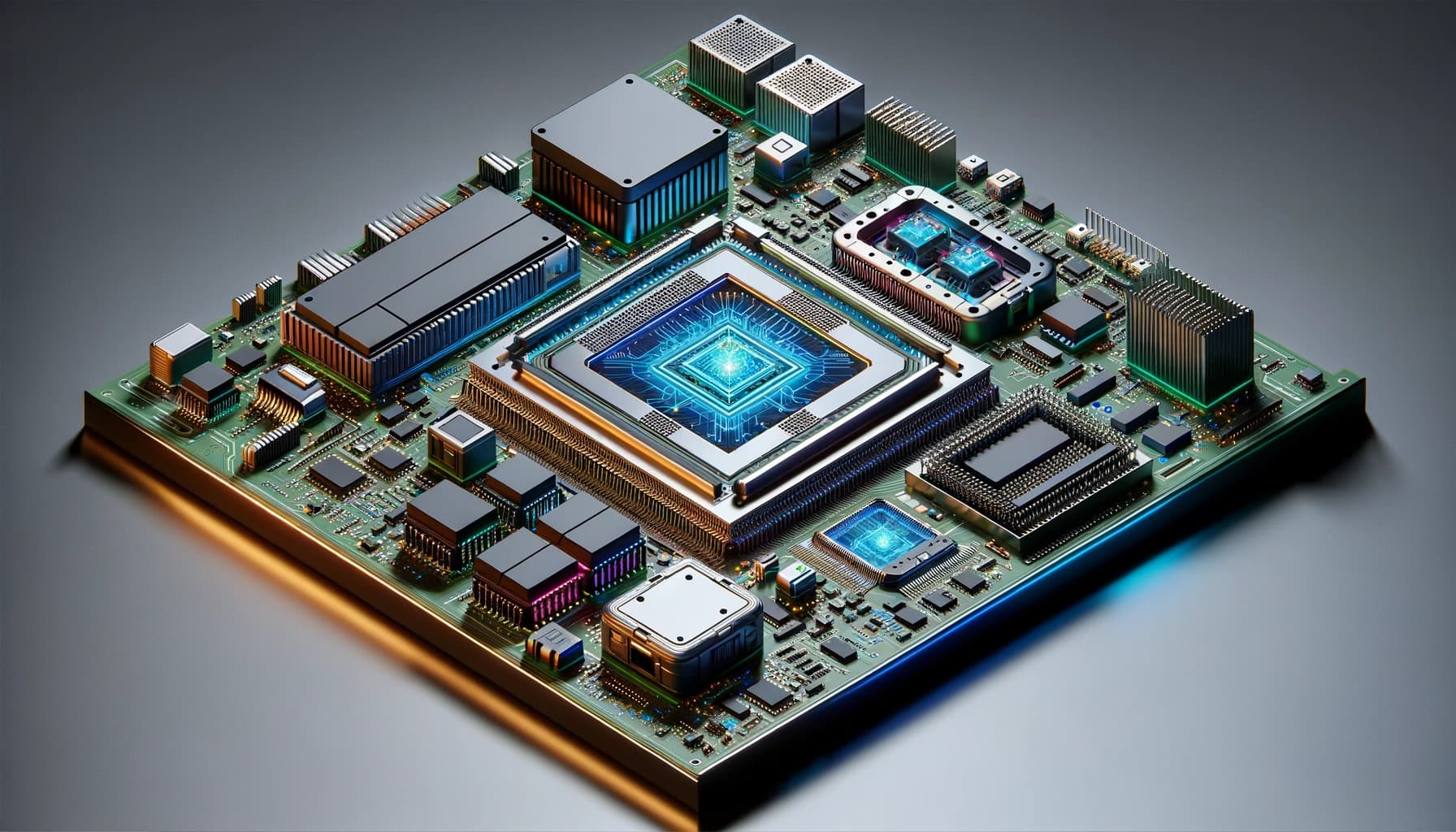
    Image Generated Using DALL-E


    The World Of AI SoC

    Artificial Intelligence (AI) has emerged as a cornerstone in the rapidly evolving computing technology landscape, driving innovation across various sectors. At the core of AI’s transformative power are specialized silicon chips, AI Systems on Chips (SoCs), designed to process AI algorithms efficiently. These chips are pivotal in enhancing the performance and capabilities of AI applications, from autonomous vehicles and smart devices to data centers and beyond.

    As AI continues to integrate into our daily lives, the companies behind these advanced SoCs play a critical role in shaping the future of technology. This list introduces the AI SoC companies taking different approaches to designing SoCs for AI applications, spotlighting their contributions to the AI revolution and their impact on the tech industry.


    Picture By Chetan Arvind Patil

    AI SoC Company List

    Below is a work in progress, and if you find AI SoC companies that still need to be listed here, please do reach out to me.

    CompanyDescription
    AmbarellaAI Vision Processors For Edge Applications
    AlphawaveProvides DSP solutions for high-speed, low power consumption, enables building AISoC with AppolloCORE IP, winner of TSMC’s Awards for Excellence.
    Anari AICreating cutting-edge technology to make things work in accordance with the intelligent and scalable future
    Axelera AIRevolutionising the field of artificial intelligence by developing a cutting-edge hardware and software platform for accelerating computer vision on edge devices
    AxiadoTo secure the end-to-end digital infrastructure by embedding a new breed of hardware-anchored AI-driven platform security in servers, 5G and network infrastructure
    BlaizeBlaize has created a transformative new compute solution that unites silicon and software to optimize AI from the edge to the core
    BrainChipSpecializes in developing advanced artificial intelligence and machine learning hardware
    Celestial AICelestial AI is the creator of the Photonic Fabri, an optical interconnect technology platform for compute and memory
    Cambricon TechnologiesFounded in 2016, Cambrian focuses on the research and development and technological innovation of artificial intelligence chip products
    Cerebras SystemsUses Wafer-Scale Engine technology for deep learning, claimed to be 1000 times faster than a GPU, with innovative interconnects, memory, and package technology
    EdgeQFuses Edge and 5G into a single AI-powered chip, aiming to off-load tasks from data centers to Edge Computing
    EnfabricaHardware, software, and system technologies that solve the critical bottlenecks in the next generation AI SoCs
    Esperanto TechnologiesEsperanto delivers high-performance, energy-efficient computing solutions that are the compelling choice for the most demanding AI applications
    EnCharge AILeader in advanced hardware and software systems for AI computing
    Flex LogicDeveloper of embed field-programmable gate IP focused on AI SoC
    GrAI Matter LabsCreated the fastest edge AI processor for machine vision in robotics, AR/VR, drones and more
    GraphcoreHas built a new type of processor for machine intelligence to accelerate machine learning and AI applications for a world of intelligent machines
    GroqLeverages Tensor Streaming Processor (TPU) for high-speed memory and fast operations, packed in a tiny package
    HailoFocuses on Edge AI, claims its Hailo processor can deliver better TOPS with high area and power efficiency
    Horizon RoboticsDesigned AI-enabled Brain Processing Units (BPU) for the automotive (Journey BPU) and IoT (Sunrise BPU) markets
    HabanaCreates world-class AI Processors, developed from the ground-up and optimized for training deep neural networks and for inference deployment in production environments
    KneronDevelops an application-specific integrated circuit and software that offers artificial intelligence-based tools
    KinaraKinara processors drive AI applications demanding low latency, high performance, and low power
    LeapMindFocuses on edge AI and machine learning
    LightelligenceProviding customers with powerful and effective computing power through a new paradigm of optoelectronic computing
    LightmatterChip architecture, powering faster, energy-efficient computing with photonic processors for sustainable AI advancement
    Luminous ComputingLeverages photonics for faster AI workload training, still in stealth mode
    Mythic AIUtilizes Intelligence Processing Units (IPUs) for efficient, performance-oriented, cost-efficient AISoC, offers Mythic Analog Matrix Processor
    NeurealityDeveloping AI inferencing accelerator chips
    PropheseeUses a patented sensor design and AI algorithms that mimic the eye and brain to reveal what was invisible until now using standard frame-based technology
    RebellionsDevelops AI accelerators by bridging the gap between underlying silicon architectures and deep learning algorithms
    Rain NeuromorphicsBuilding the most energy efficient hardware for AI
    SambaNova SystemsAI hardware and integrated systems to run AI applications from the data center to the cloud
    SiMa.aiAims for greener, low-power AISoC for Edge AI, details forthcoming, plans new silicon launch
    Synthara AGEnables seamless integration of in-memory computing capabilities to existing chip designs, making them 130 times faster and 150 times for energy efficient
    SyntiantLeader in edge-AI deployments, bringing deep-learning to any device with industry-leading Neural Decision Processors and hardware-agnostic machine learning models
    TenstorrentNext-generation computing company that utilizes RISC-V that builds computers for AI
    Wave ComputingAccelerates AI computing with MIPS architecture, offers M-Class product for IoT and smart devices

    Why Care About AI SoC Companies

    Understanding and keeping track of AI Systems-On-A-Chip (SoC) companies is crucial for several reasons. Firstly, these companies are at the forefront of developing the foundational technology that powers various AI applications, from consumer electronics to critical infrastructure.

    Their innovations in chip design and processing capabilities directly influence the efficiency, performance, and powers of AI systems, affecting everything from energy consumption to processing speed and accuracy.

    Furthermore, as AI becomes more integrated into our daily lives, these companies’ strategies and market positions have significant economic and technological implications.

    By understanding the landscape of AI SoC companies, stakeholders can better navigate the technological shifts, investment opportunities, and policy considerations that shape our digital future.

  • Artificial Intelligence Application, Edge And eFPGA

    Published By: Commercial Micro Manufacturing
    Date: February 2024
    Media Type: Digital Media

  • The Different Skills And Responsibilities Of A Semiconductor Validation Engineer

    Image Generated Using DALL-E


    Post-Tape Out Validation Types

    The post-silicon tape-out phase in semiconductor product development involves rigorous testing to ensure that the manufactured devices meet their intended specifications and perform reliably in real-world applications. This phase is critical because it represents the first opportunity to evaluate the physical samples of the semiconductor devices.

    While ATE-based testing is the most widely known way to validate a silicon chip, board-specific validation types are also crucial in ensuring the device meets all the specifications.

    Bench Validation: Bench validation involves direct electrical testing of the semiconductor devices on a workbench setup. This type of testing requires characterization using lab equipment like oscilloscopes, multimeters, and signal generators to measure the electrical properties of the devices, such as current, voltage, and frequency.

    Application Validation: Focuses on evaluating how well the semiconductor devices perform in specific application scenarios or end-use conditions. They integrate the devices into a representative or actual system and test them under real or simulated operational conditions.

    Firmware Validation: As semiconductor devices become more complex and programmable, firmware validation has become an integral part of the post-tape-out validation process. It includes verifying that the firmware is bug-free, functions as intended across various hardware configurations, and interacts correctly with other system components.

    System Validation: Takes a holistic approach, assessing the semiconductor device’s performance within the context of the complete system. This type of validation ensures that the device meets its individual specifications and performs well when integrated with other system components.

    Each post-tape-out validation activity — bench, application, firmware, and system validation — is crucial for ensuring that semiconductor devices will perform reliably and efficiently in their intended applications.

    The insights gained from these tests, guide engineers in making necessary adjustments and improvements, ultimately producing high-quality, reliable semiconductor products.


    Picture By Chetan Arvind Patil

    Skills And Responsibilities

    The skills and responsibilities associated with each type of post-tape validation activity highlight the interdisciplinary nature of the semiconductor validation field. Engineers must deeply understand electrical engineering principles, software development, system architecture, and application-specific requirements.

    Moreover, their roles demand technical proficiency and the ability to collaborate across teams, communicate effectively, and manage complex validation projects. As the semiconductor industry continues to advance, the importance of these professionals will only grow.

    They play a pivotal role in bridging the gap between design and real-world application, ensuring that innovations in semiconductor technology translate into reliable, high-performing products that meet the evolving needs of consumers and industries alike.

    Some of the skills and responsibilities of validation engineers are stated below:

    ValidationKey SkillsResponsibilities
    Bench– Electrical engineering fundamentals– Conducting electrical measurements (voltage, current, frequency) using lab equipment (oscilloscopes, multimeters) and characterization
    – Proficiency with lab equipment– Analyzing test data to identify deviations from expected performance
    – Attention to detail– Debugging and troubleshooting device issues at the electrical level
    – Data analysis and interpretation– Documenting test results and providing feedback to design teams
    Application– Understanding of application-specific requirements– Integrating semiconductor devices into application-specific systems or test platforms
    – System design and integration skills– Simulating real-world operating conditions to validate device performance
    – Problem-solving skills– Identifying and resolving compatibility and performance issues in specific applications
    – Communication and collaboration skills– Collaborating with cross-functional teams to ensure device meets application requirements
    Firmware– Programming and scripting (e.g., C/C++, Python)– Writing and executing test scripts to validate firmware functionality across different hardware configurations
    – Understanding of embedded systems and microcontroller architectures– Identifying and debugging firmware issues, including compatibility, stability, and performance problems
    – Software testing methodologies– Ensuring firmware updates and patches do not introduce new issues
    – Attention to detail– Documenting firmware validation processes and results
    System– Broad technical knowledge of system architecture and components– Testing the integration of semiconductor devices within the overall system to ensure compatibility and performance
    – System Architecture Knowledge– Understanding of various system architectures, including how different components (processors, memory, I/O devices) interact within a system.
    – Analytical and problem-solving skills– Collaborating with system engineers, designers, and quality assurance teams to address and resolve issues
    – Security fundamentals– Understanding of security principles and practices, especially for devices that will operate in secure or sensitive environments.

    Take Away

    For students aspiring to enter the dynamic field of semiconductor validation, understanding the diversity of skills and responsibilities required across different post-tape activities is crucial. It is not just about mastering the technical aspects of electrical engineering, programming, or system design. It is also about developing solid problem-solving abilities, working collaboratively in multidisciplinary teams, and honing your communication skills.

    This field offers a unique opportunity to contribute to the cutting edge of technology, where your work ensures that the semiconductor devices powering tomorrow’s innovations are reliable, efficient, and meet the highest quality standards. Whether your interest lies in bench testing, application testing, firmware validation, or system validation, the semiconductor industry provides a challenging and rewarding career path that plays a pivotal role in shaping the future of technology.


  • The Race For Semiconductor Custom Chip Is Only Getting Started

    Image Generated Using DALL-E


    What Are Semiconductor Custom Chip

    Semiconductor custom chips, also known as application-specific integrated circuits (ASICs), represent a specialized category of electronic components designed to perform specific functions or tasks within electronic devices.

    Unlike general-purpose chips that can run a wide range of applications, custom chips are engineered for a particular application or product, offering optimized performance, power efficiency, and often reduced size compared to their off-the-shelf counterparts.

    These chips are tailored to meet the unique requirements of a project, including specific computational tasks, signal processing, or control functions, making them indispensable in industries such as telecommunications, automotive, consumer electronics, and increasingly in emerging technologies like IoT (Internet of Things) and AI (Artificial Intelligence).

    The design and fabrication of custom chips involve a collaborative process between the chip designers and manufacturers, ensuring that the final product precisely matches the functional and operational specifications of the intended application.


    Integration Of AI And Semiconductor Custom Chip

    Lately, the AI industry is realizing the potential of these custom chips, and below are the main reasons:

    ASPECTCONNECTION
    Optimized PerformanceDesigned specifically for AI workloads, offering faster data processing and efficient execution.
    Energy EfficiencyEngineered for minimal energy consumption, crucial for mobile and edge computing AI applications.
    Tailored Hardware AccelerationIncorporate accelerators like TPUs for improved speed in AI computations, enabling real-time processing.
    Flexibility And ScalabilityAllows integration of various AI functionalities, adaptable to evolving computational demands.
    Cost-EffectivenessOptimizes hardware for specific tasks, reducing unnecessary components and lowering production costs.
    Enhanced SecurityIncorporates security features to protect AI data and algorithms, critical for sensitive applications.

    Picture By Chetan Arvind Patil

    Why The Race For Custom Chip Is Only Getting Started

    Several compelling reasons drive the race among AI software companies to build custom chips, and indications suggest that this competition is only gaining momentum due to the rapidly evolving landscape of artificial intelligence and machine learning.

    Here are the primary factors fueling this race:

    REASONSEXPLANATION
    Demand For Higher Computational PowerAI models’ growing complexity necessitates chips capable of efficient, high-speed data processing to enable advanced applications.
    Energy EfficiencyCustom chips are optimized for lower power consumption, essential for mobile and edge computing AI applications, to extend battery life and reduce operational costs.
    Competitive AdvantageTailoring hardware to specific needs offers performance, capabilities, and cost benefits, providing a competitive edge in various sectors.
    Reduced Dependence On External SuppliersDeveloping in-house chips reduces reliance on third-party manufacturers, offering more control over supply chains and potentially lower costs.
    Innovations In AI Require Tailored SolutionsEmerging AI algorithms and models need specific hardware features, making custom chips vital for supporting proprietary technologies.
    Latency ReductionCustom chips enable on-site data processing in edge devices, facilitating real-time decision-making crucial for applications like autonomous driving.
    Increased AI AccessibilityBy making AI solutions more affordable and energy-efficient, custom chips help democratize AI technology, fostering innovation across numerous sectors.

    The race for custom chips, particularly in artificial intelligence (AI), is burgeoning at an unprecedented pace, driven by the insatiable demand for more powerful, efficient, and specialized computing solutions. This surge is not merely a trend but a fundamental shift in how technology ecosystems evolve to meet the intricate demands of modern applications and services.


    How Semiconductor Industry Will Benefit From AI SoC Chip Race

    As we stand on the cusp of technological innovations that demand tailored computational capabilities, the race for custom chip development is only gaining momentum. It promises to reshape industries, foster new levels of innovation, and redefine the competitive landscape, ensuring the journey toward more advanced, application-specific integrated circuits (ASICs) is just beginning.

    Below are the major benefits:

    BENEFITSEXPLANATION
    Increased Demand For Advanced SemiconductorsRising needs for custom AI chips boost production volumes and drive technological advancements in semiconductor manufacturing.
    Innovation And Technological AdvancementsThe specific requirements of AI applications incentivize the development of new chip architectures, manufacturing techniques, and materials, propelling industry-wide technological progress.
    Diversification Of Revenue StreamsCustom AI chips open up new markets, allowing semiconductor companies to cater to a diverse customer base and reduce reliance on a few large clients, enhancing financial stability.
    Partnerships And CollaborationsThe complexity of AI chip production encourages collaborations between semiconductor firms and AI companies, leading to shared R&D and co-development of technologies, fostering a more integrated supply chain.
    Global Market ExpansionThe worldwide spread of AI technologies necessitates investments in global supply chains and manufacturing capabilities, allowing semiconductor companies to tap into new regional markets.
    Enhanced Manufacturing CapabilitiesProducing custom AI chips requires semiconductor manufacturers to adopt advanced fabrication technologies and improve production efficiencies, benefiting the broader manufacturing capabilities of the industry.
    Workforce DevelopmentThe demand for skilled personnel in R&D, manufacturing, and testing of custom AI chips encourages the industry to invest in developing a talented workforce, promoting a culture of innovation.
    Regulatory And Policy EngagementThe growing recognition of semiconductors’ importance in national security and economies opens opportunities for the industry to engage with governments on supportive policies and regulations, enhancing industry resilience.

    Furthermore, the competitive landscape of the tech industry is another catalyst propelling the race for custom chip development. Companies seek to differentiate their products and services by leveraging the unique capabilities that custom chips offer, such as reduced latency, enhanced data privacy, and the ability to perform sophisticated AI tasks at the edge of networks.

    This differentiation is crucial in industries where performance and efficiency can directly impact user experience and operational costs, such as cloud computing, consumer electronics, and automotive technologies. Thus, reigniting the race to make better custom chips.


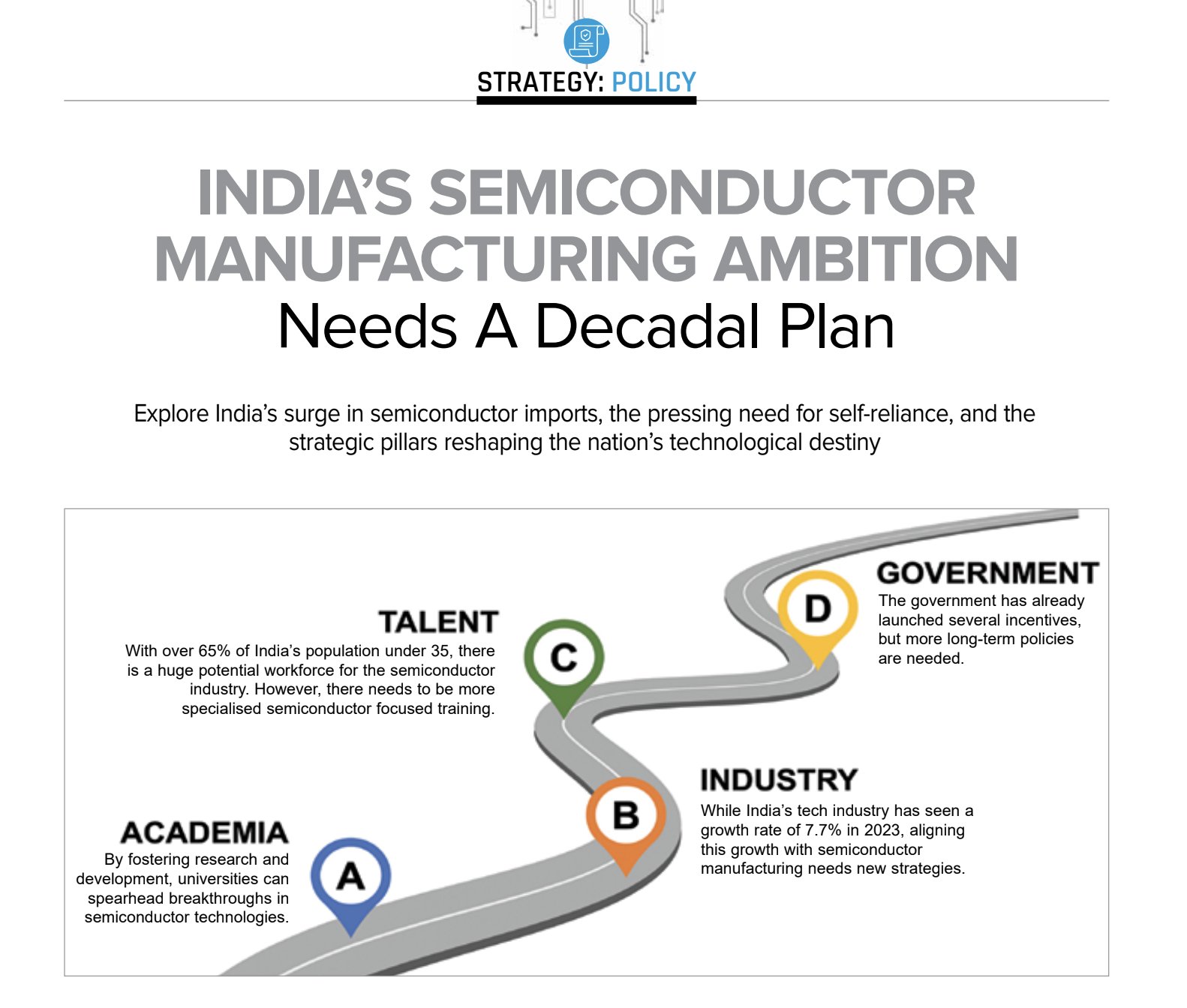
  • India’s Semiconductor Manufacturing Ambition Needs A Decadal Plan

    Published By: Electronics For You
    Date: February 2024
    Media Type: Digital And Print Magazine

  • The Essential Skills For Mastery In Computational Lithography

    Image Generated Using DALL-E


    Students And Computational Lithography

    I recently wrote about computational lithography. Several students asked, apart from mathematics skills, what more is required to align educational training so one has a better chance of joining semiconductors as a computational lithography engineer. 

    I thought a lot about this, and outlined in this blog are all the ins and outs of computational lithography that can benefit students.


    What Is Computational Lithography

    Computational lithography, a critical component of the semiconductor manufacturing process, represents the intersection of computer science, physics, and engineering, tailored to enhance the capabilities of photolithography. Photolithography is a process used to transfer geometric patterns onto a substrate or silicon wafer, essential for creating the intricate circuits that form the backbone of electronic devices.

    The field of computational lithography encompasses advanced algorithms and software tools to optimize this patterning process. Given the physical limitations of traditional lithography techniques, particularly as the semiconductor industry strives to shrink chip features to the sub-nanometer scale, computational lithography emerges as a pivotal solution. It enables the production of smaller, more efficient, and powerful microchips beyond the constraints of optical lithography.


    Picture By Chetan Arvind Patil

    Why Learn About Computational Lithography

    Learning computational lithography is becoming increasingly critical, especially within the semiconductor industry’s relentless drive toward miniaturization and efficiency improvement.

    Several vital roles demand skills in computational lithography. Below is an example of a job description requiring computational lithography skills:

    Image Credit: ASML

    If as a student you are looking for more critical and technical reasons on why learning computational lithography is invaluable. Then below is a guide that can helpful.

    REASONSDESCRIPTION
    Central Role In Semiconductor ManufacturingEssential for producing advanced semiconductor devices, enabling continued technological advancement.
    Addressing Physical LimitationsProvides solutions to surpass the physical limits of traditional lithography, enabling the creation of nanoscale features.
    High Demand For Skilled ProfessionalsExpertise in computational lithography is highly sought after, with growing demand as technology evolves.
    Interdisciplinary Skill DevelopmentFosters a wide range of skills from various disciplines, valuable across the semiconductor industry and beyond.
    Enabling Advanced TechnologiesKey to the development of cutting-edge technologies for advanced to ultra-advanced chips
    Research And Development OpportunitiesNumerous opportunities for contributing to new techniques and methodologies in lithography.
    Economic And Strategic ImportanceContributes to the strength of the semiconductor industry, a cornerstone of the global economy and national security.
    Personal And Professional GrowthThe evolving nature of computational lithography encourages lifelong learning and adaptability.
    Collaborative And Multidisciplinary Work EnvironmentInvolves working in collaborative, multidisciplinary teams, fostering innovation and problem-solving.
    Global Network And CommunityEngaging with computational lithography opens doors to a global community of experts and industry leaders.

    How To Learn And Enhance Skills Around Computational Lithography

    Learning and enhancing skills in computational lithography involves a multidisciplinary approach, blending principles from physics, engineering, computer science, and mathematics. This field is crucial for those aspiring to contribute to the semiconductor industry’s evolution, particularly in designing and manufacturing ever-smaller and more efficient microchips.

    Here’s a structured pathway to learn and enhance your skills in computational lithography:

    STRATEGYDESCRIPTION
    Solidify Your Foundation In Physics And MathematicsFocus on optics, quantum mechanics, electromagnetism, calculus, differential equations, linear algebra, and numerical methods.
    Gain A Deep Understanding of Semiconductor Fabrication ProcessesLearn the basics of semiconductor manufacturing and specialize in lithography processes.
    Develop Computational SkillsGain proficiency in programming languages (Python, MATLAB, C++) and familiarize yourself with software tools for simulation and design.
    Engage In Hands-On Projects And SimulationsWork on practical projects or simulations, and participate in team projects to apply theoretical knowledge.
    Stay Updated With The Latest Research And DevelopmentsRead journals, attend conferences, and participate in workshops to stay informed about the latest advancements.
    Pursue Advanced EducationConsider specialized courses, certifications, and advanced degrees focused on lithography and semiconductor manufacturing.
    Network With Professionals And Join CommunitiesConnect with experts through professional networks and online communities focused on computational lithography.
    Learn From Industry ExperienceSeek internships or co-op opportunities in semiconductor manufacturing companies or research institutions.
    Critical Thinking And Problem-Solving SkillsParticipate in challenges or competitions and study case studies to enhance problem-solving skills.
    Adopt A Lifelong Learning MindsetEmbrace continuous learning to keep up with the evolving field of computational lithography.

    Take Away

    As students navigate the ever-evolving landscape of semiconductor technology and innovation, embracing the field of computational lithography offers a unique and rewarding pathway to making significant contributions to the semiconductor industry and beyond.

    This discipline, lying at the intersection of physics, mathematics, engineering, and computer science, not only challenges you to apply and expand your academic knowledge but also positions you at the forefront of technological advancements that power our modern world.

    By diving into computational lithography, students will prepare for a career that has the potential to open doors to becoming part of a global community of innovators, researchers, and professionals who are driving the next wave of the semiconductor technological revolution.


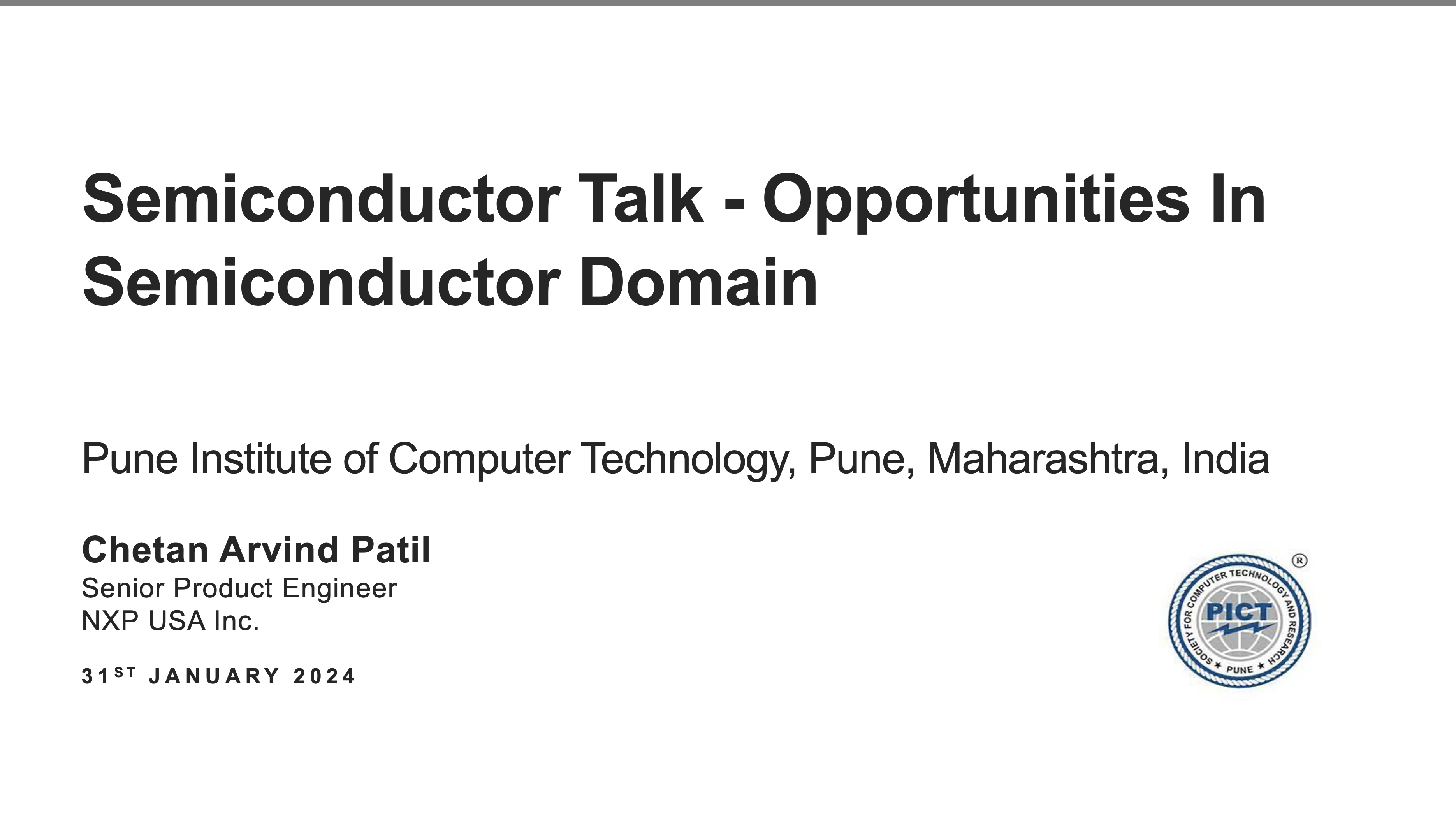
  • Semiconductor Talk – Opportunities In Semiconductor Domain

    • Hosted By: Pune Institute of Computer Technology (PICT)
    • Location: Pune, Maharashtra, India (Virtual)
    • Date: 30th/31st January 2024
  • The AI Centers And Implications On Semiconductor Industry

    Image Generated Using DALL-E


    Data To AI Centers

    Data centers have been essential for storing, managing, and processing data for several decades. However, we are now on the brink of a new era of technology, and a significant shift is imminent. Traditional data centers will be replaced by AI Centers, a new technology hub specifically designed to cater to the growing demands of Artificial Narrow Intelligence (ANI), Artificial General Intelligence (AGI), and Artificial Super Intelligence (ASI).

    AI Centers: AI Centers Will Get Equipped With The Best XPUs In The Market. It Will Drive The Need To Push Everything Toward AGI And Then ASI. Eventually, It Will Also Lead To The Creation Of AI Centers Cum AI FABs That Will Then Turn Into AI RnD Center And So On.

    AI Centers, as the term suggests, are dedicated facilities equipped with advanced computational resources, primarily for ANI, AGI, and ASI. Unlike conventional data centers that handle a broad spectrum of data-related tasks, AI Centers will be optimized for the intensive computational demands of AI algorithms.

    The shift towards AI Centers is propelled mainly by the increasing integration of AI features in software solutions across various industries. AI’s capabilities in pattern recognition, predictive analytics, generative AI, and similar automation are becoming indispensable in almost all industries. This widespread adoption necessitates infrastructure that can efficiently handle the unique computational requirements of AI, which is where AI Centers come into the picture.


    Picture By Chetan Arvind Patil

    How AI Centers Differ From Data Centers

    To understand more about AI Centers. First, we look at how Data Centers differ from AI Centers. The only significant difference between them is the processing power that AI Centers demand. Which eventually needs more specialized processors. At the same time, the energy demand of AI centers is ten times that of data centers. AI Centers will cost more to set up and run in the long run.

    However, the benefits of such a center will outweigh the negatives. For example, quickly computing (based on historical data) and predicting the right medical treatments could save doctors a lot of time. Eventually, this leads to sound decisions. It could also be a game changer in research areas like cancers and other severe medical conditions.

    ASPECTDATA CENTERSAI CENTERS
    Primary FunctionStorage and management of large data setsFocused on AI and ML computations
    Processing PowerHigh, but generalizedExtremely high, specialized for AI tasks
    HardwareStandard CPUs and storage devicesAdvanced XPUs, GPUs, TPUs, ASICs
    SoftwareGeneral-purpose operating systems and appsSpecialized AI and ML algorithms
    Data ProcessingBroad spectrum, including transactional dataPrimarily for AI model training and inference
    Energy ConsumptionHigh, but less specializedExtremely high, due to intensive computations
    Cooling RequirementsSignificant, due to dense hardwareEven higher, due to more intense processing
    Storage CapacityMassive, for diverse data typesOptimized for fast access rather than volume
    Network InfrastructureRobust, for varied trafficUltra-high-speed, for rapid data processing
    ScalabilityDesigned for incremental growthRequires scaling specialized hardware
    Security ConcernsHigh, due to diverse data storageHigh, with added focus on model integrity
    Cost of Setup and OperationHigh, but standardizedHigher, due to specialized equipment
    Maintenance ComplexityModerateHigh, due to specialized hardware and software
    Business ModelService-oriented (e.g., cloud storage)Driven by AI-as-a-Service offerings
    Market DemandConsistent, for various IT needsGrowing rapidly, driven by AI advancements
    Innovation PaceSteady, with gradual improvementsRapid, aligned with AI and ML breakthroughs
    Workforce SkillsIT and data management focusedAI, ML, and specialized hardware expertise
    Environmental ImpactSignificant, due to energy usePotentially higher, depending on efficiency gains
    Regulatory ComplianceData privacy and security lawsAdditional concerns with AI ethics and transparency
    Future OutlookEssential but evolving towards integration with AICentral to the advancement of AI and its applications

    Impact On Semiconductor Industry

    The heart of these AI Centers will be the XPUs – a broad term encompassing a range of specialized processing units like GPUs (Graphics Processing Units), TPUs (Tensor Processing Units), and other Application-Specific Integrated Circuits (ASICs). These processors are designed to handle the parallel processing tasks that AI and ML algorithms demand.

    The semiconductor industry will need to innovate continuously to keep up with the evolving requirements of AI algorithms. It could mean designing more powerful and efficient chips and custom hardware solutions tailored for specific AI applications.

    The development of AI Centers will likely lead to increased investment in the semiconductor industry in terms of capital and research. Collaborations between tech companies and semiconductor manufacturers could become more common as they work together to optimize hardware for AI applications.

    While this shift presents lucrative opportunities for the semiconductor industry, it also brings challenges. Scaling production, managing power consumption, and ensuring the sustainability of materials are some of the hurdles that must be addressed.

    Take Away

    The transition from traditional data centers to AI Centers marks a significant turning point in the computing and semiconductor industries. As AI continues incorporating its way into various software solutions, the demand for specialized, high-performance computing resources will surge. It presents unique challenges and opportunities for the semiconductor industry, driving innovation and collaboration in new and exciting ways.


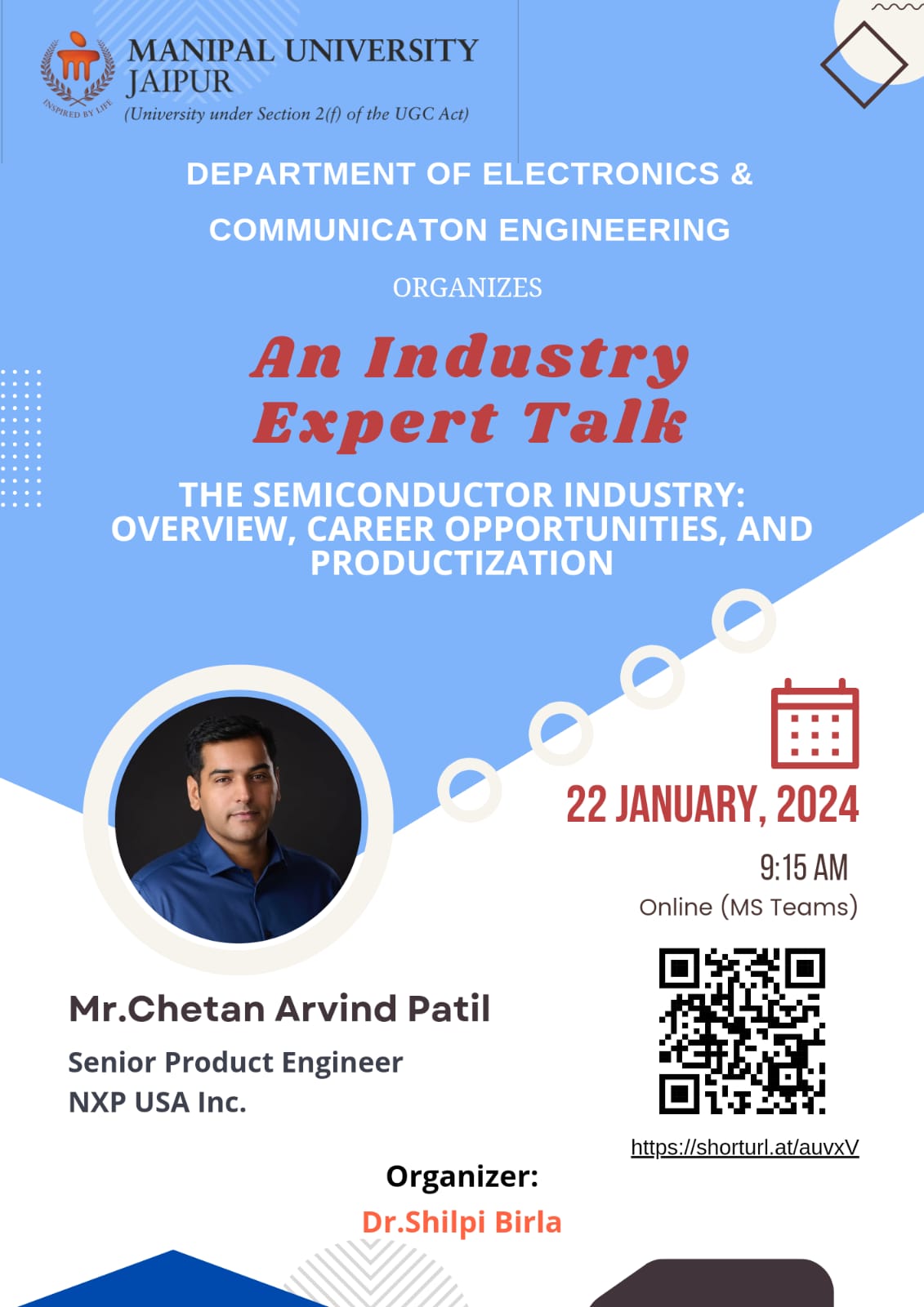
  • The Semiconductor Industry Overview, Career Opportunities And Productization

    • Hosted By: Manipal University Jaipur
    • Location: Jaipur, Rajasthan, India (Virtual)
    • Date: 21st/22nd January 2024
  • The Student Guide To Match Semiconductor Skills With Functions

    Image Generated Using DALL-E


    Semiconductor, Students, Functions And Skills

    In the last blog post, I wrote about a guide students can use to select a major with a focus of joining the semiconductor industry as an engineer. As an extension to that blog, I am now writing about another guide that students can use to match the skills they have (or believe they will acquire on the go) with the specific functions of the semiconductor industry.

    Functions: Different Types of Job Roles That Semiconductor Industry Has To Offer

    Skills: Technical And/Or Management Skills Required To Join A Function Of A Semiconductor Industry

    Before marching the path of acquiring a specific skill(s) and mapping it to a function(s), students should spend time understanding different sets of skills that the industry is looking for and have a magnificent view of various sets of functions that exist. In this regard, SRC MAPT’s Knowledge, Abilities, and Skills has a detailed and extensive view of the skills and functions.


    Picture By Chetan Arvind Patil

    Take A Look At Different Functions

    In the table below, I have extended the functions with a specific definition of the responsibilities. Such a view will allow students to understand the job opportunities clearly. Please do note that many of these functions were clubbed under a super function, and often, there are branches of each of the parts, which becomes more apparent to students when they start working for a semiconductor company and can then align their career goals with a better understanding of each of the functions and their branches.

    Note: I have updated the table with a few more functions that are not part of SRC MAPT’s matrix yet.

    FUNCTIONSRESPONSIBILITIES
    Process And Product ArchitectDesigning overall process flow and architecture for semiconductor product development
    Roadmap Development ManagerManaging the strategic planning of product development and technological advancements
    Digital Design And Architecture EngineerEngineering digital circuits and systems, including design and architecture
    Analog/Circuit Design EngineerDesigning analog circuits and systems, ensuring functionality and performance
    Digital Verification EngineerVerifying digital system designs to ensure they meet the specified requirements
    Analog And Mixed Signal EngineerDesigning and testing analog and mixed-signal circuits and ensuring integration with digital components
    Failure Analysis EngineerInvestigating the root causes of product failures and developing solutions to improve reliability
    Product/Industrial EngineerOverseeing product development from design to market release
    Financial ControllerOverseeing financial reporting, budgeting, and fiscal management within the company
    Sales EngineerBridging technical expertise and sales acumen to provide solutions to customers
    Marketing ManagerLeading marketing strategies, campaigns, and market research efforts to drive sales
    Technical/Product Marketing Engineer Strings together the different elements from Silicon out to the platform and finally the product/solution that the market/customer is looking for. [Credit To Gopinath Meghashyam Via LinkedIn]
    Test EngineersConducting tests on semiconductor devices to ensure quality and reliability
    Validation/Application EngineersProviding technical support and solutions for product applications
    Layout/CAD EngineerCreating and managing layout and CAD designs for semiconductor devices
    Systems EngineerEngineering and integrating systems for optimal performance and efficiency
    Firmware EngineerDeveloping firmware and embedded systems for semiconductor products
    Quality, Yield And Reliability EngineersEnsuring product quality, yield rates, and reliability standards are met
    Program/Product/Project ManagersManaging and overseeing projects/product/program within the semiconductor industry
    Data ScientistAnalyzing data to extract insights and drive product improvements
    Operations EngineersImproving operational processes and productivity within manufacturing
    Software Engineer/DeveloperDeveloping software for semiconductor device production and testing
    Procurement EngineerManaging procurement of materials and components for manufacturing
    Supply Chain ManagerOverseeing the supply chain, from sourcing to delivery of finished products
    Human ResourceHandling human resources functions, including recruitment and employee relations
    Workforce DevelopmentDeveloping and implementing training programs for workforce skill enhancement
    Business Development And AnalyticsDriving business growth through market analysis and strategic initiatives
    Equipment EngineerMaintaining and troubleshooting semiconductor manufacturing equipment
    FacilitiesManaging the maintenance and operations of facility systems
    Field Service EngineersProviding field engineering support and maintenance for installed products
    Field Application EngineerSupporting customers with product implementation and technical guidance
    Fab Automation And Packaging AssemblyAutomating and optimizing packaging and assembly processes in fabrication
    Process ControlMonitoring and controlling semiconductor manufacturing processes
    Process/Mask EngineerDesigning and fabricating masks used in semiconductor lithography
    Optoelectronics EngineerEngineering optoelectronic devices and systems for semiconductor applications
    Metrology/InspectionConducting metrology and inspection to ensure product specifications are met
    Packaging EngineerEngineering the packaging of semiconductor devices for protection and performance
    Environmental And Safety EngineerImplementing environmental health and safety standards in the workplace
    Regulatory And Compliance ManagerManaging compliance with industry regulations and company policies
    Environmental AffairsOverseeing environmental programs and sustainability initiatives
    Fab TechnicianOperating and maintaining equipment in semiconductor fabrication labs
    Lab TechnicianConducting experiments and tests in research and development labs

    Take A Look At Different Skills These Functions Demand

    Now that one has a good view of the different types of functions in the semiconductor industry (precisely, a company). Students should now look at other types of skills needed to be part of these functions, and in the long run, they should also understand how to acquire these skills.

    To do so, students should explore (either via industry networking or internships) a specific set of skills to be part of a given function. The table below is used as a base to help students. On top of this, students can further develop their skills.

    Note: I have provided an updated view and this will not directly relate to SRC MAPT’s matrix.

    FUNCTIONSSKILLS
    Process And Product ArchitectMarket View, Specifications, Standards, Technical Requirement And Use Case Handling
    Roadmap Development ManagerBusiness Strategy Development
    Digital Design And Architecture EngineerDigital Design, Analog Circuit, Verilog, CAD And HDL/HVL
    Analog/Circuit Design EngineerAnalog Circuit, Technology Process, CAD And Mixed Signal Circuit
    Digital Verification EngineerProtocols, Programming, Tool Knowledge, Verification Methodologies
    Analog And Mixed Signal EngineerProtocols, Programming, Tool Knowledge, Verification Methodologies
    Failure Analysis EngineerPhysical And Electrical Failure Analysis
    Product/Industrial EngineerYield, DOE, Quality, Test, Operations And Reliability, COGS, Characterization, Compliance And Production Flows
    Financial ControllerFinancial Modeling And Simulation
    Sales EngineerProduct, Business Strategy And Customer Acquisition
    Marketing ManagerMarketing, Product Management, Customer Engagement, Business Case, And Sales
    Technical/Product Marketing Engineer Product Knowledge, Customer Engagement, And Business Administration.
    Test EngineersTest Program Development, Validation, Programming, Silicon Bring-Up And ATE Knowledge.
    Validation/Application EngineersBoard Design, Layout And Programming Languages
    Layout/CAD EngineerAnalog/Digital Circuit Concepts, Layout And CAD Tool Management
    Systems EngineerProgramming Languages And System Design
    Firmware EngineerProgramming Paradigms, Programming Languages And Embedded Systems
    Quality, Yield And Reliability EngineersQuality And Reliability Standards, Failure Analysis, Hardware Development And DFMEA
    Program/Product/Project ManagersProject And People Management, Data Tools, Agile And Statistics
    Data ScientistBig Data Analytics, Data Structures, Algorithms And Object Oriented Programming
    Operations EngineersProduct Development, Productization, Cost Management And Margin Improvement
    Software Engineer/DeveloperProgramming Languages And Software Development Life Cycle
    Procurement EngineerVendor Mangement, Finance And COGS
    Supply Chain ManagerProduction And Inventory Management
    Human ResourceTalent Development, Retention And Regulatory Policies
    Workforce DevelopmentTalent Development And Retention
    Business Development And AnalyticsBusiness Strategy Development And Market Insights
    Equipment EngineerEquipment Design, Maintenance And Electrical Drawings
    FacilitiesOperations Planning And Design For Availability
    Field Service EngineersProduct Ownership, Know About Of Electrical, Optical, Thermal And Mechanical Aspect
    Field Application EngineerProduct Knowledge And Customer Engagement
    Fab Automation And Packaging AssemblyFabrication Flow, Assembly Process, Factory Management, Litho And Manufacturing Engineering Services
    Process ControlFabrication/Assembly Flows, Process Control Techniques, Yield Improvement, Defect Analysis And Process Development
    Process/Mask EngineerFabrication Flow And/Or Assembly Process Knowledge And Data Analysis
    Optoelectronics EngineerSemiconductor Physics And Optoelectronics
    Metrology/InspectionMetrology, Failure Analysis, SEM And AFM
    Packaging EngineerPackaging Technology, Assembly Process, Standards, Thermal And Mechanical Engineering
    Environmental And Safety EngineerEnvironmental Science And Safety Engineering
    Regulatory And Compliance ManagerRegulatory Policies And Compliance Management
    Environmental AffairsEnvironmental Science And Policy Development
    Fab TechnicianEquipment Operation And Basic Maintenance
    Lab TechnicianChemical Handling And Equipment Maintenance

    Take Away

    I hope, using the above information, aspiring students (and professionals) can invest in acquiring specialized skills and will find themselves well-equipped to capitalize on the opportunities presented by the semiconductor industry’s growth.

    In conclusion, students need to strategically align their learning objectives with the demands of the industry, and doing so will ensure they are positioning themselves at the forefront of innovation and contribute significantly to the advancement of semiconductor technology.