Image Generated Using Nano Banana
What Computer Architecture Is And Why It Matters
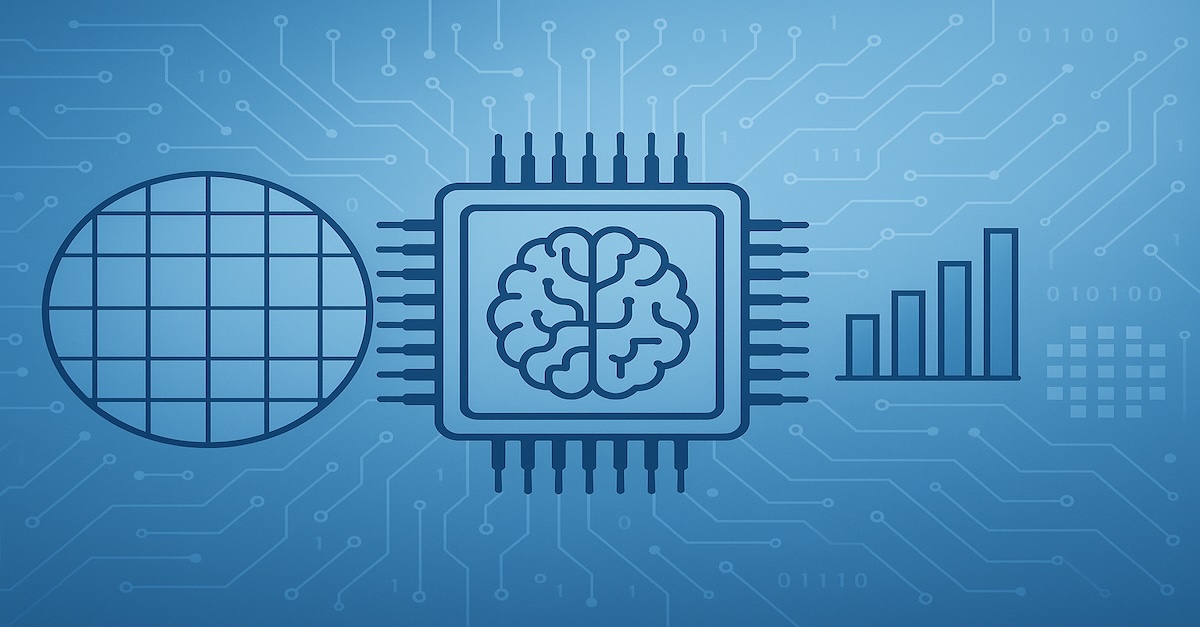
Computer architecture defines a computing system’s structure, component interaction, and trade-offs for performance, efficiency, cost, and reliability at scale. Architecture balances instruction sets, microarchitecture, memory hierarchies, and system-level design to meet workload requirements. Instruction encoding, pipeline depth, and cache topology shape both the physical silicon and the chip’s performance.
Unlike computer organization or circuit implementation, architecture focuses on what the system does and how it exposes those capabilities to software. This includes the instruction set interface and the abstract execution model visible to compilers, operating systems, and applications.
In semiconductor-powered computing, these architectural choices shape how transistors, the fundamental semiconductor devices, coordinate to deliver throughput, latency, efficiency, and workload specialization.
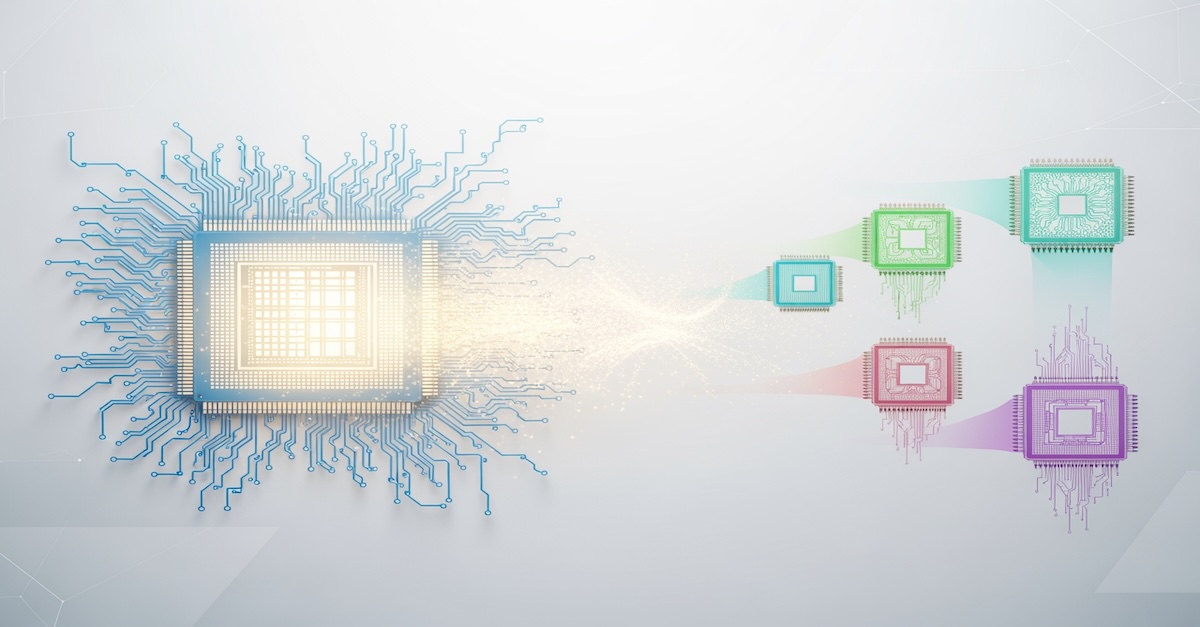
Modern computing systems no longer rely on a single silicon engine for all performance demands. Instead, heterogeneous architectures combine general-purpose cores with specialized accelerators. This enables systems to efficiently handle workloads including sequential control logic, parallel processing, machine learning, graphics rendering, and signal processing.
This architectural shift is a key lever for innovation as transistor scaling slows and thermal constraints tighten. By tailoring structures to specific workloads, semiconductor-powered computing continues to advance. This occurs even as raw process scaling alone becomes less effective.
Architectural Paradigms And Workload Mapping
As computing workloads diversified, no single architectural paradigm could efficiently meet all performance, power, and scalability demands. Computer architecture therefore evolved along multiple paths, each optimized for how computation is expressed, how data moves, and how parallelism is exploited. These paradigms are direct responses to workload characteristics such as instruction complexity, data locality, concurrency, and latency sensitivity.
Modern systems now integrate multiple architectural paradigms within a single platform. Control-heavy functions run on general-purpose cores, while compute-dense kernels are offloaded to parallel or specialized engines. This workload-driven mapping shapes not only performance, but also silicon area allocation, power delivery, memory hierarchy, and interconnect design.
| Architectural Paradigm | Architectural Focus | Strengths | Best-Suited Workloads |
|---|---|---|---|
| General-Purpose CPU Architecture | Low-latency execution, complex control flow, instruction-level parallelism | Flexibility, strong single-thread performance, fast context switching | Operating systems, application control logic, compilation, transaction processing |
| Massively Parallel Architecture | High throughput via many lightweight execution units | Excellent parallel efficiency, high arithmetic intensity | Graphics rendering, scientific simulation, AI training and inference |
| Vector and SIMD Architectures | Data-level parallelism with uniform operations | Efficient execution of repetitive numeric operations | Signal processing, media processing, numerical kernels |
| Domain-Specific Accelerators | Hardware optimized for narrow operation sets | Maximum performance per watt for targeted tasks | Neural networks, image processing, encryption, compression |
| Reconfigurable Architectures | Adaptable hardware pipelines | Flexibility with hardware-level optimization | Prototyping, edge inference, custom data paths |
Eventually, the effectiveness of an architecture is ultimately determined by how well it matches the workload it is executing. Workloads with heavy branching and irregular memory access benefit from architectures optimized for low latency and sophisticated control logic. Highly parallel workloads with predictable data flow benefit from wide execution arrays and simplified control mechanisms. Data-intensive workloads increasingly demand architectures that minimize data movement rather than raw compute capability.
Research Frontiers And Product Impacts
Over the past two decades, computer architecture research has shifted from abstract performance models toward workload-driven, system-level innovation. As transistor scaling slowed and power density constraints tightened, the focus moved from peak compute capability to system interactions. Computation, memory, and data movement are now examined in real systems. Many architectural concepts shaping today’s semiconductor products started in academic research, later refined and scaled by industry.
Heterogeneous computing is a clear example of this transition. Early research showed that offloading well-defined kernels to specialized hardware could dramatically improve performance per watt. Today, this principle underpins modern system-on-chip designs. General-purpose CPUs are now combined with GPUs and domain-specific accelerators. Apple’s silicon platforms exemplify this approach. They use tightly coupled compute engines and unified memory architectures to reduce data movement and maximize throughput.

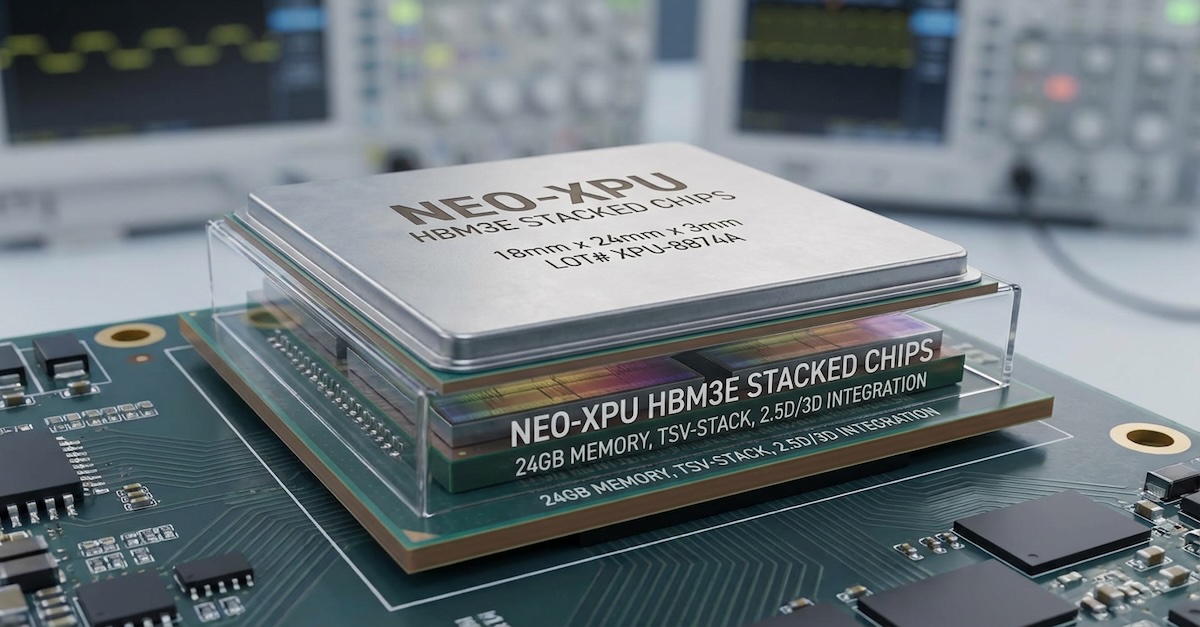
Energy efficiency has also emerged as a dominant architectural driver, particularly for data-centric workloads. Research highlighting the high energy cost of data movement has shifted architectural emphasis. Design now focuses on locality, reduced precision, and memory-centric approaches. These ideas appear in AI accelerators and data center processors. Such chips prioritize high-bandwidth memory and on-chip buffering over traditional instruction throughput.
At the edge, research into ultra-low-power and domain-specific architectures has shaped embedded processors. These chips now achieve real-time inference and signal processing within tight energy budgets. Across all markets, architectural innovation shapes how semiconductor advances become practical computing. This trend reinforces architecture’s central role in modern systems.
Architecture As The Linchpin Of Modern Computing
At its core, computer architecture is the discipline that transforms raw semiconductor capability into practical, scalable computing systems. While advances in process technology determine what is physically possible, architecture determines what is achievable in real workloads. It defines how transistors are organized, how data flows through the system, and how efficiently computation is delivered under power, cost, and thermal constraints.
As computing has expanded beyond a single dominant workload, architecture has become the critical mechanism for managing diversity. General-purpose processing, massive parallelism, and domain-specific acceleration now coexist within the same systems. Architecture governs how these elements are composed, how responsibilities are partitioned, and how bottlenecks are avoided. In doing so, it enables systems to adapt to evolving application demands without relying solely on continued transistor scaling.
Looking ahead, the future of computing will be shaped less by uniform scaling and more by intelligent architectural design.
Heterogeneous integration, chiplet-based systems, and workload-aware architectures will continue to define how semiconductor advances are harnessed. In this context, architecture stands as the linchpin of modern computing, holding together silicon capability, system design, and application needs into a coherent and effective whole.